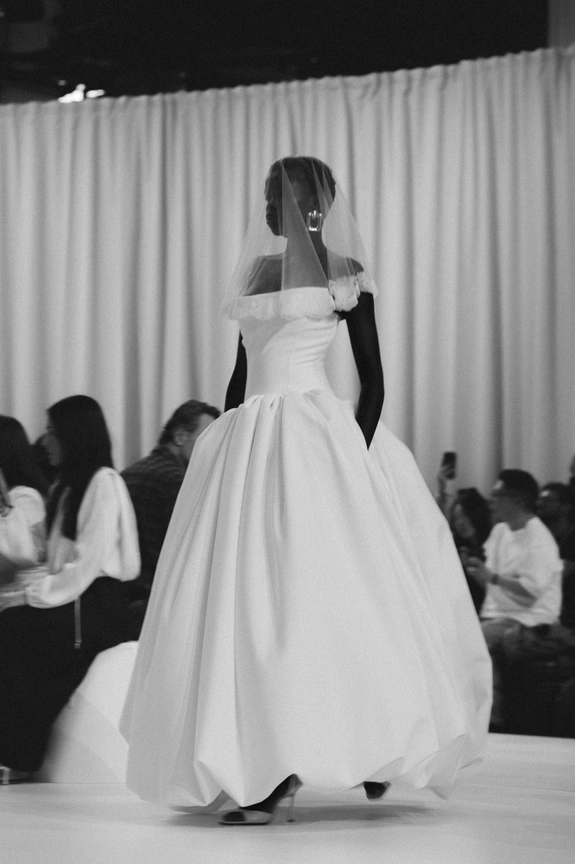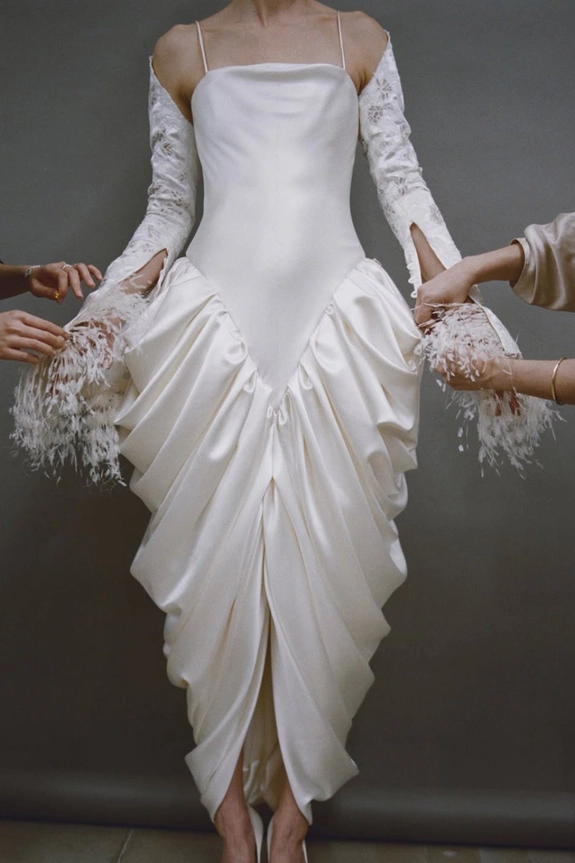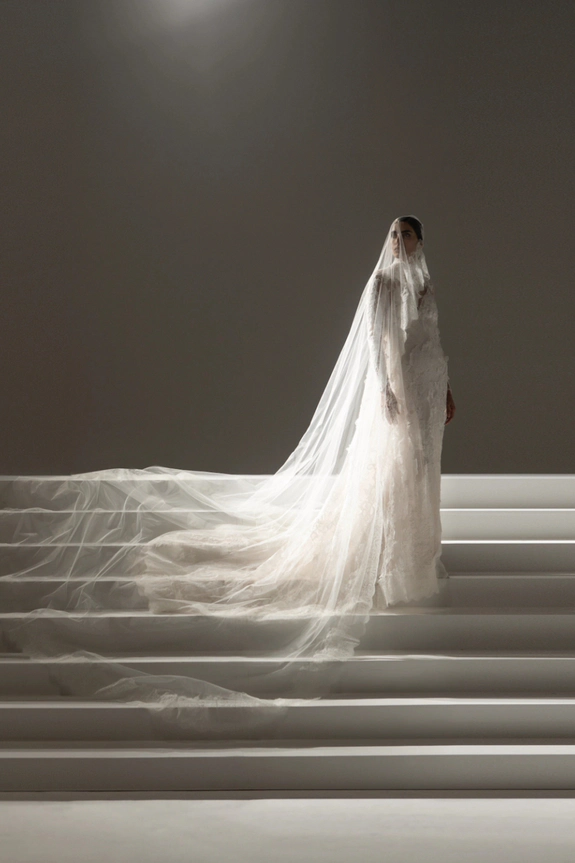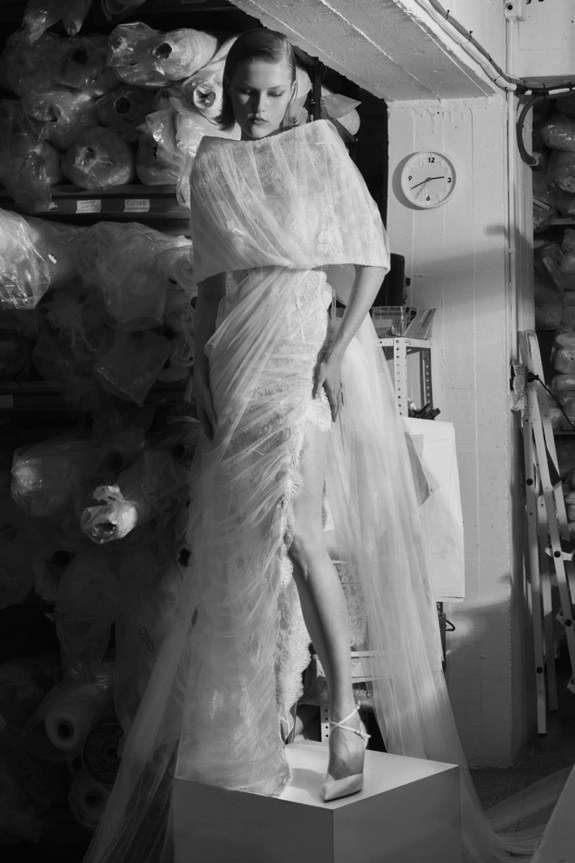
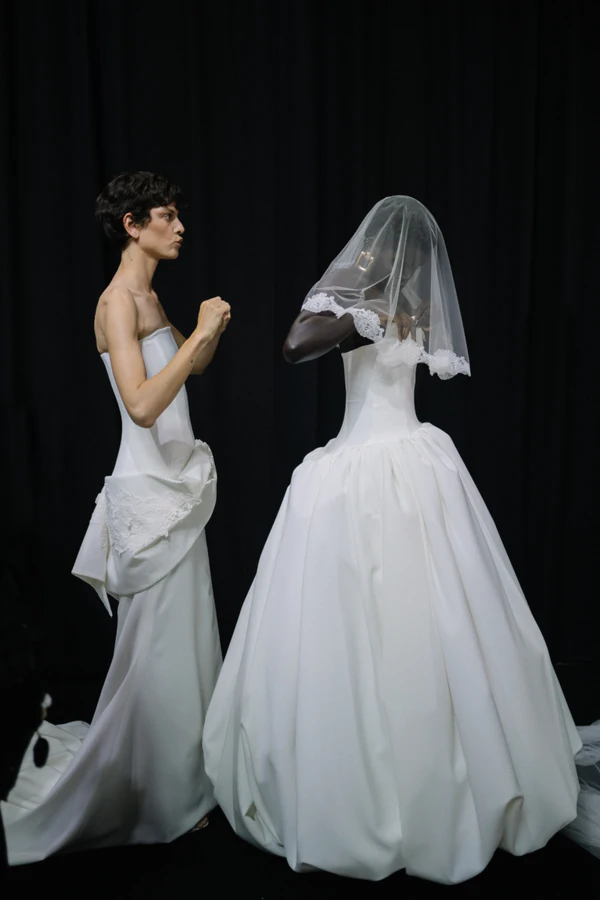
Sure, bridal will always have its go-tos. The silky slip, the dramatic train, the cinched waist silhouette. Those aren’t going anywhere. But this season at Barcelona Bridal Fashion Week, designers pushed those familiar staples in a way that feels considered and current, creating pieces that feel entirely new, while still holding onto what makes them work in the first place. Classic silhouettes that we come back to each season (because they’re just that good) certainly didn’t disappear, but this year they felt more defined, with sharper lines, sculptural proportions, and more intentional detail that brought a new point of view. More than anything, texture and embellishment really led the conversation.
Collections moved easily between moods, from structured to soft, minimal to ornate, classic to slightly undone. The through line wasn’t a single aesthetic, but a sense of range, with each designer bringing a bouquet of looks to bridal, rather than prescribing to just one. It all points to a broader shift, one shaped by a set of trends that feel just as varied as the collections themselves. Here, ten trends that defined the season and we’re expecting to see a lot more of.
Fringe Factor
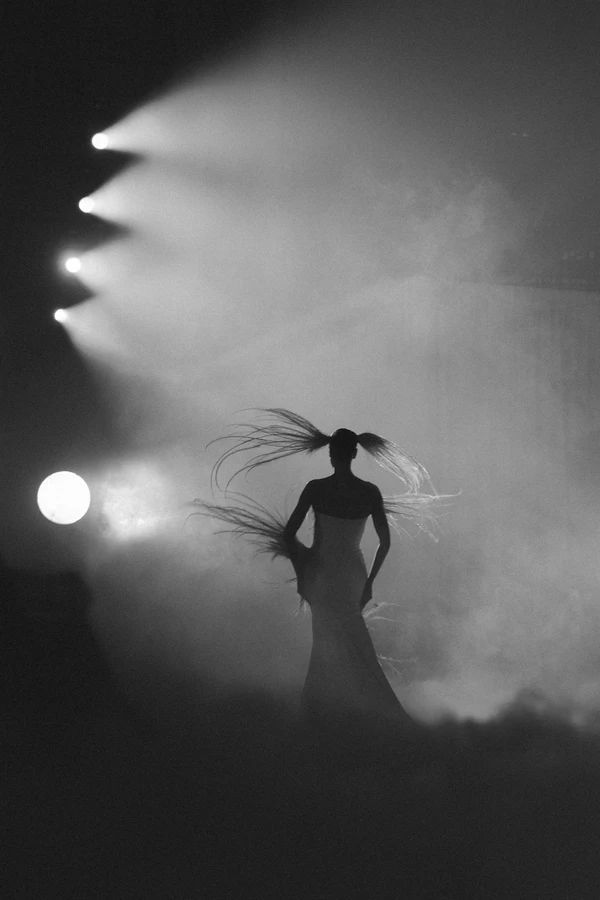
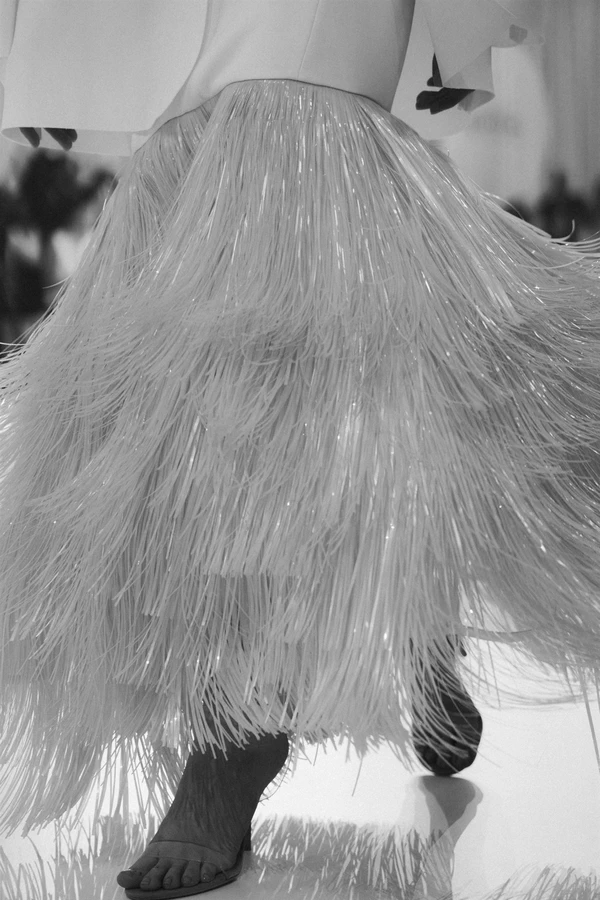
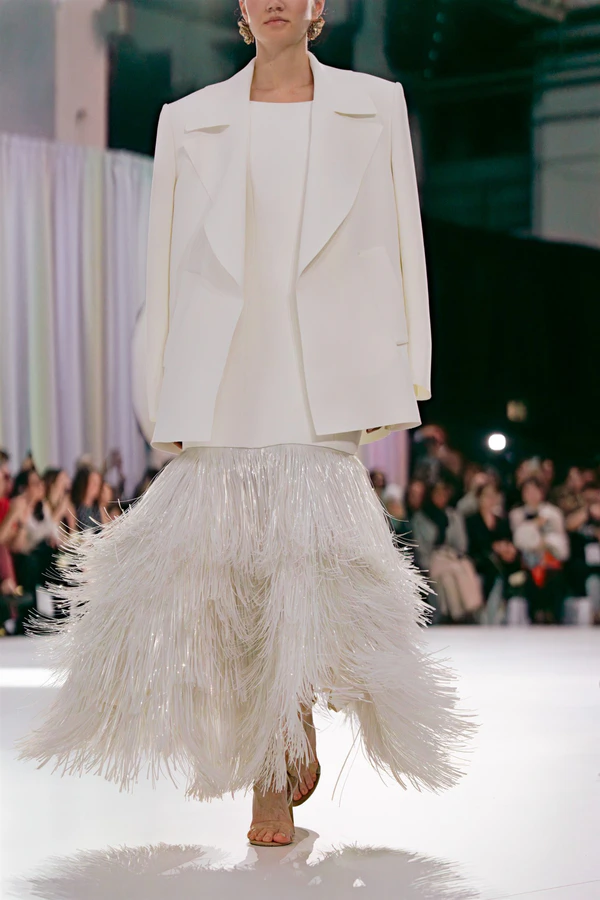
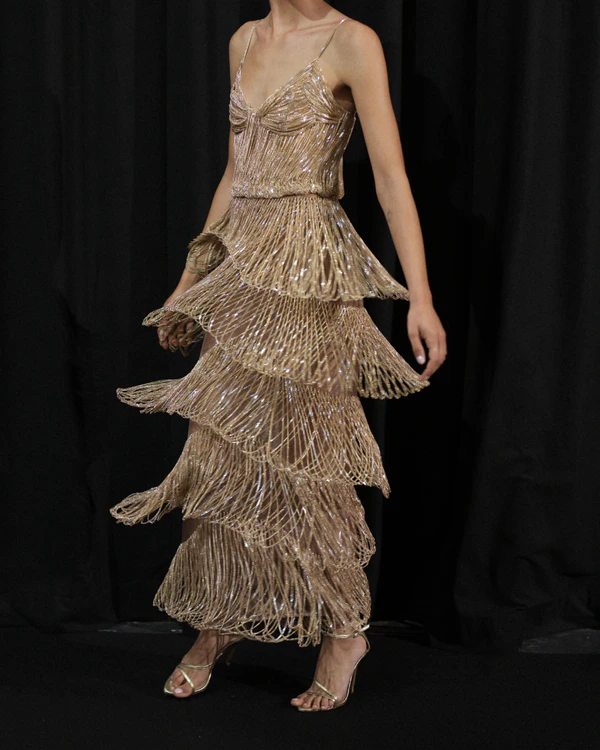
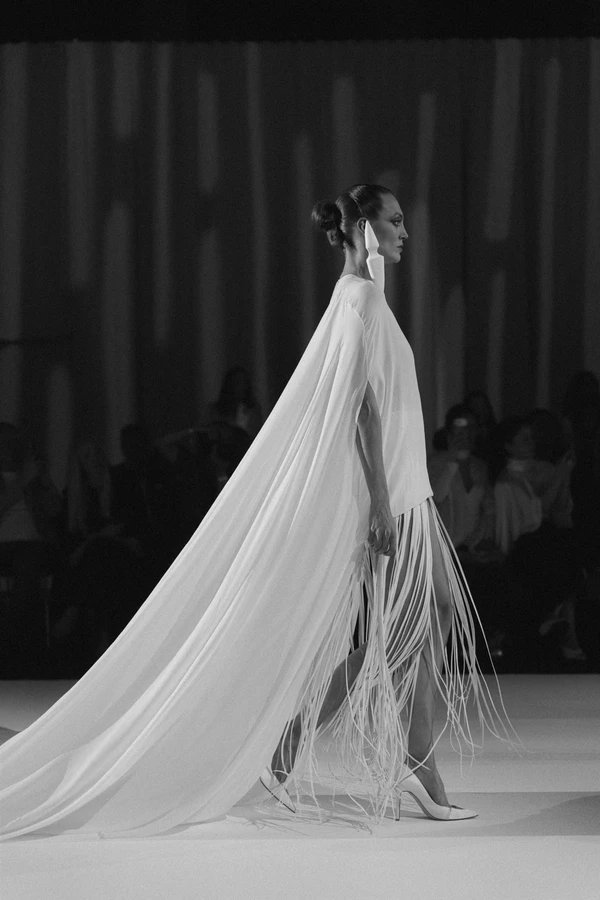
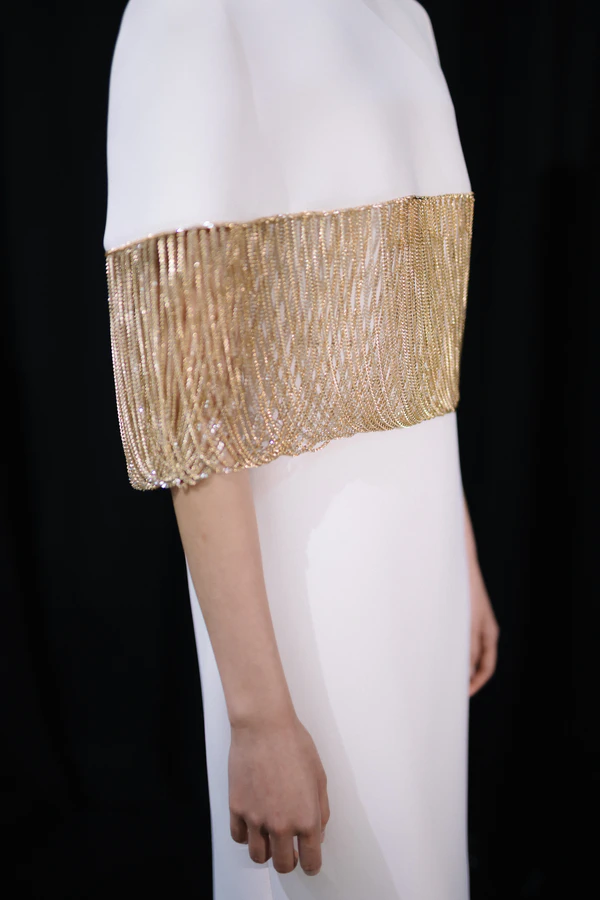
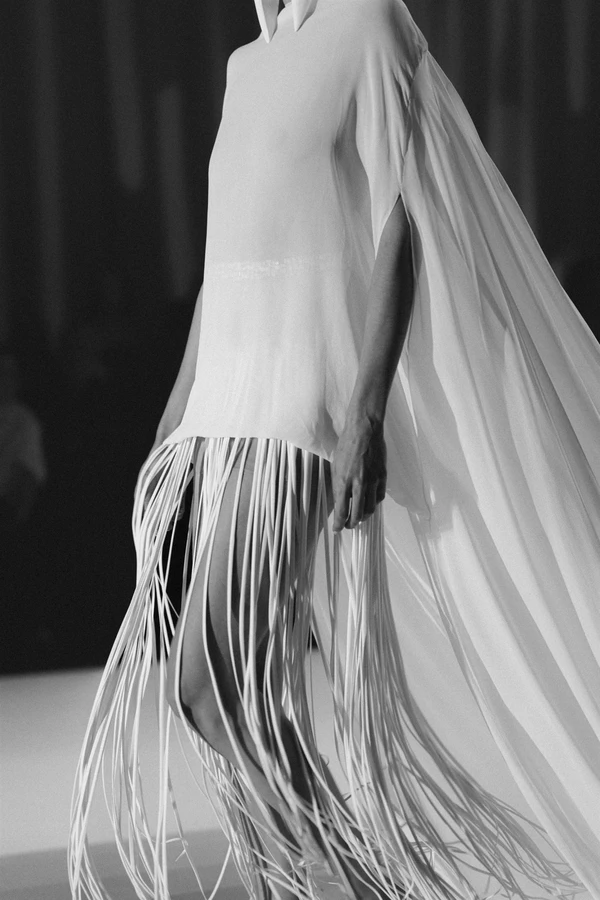
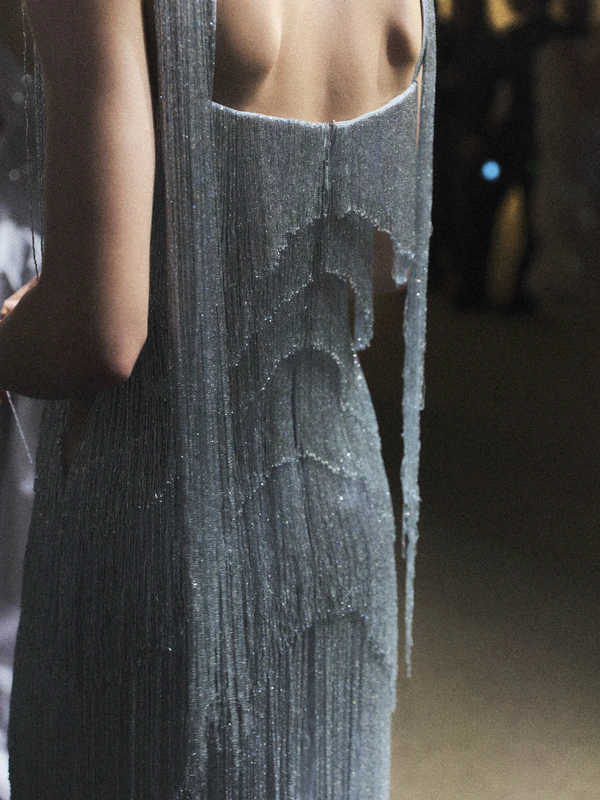
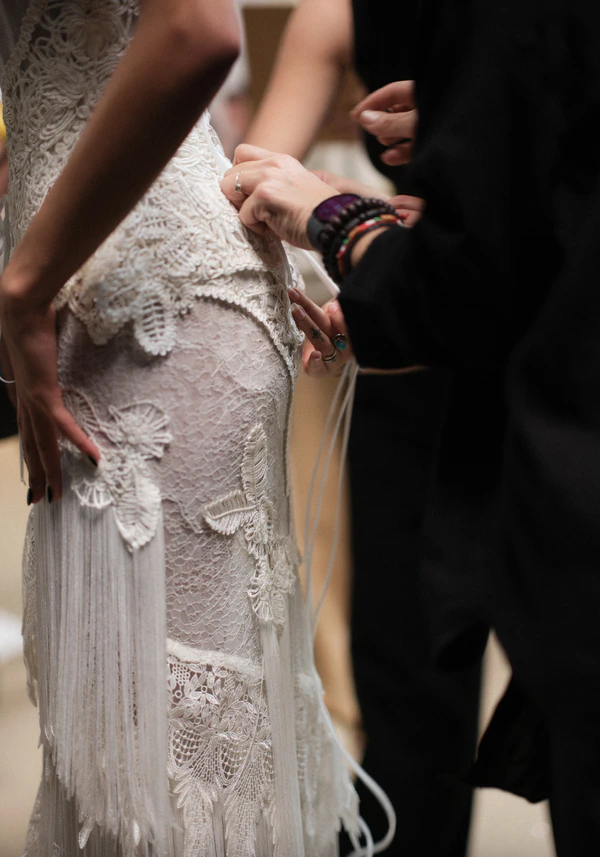
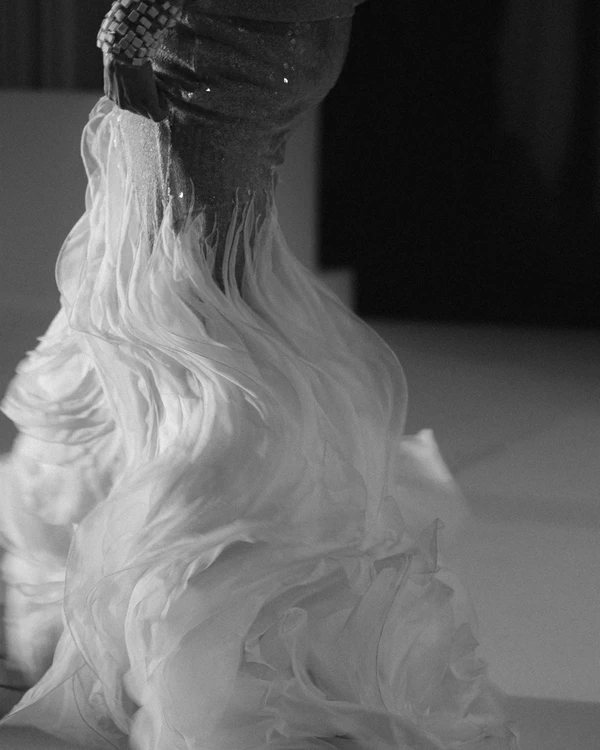
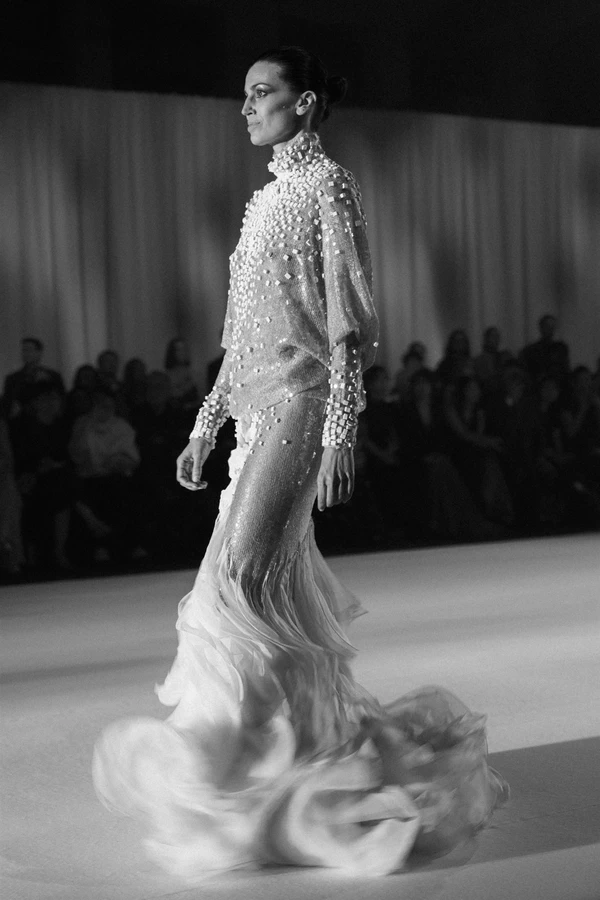
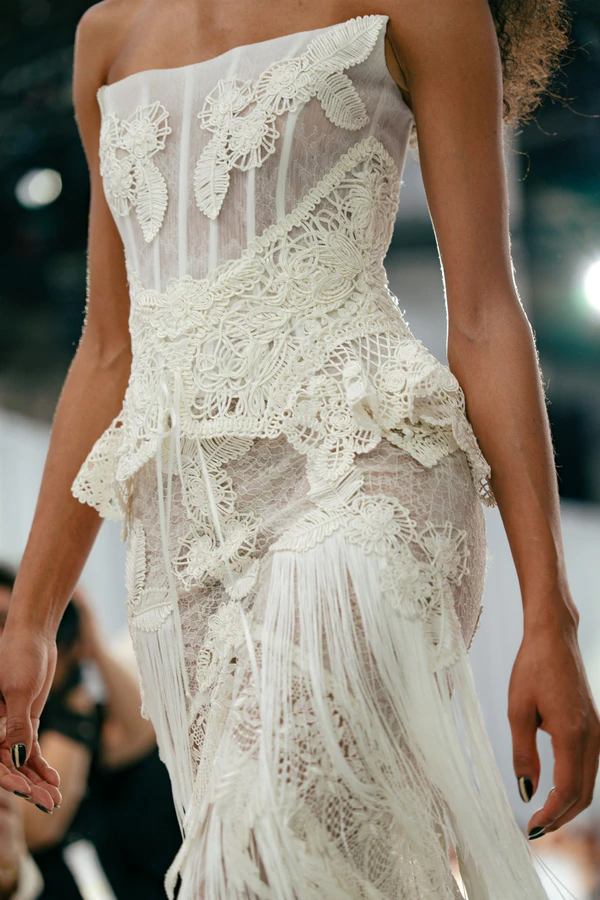
Fringe came ready to move this season, and it didn’t hold back. Strands swayed down runways, metallic pieces caught light mid-walk, and suddenly even the sleekest silhouettes had a little more energy to them. What kept it from feeling overly retro is how differently designers approached it. What kept the trend from slipping into anything overly retro is how varied the interpretations felt. Sometimes it leaned sharp and almost graphic, like the metallic fringe at Isabel Sanchis that gave gowns this cool, architectural edge. Elsewhere, the mood softened entirely. Yolancris approached fringe through texture, weaving it into layered dresses that felt breezier, lighter, almost Mediterranean in spirit. And sparkle definitely had something to do with it too. Wang Feng treated fringe almost like jewelry itself, adding shimmering strands and embellishment across already light-catching gowns so everything moved with even more drama once on the runway. And finally the drama arrived. Stéphane Rolland let fringe dissolve directly into the silhouette itself, fading toward the hem like a moving ombré. It shifted with every step. That’s what made the trend land. It never felt costume-y or overly precious. If anything, it made bridal feel a little more alive.
The Modern Mermaid
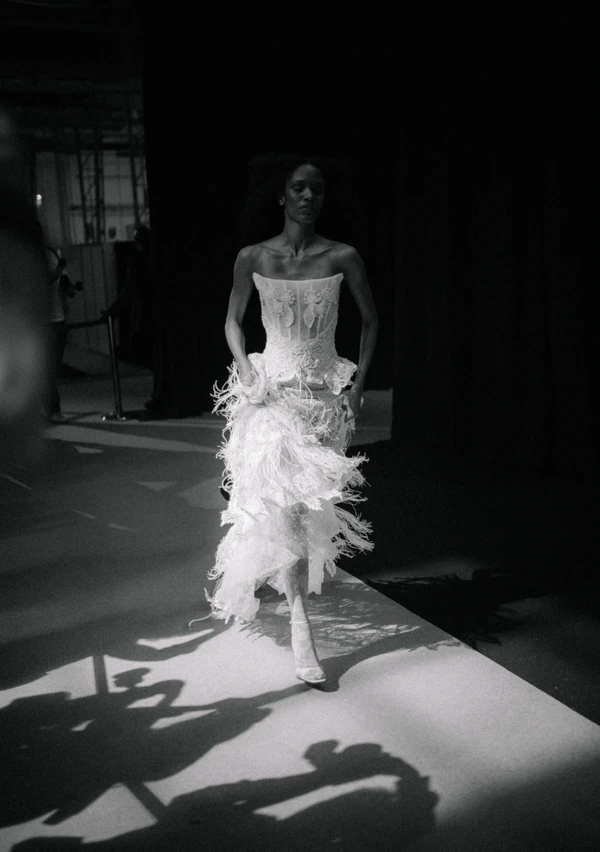
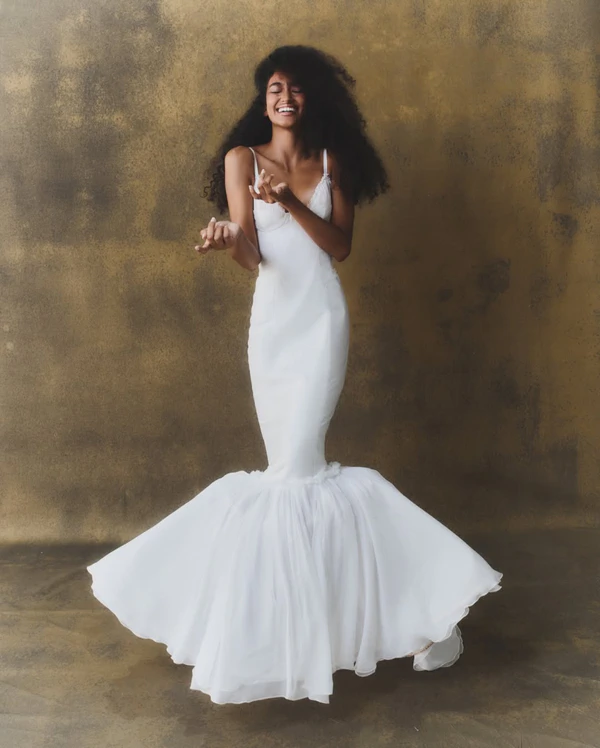
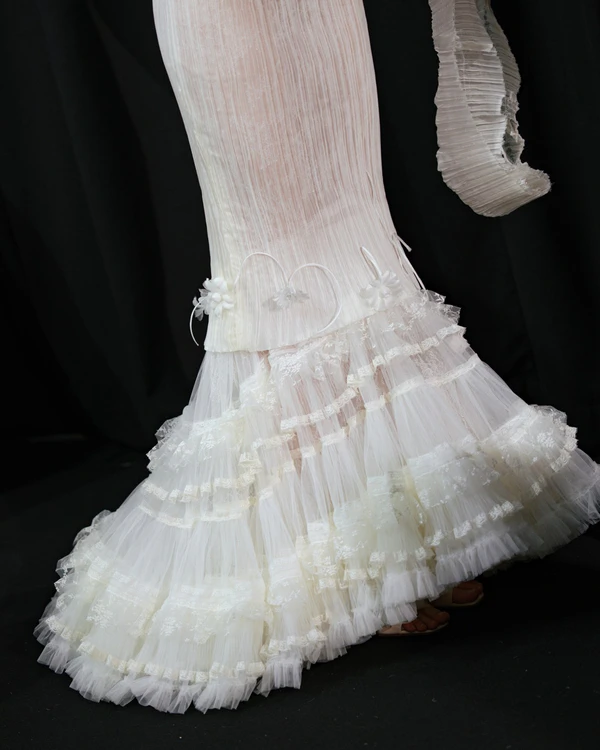
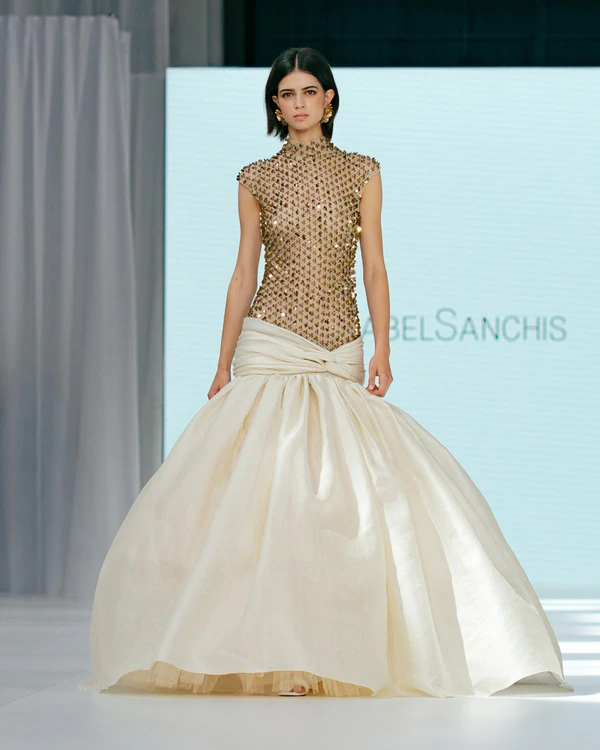
The mermaid silhouette is reappearing, but not as you remember it from the early 2000s. The proportions feel different now, less rigid, more fluid, sometimes even fuller through the skirt, shifting the shape into something that feels softer and more considered. What stood out is how designers are breaking up the silhouette. In some cases, it’s styled in layers, a cropped bolero or structured top sitting above a fuller skirt, letting the “tail” moment stand on its own rather than blending into the rest of the dress. In others, the contrast happens within the piece itself, a cleaner bodice giving way to a more textured or voluminous lower half, almost like the shape resets partway through. At J. Andreatta, the silhouette leaned fully into old-school glamour, fitted clean through the body before dramatically flaring at the very bottom, giving that unmistakable ‘90s supermodel energy. Isabel Sanchis tapped into a similar sense of glamour too, using luminous fabrics and sculptural texture to create mermaid silhouettes that felt reminiscent of old Hollywood, just viewed through a much more modern lens. Then the mood shifted. Yolancris played with layered textures and contrasting materials to break up the silhouette entirely. What made the trend feel fresh again is that it never felt overly done-up. The mermaid dress has officially moved beyond its Pinterest-era reputation.
Birds of a Feather
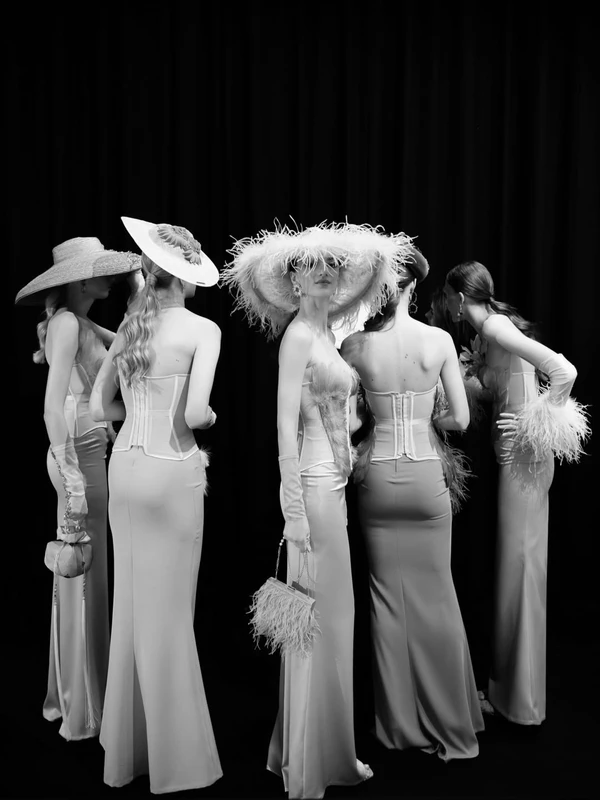
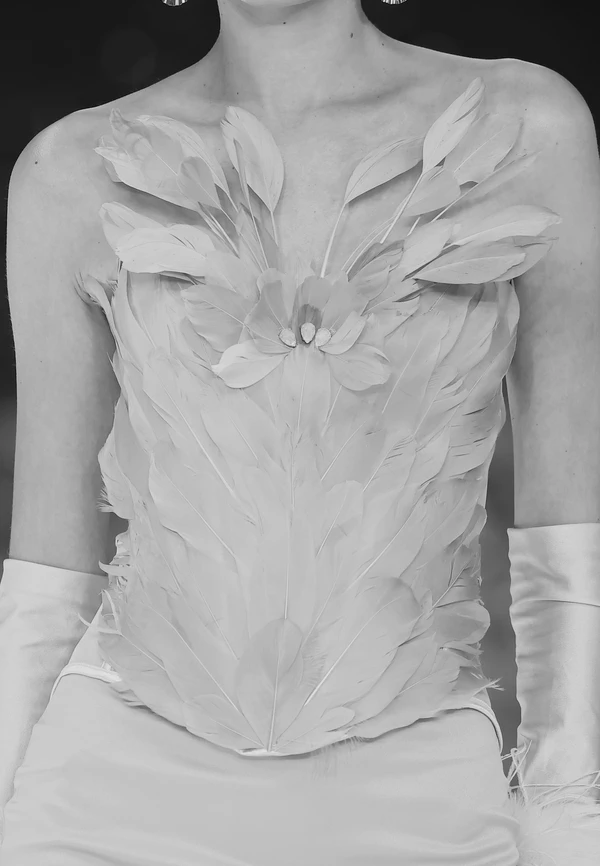
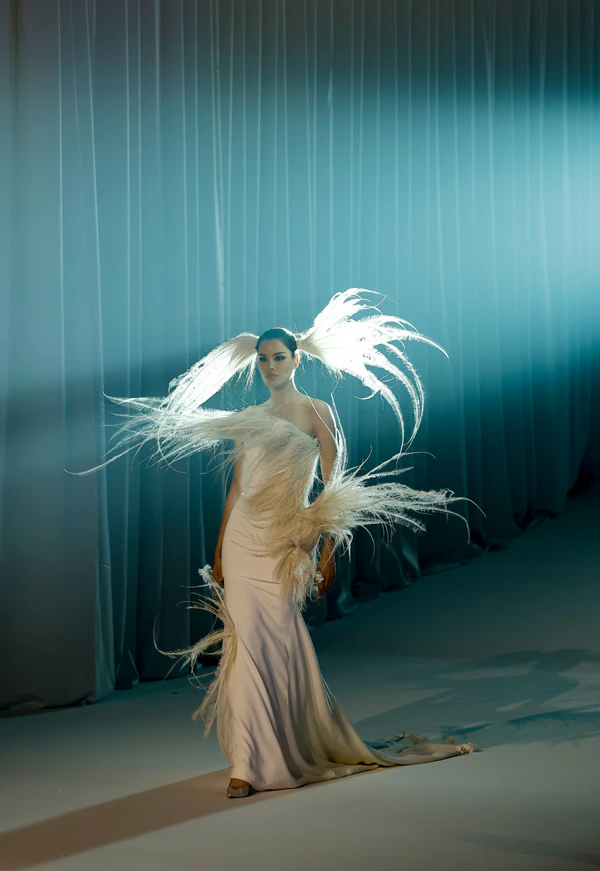
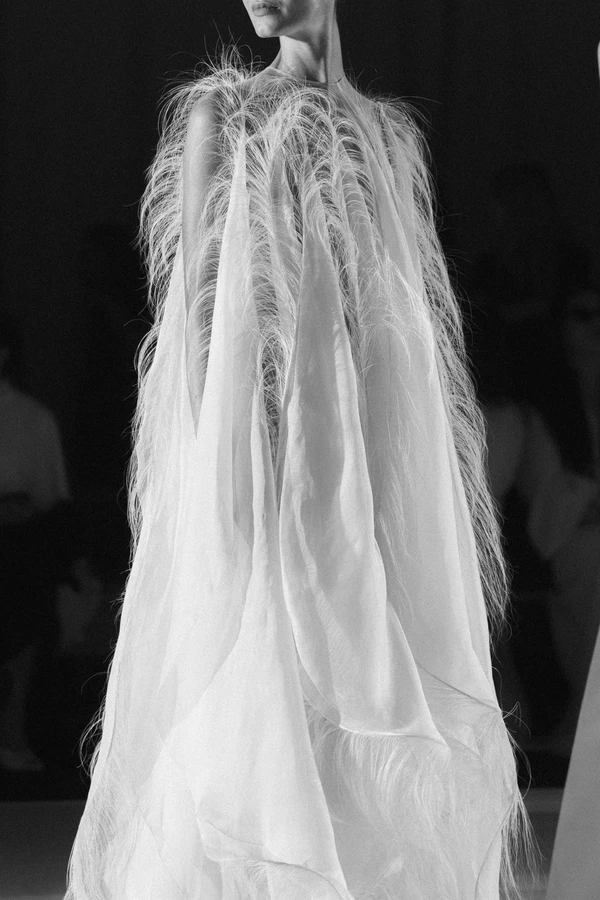
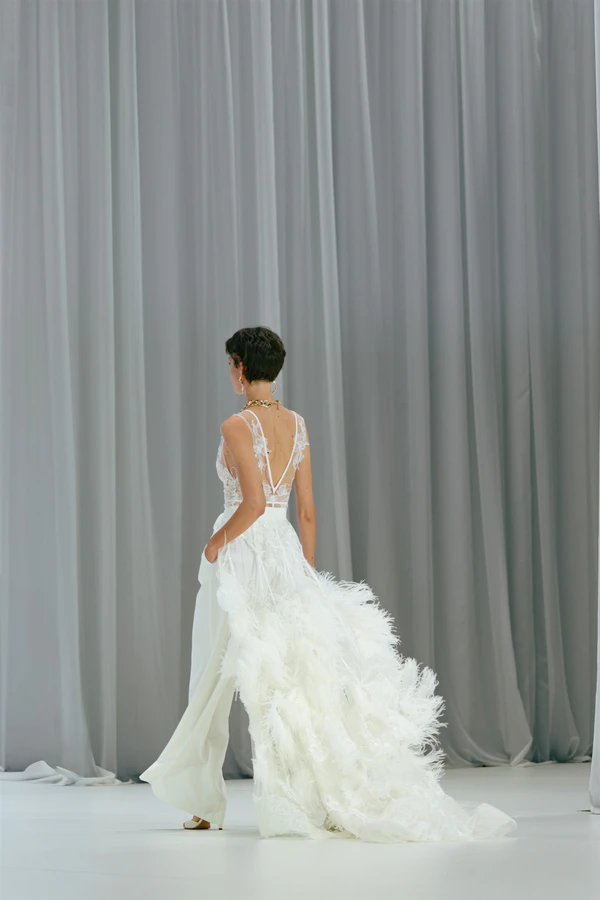
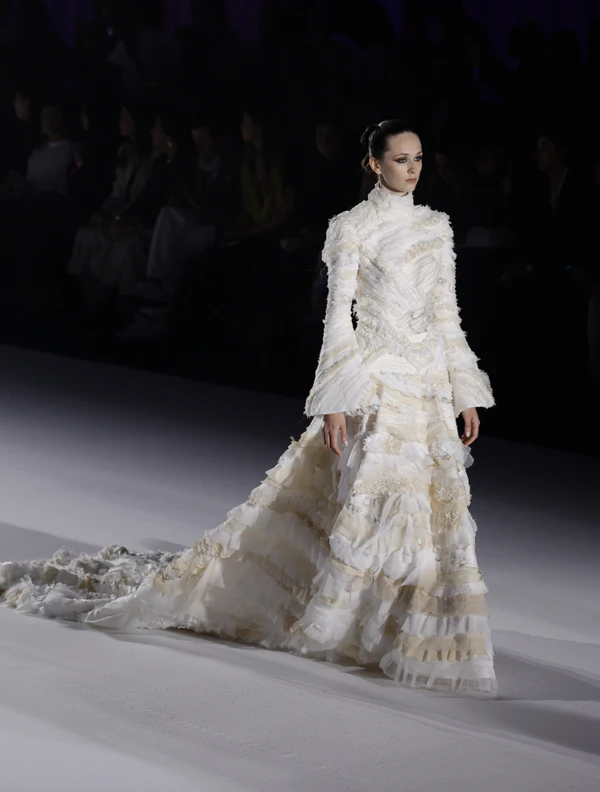
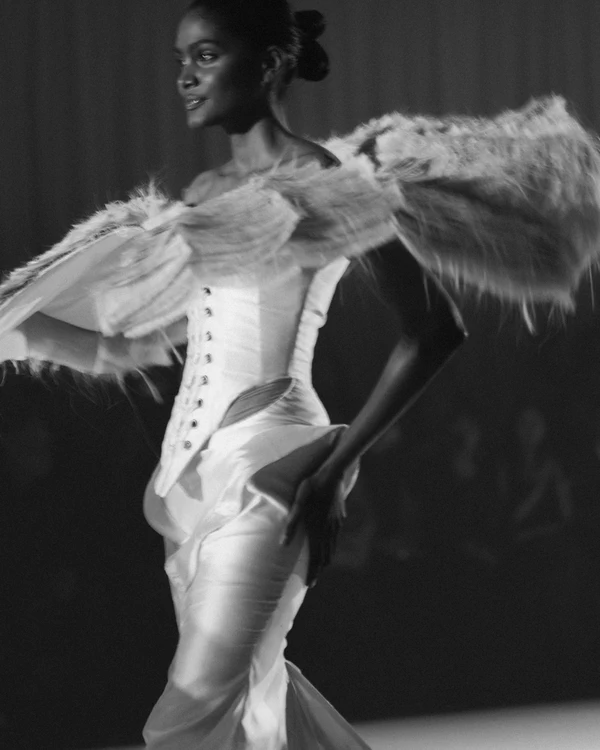
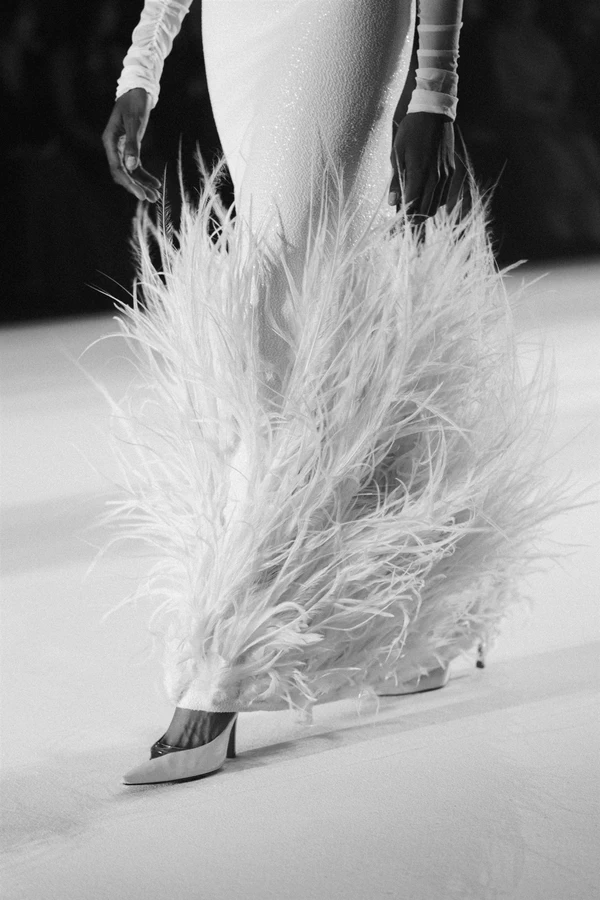
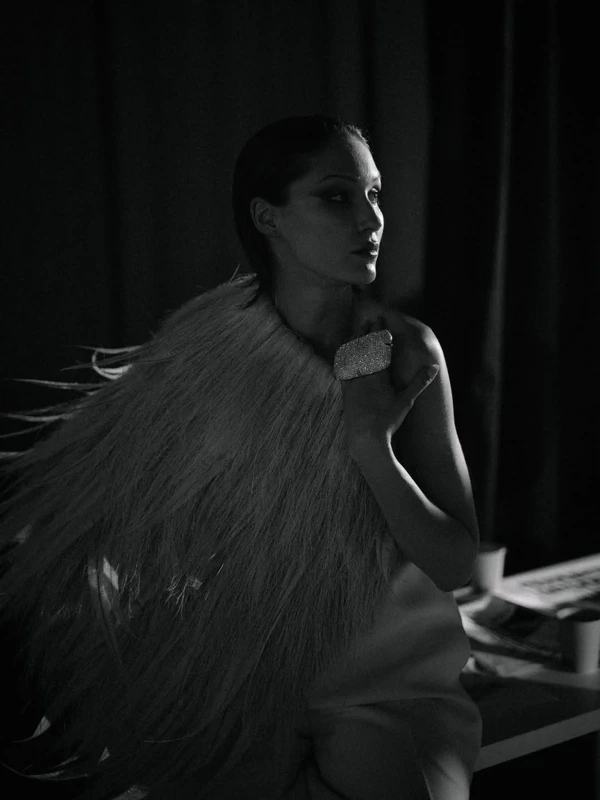
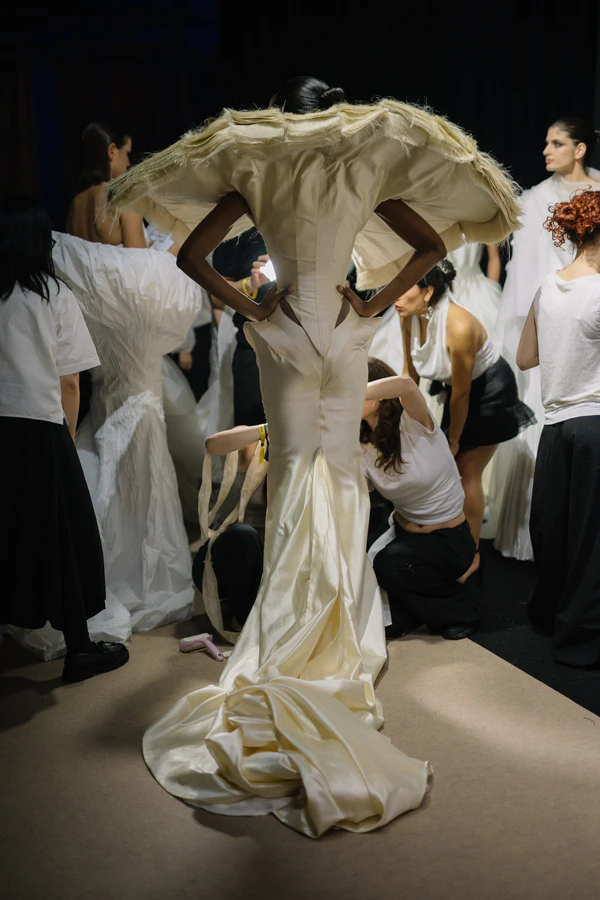
We're calling it, 2026 is the year of the swan. Feathers showed up all over Barcelona Bridal Fashion Week, though the mood felt far more refined than theatrical. Designers weren’t turning brides into literal swans, they were pulling from the feeling of one instead: softness, movement, drama, elegance. Some collections leaned fully into the fantasy. By Loleiro sent feather-covered corsetry down the runway that completely stole the spotlight, the kind of look that reminds you feather fashion at its finest is still very much alive. Then the mood softened. At Yolancris, wispy textures floated off gowns so delicately they almost looked airbrushed onto the silhouette. And naturally, Stéphane Rolland took things somewhere more couture. Feathers traced dramatic hemlines, sculpted around the body, and transformed into bold shapes with real presence. That contrast is what made the trend work so well. Some versions felt light and romantic, others fully embraced the fantasy. Either way, bridal was clearly ready for a little drama again, and so are we!
Stud Work
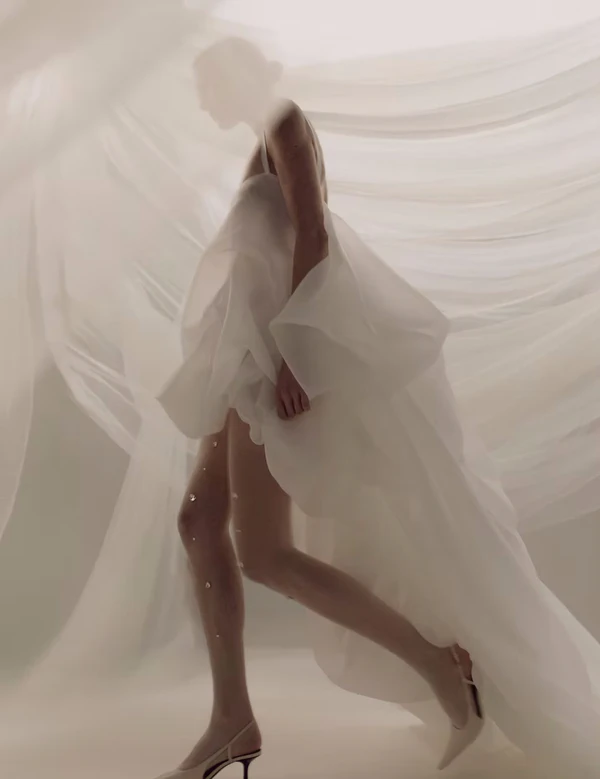
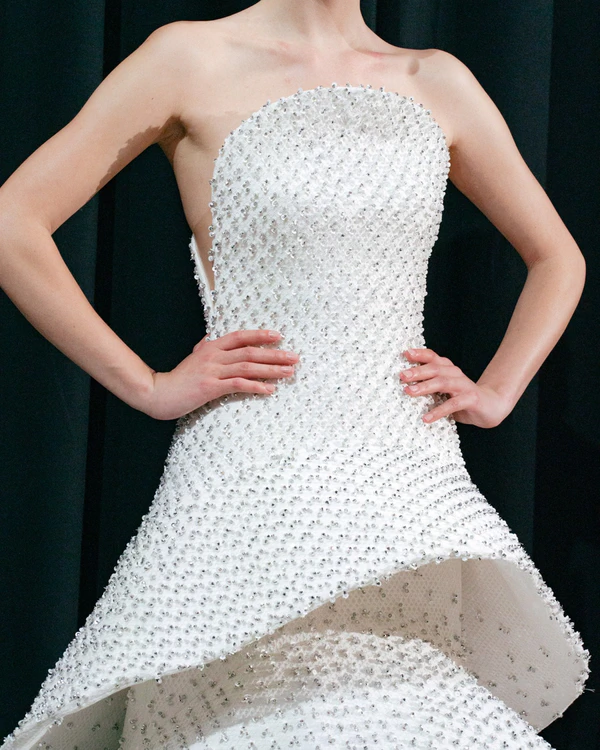
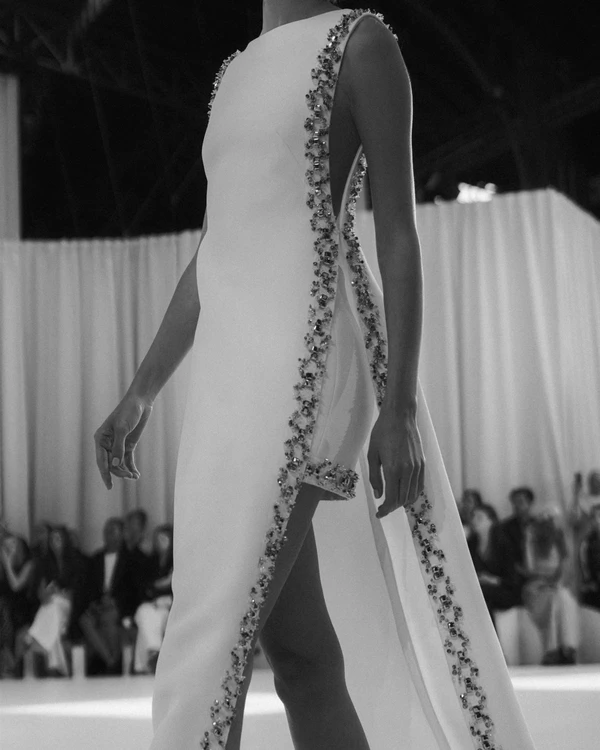
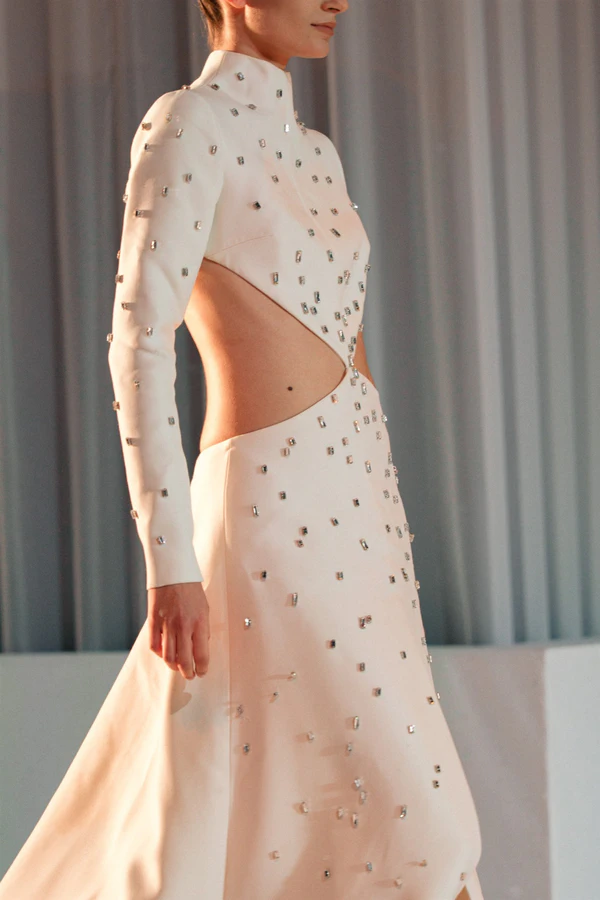
Sparkle, but make it precise. Think tiny, jewel-like studs placed with intent, scattered across gowns in a way that feels almost accidental, until you realize it’s anything but. It shifts depending on how you look at it. Up close, it’s subtle. Step back, and suddenly it’s doing a lot more. With Stéphane Rolland and Isabel Sanchis, embellishment is dialed back and spaced out with real precision, tracing cutouts, skimming along bodices, or landing almost sporadically across the fabric. Nothing feels crowded. Nothing feels excessive. And that’s really the shift. This kind of detailing moves away from the heavily beaded, all-over finishes we’ve seen before. It asks you to look a little closer, and once you do, it’s hard to look away.
Coastal Craft
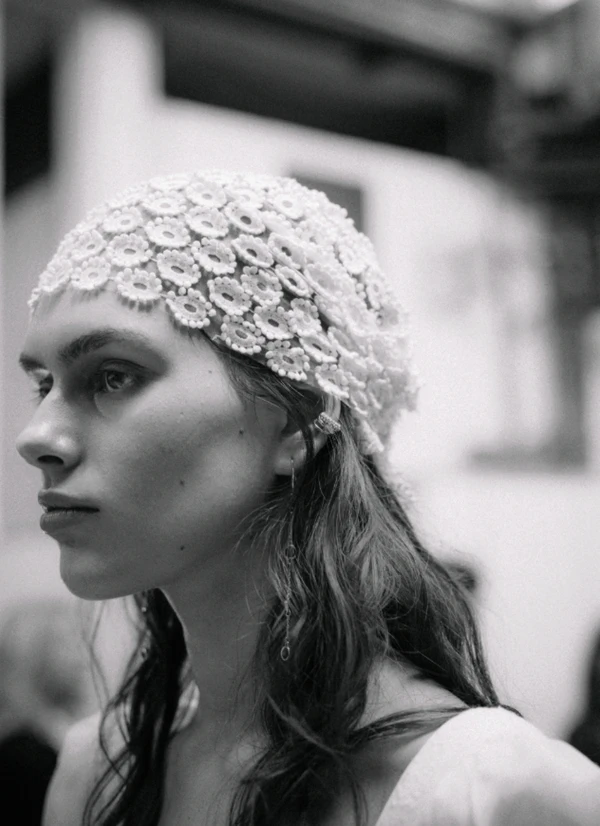
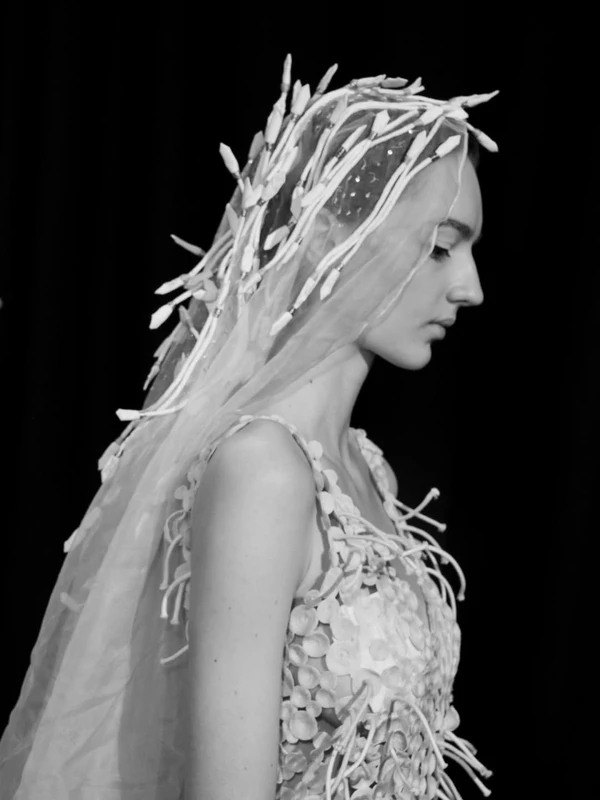
Somewhere between a beach club on the Costa del Sol and a perfectly undone Mediterranean summer sat one of the season’s most interesting bridal moods. Crochet textures, woven details, net-like finishes, suddenly everything felt a little more tactile, a little less pristine. Bridal loosened up a bit, and honestly, it suited it. At Immaclé, that mood came through in long-sleeve gowns built entirely from woven textures, intricate but still incredibly light. And the coastal styling didn’t stop at the dresses. Headscarves and crochet-inspired headpieces were everywhere this season, though Andrea Lalanza pushed the idea further, pairing softer accessories and coastal textures with clean, minimal silhouettes that kept the whole look feeling modern rather than overly bohemian. Then Yolancris shifted the mood again, layering chunkier lace, fringe, and woven detailing into gowns that felt richer, more textured, and almost sun-faded in the way they moved down the runway. As destination weddings continue to rise, so does this mood of bridal dressing, relaxed, textured, and somehow even chicer because it doesn’t feel overdone.
Untied
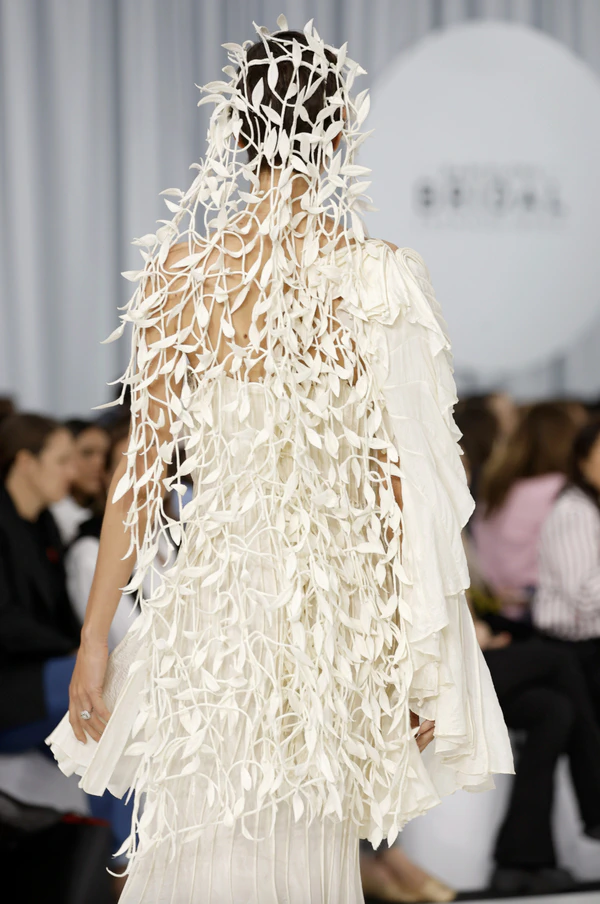
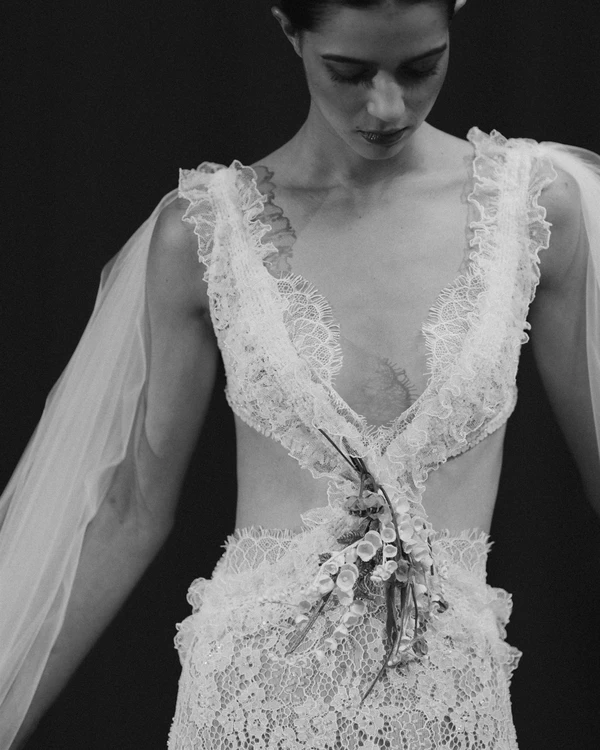
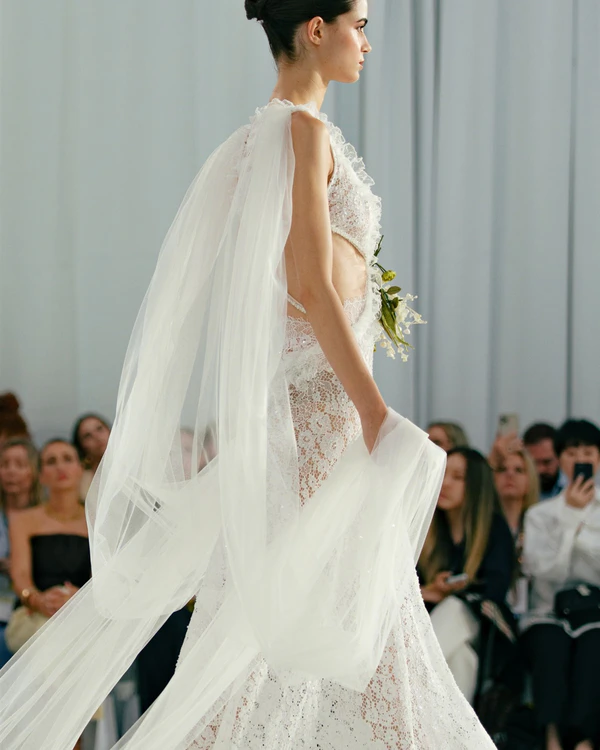
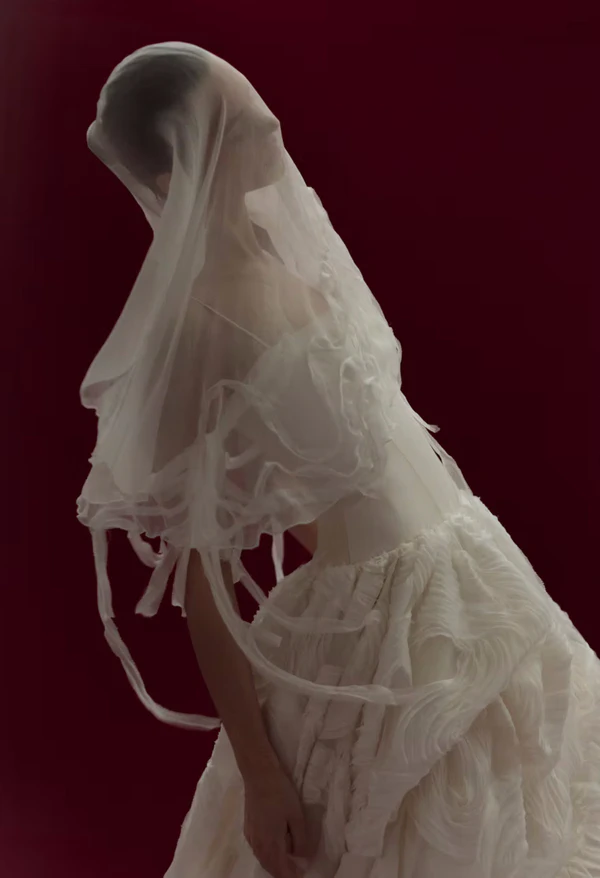
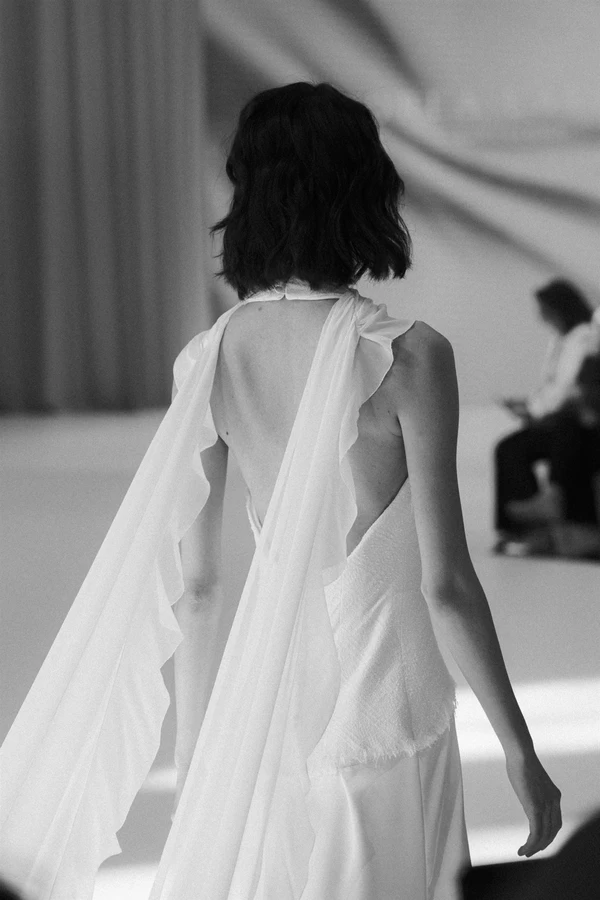
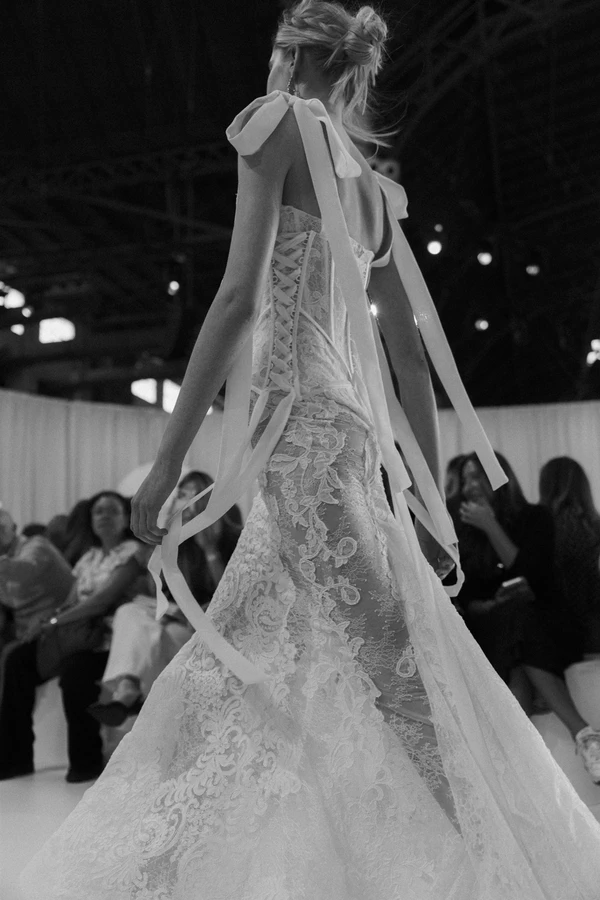
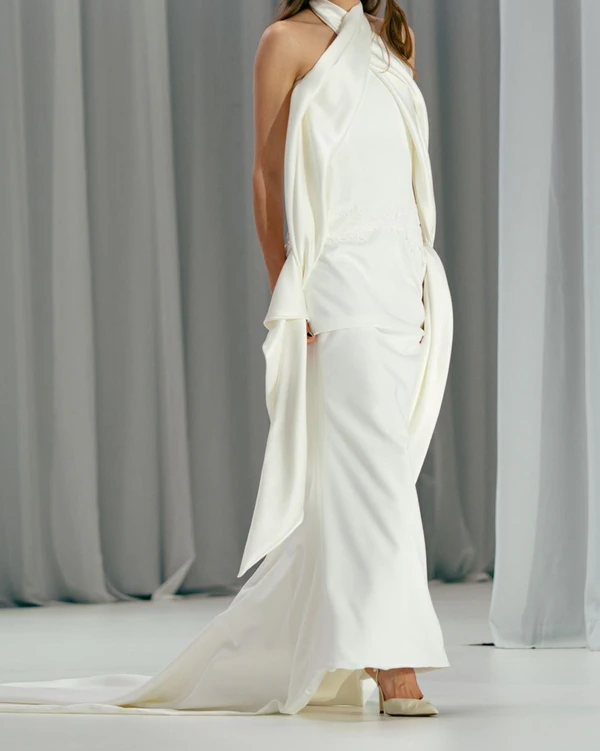
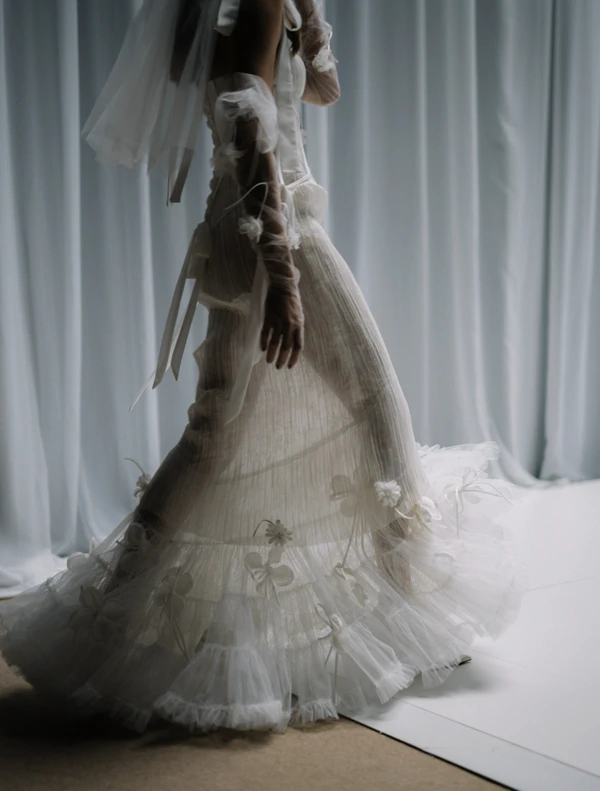
Some of the most interesting looks felt a little undone. Across the Barcelona Bridal Fashion Week runways, fabric that feels slightly untied, not fixed and just left to fall, showed up in ways that felt effortless but intentional. It’s easy to see this trend gaining momentum with 2027 brides, it captures a kind of romantic ease that feels right now. Long, wispy ends trail from the neckline, panels twist and loop around the body, and pieces of fabric drape in a way that feels almost incidental, until you realize how deliberate it actually is. At Ouma, delicate ribbon-like details floated around the body so lightly they barely seemed attached at all. Andrea Lalanza approached it through elongated scarves and trailing fabric that fell from the neckline like an undone veil, giving minimalist silhouettes something far more atmospheric. And then there was Yolancris, who used the idea almost as a styling trick, softening structured corsetry with loose lace-driven layers and accessories that brought movement back into the silhouette. It all felt a bit more relaxed, a bit more romantic, and honestly very aligned with where bridal seems to be heading right now.
Petal Placement
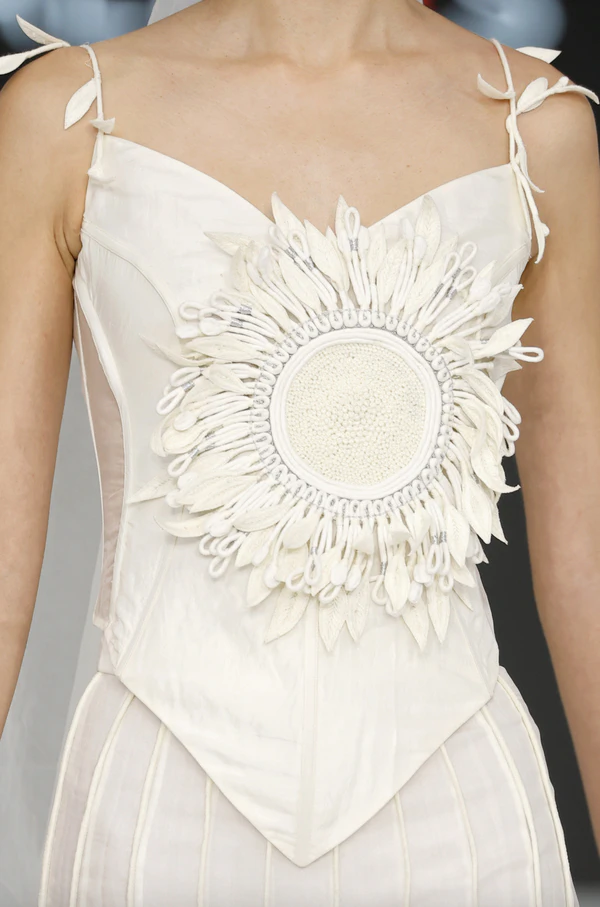
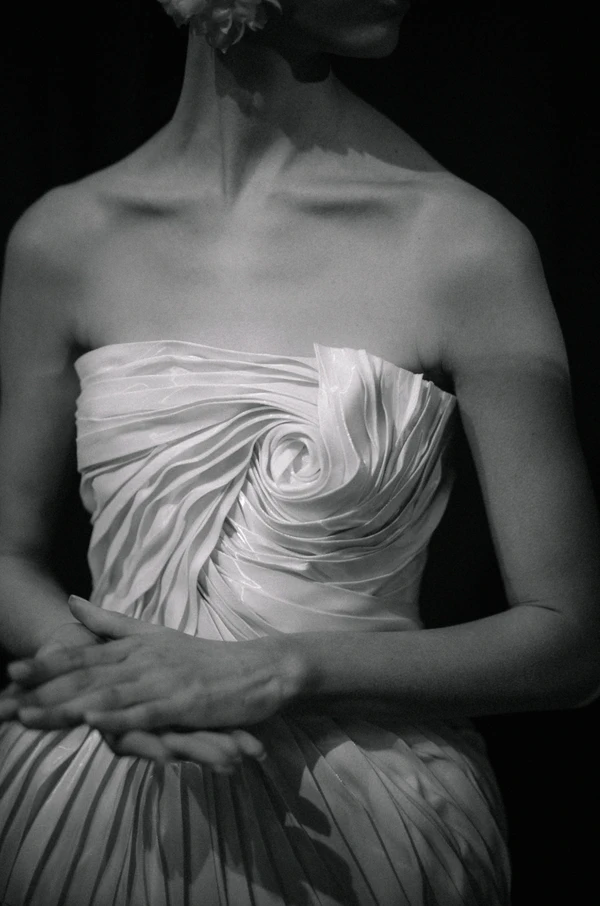
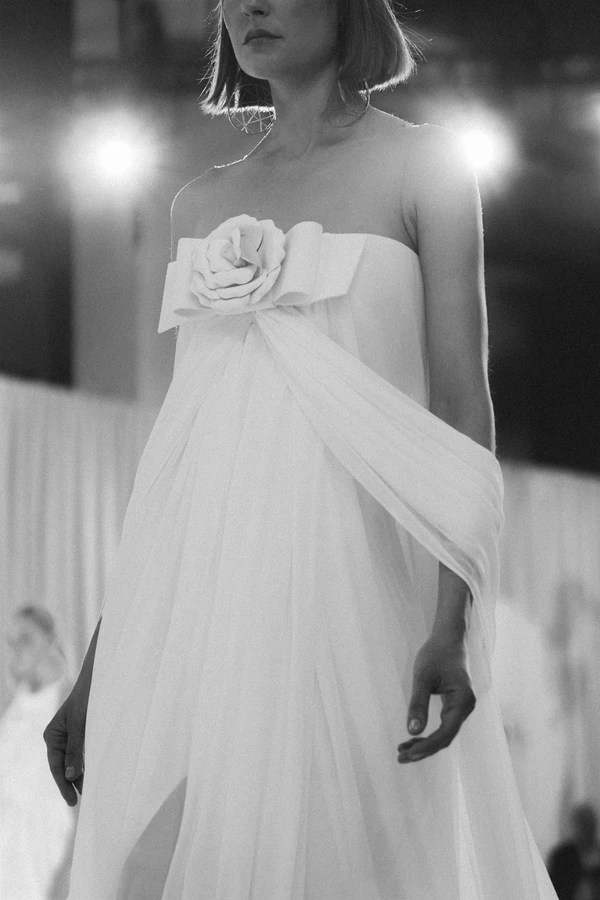
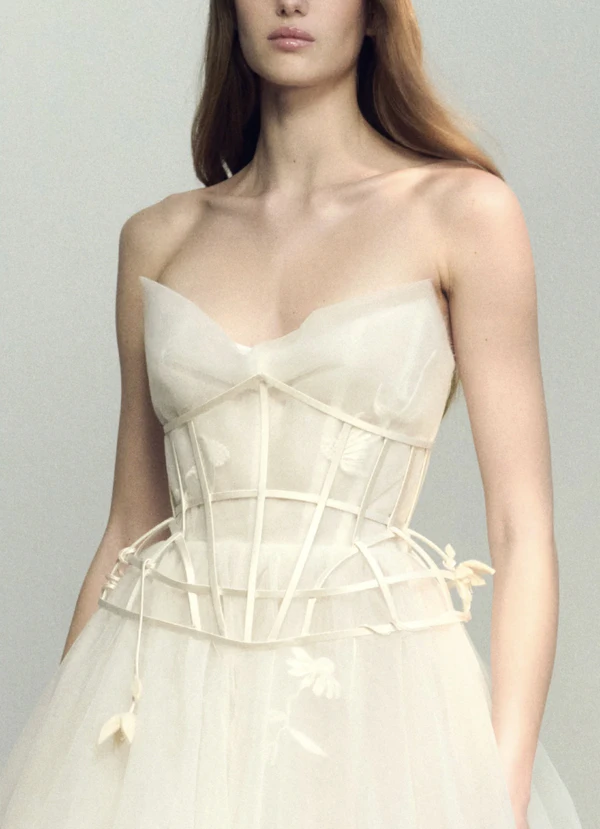
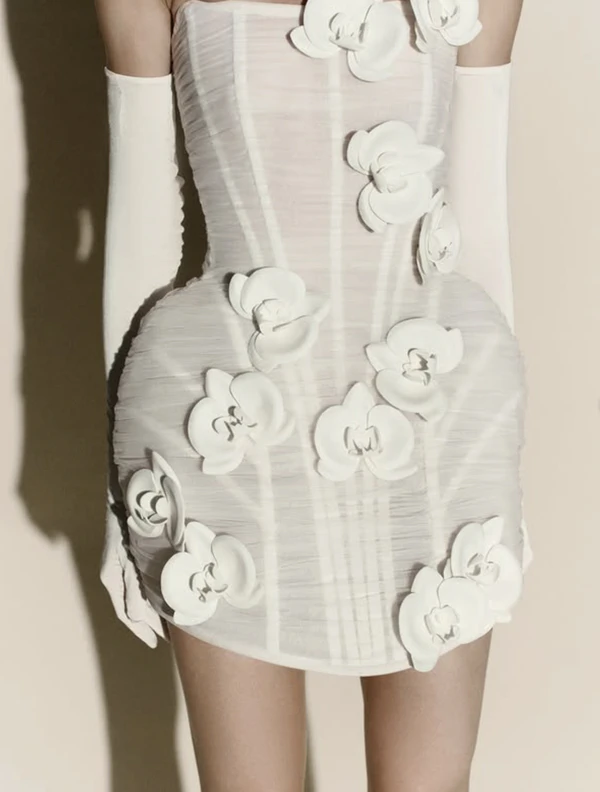
It starts with a flower, but not in the way you’d expect. Placed front and center, built into the neckline, sculpted across the bodice, or clustered with intention, these aren’t background details, they are the look. There’s a shift in how florals are being handled. Less scattered, more precise. Instead of soft prints or delicate embroidery, we’re seeing petals take on structure, almost architectural at times, giving the dress a focal point that feels deliberate rather than decorative. At moments, it leans romantic, soft layers, dimensional blooms, pieces that feel almost lifted from the fabric itself. At Halfpenny London and Yolancris, florals were woven subtly throughout the collections, worked into the design in a way that felt more like a finishing touch than a focal point. Elsewhere, we saw the motif turn more graphic, cleaner placements, sharper forms, where the flower reads less as embellishment and more as design. Florals didn’t just show up this year, they stepped forward.
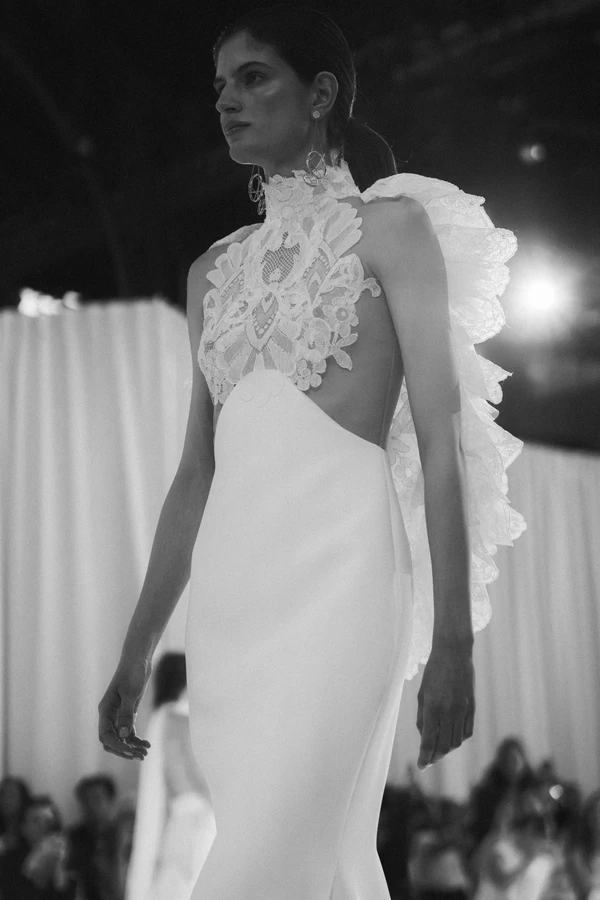
A Nod to Vintage
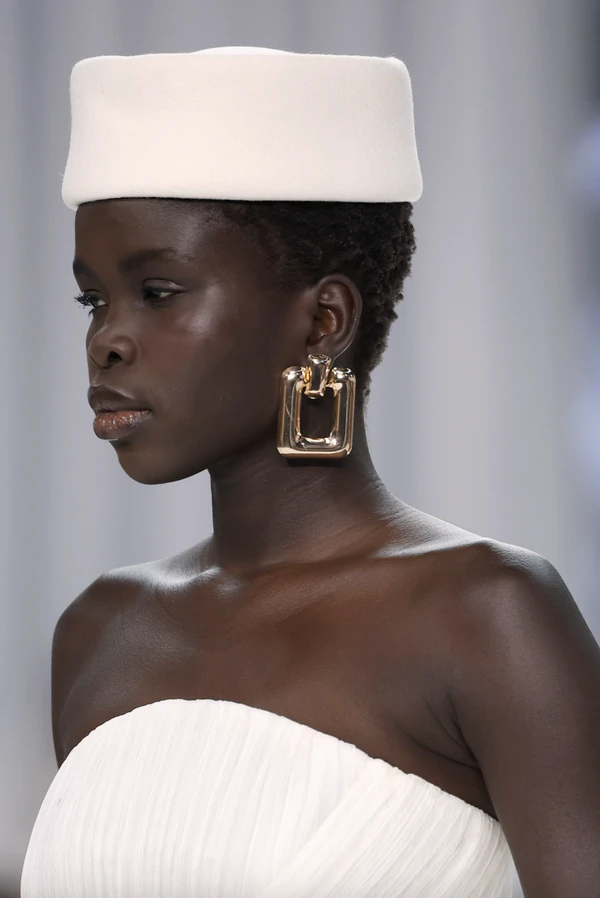
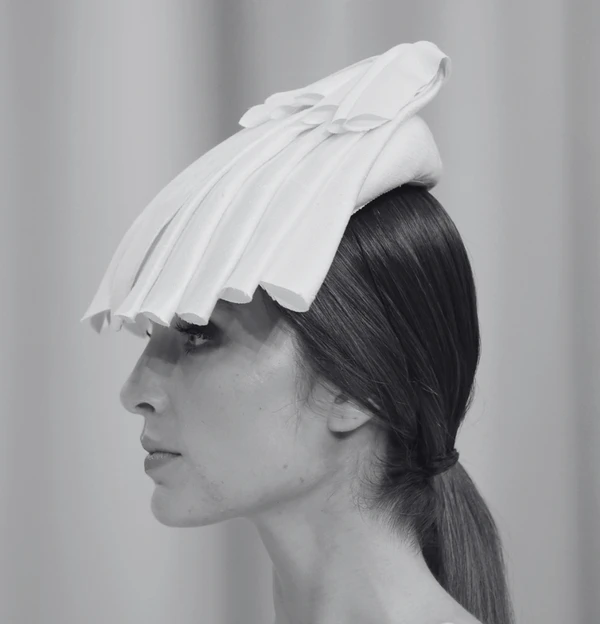
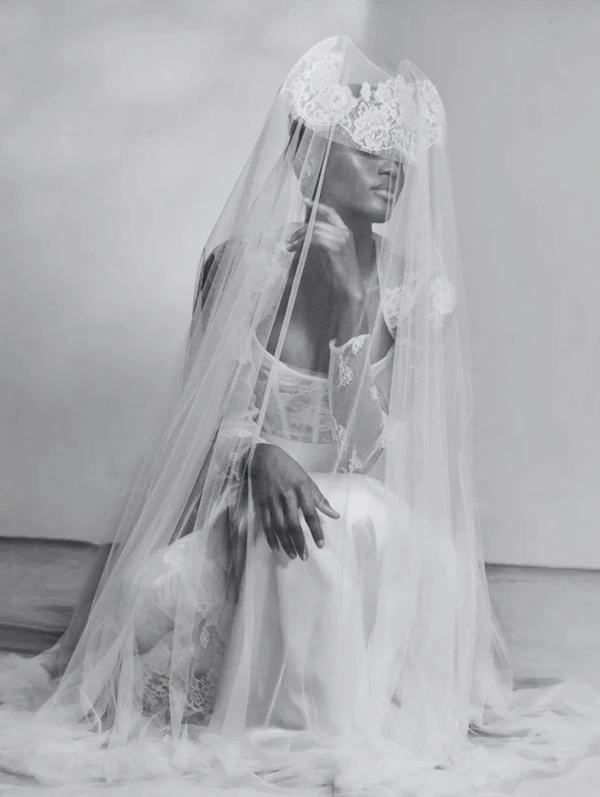
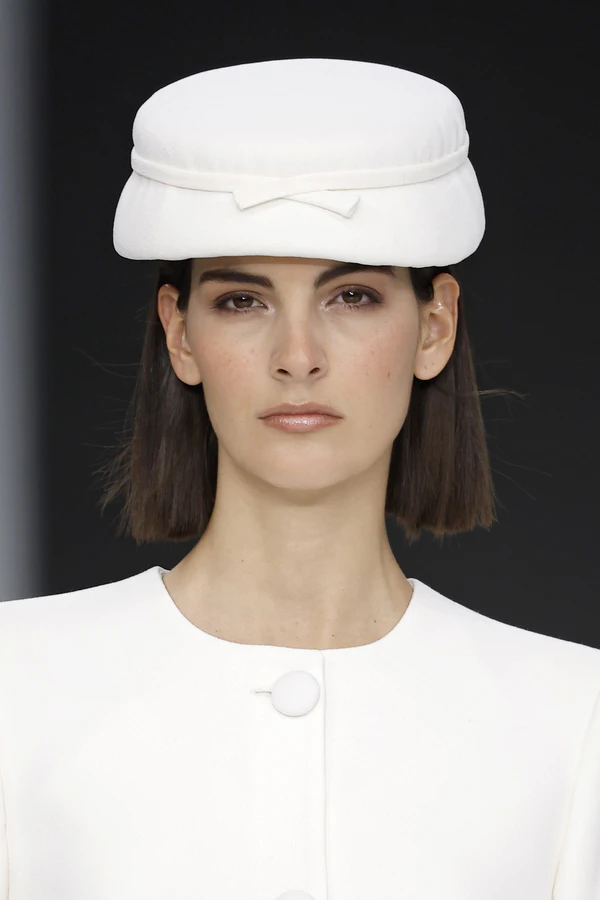
Hats have been making their way into bridal recently, and this season they leaned vintage, adding personality and just the right amount of playfulness. Not quite costume, not quite traditional either, they sat somewhere in between, which is exactly what made them work. Pillbox styles in particular stood out, especially when paired with ankle-length silhouettes and softer, more vintage-leaning shapes. We saw that come through at Yolancris, where the overall look felt quietly refined, almost understated. Elsewhere, the mood shifted. Raquel López shared something more distinct, with sculptural headpieces, pleated detailing, and cap-like forms that carried a clear nod to a more mod, 60s-inspired direction. And honestly, some of the strongest styling moments came from the more intricate pieces. Halfpenny London sent out dramatic lace headwear that felt unmistakably vintage, the kind of accessory that completely changes the energy of a look the second it’s added. It shifts the focus upward, and the entire look reads differently because of it.
Avant-Garde Essence
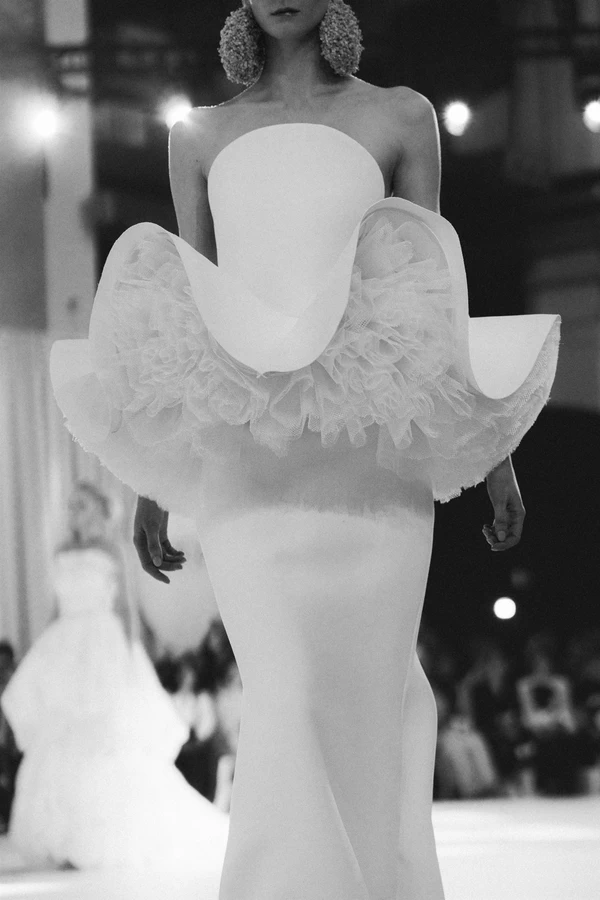
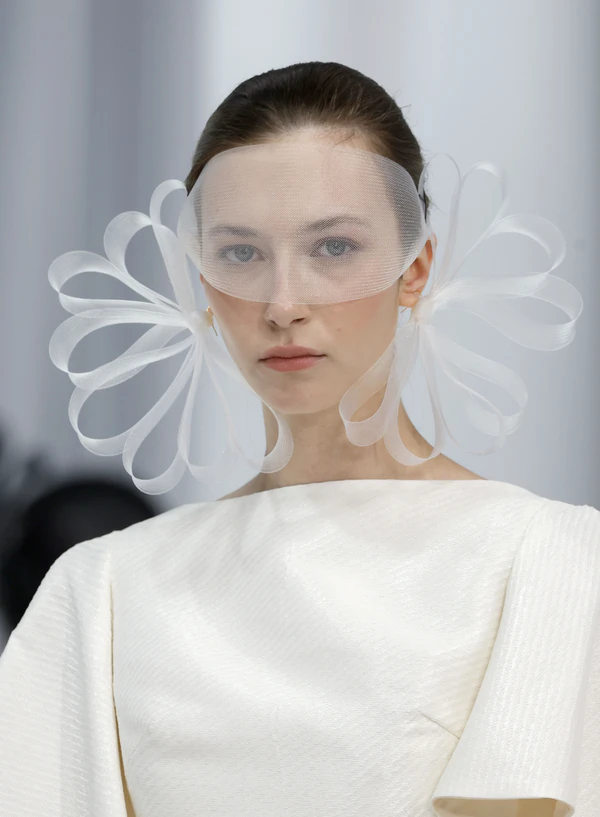
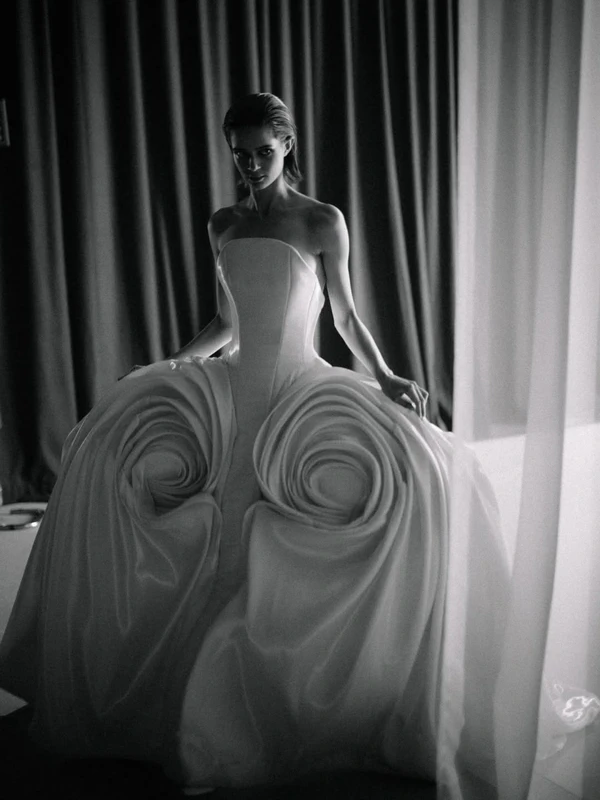
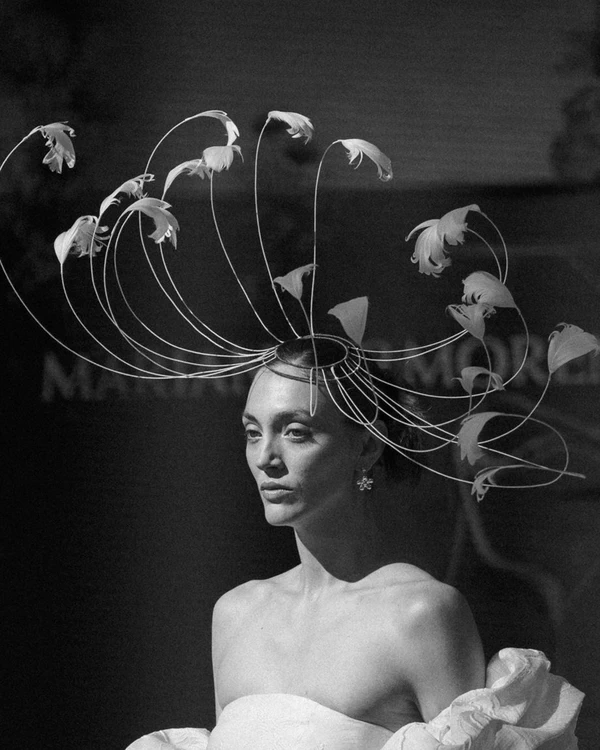
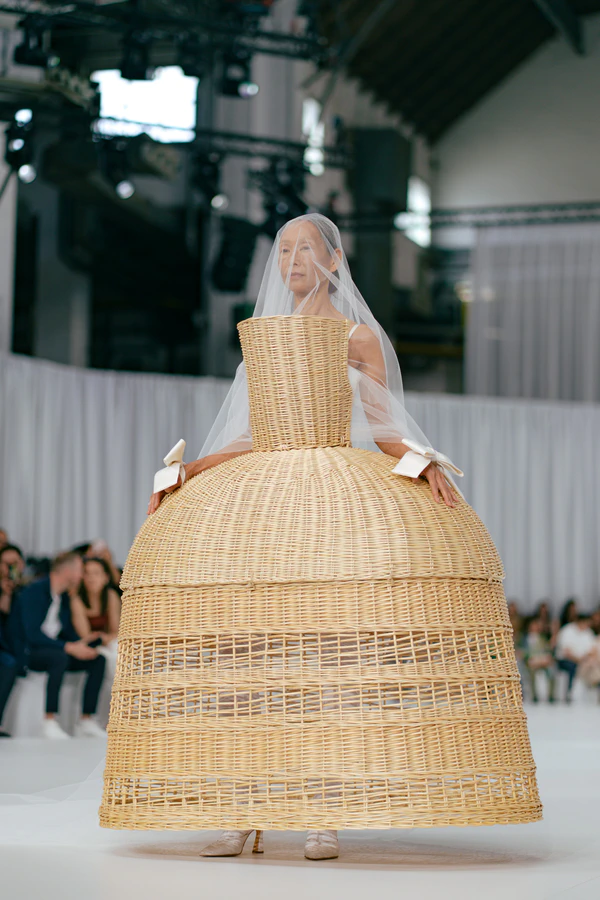
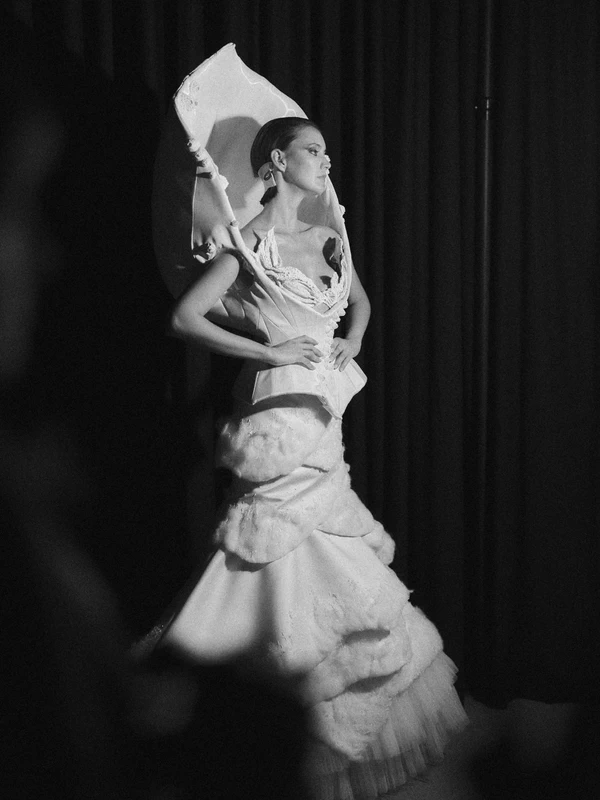
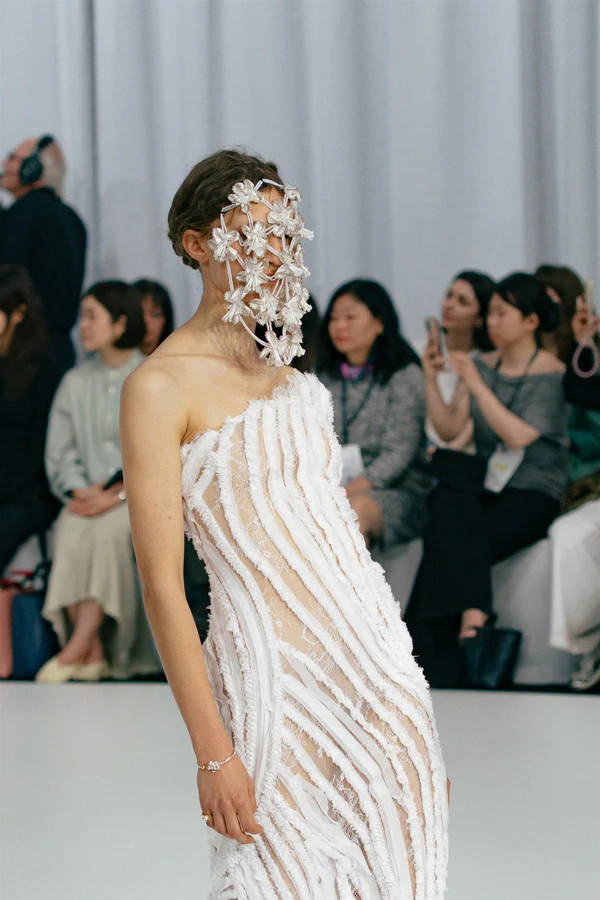
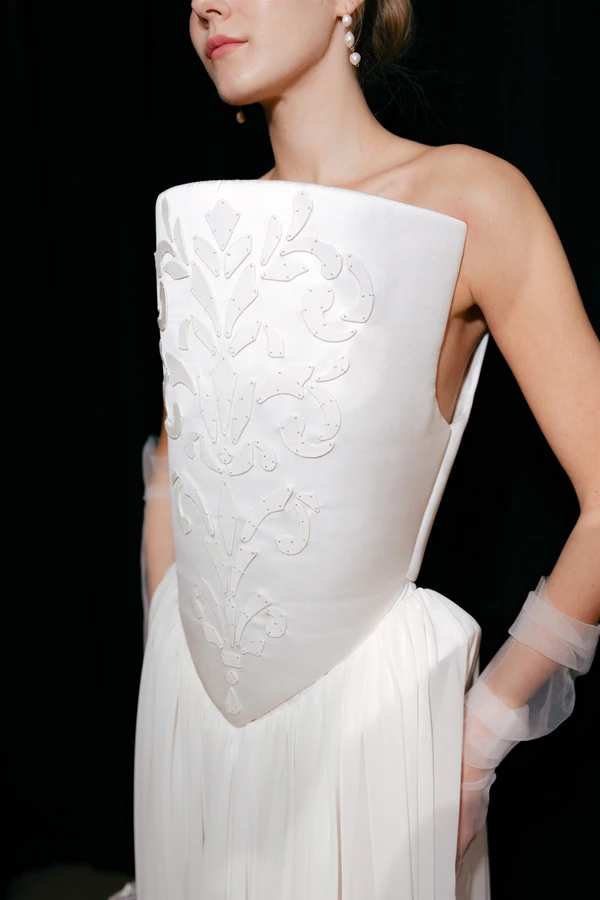
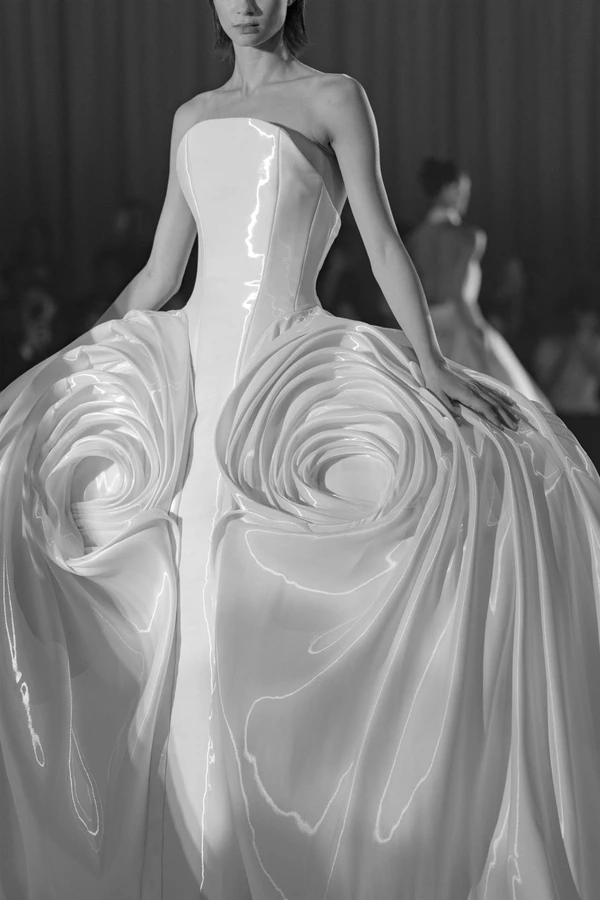
Not every look was designed to play it safe, and that’s exactly what made this season so exciting. Across the Barcelona Bridal Fashion Week runways, bridal pushed further into fashion territory, with sculptural shapes, exaggerated proportions, and statement headpieces that felt closer to couture than traditional bridal. At times, the collections almost felt Schiaparelli-coded in the way they embraced fashion fantasy over tradition. At Candelas y Felipa, a woven basket-like dress instantly became a focal point on the runway, the kind of piece that completely shifts the energy in the room. Other looks throughout the collection played with materials that moved in unexpected ways once on the body, leaning into something far more expressive than traditional bridal usually allows. That same willingness to push things further showed up elsewhere too. Mariano Moreno approached headpieces with a more otherworldly perspective, bringing in shapes that felt distinctly high fashion, while Stéphane Rolland explored avant-garde dressing through exaggerated cuts and sculptural proportions. Even the student designers featured within Rolland’s presentation leaned fully into the mood. Featured LCI Student designer Mugmag Studio sent out a sharply fitted corseted bodice that opened into an exaggerated ballroom-style skirt framed with curled rosette detailing, dramatic, theatrical, and impossible to ignore once it hit the runway.
Fluid Form
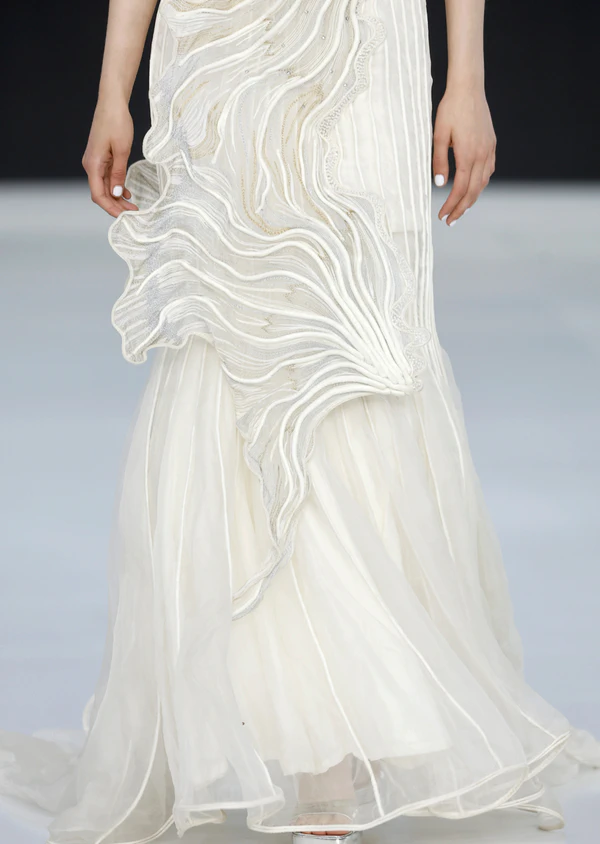
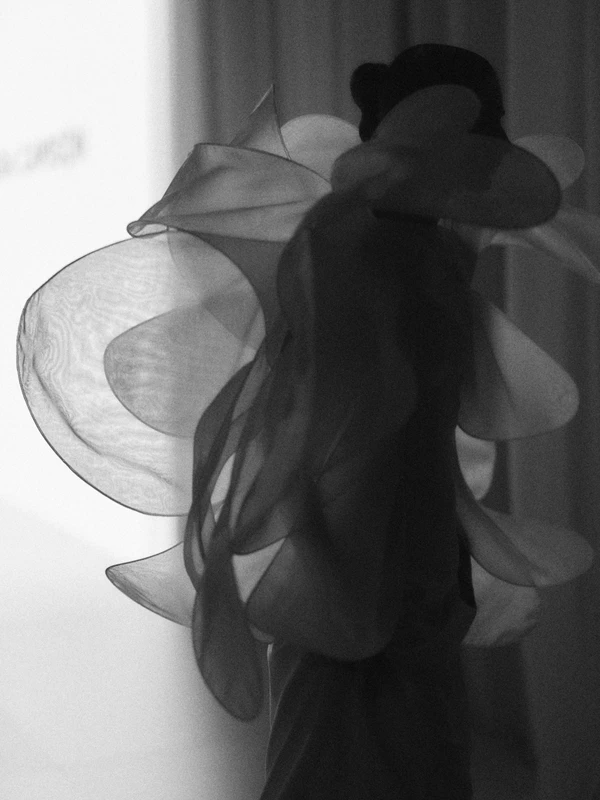
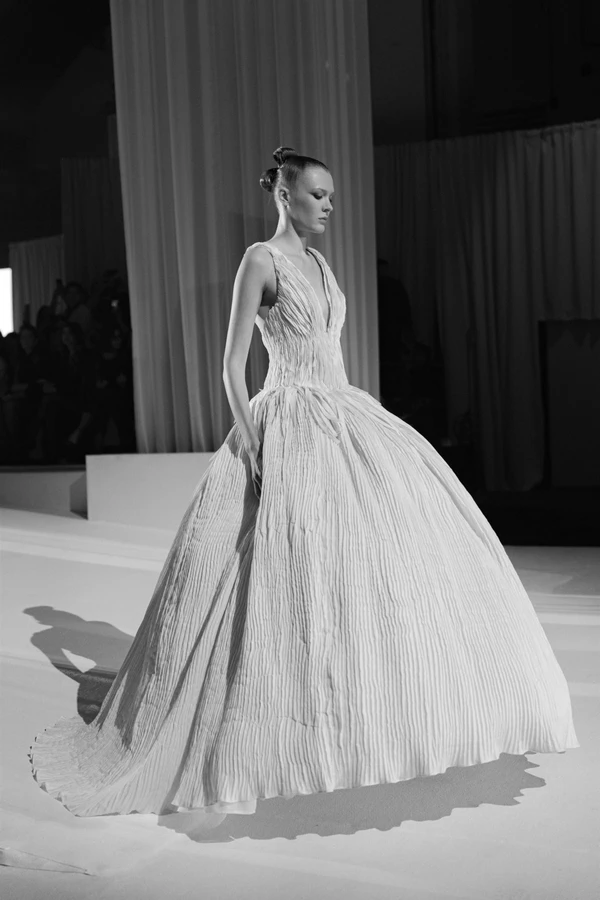
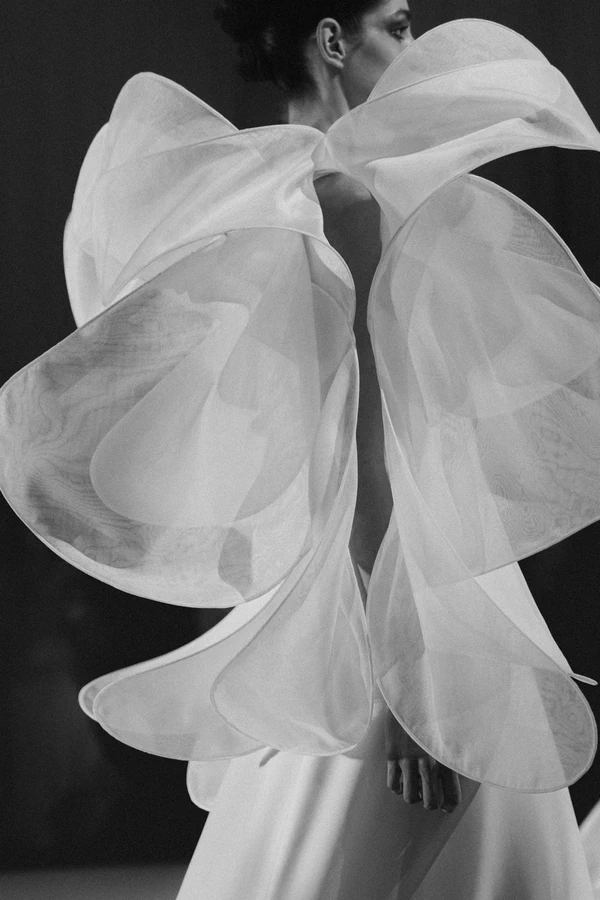
Not every statement this season came from embellishment. In some cases, it was the line itself doing the work. Curved seams, sculpted panels, and petal-like forms moved across the body in a way that felt almost instinctive, less structured, more fluid. There’s a lightness to it. Fabric lifts, folds, and extends outward, holding shape without feeling heavy. Edges curve instead of cut, creating silhouettes that feel softer, more continuous, almost like they’re in motion even when still. That feeling really came through at Ouma, where the collection practically moved on its own, you could feel the fluidity just by looking at it. A similar idea played out in Stéphane Rolland’s student-led show, with layers of sheer organza creating volume that felt weightless, adding movement without ever weighing the silhouette down. At times it reads sculptural, yet defined. At others, more subtle, a shift in line, a softened edge, a shape that doesn’t follow the body so much as move alongside it.