A wedding dress can say so much before a word is even spoken, which is exactly why American bridal design has never had more range or more confidence. From New York City's Garment District to the California coast, the country is brimming with talent. Some have been dressing brides for decades; others are just a few seasons into proving they belong in the same conversation. What ties them together isn't a shared silhouette or price point, but creating iconic, instantly recognizable looks for every kind of bride. From the modern minimalist to the bold romantic, these are the American designers shaping bridal fashion right now, and why each one deserves a spot on your mood board.


Danielle Frankel
Founded in New York in 2017 by designer Danielle Frankel Hirsch, Danielle Frankel treats bridalwear as a space for experimentation rather than a fixed visual code. Her designs are built around contrast: architectural tailoring softened by dramatic draping, precise corsetry disrupted by collapsed volume, and familiar bridal fabrics manipulated into something entirely unexpected. Hand-cut lace appliqué, baroque pearl embroidery, dried floral embellishments, and woven silk-and-metal textiles bring depth and intricacy to each design. Drapes twist, hems bubble, and floral details appear beautifully wilted, giving even the most technically complex pieces a sense of movement and vulnerability. Framed through painterly, slightly surreal imagery, the Danielle Frankel's work speaks to brides who want romance with intelligence, ceremony with edge, and a gown that feels like a piece of art.


Cinq
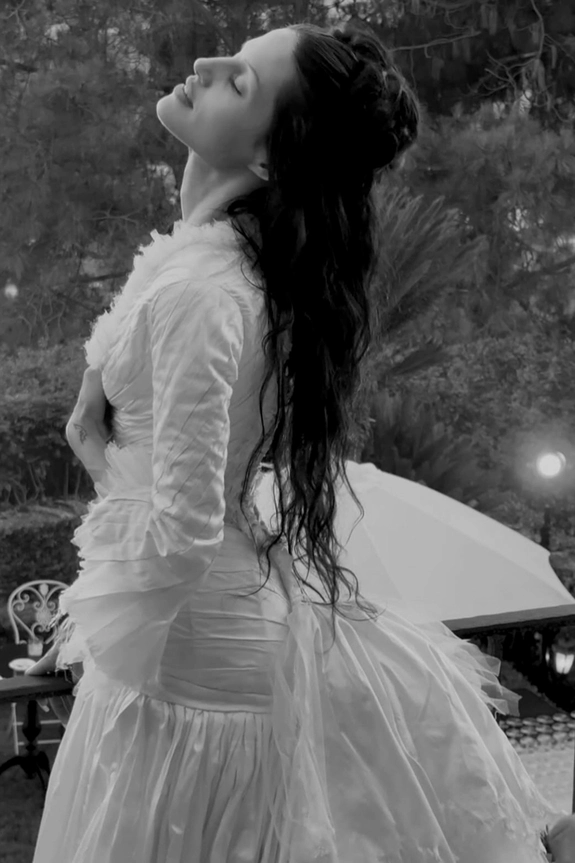
Designed in Los Angeles, Cinq is made for brides who find romance in things that feel slightly lived-in, beautifully imperfect, and touched by another era. Their aesthetic is rooted in nostalgia, pairing vintage-inspired silhouettes with modern construction and an unmistakable instinct for mood. Corseted bodices, softly gathered skirts, lace-trimmed trains, and sheer, weightless layers recall heirloom gowns, while clean lines and restrained detailing keep the look firmly in the present. It is easy to see why so many influencers and celebrities have fallen for this designer, including Lana Del Rey who wore a custom Cinq design for her own wedding.


Tanner Fletcher
In Tanner Fletcher’s world, a wedding wardrobe does not need to fit into a tidy box. Founded in Brooklyn by Tanner Richie and Fletcher Kasell, the brand places beautifully tailored suits, flowing gowns, delicate ruffles, and fanciful bows under the same romantic roof. The label’s designs are genderless, vintage-minded, and guided by the sentiment each piecce evokes. Each piece is created to hold meaning beyond the wedding itself, becoming something to rewear, reinterpret, and keep close. Across its bridal collections, Tanner Fletcher continues to expand who wedding fashion is for, giving every kind of bride, groom, and celebrant the freedom to dress as themselves.


Amsale
Amsale has spent decades proving that simplicity can carry just as much drama as embellishment. The New York house took shape after Ethiopian-born designer Amsale Aberra created her own pared-back wedding dress in 1985, and it continues to filter classic bridal forms through a crisp, modern point of view. Draped bodices and floral jacquards meet expansive ball-gown skirts, sleek columns, and elongated mermaid silhouettes, creating a collection broad in possibility yet remarkably consistent in its elegance. Hand-finished in the brand’s New York atelier using couture techniques, each gown reflects Amsale’s belief that restraint, proportion, and impeccable craft can make the strongest statement.


Noa Fineout
Designer Noa Fineout’s relationship with dressmaking started with an object that still sits in her studio today: her late grandmother’s antique Singer sewing machine. What started with self-taught lessons eventually led to industry workshops, university studios, and hands-on experience inside couture ateliers, where she refined her command of draping, corsetry, and construction under designers including Olivier Theyskens. Since launching her namesake label in 2022, Noa Fineout has created bespoke gowns for brides and private clients across Los Angeles, New York, Chicago, Paris, and beyond. Her process is highly collaborative, treating each commission less as a variation on a house silhouette and more as an exercise in translating the wearer’s personality into fabric, structure, and proportion.


Alexandra Grecco
Alexandra Grecco’s bridal story began before she formally entered bridal at all. After studying at the Fashion Institute of Technology, the New York designer launched a ready-to-wear label whose soft palettes, fluid fabrics, and quietly celebratory mood naturally evolved toward wedding dressing. Since 2014, her namesake bridal line has remained closely tied to that instinctive sense of ease. Each gown is made to order by skilled artisans in New York’s Garment District, one piece at a time, keeping production intimate while limiting excess and surplus. That slower rhythm shapes the aesthetic as much as the process: romantic silhouettes, fluid movement, and thoughtful details.


House of Gilles
House of Gilles is built on fashion history, but never feels beholden to it. Led by Gilles Mendel and Chloé Mendel Corgan, the New York house represents the fifth and sixth generations of a family immersed in the craft of making clothes. Couture tradition provides the foundation, while the approach remains deeply personal: every bridal gown is developed through direct collaboration with the designers, from the first sketch through the final fitting. That one-on-one process allows each piece to take shape around the wearer. Crafted in the heart of New York City, House of Gilles treats bridalwear as both couture and conversation, where technique, imagination, and individuality are given equal weight.


Mirror Palais
Queens-born designer Marcelo Gaia launched Mirror Palais in 2019 as a love letter to the women, memories, and fantasies that have shaped his visual world. Nearly a decade spent working as a stylist sharpened his eye, but the brand’s references are far more personal, moving between his mother’s wardrobe, Brazilian heritage, religious iconography, and even Sailor Moon. Many Mirror Palais pieces are produced in limited quantities or made to order, with vintage fabrics lending each release an added sense of rarity. Designed to celebrate a wide range of bodies, the label’s sensual, dreamlike silhouettes have found fans among celebrities and everyday it-girls alike.


Ferrah
Ferrah creates demi-couture bridal and occasionwear from its New Orleans atelier, where founder Lela Orr develops each collection as its own atmospheric world. Writing, travel, music, scent, and an evolving visual narrative all feed into the process, giving the work a sense of continuity from one chapter to the next. The studio’s design language sits in the tension between nostalgia and modernity, expressed through sculptural silhouettes, refined draping, exceptional textiles, and meticulous construction. New Orleans remains a quiet but constant presence throughout, filtering into the work through mood, texture, and pace.


Wiederhoeft
The New York-based designer Jackson Wiederhoeft treats bridalwear as a stage for transformation, where a gown can carry as much character as the person wearing it. Drawing on dance, costume, performance art, and fantasy, each look enters the collection with its own personality, from romantic ingénue to full-blown theatrical heroine. Architectural corsetry, intricate embroidery, sculpted volume, and highly worked surfaces give the clothes their dramatic presence, while movement remains central to how they are imagined and shown. That instinct for fashion as performance has made Wiederhoeft a favorite among celebrities including Rihanna, Lady Gaga, and Sabrina Carpenter. Bridal has become a defining part of the brand, offering gowns for those who want the ceremony to feel like a little theatrical universe rather than simply an occasion.


Cult Gaia
Cult Gaia began in Los Angeles in 2012 as the vision of designer Jasmin Larian Hekmat, and has since grown from an accessories label into a full-fledged lifestyle brand spanning ready-to-wear, shoes, accessories, and bridal. Taking its name from Gaia, the goddess of Mother Earth and daughter of Chaos, the brand has always looked to nature and femininity as creative forces. Its pieces are conceived as objets d’art, designed to catch the eye and earn a permanent place in the wardrobe. In bridal, that philosophy comes through in sculptural silhouettes, fluid draping, embroidered linen, floral motifs, and three-dimensional embellishments that make each look go beyond traditional weddingwear and become a fan-favorite brand for courthouse weddings, ceremonies, and the bridal wardrobe as a whole.


Enaura
Founded in New York City in 2013 by designer Sohil Mistry, Enaura brings generations of handwork into a distinctly modern bridal context. At the heart of the house are karigars, artisans whose knowledge has been passed down through practice, repetition, and touch long before the label itself existed. Traditional techniques including Zardozi and Tambour embroidery remain central to the collections, treated not as relics to be preserved but as a living craft that continues to evolve. Today, the process stretches between continents, from embroidery rooms in India to pattern tables in New York’s Garment District. Richly worked surfaces, luminous silks, and feminine silhouettes give the gowns their sense of occasion, while the hands behind them remain very much part of the story.


Andrew Kwon
Before finding his way to fashion, Andrew Kwon explored architecture and interior design, an early interest in form and space that still echoes through his work today. His craft was later shaped by time at Chloé, Vera Wang, Marchesa, and Nicolas Caito, where he immersed himself in the worlds of bridal and eveningwear. Kwon launched his namesake label in 2021 with a desire to create gowns that feel as emotionally charged as the moments they are made for, inspired in part by the memory of watching his mother walk down the aisle in tears of joy. His aesthetic balances romance with structure: sculptural draping, sweeping volume, delicate transparencies, and intricate embellishment give each gown a sense of drama softened by movement.


Odylyne The Ceremony
Designed by Stephanie White, California-based Odylyne The Ceremony approaches bridalwear as a kind of dream state, suspended between tradition and imagination. The gowns draw on familiar romantic codes but loosen them into something more instinctive and otherworldly, with ethereal volumes, delicate detailing, and silhouettes that feel almost in motion. Instead of fixed references, inspiration often comes from fleeting sensations, from light shifting across water to the movement of air and the feeling of something just out of reach. That softness gives the collections their particular magic, creating bridalwear for women who want to honor tradition without letting it define the limits of the fantasy.


Atelier Arielle
Co-founded by Ariel Han and Kaia Garland, Atelier Arielle brings red-carpet glamour into the bridal space. Han's experience spans six Met Galas, the Emmys, and the Tonys, shaping an exacting approach to construction, proportion, and finish. Sculptural silhouettes and confident cuts carry that technical rigor into gowns that still feel intimate and deeply individual. Garland’s perspective adds an intuitive understanding of the emotional weight of bridalwear, giving the collections depth and rich in texture. Every piece is designed in New York City, with fittings held in the brand’s intimate showroom and studio.


Varca
Sarah Varca’s bridalwear is expressive by nature, but its boldness is built on serious technical discipline. Trained in costume design and historical pattern making, she began her career as a technician, seamstress, draper, and luxury bridal alterationist before launching her own label, Varca. Sarah remains the brand’s primary pattern and sample maker, developing gowns through traditional methods learned from old-school tailors and pattern makers: sculpting directly on the form, engineering internal structure, and working with pencil and paper rather than relying on digital shortcuts. Based in Chicago and produced in New York City’s Garment District, Varca keeps its process intentionally small-scale, hands-on, and deeply connected to the craft of making clothes.


Sarah Seven
Sarah Seven likes her minimalism with a pulse. She pairs clean, fluid silhouettes and whisper-light fabrics with a more discerning, irreverent point of view, proving that restraint doesn't have to mean playing it safe. The Sarah Seven bridal world leaves room for both sophistication and personality, allowing a pared-back gown to still feel bold and playful. There is a confidence to the simplicity, but also a sense that fashion should never become too serious or self-conscious. That duality is exactly what gives the label its charm: minimal in form, maximal in attitude, and never so polished that it loses its fun.


Jenny Yoo
Designer Jenny Yoo has been refining a modern take on classic bridal since launching her label from a New York City apartment in 2002. Her collections are rooted in timeless silhouettes, but softness, texture, and thoughtful construction keep them from ever feeling too traditional. Airy tulle, silk crepe, flowing chiffon, delicate lace, and intricate floral prints create a rich interplay of surfaces, while subtle structure gives even the most fluid gowns a sense of definition. That understated appeal recently found a cinematic moment in The Drama, where Zendaya’s character wears Jenny Yoo’s Lawrence gown.


Oscar de la Renta
Oscar de la Renta launched his namesake ready-to-wear house in 1965, with bridal following in 2006. Nearly two decades on, the category remains unmistakably rooted in femininity and elegance, but it is the workmanship behind the romance that makes the gowns feel truly exceptional. Designs begin as detailed sketches before passing through expert hands in the house’s New York atelier and specialist European workrooms, where interior construction is considered as carefully as the surface. Sculpted tailoring, intricate lace, dimensional florals, embroidery, and richly worked fabrics bring a couture sense to silhouettes that range from sweeping and ceremonial to more streamlined in style. Oscar de la Renta has dressed generations of first ladies, performers, and cultural figures.


Vera Wang
Few names are as closely entwined with modern bridal fashion as Vera Wang. Based in New York, the former competitive figure skater launched her eponymous bridal house in 1990 and went on to reshape expectations of what a wedding gown could be. Sculptural volumes, fluid draping, sheer layers, and corseted foundations give her gowns their signature tension, often playing with proportion, transparency, and deliberately undone detail. Decades later, Vera Wang remains a reference point for brides who want the ceremony of a wedding dress without surrendering the thrill of fashion.


Seline Meisler
Seline Meisler brings a distinctly fashion-minded eye to bridalwear, shaped by nearly seven years at Diane von Furstenberg and her ongoing illustration work for Oscar de la Renta. Her collections look to vintage dressmaking and fine lingerie for inspiration, reworking those references through a more contemporary lens. French lace appliqués, lingerie-inspired construction, soft corsetry, and feminine detailing give the gowns their romantic character, while precise proportions keep them feeling editorial. Created in New York City’s Garment District, the pieces are designed for brides drawn to old-world craftsmanship but seeking something sharper and unmistakably current.