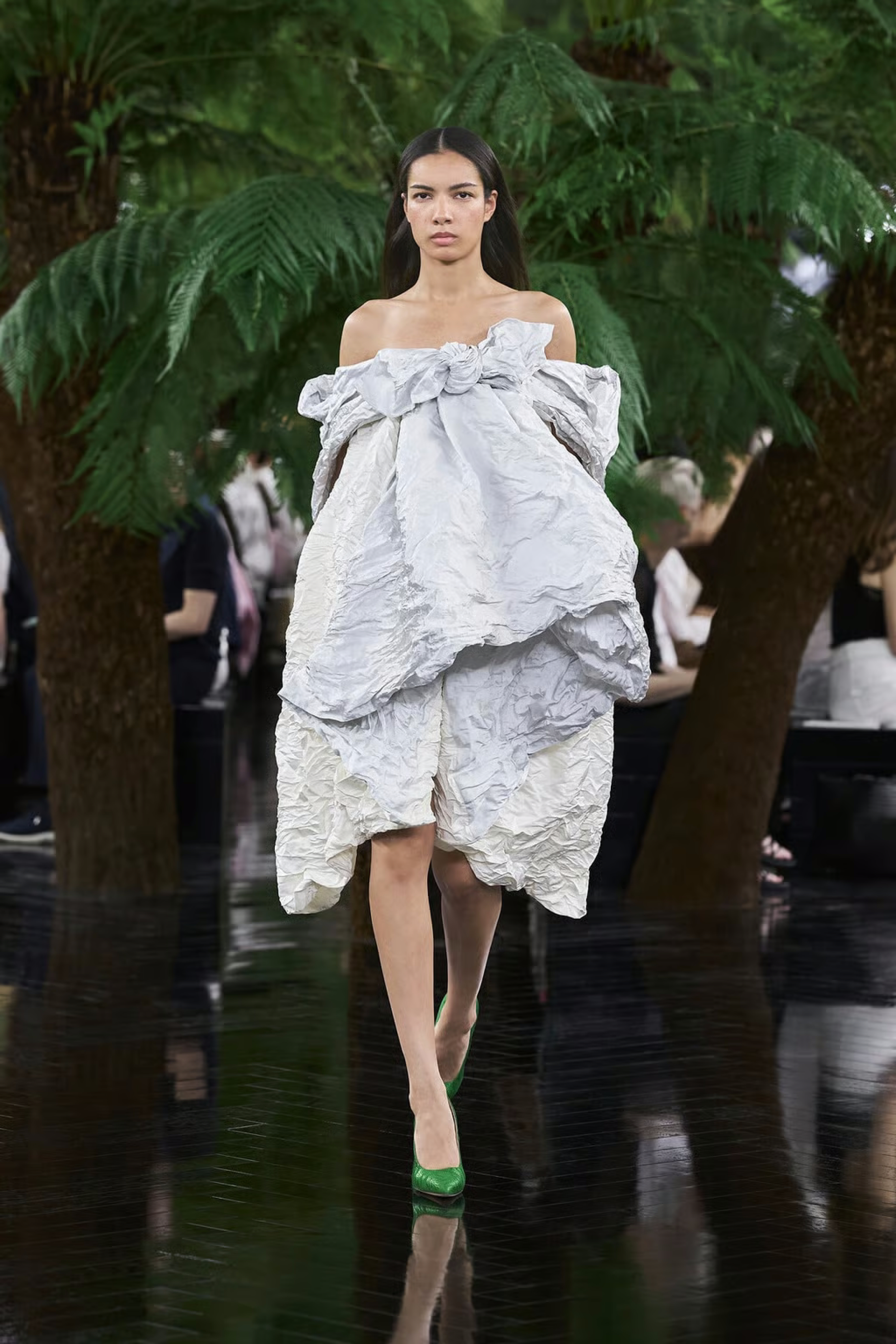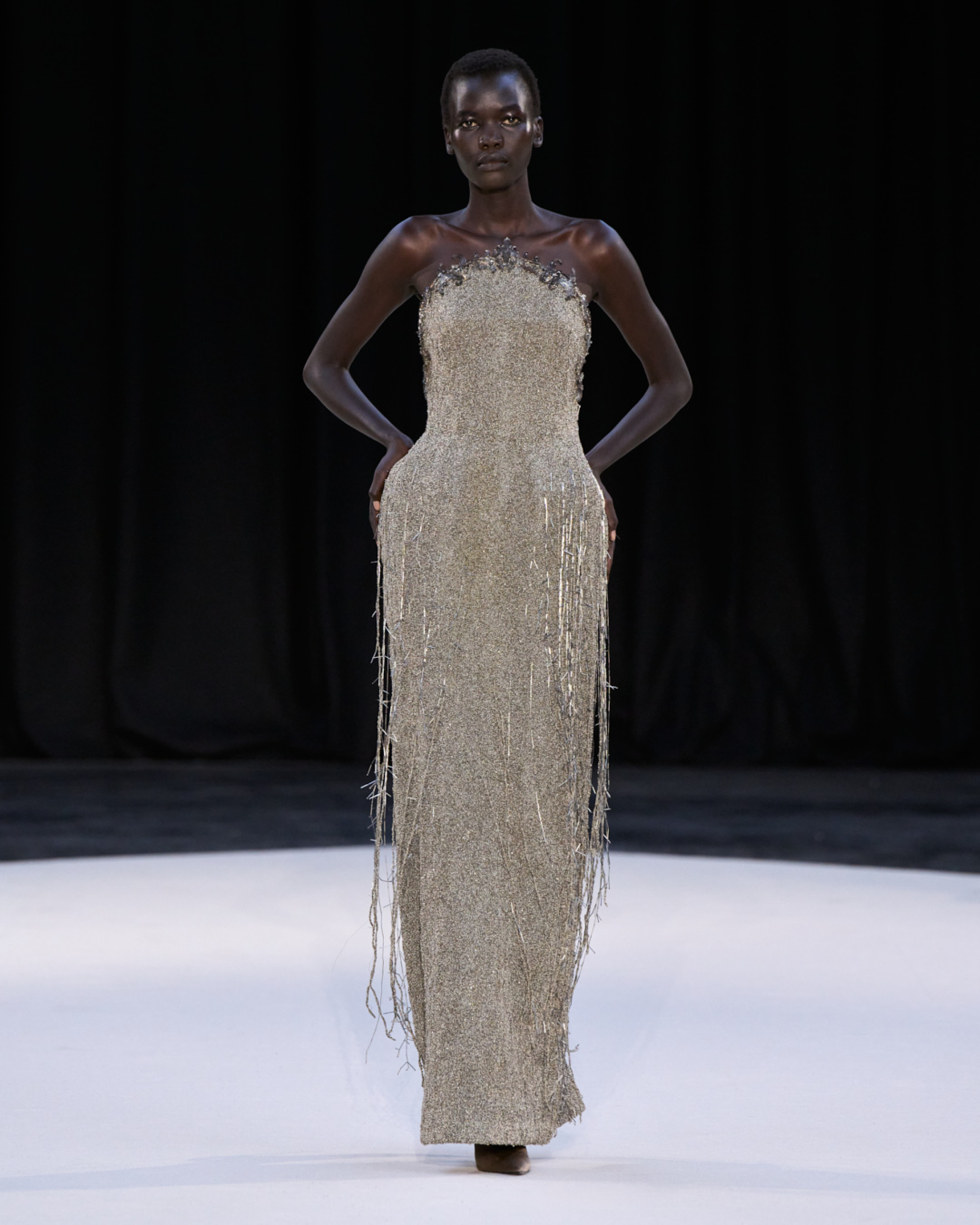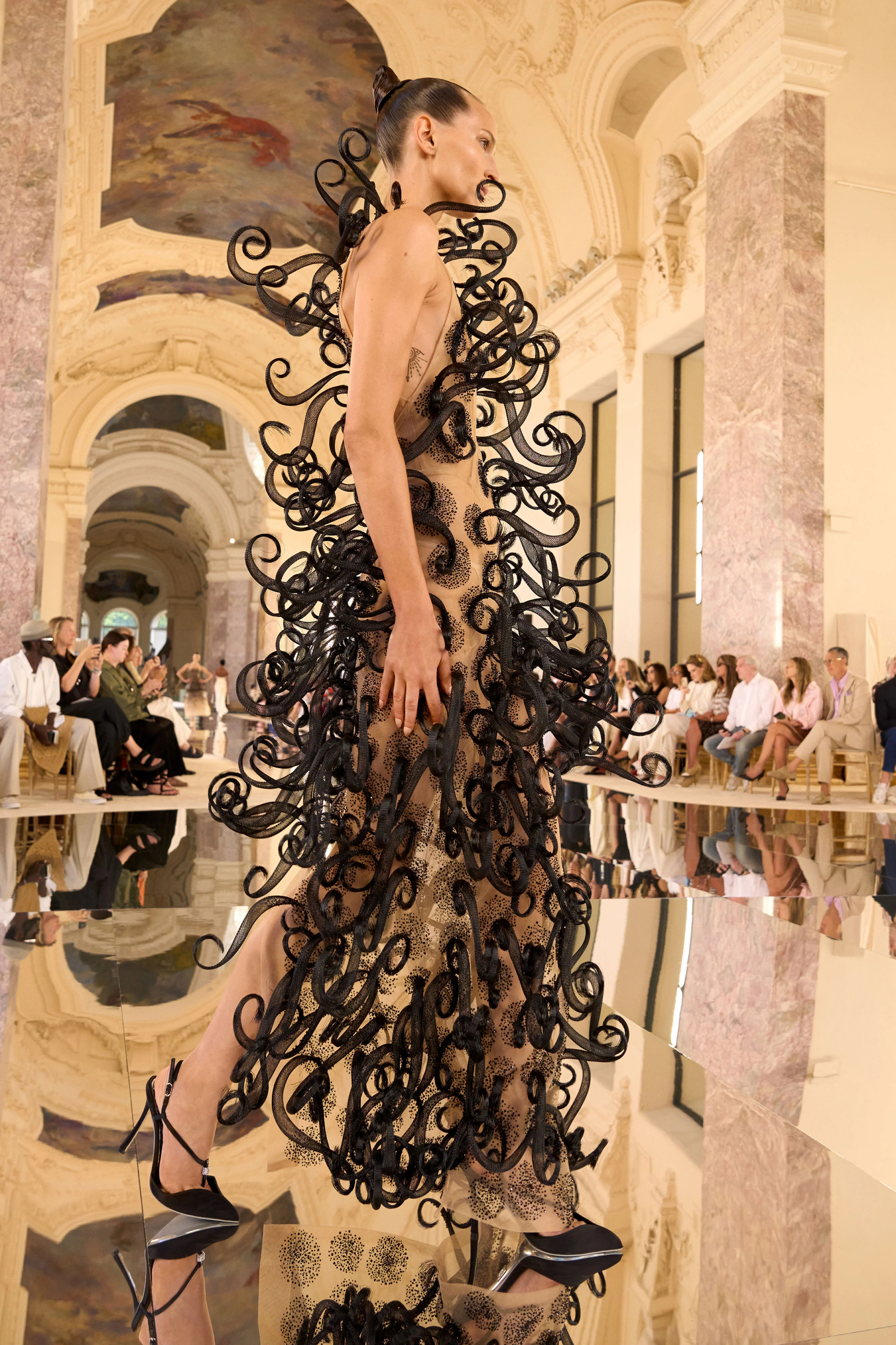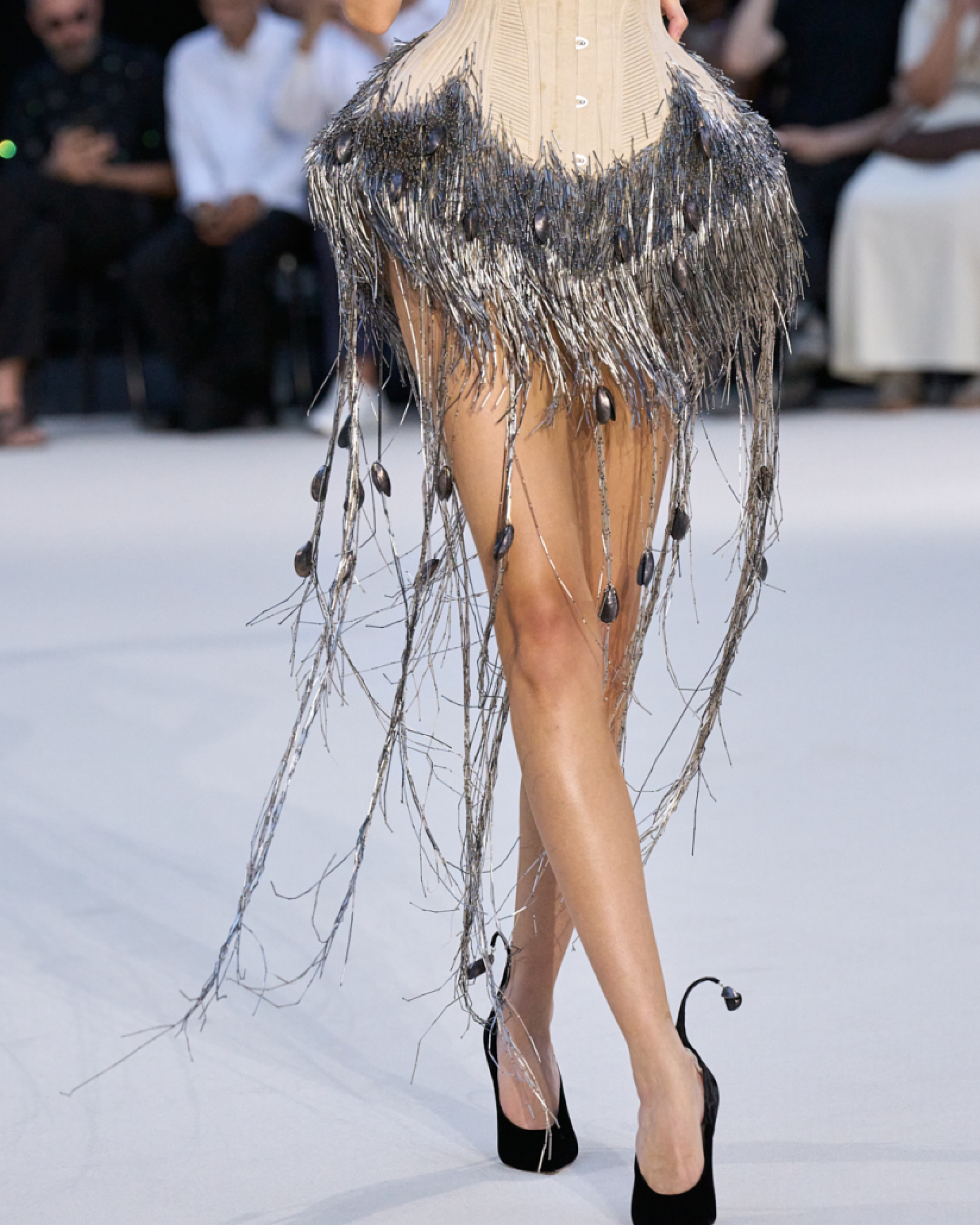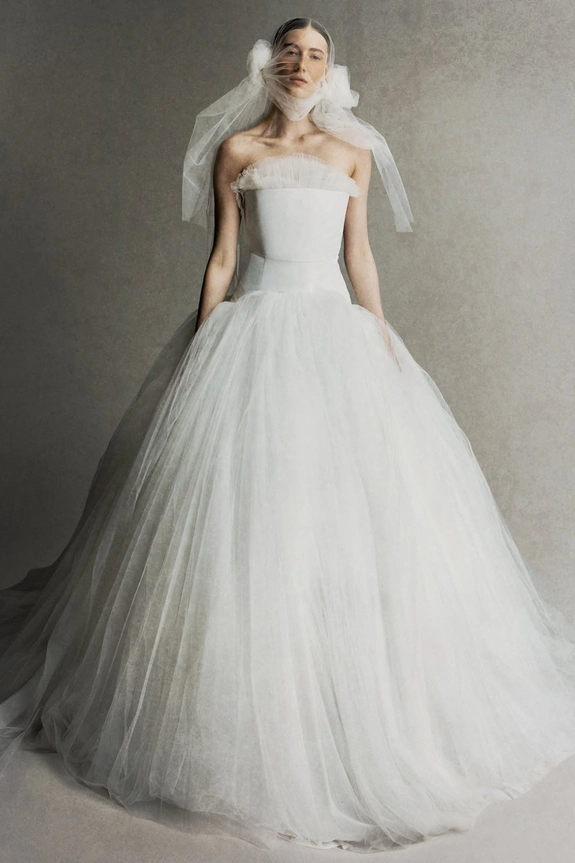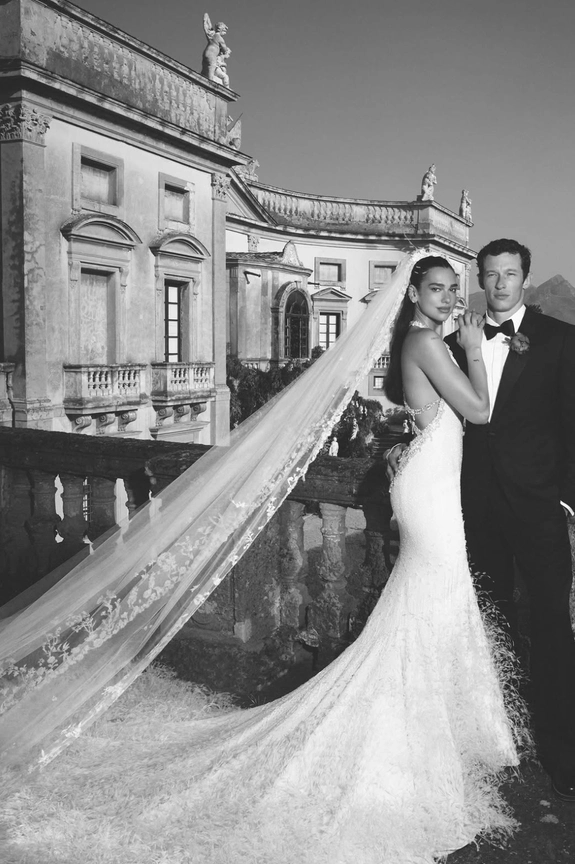
To some people, couture might seem like a parade of beautiful, completely unwearable things. But couture is far from that — it's the starting point for ideas that end up in everyone's closet. Think of couture like the infamous cerulean sweater monologue in The Devil Wears Prada, where Miranda Priestly explains to Andy Sachs that the blue sweater she thinks she simply "chose" was actually filtered down from collections, designers, and decisions made seasons earlier. The same logic applies to Paris Couture Week. A fully feathered gown might not be walking down every aisle tomorrow, but the idea behind it will. A dramatic neckline becomes a new bridal dress staple. A Victorian lace collar suddenly feels relevant again. Pleats lose their reputation for being polite. Fringe trades kitsch for polish.
At times couture might look like fantasy, but fashion has a funny way of turning fantasy into what you'll be wearing next. So take note of this year's biggest trends from Paris Couture Week, where texture, history, craft, and drama all took on new life — because these ideas are already trickling down to what you'll most certainly wear down the aisle.
Arts & Crafts
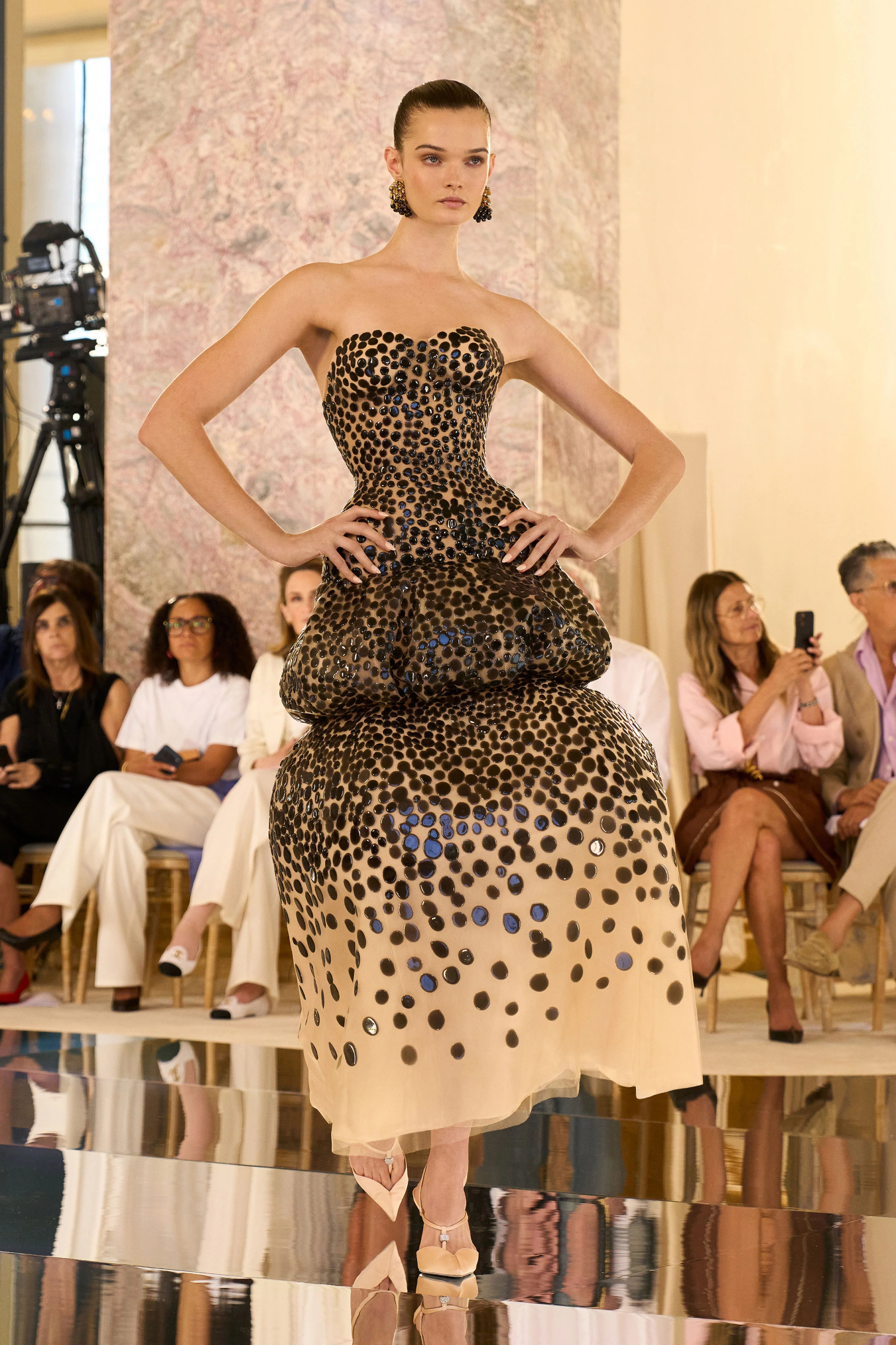
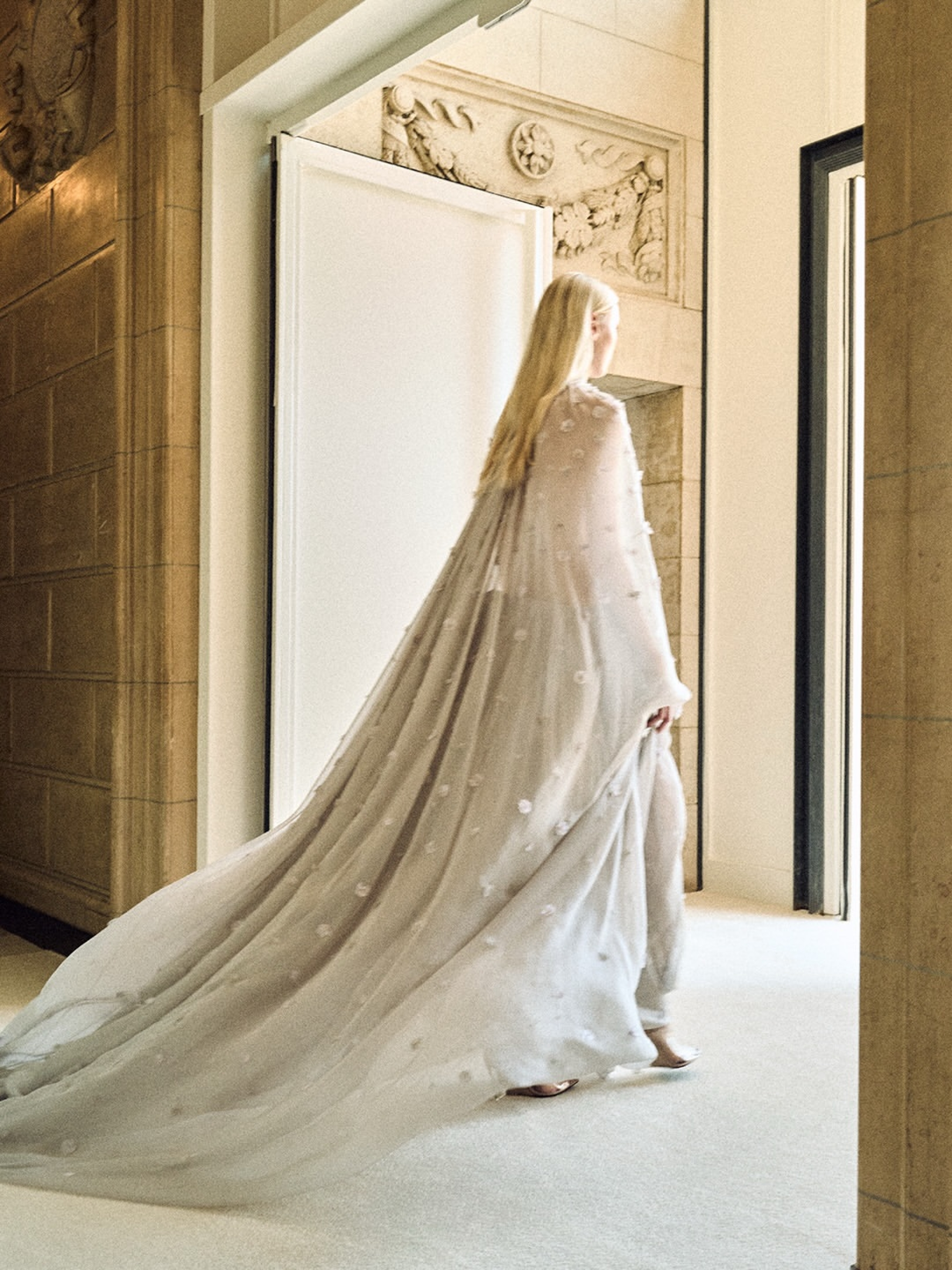
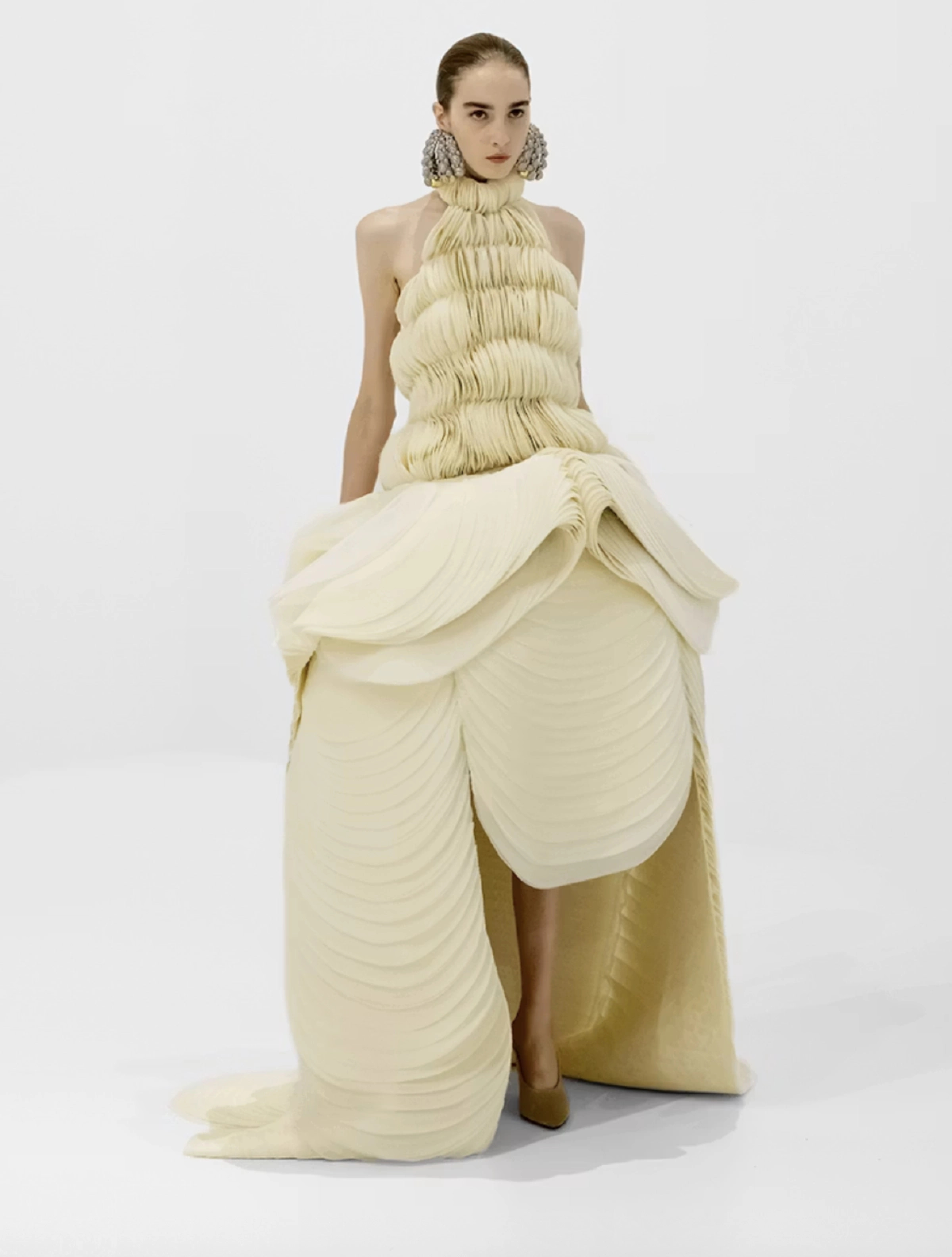
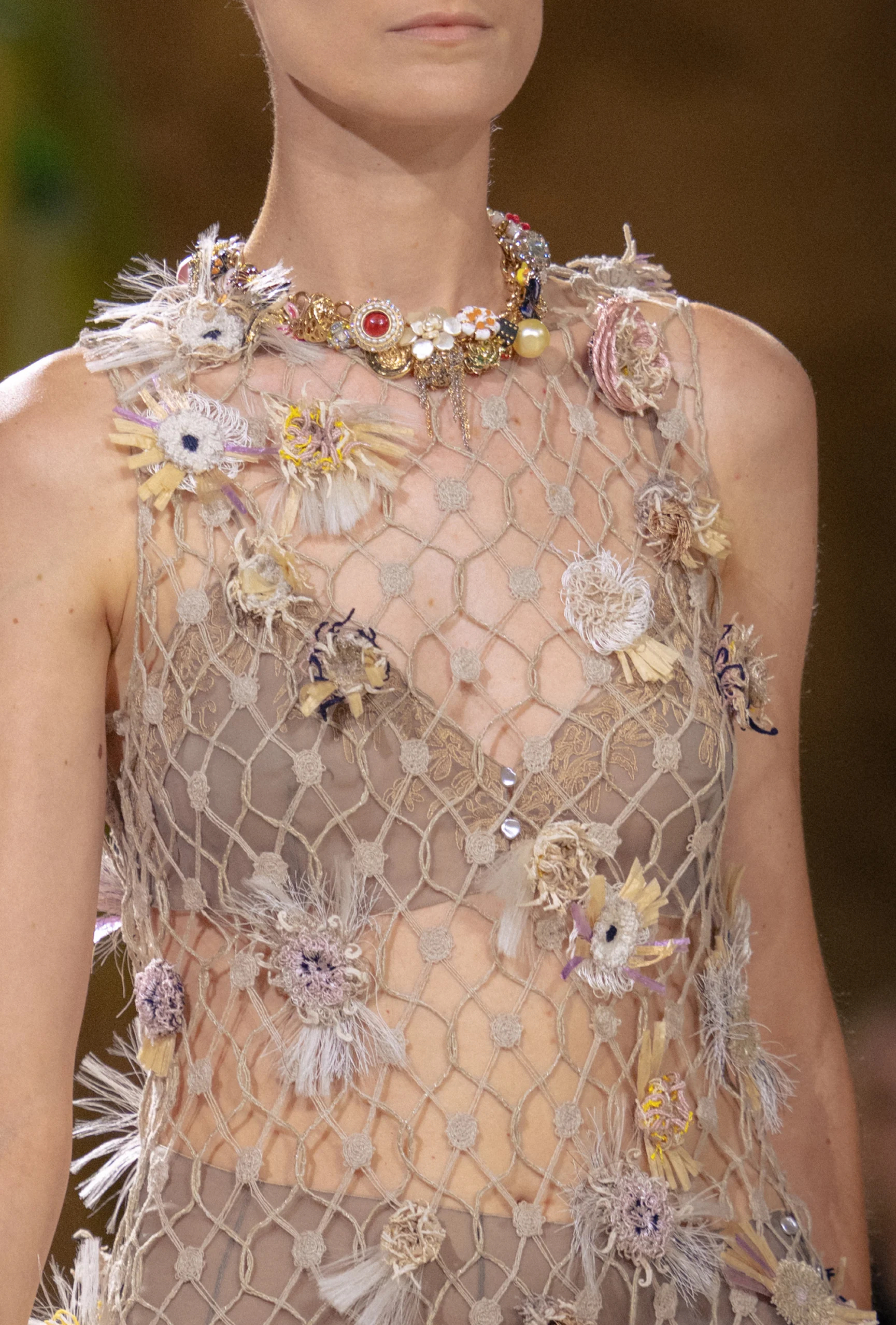
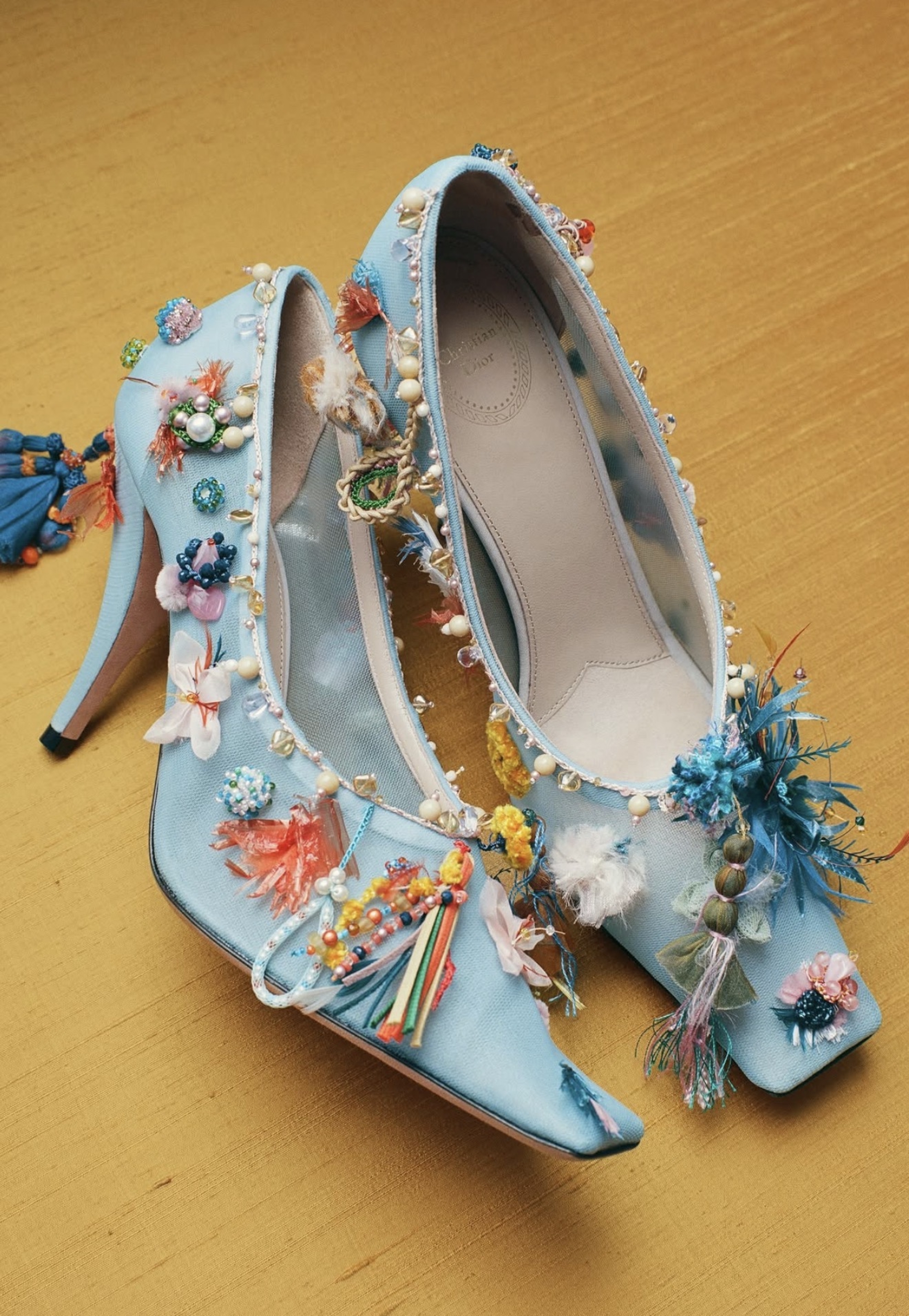
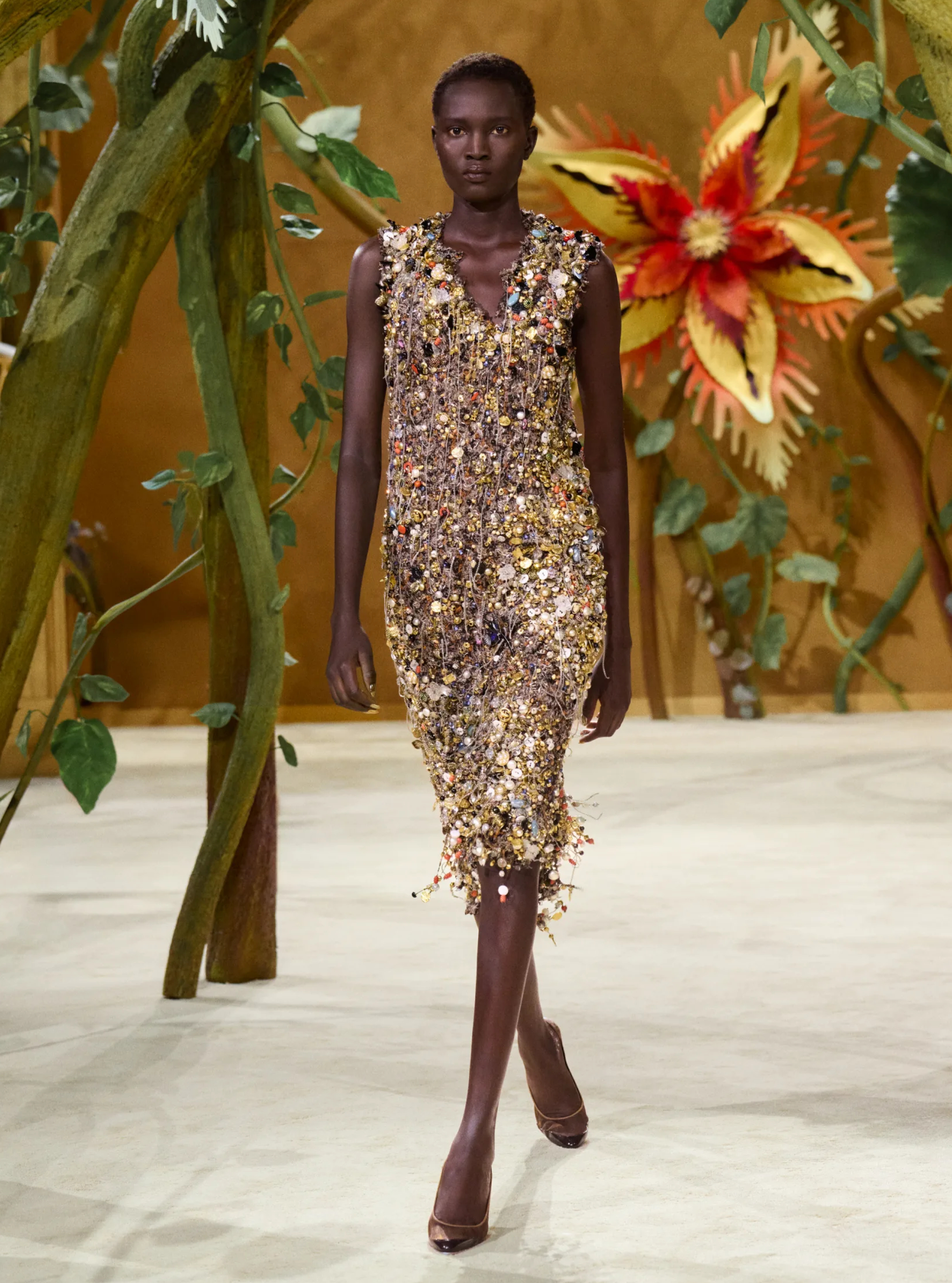
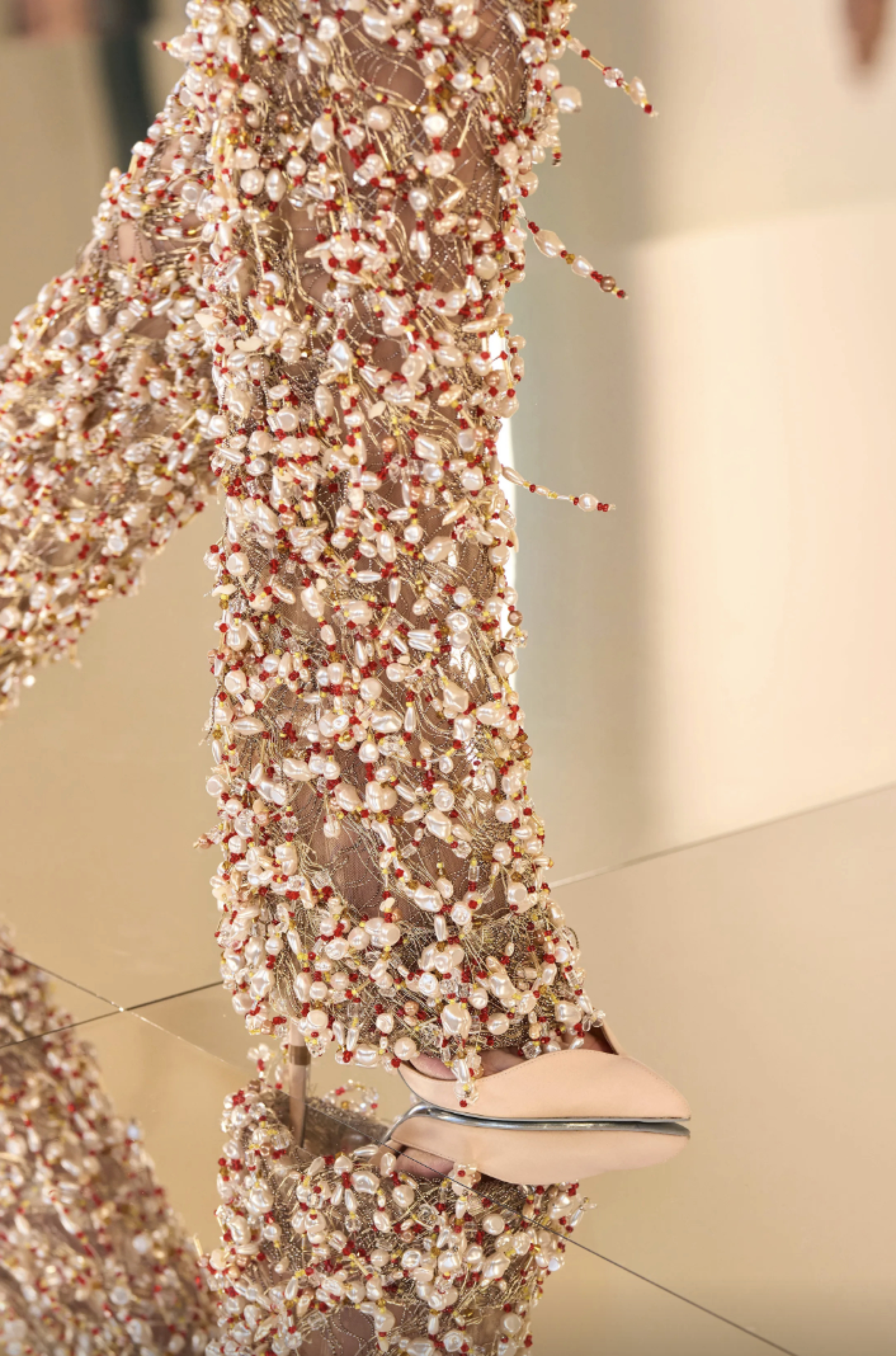
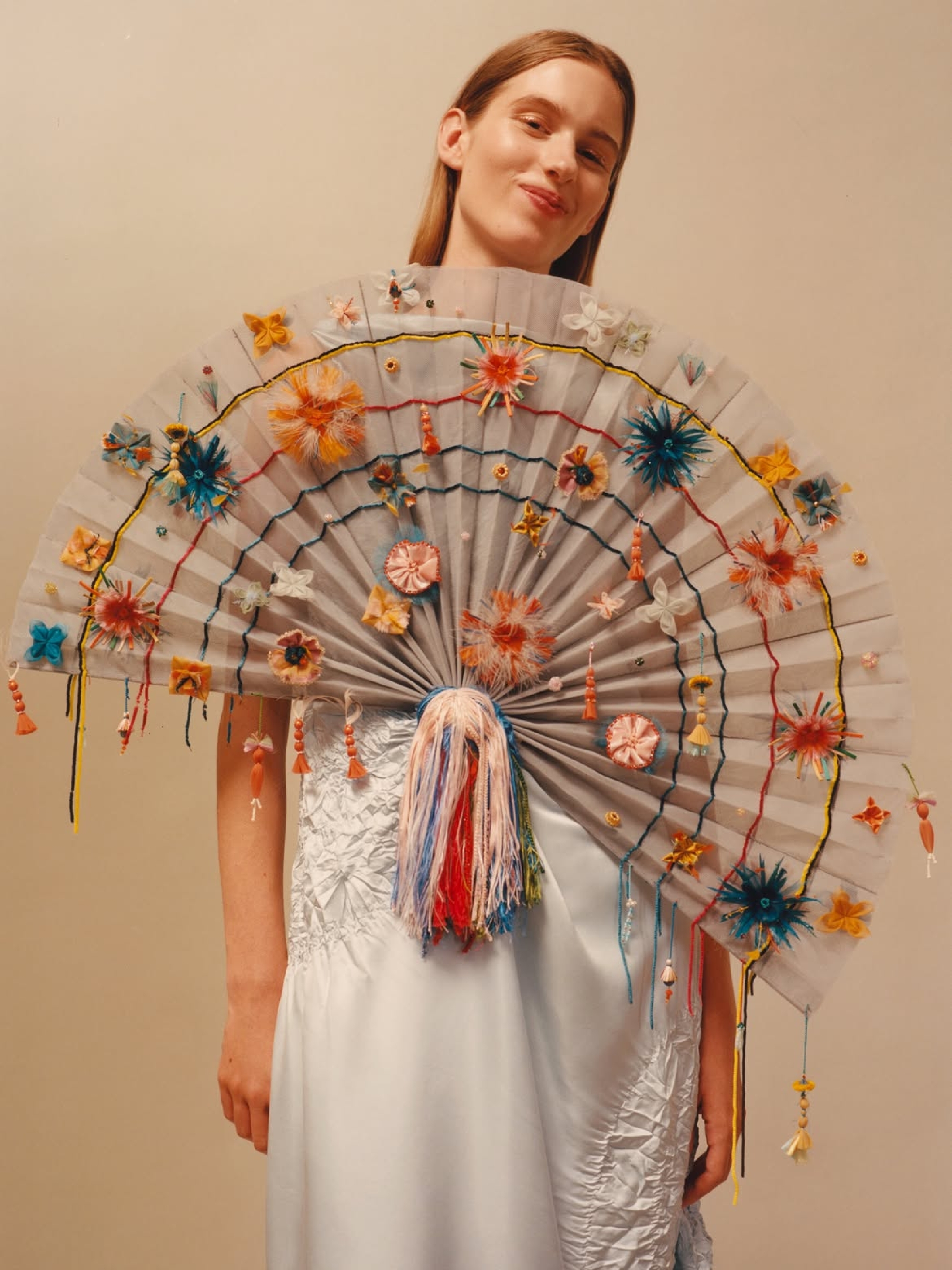
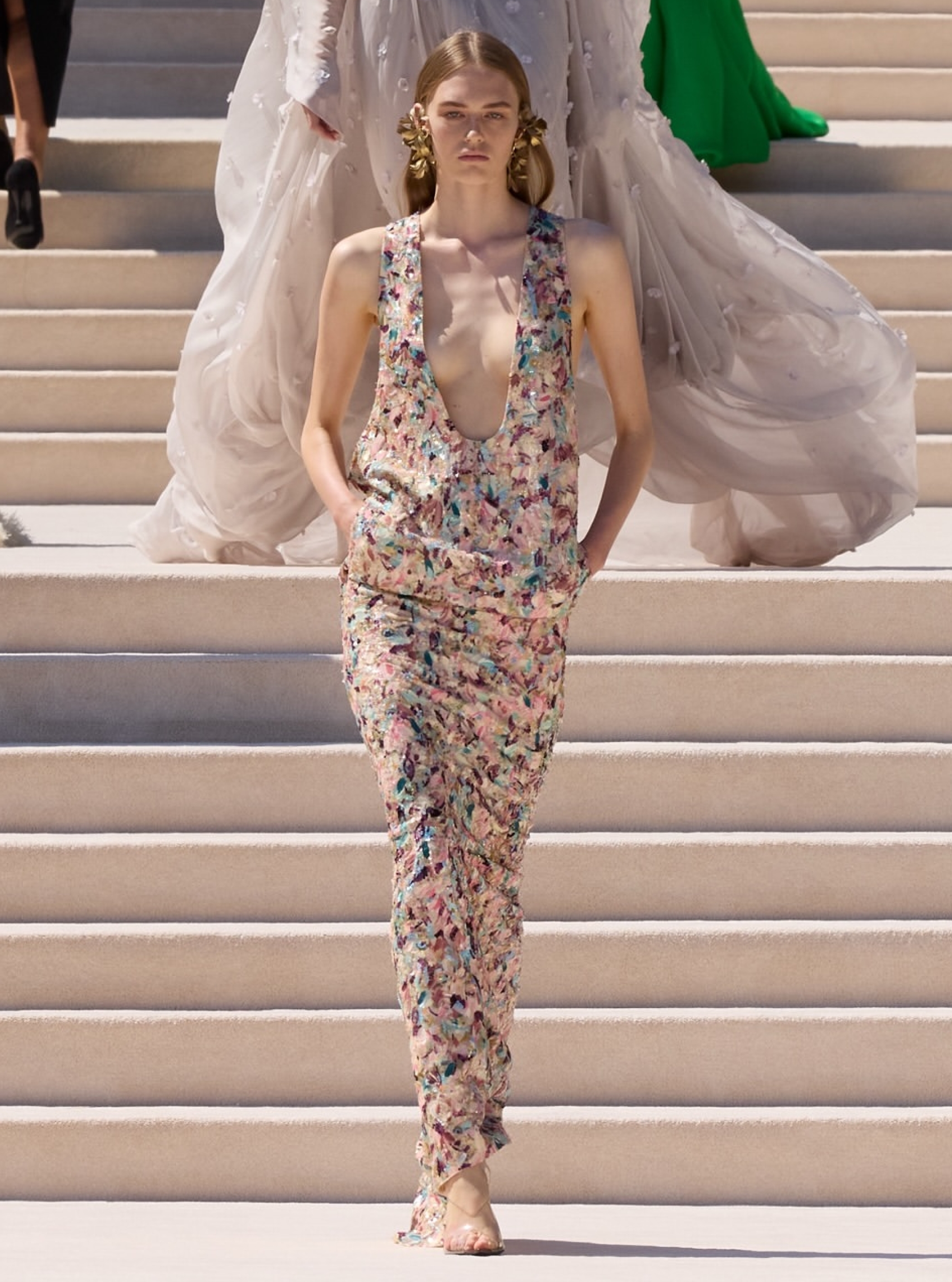
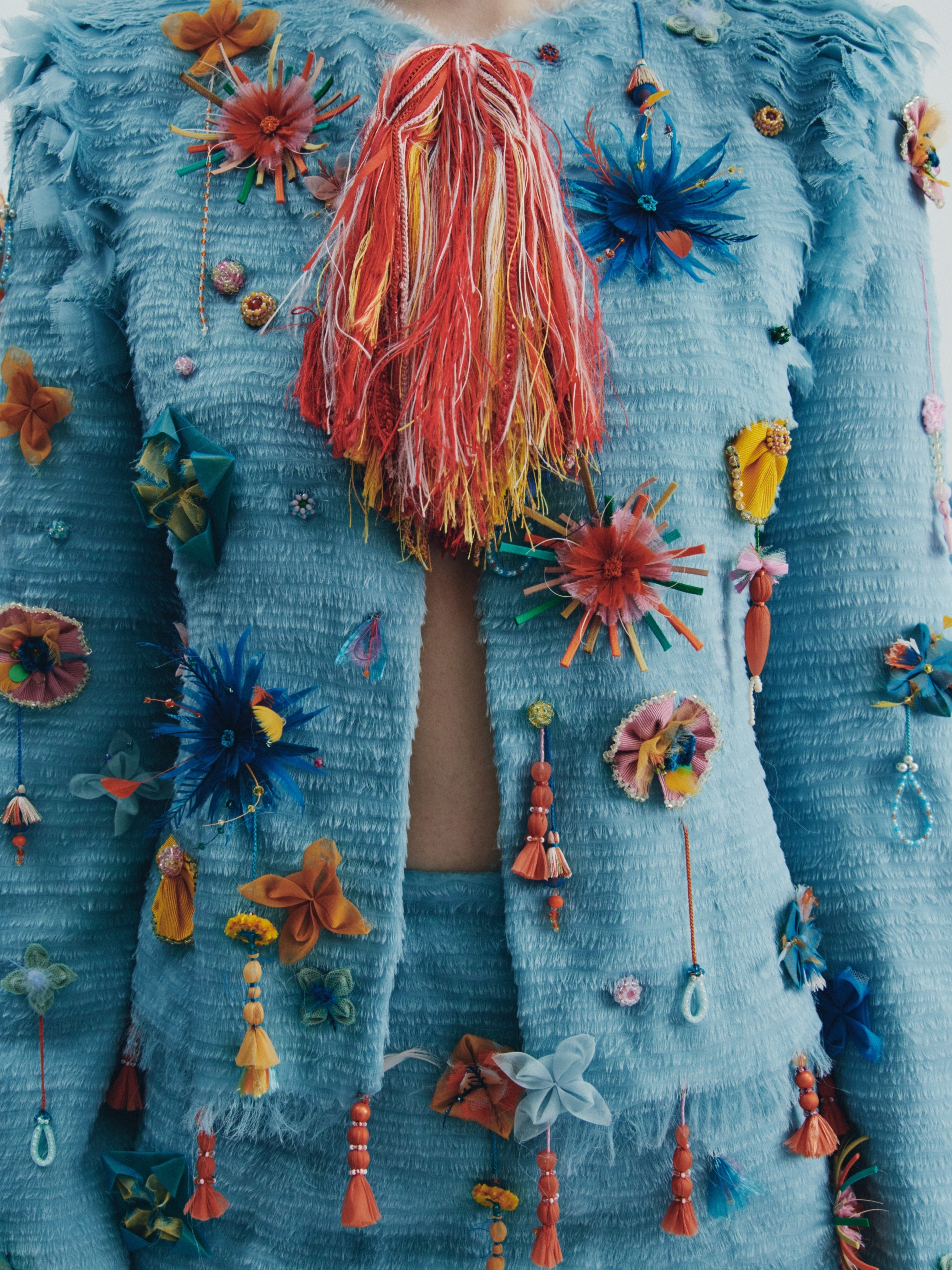
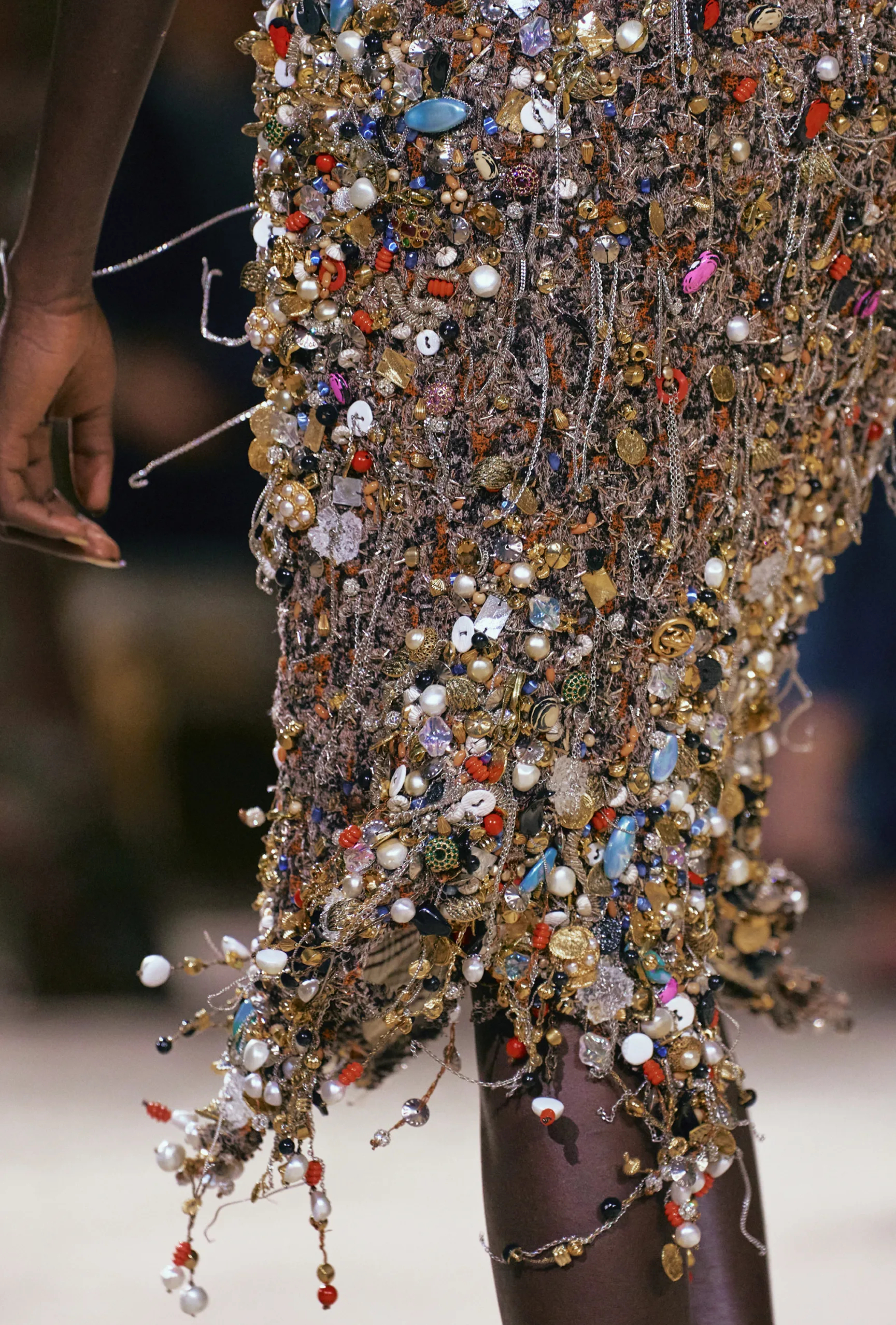
The best kind of “messy” is never actually messy. It’s intentional, but appears just imperfect enough. That was the charm of couture’s craftier moments this season, where beads, buttons, cutouts, and tiny fabric loops looked almost too playful to be there. Chanel and Dior both seemed to channel their inner child, but in the most high-fashion way possible. Collars came dotted with charms. Embellishment felt collected rather than perfectly placed. And one particularly standout dress at Chanel resembled the world’s most expensive I Spy book page, with its gold buttons, scattered beads, and little details seemingly hiding in every corner. Robert Wun took the trend more literally, turning splattered paint into a full couture moment . It was playful without being unserious, which might be the hardest balance to pull off. After years of clean minimalism and perfectly placed embellishment, there’s something refreshing about dresses that look personal, touched, and just a little bit unexpected. Now, fingers crossed someone brings this type of energy to bridal this year.
Body Con
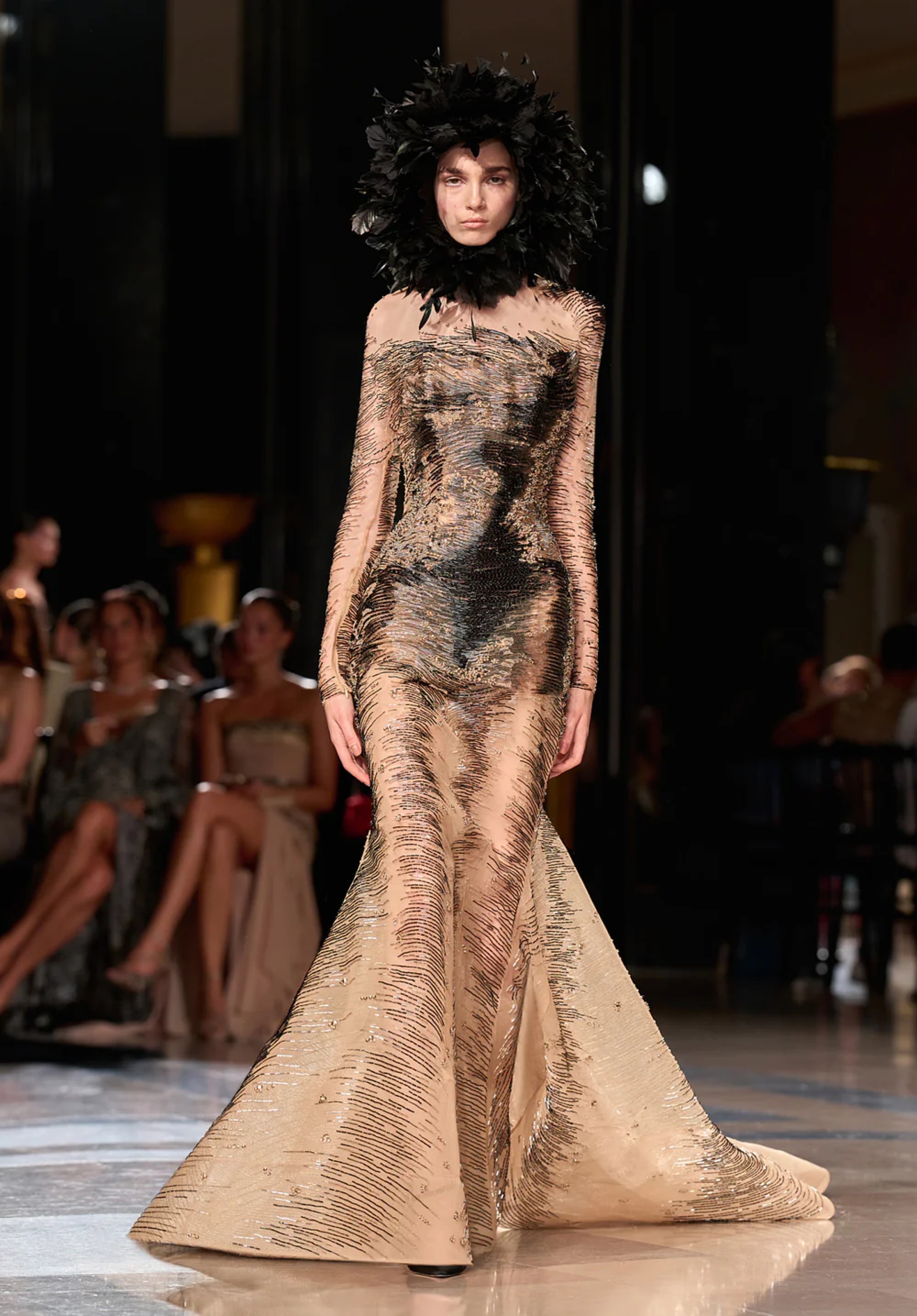
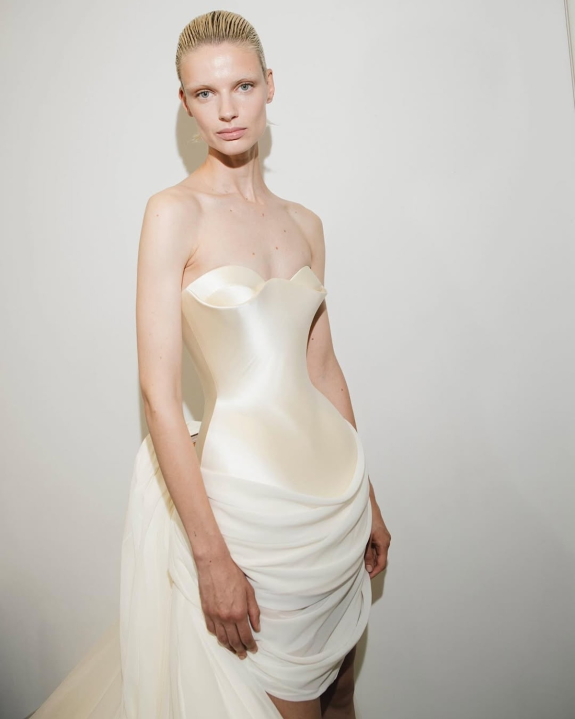
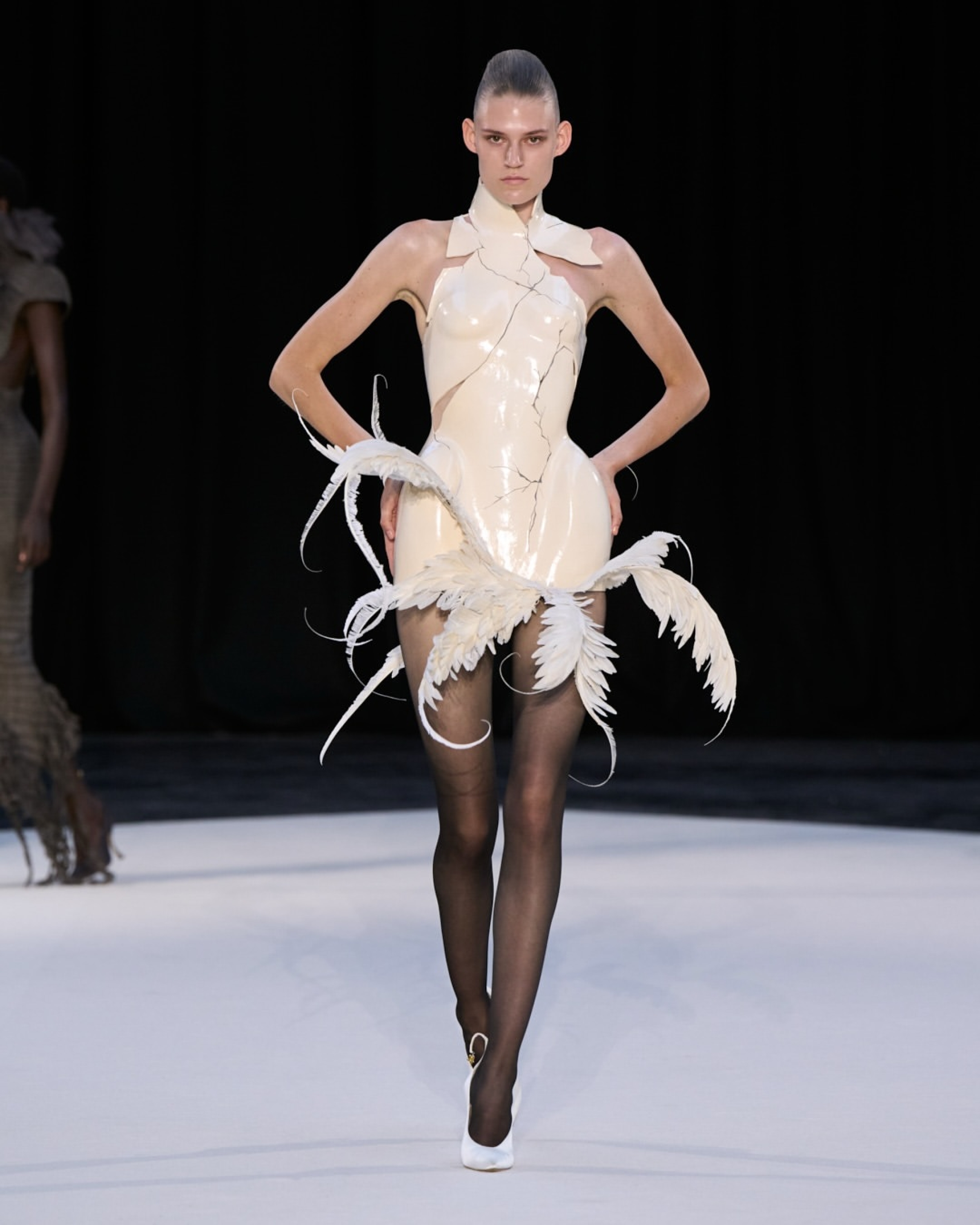
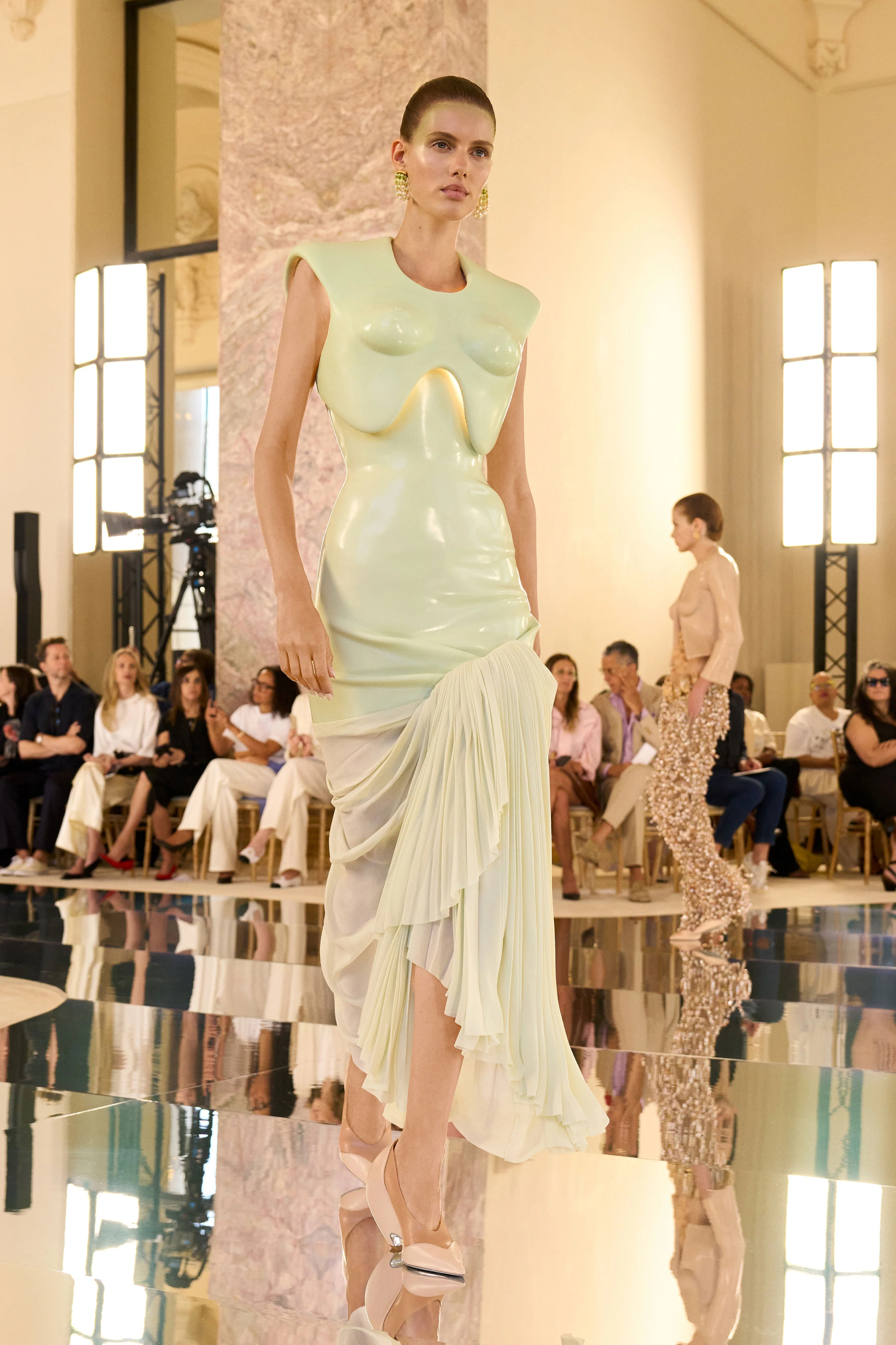
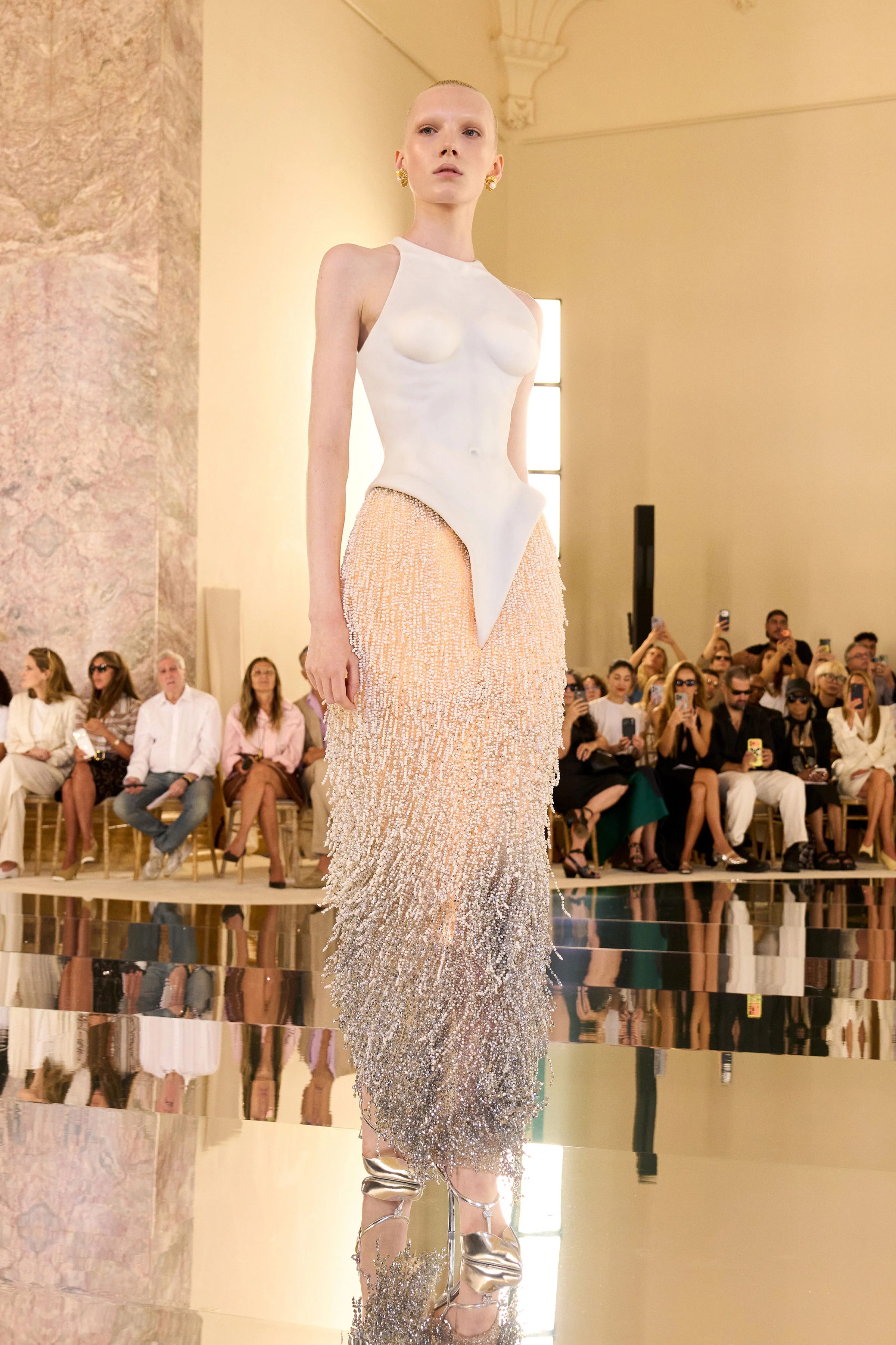
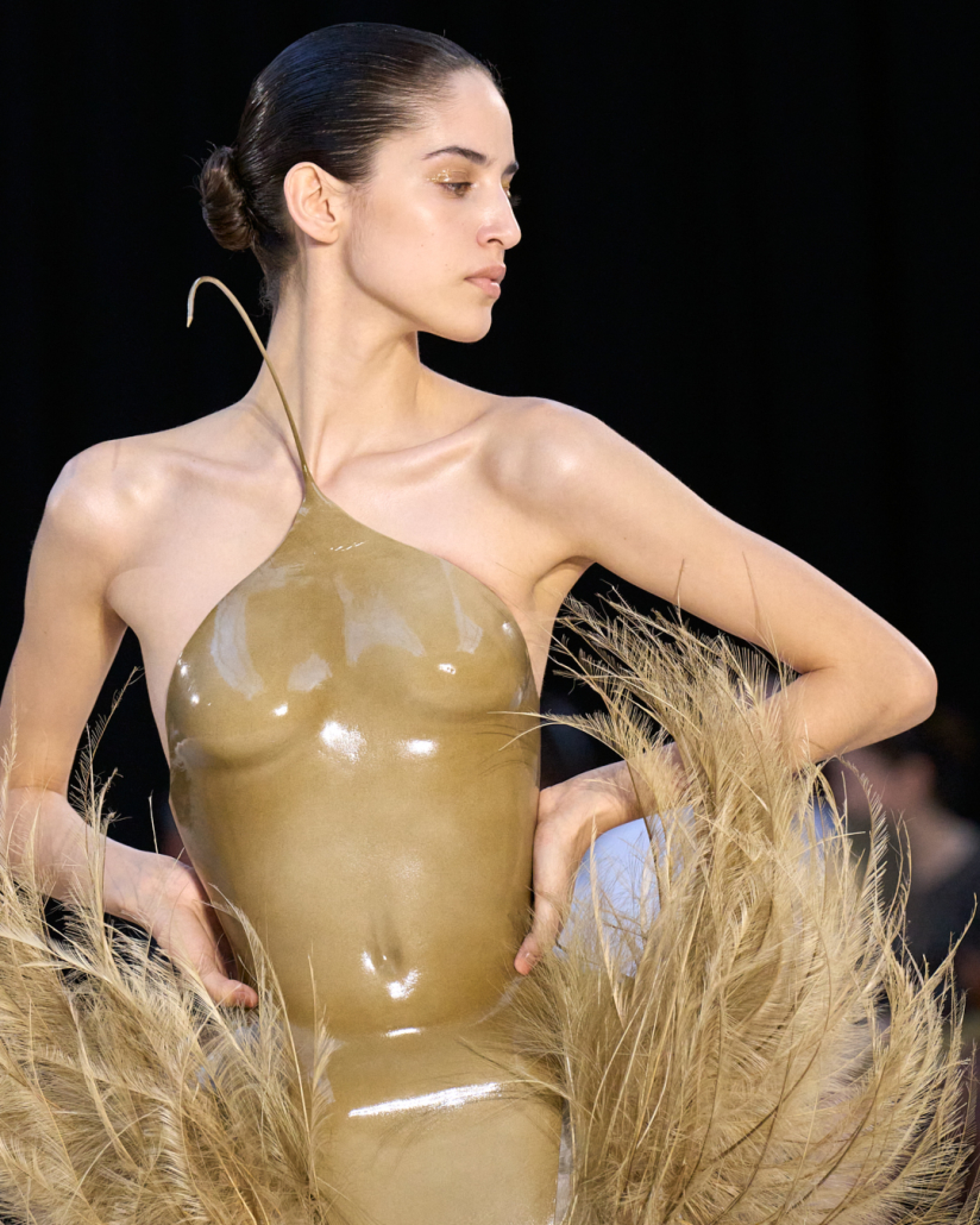
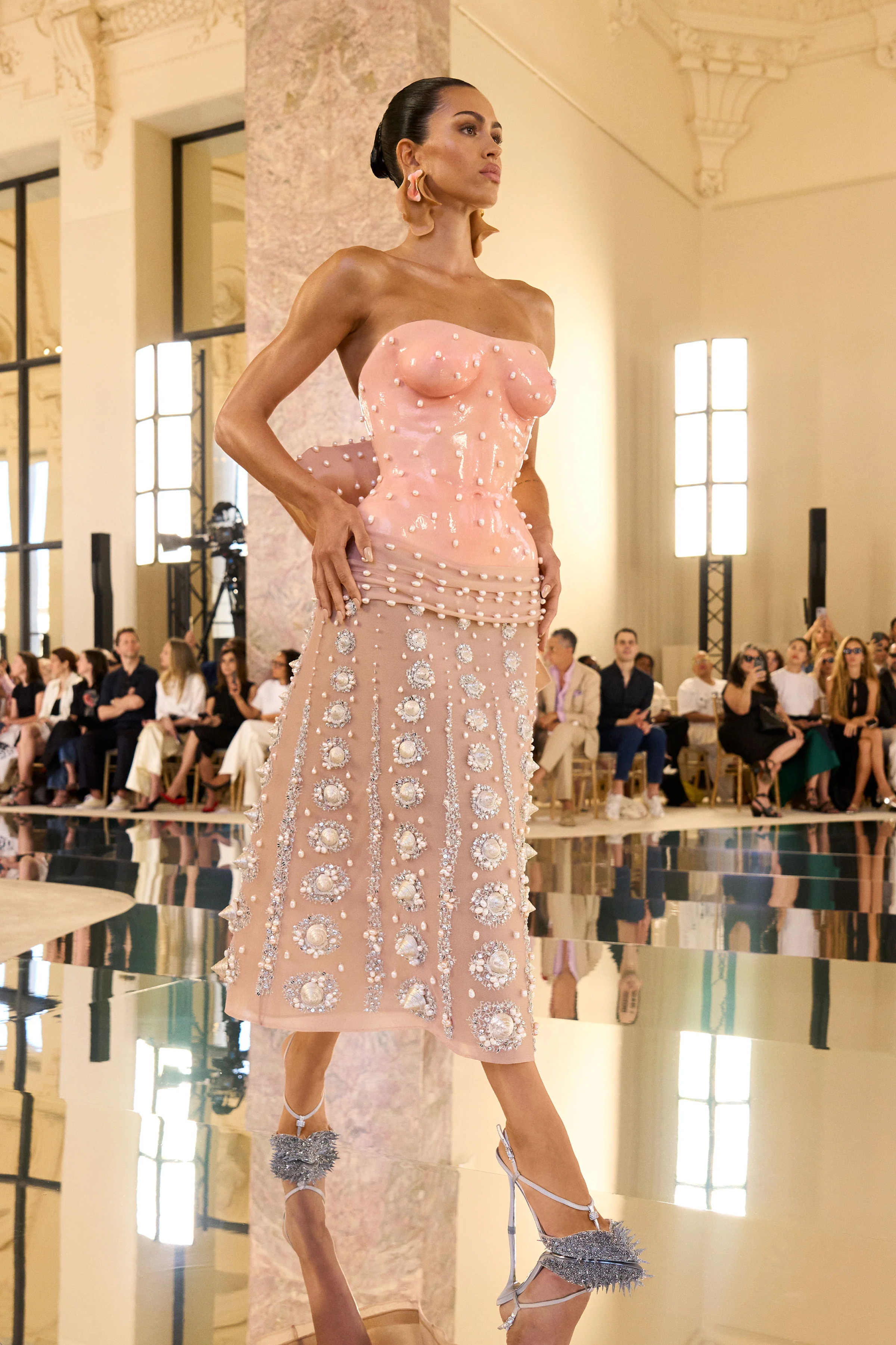
The female form became couture’s greatest muse this season, with designers treating the body as something to sculp, rather than just something simply to adorn. We saw hand-molded bodices that captured the anatomy itself, revealing the subtle contours of ribs, collarbones, the curve of the waist, and even the suggestion of the navel or bust. Schiaparelli led the conversation with its striking sculpted bodices, most famously the warrior-inspired look later iconically worn by Zendaya for 'The Odyssey' premiere. A meticulously molded breastplate was softened by a cascading gradient pearl-fringed skirt, striking a compelling balance between power and femininity. Throughout the collection, the idea evolved into goddess-like silhouettes, where fluid drapery spilled effortlessly from rigid, body-cast forms. Elsewhere at Ashi Studio, an almost primal quality emerged, with glossy sculptural body armor recalling the glossy protective shells of crustaceans. Equal parts strength and sensuality, these designs didn’t just celebrate the female form. They immortalized it.
Birds of Paradise
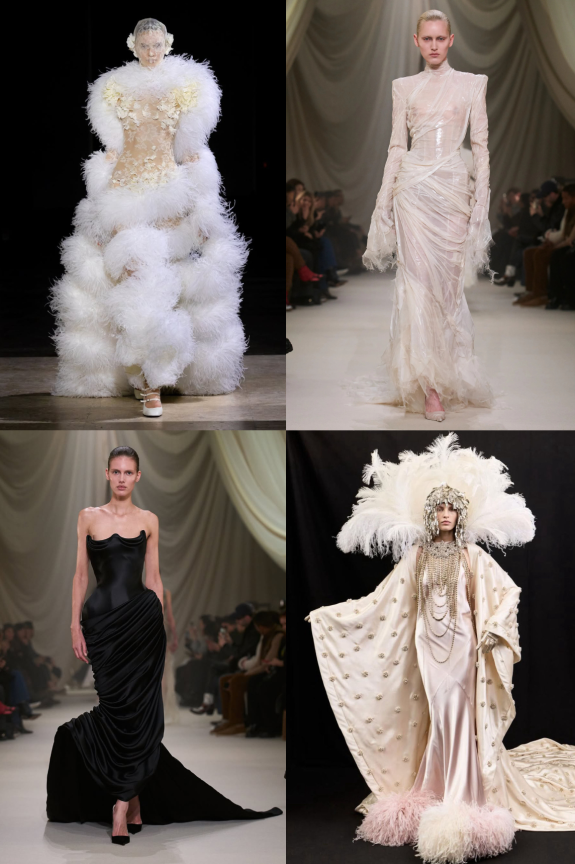
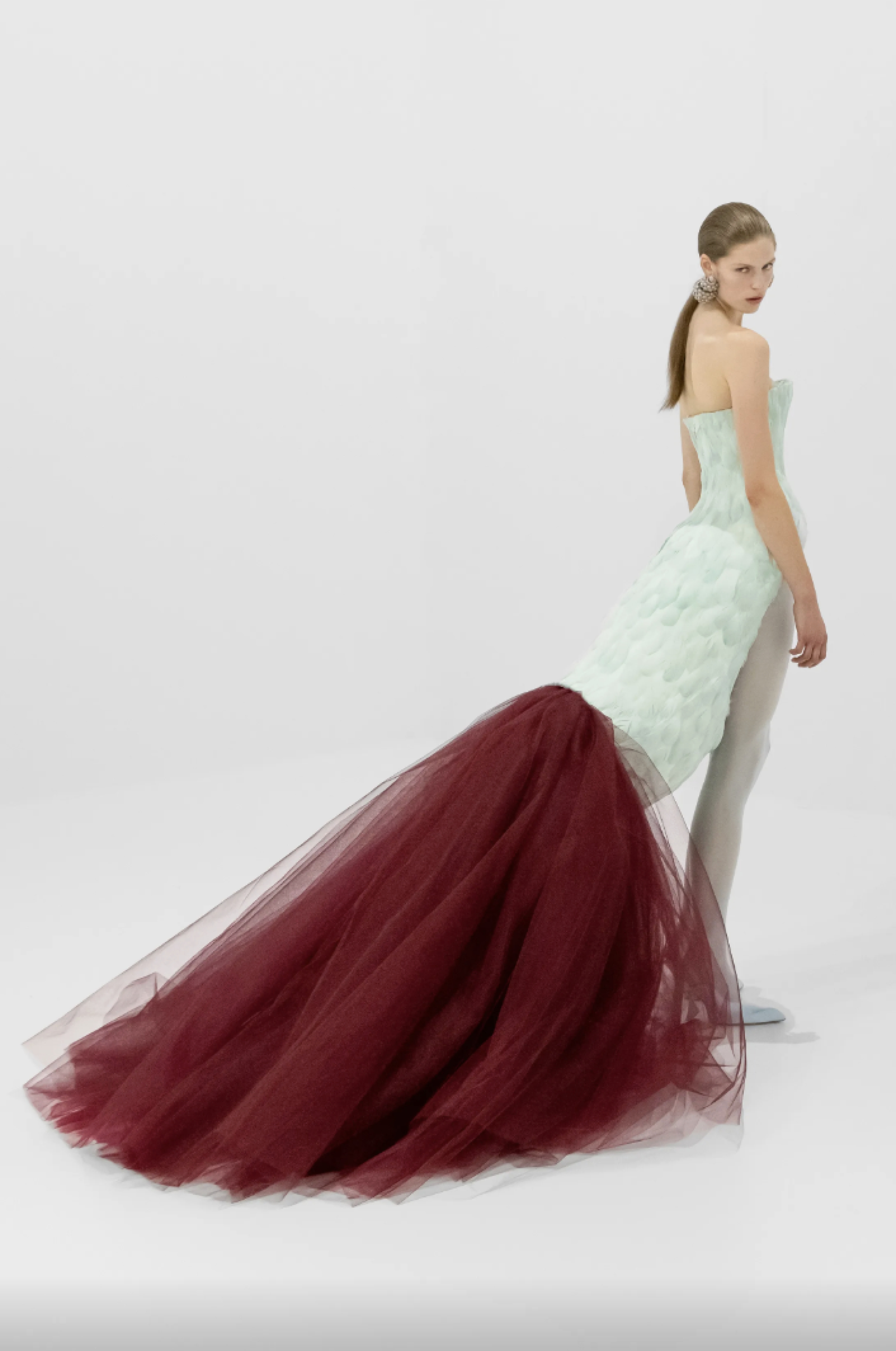
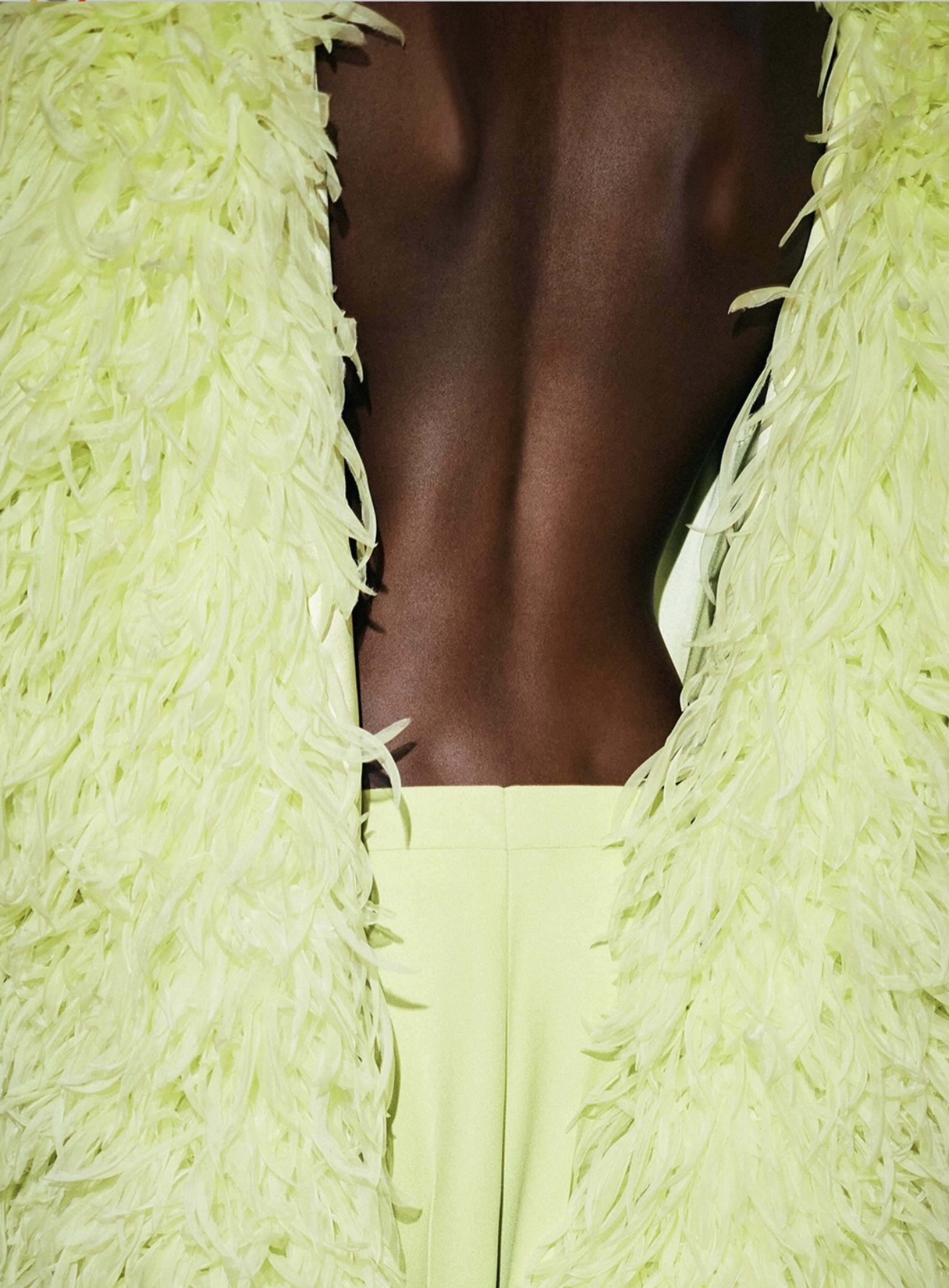
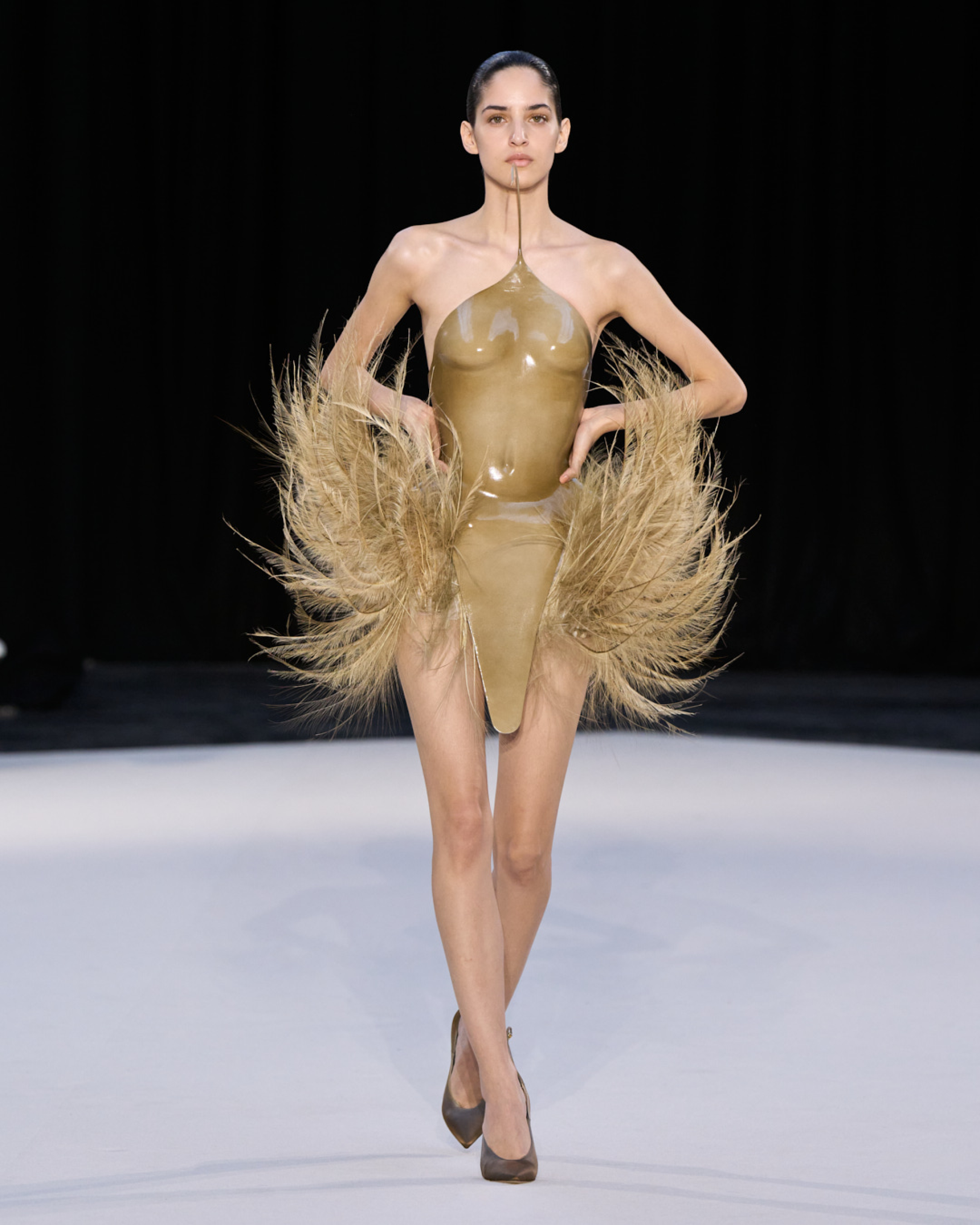
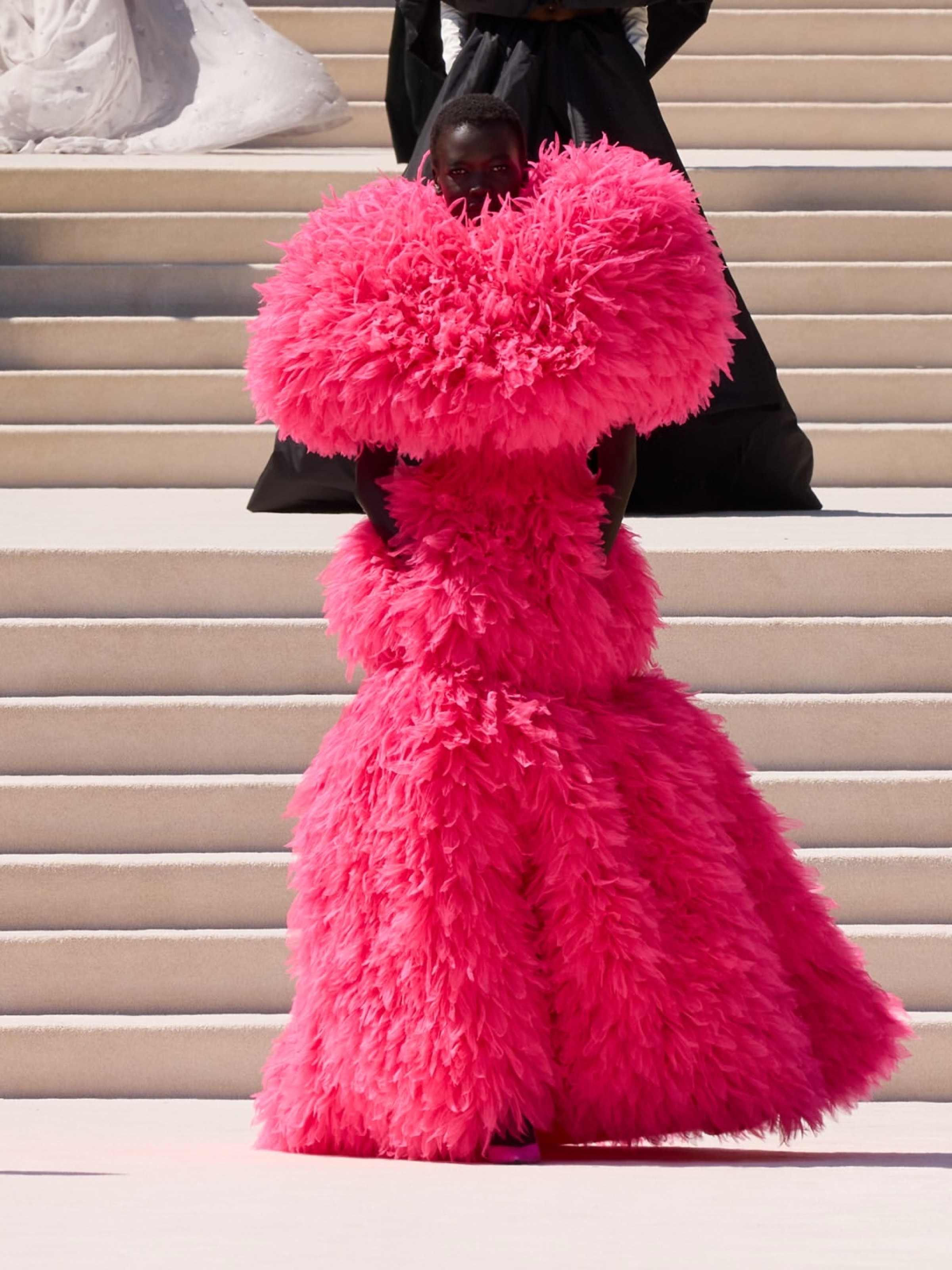
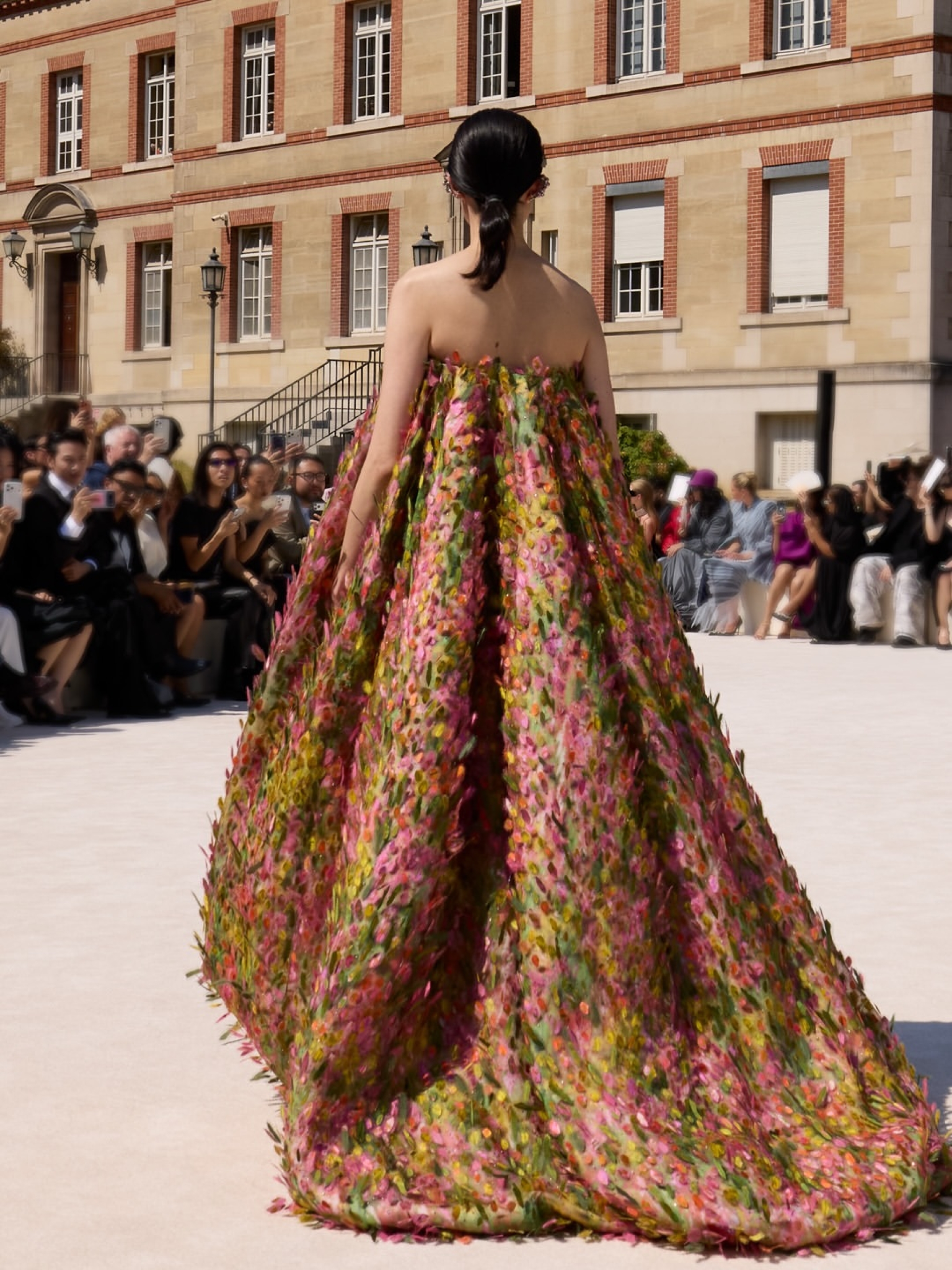
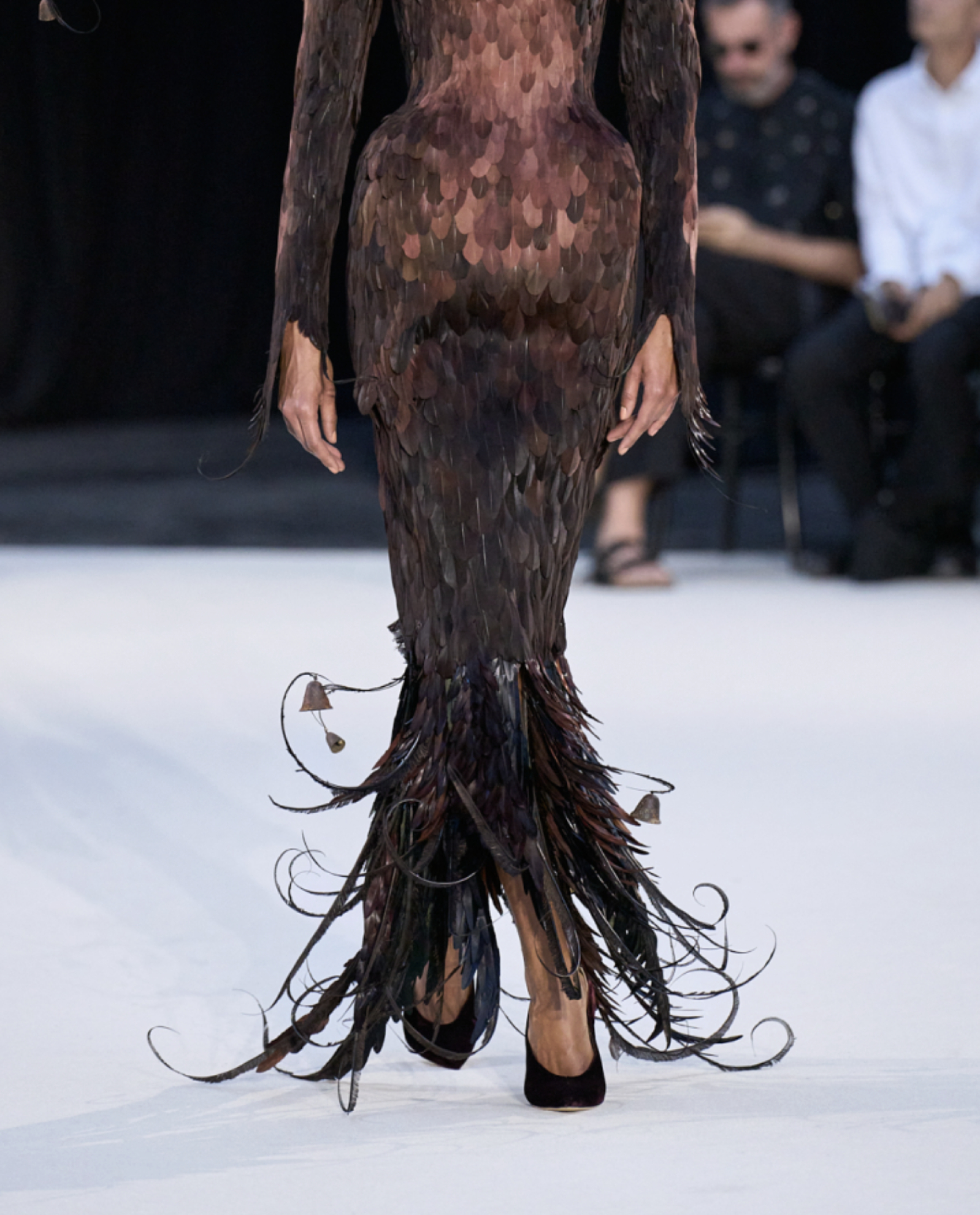
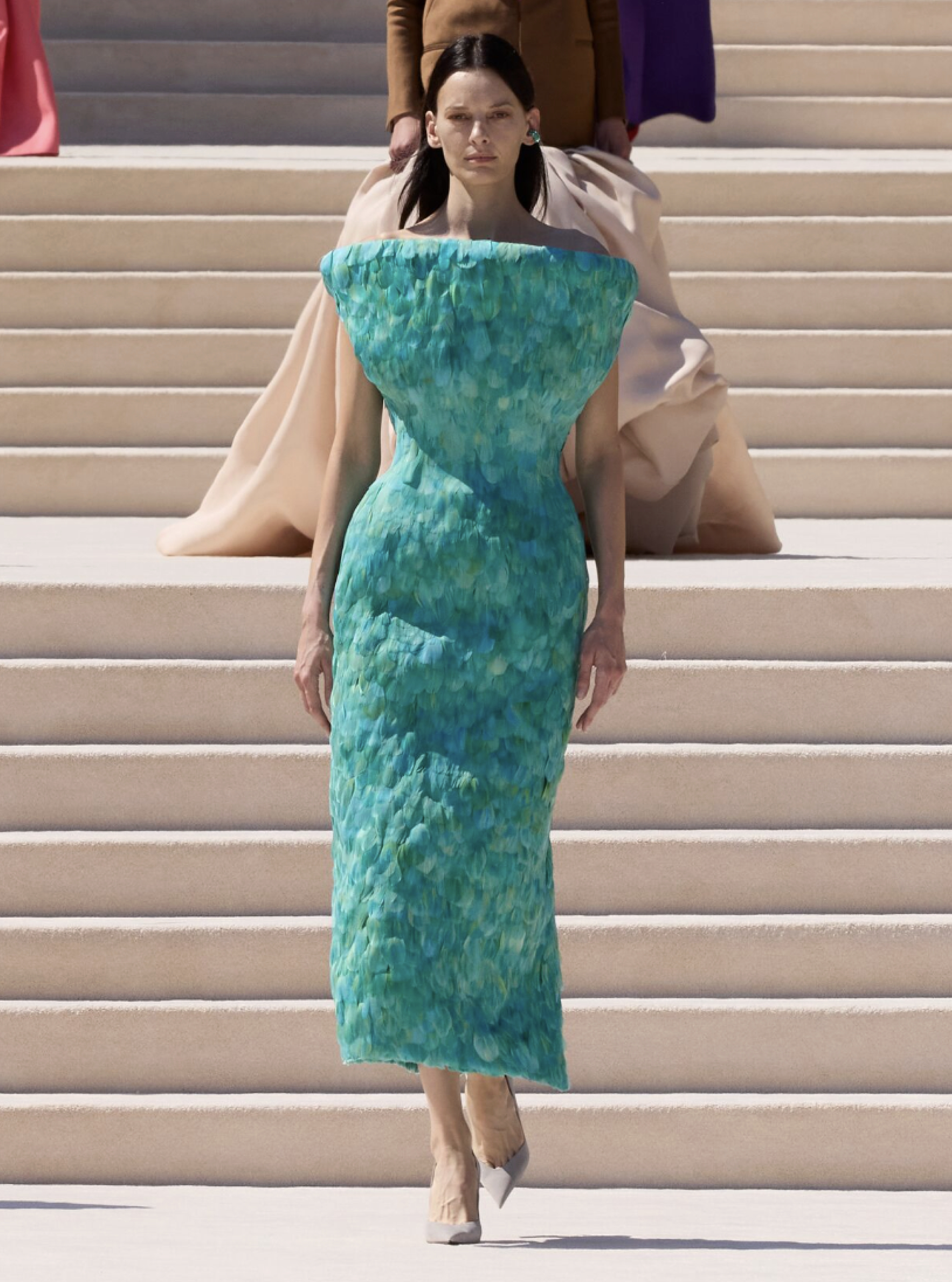
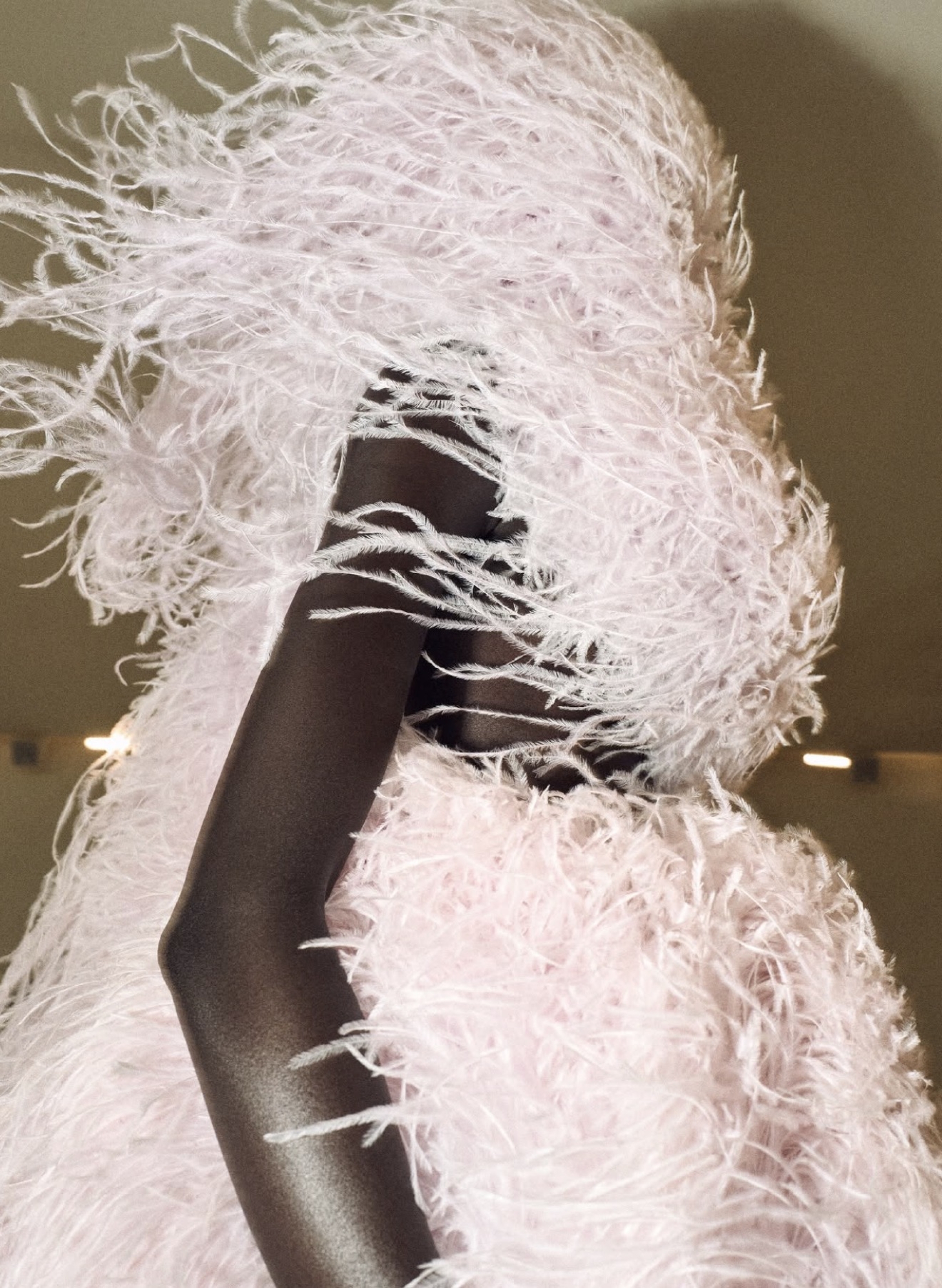
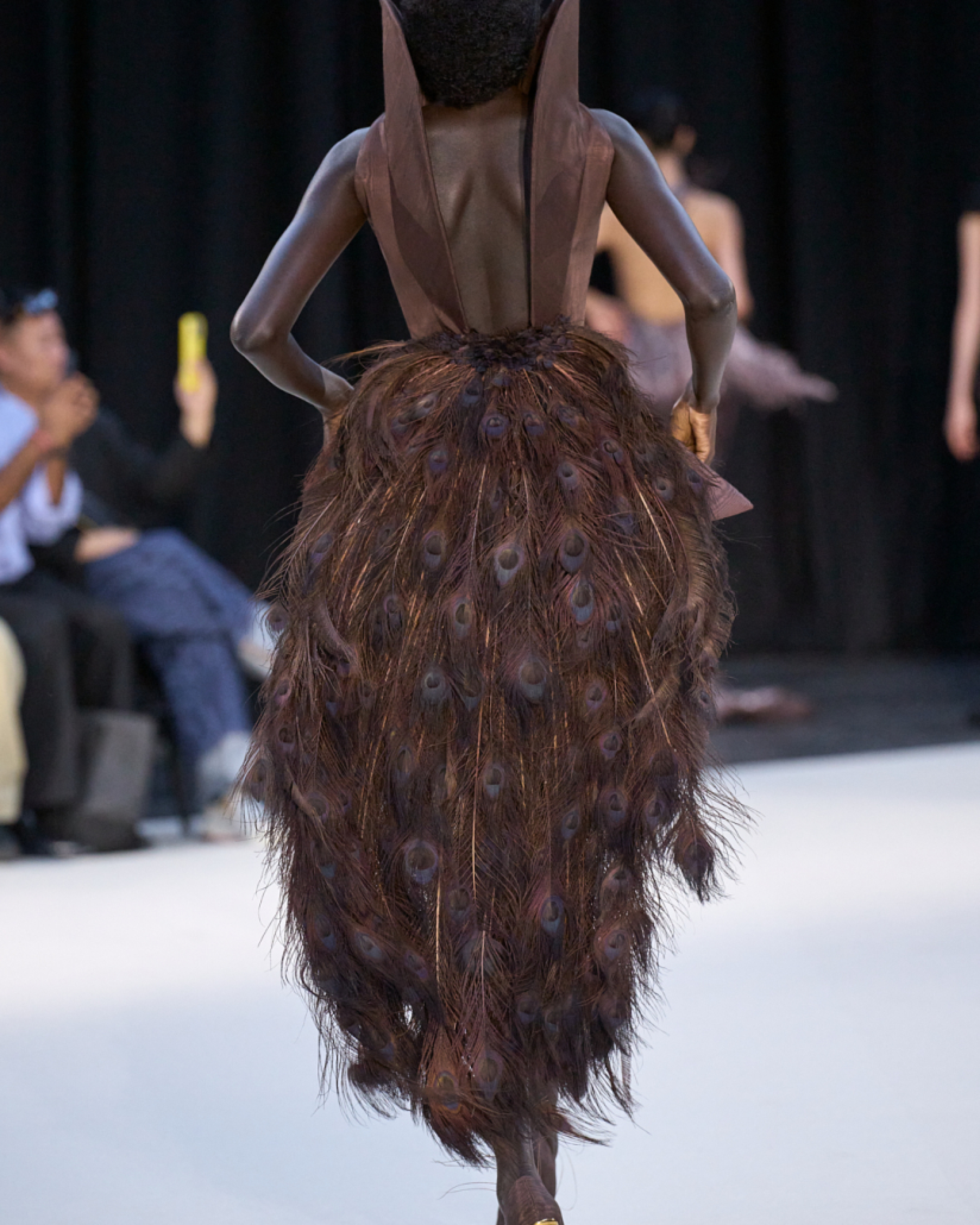
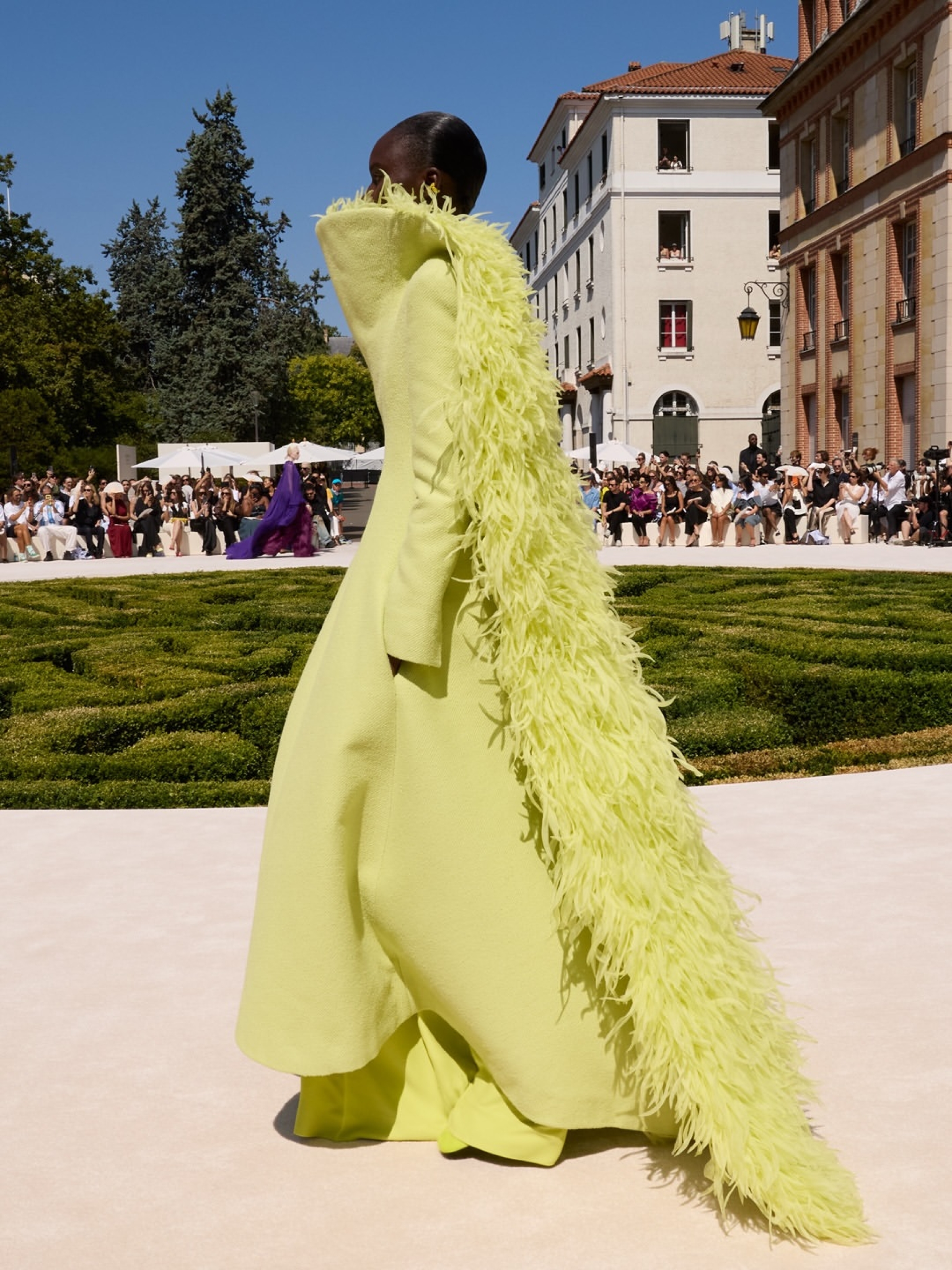
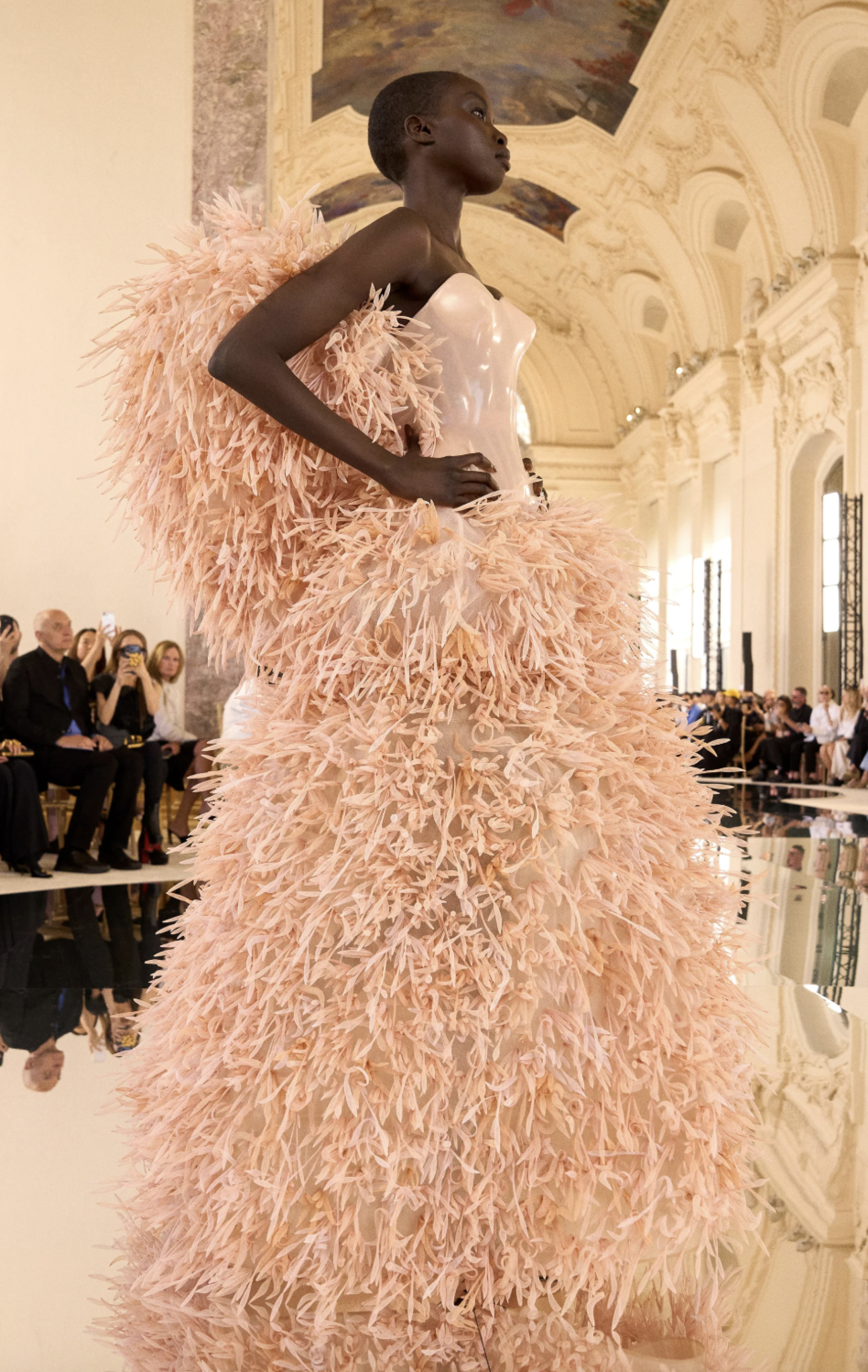
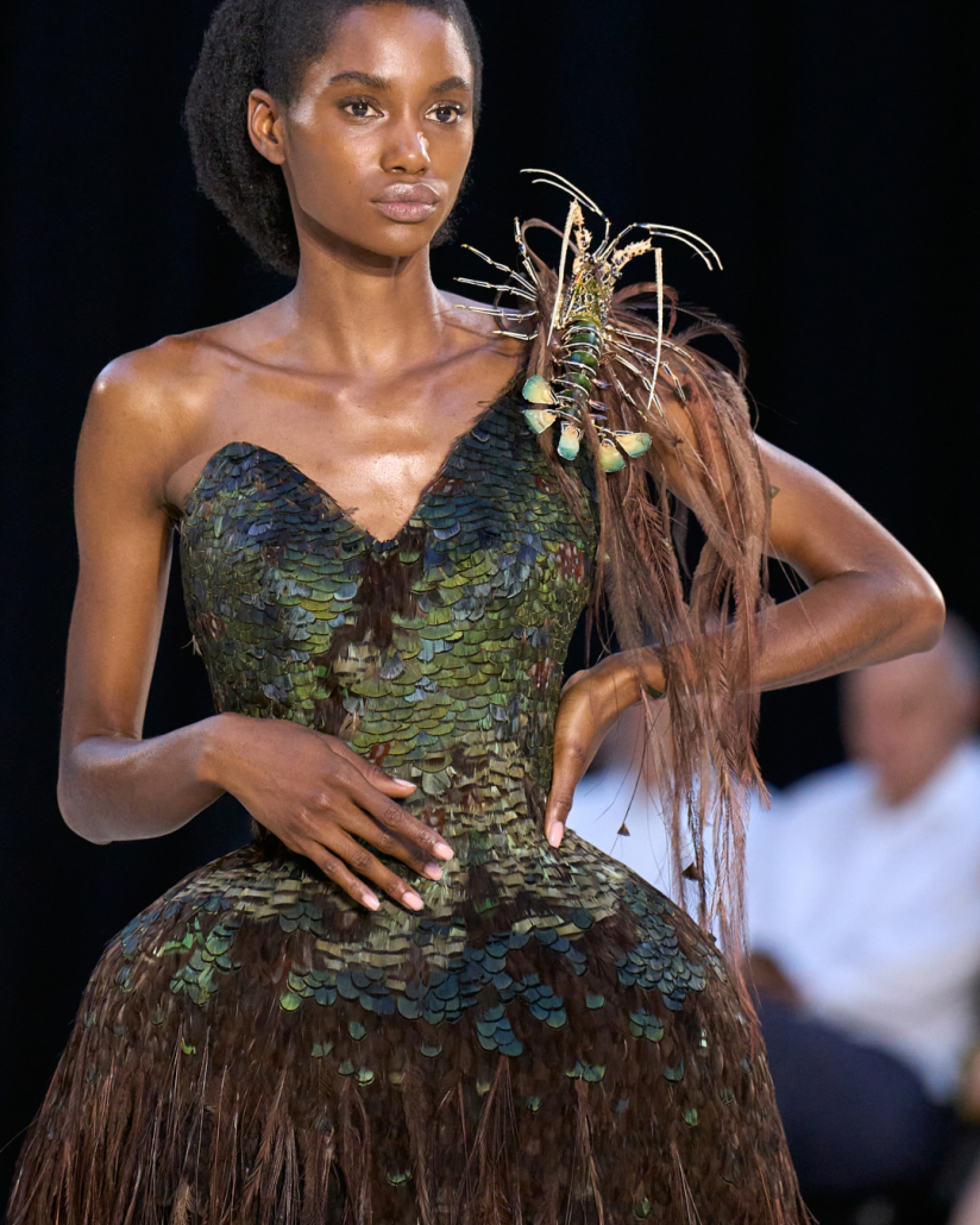
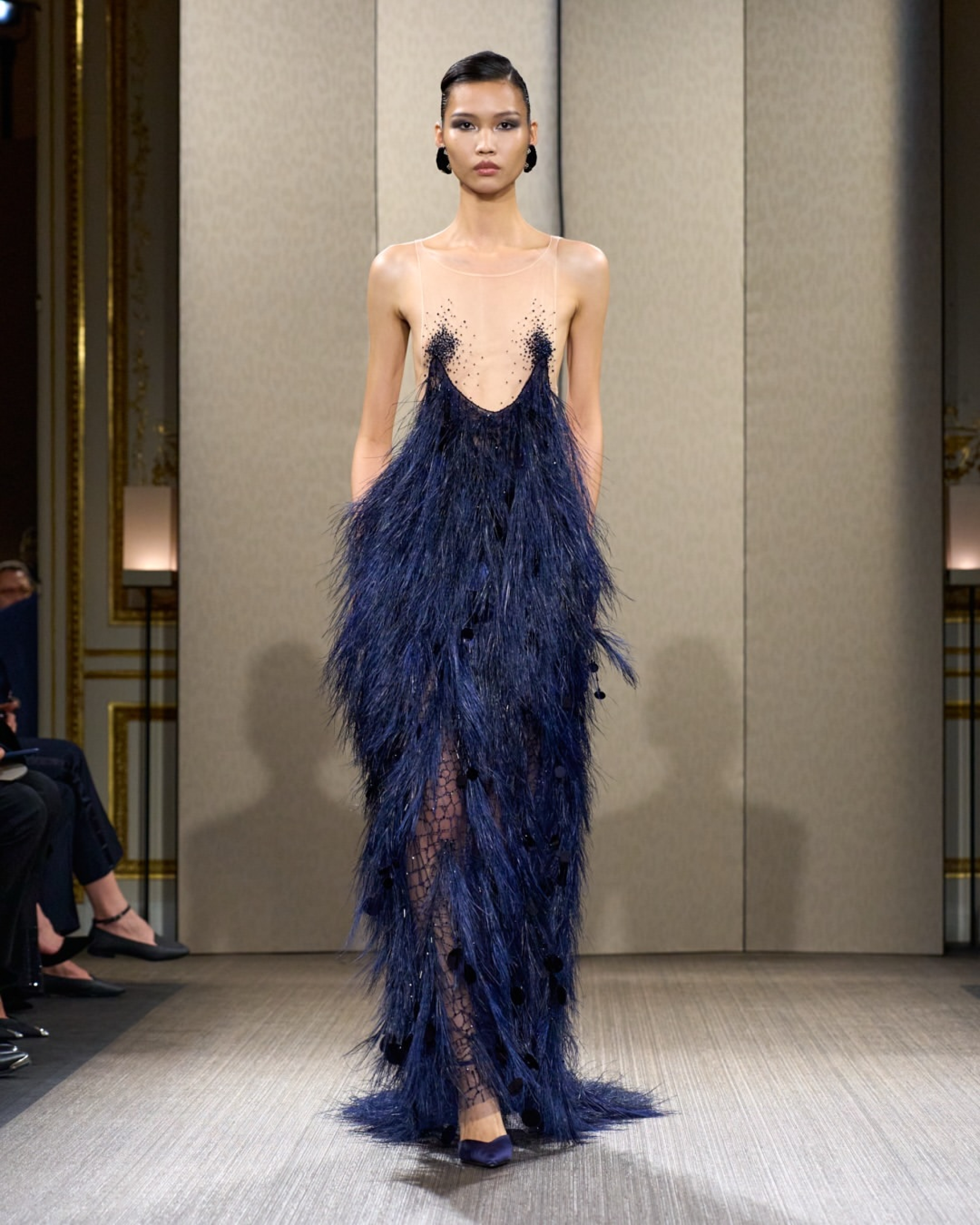
Feathers have been hovering at the edges of couture for seasons (a hem here, a cuff there), but for fall 2026, designers stopped rationing them. Rather than reserving them for the occasional feathered accessory, they built entire looks around them, crafting vibrant, Birds of Paradise-inspired silhouettes that felt whimsical, sculptural, and wonderfully eccentric. Pierpaolo Piccioli's long-awaited (and much-needed) debut for Balenciaga did not disappoint. He seemingly made the house feel elegant again, leading with monumental feathered looks that felt architectural and statement-making without ever feeling heavy. If this is a preview of what's to come, we'd happily see the idea translated into a full feathered wedding dress. Ashi Studio went full throttle too, creating silhouettes that felt as exotic as they did couture. And, of course, no conversation about pushing fashion's boundaries would be complete without Jean Paul Gaultier, where guest designer Duran Lantink proved feathers could hug the body just as convincingly as embroidery. Couture has always borrowed from nature, but this season it took flight.
The Roaring Twenties
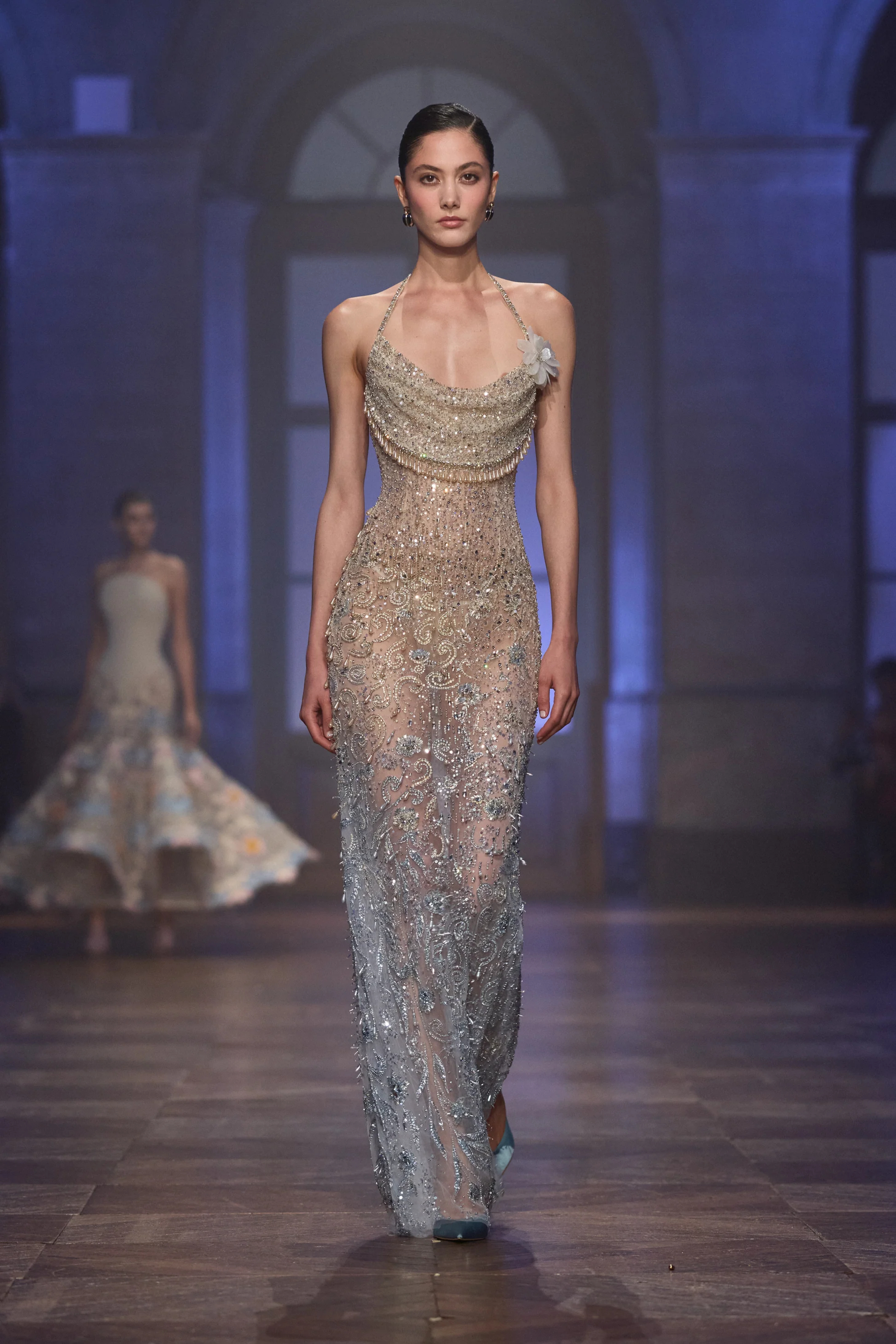
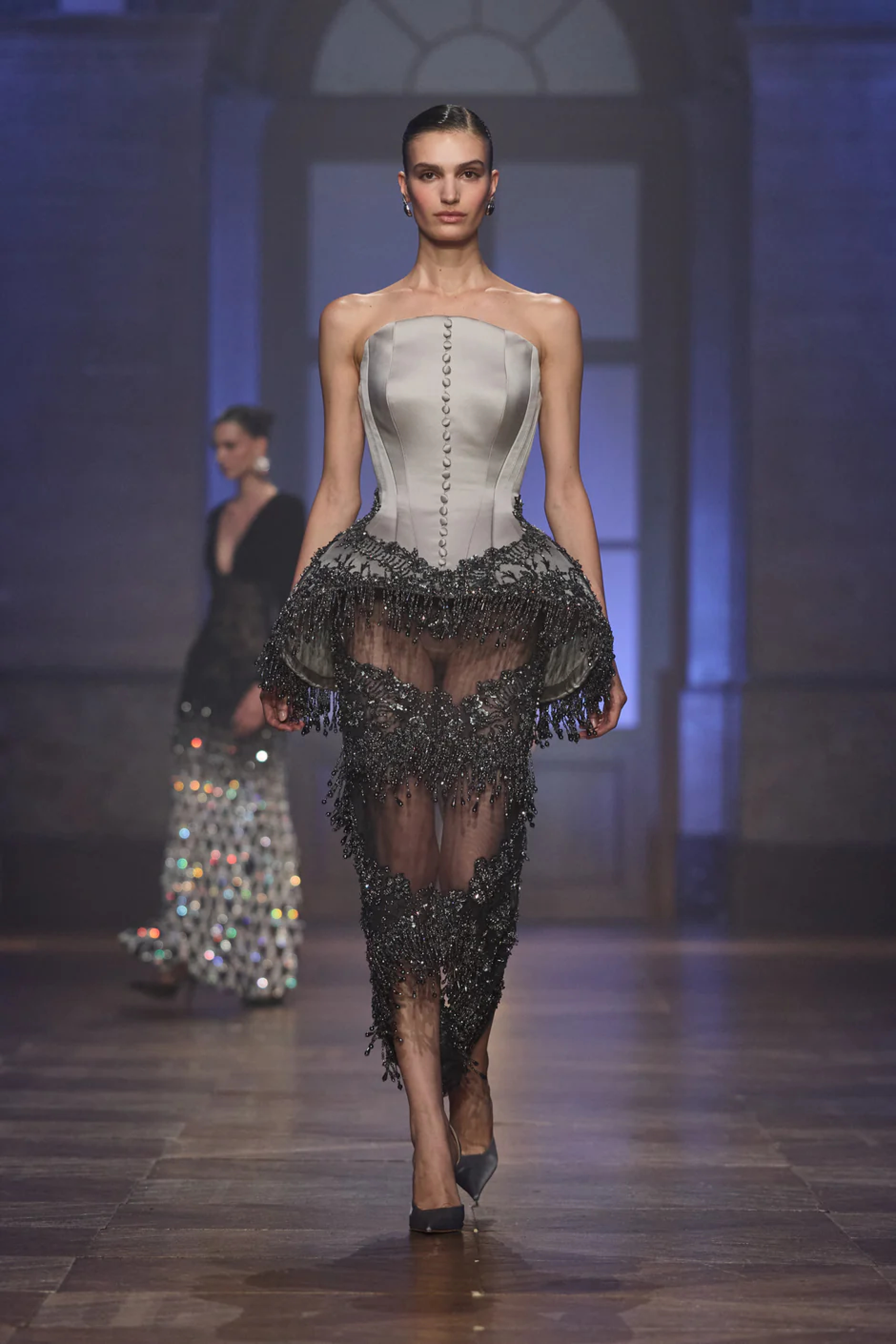
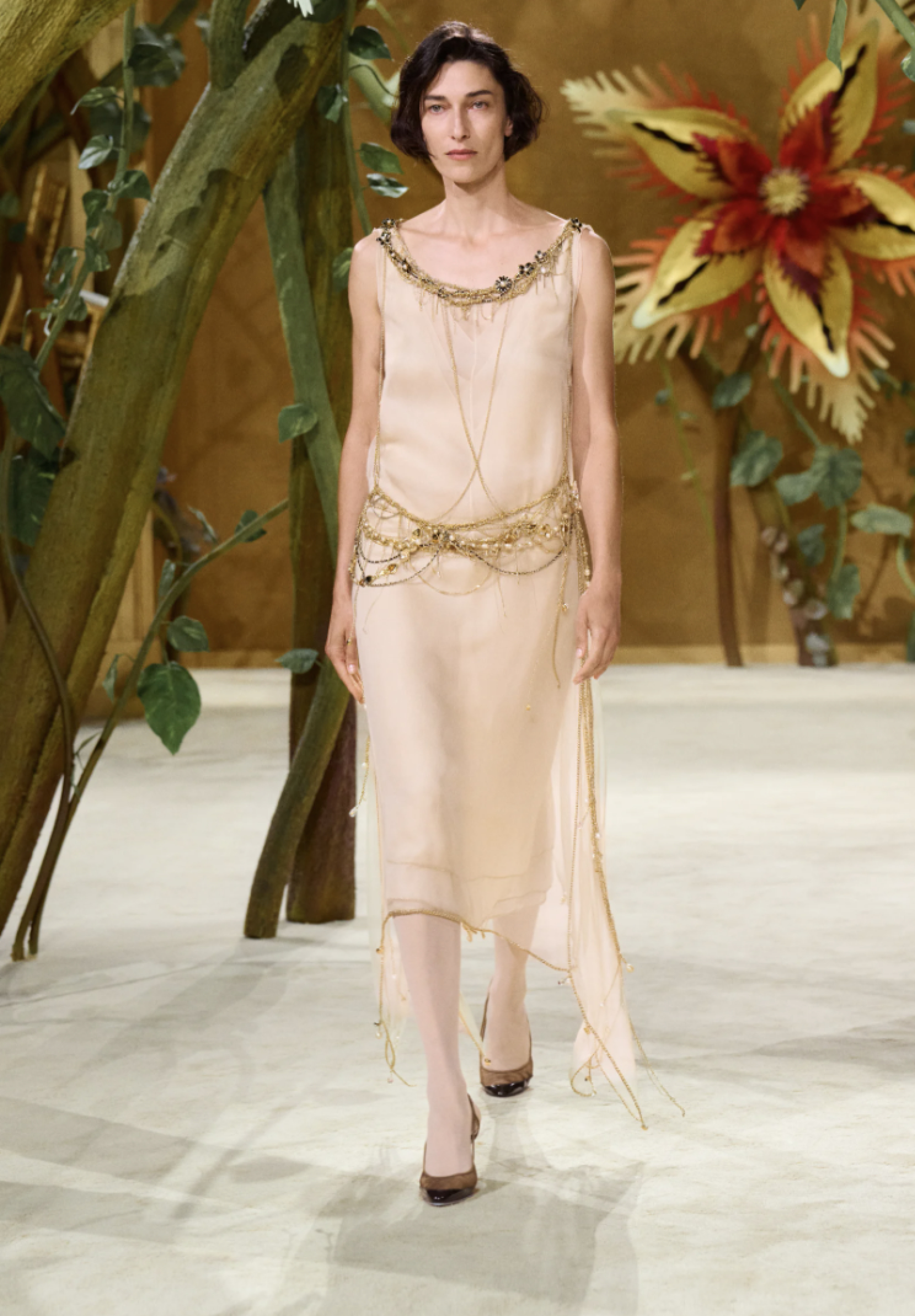
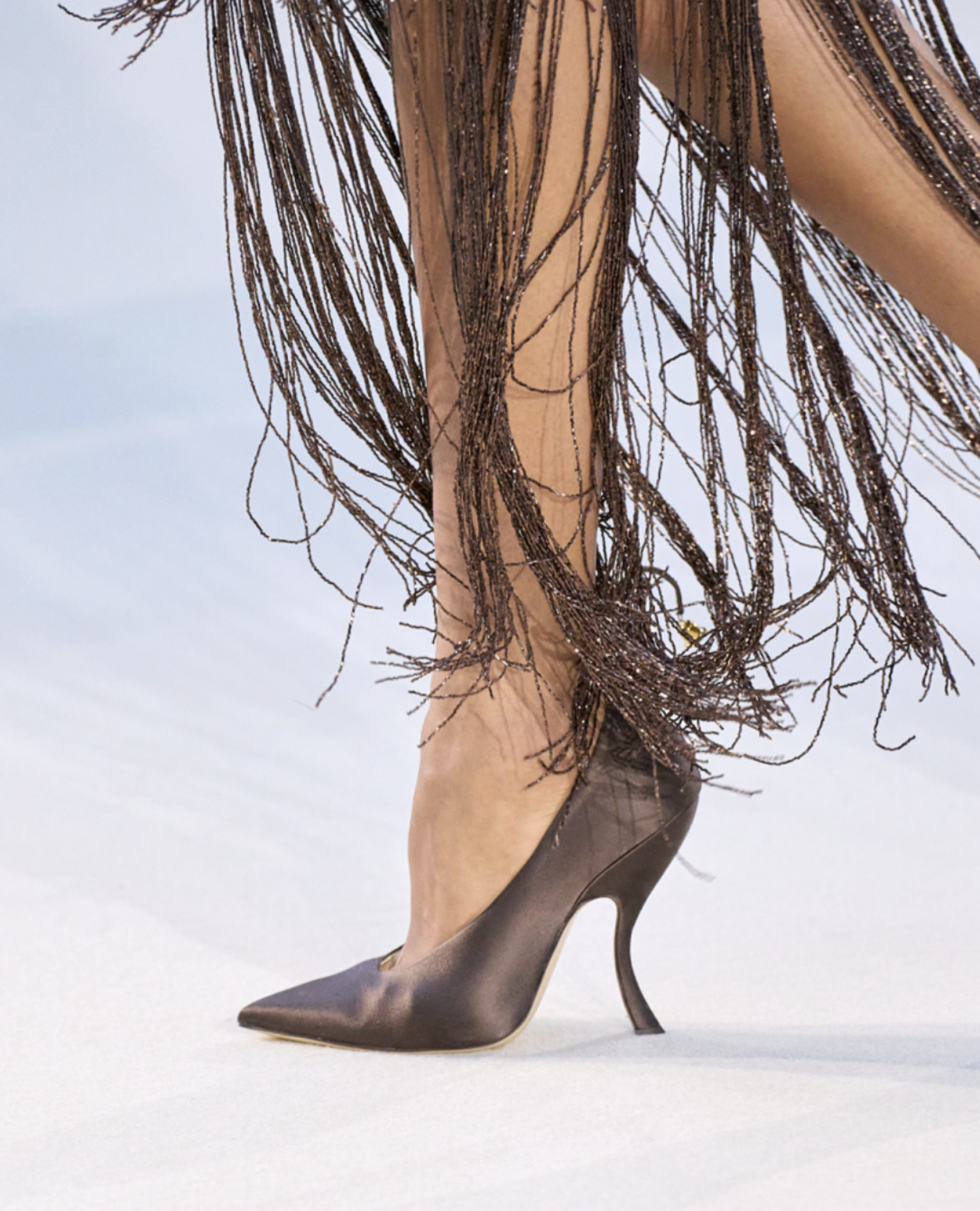
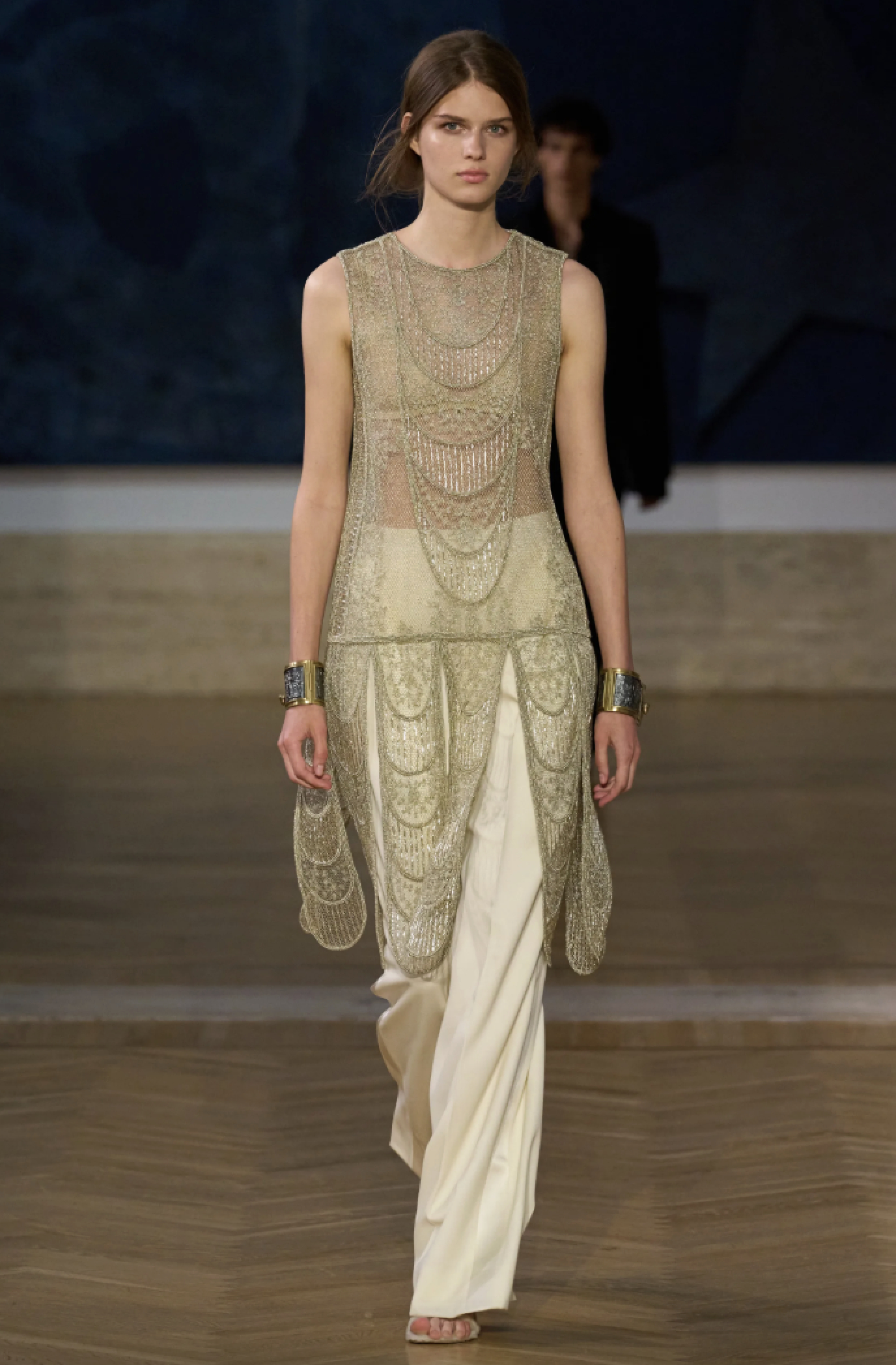
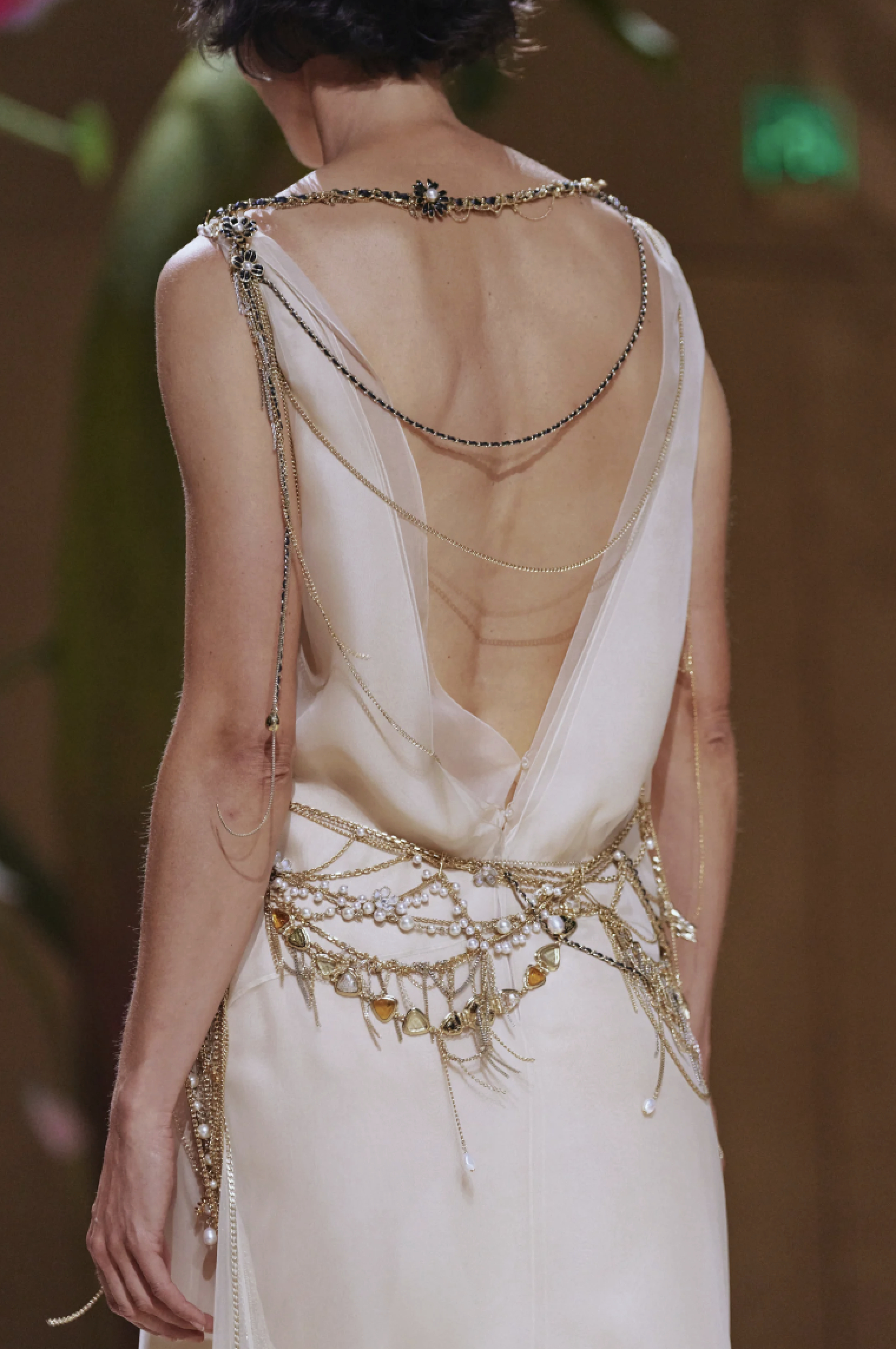
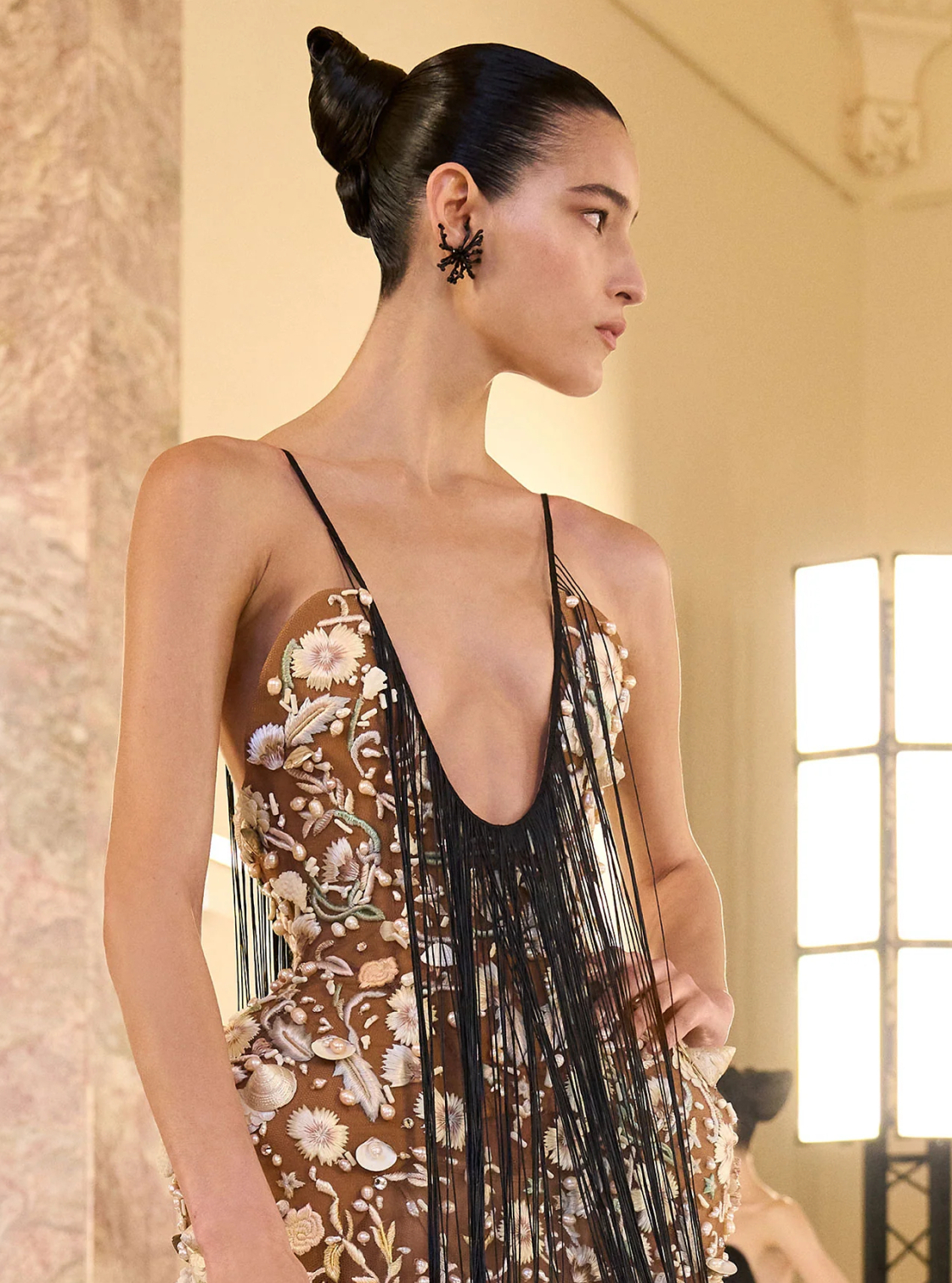
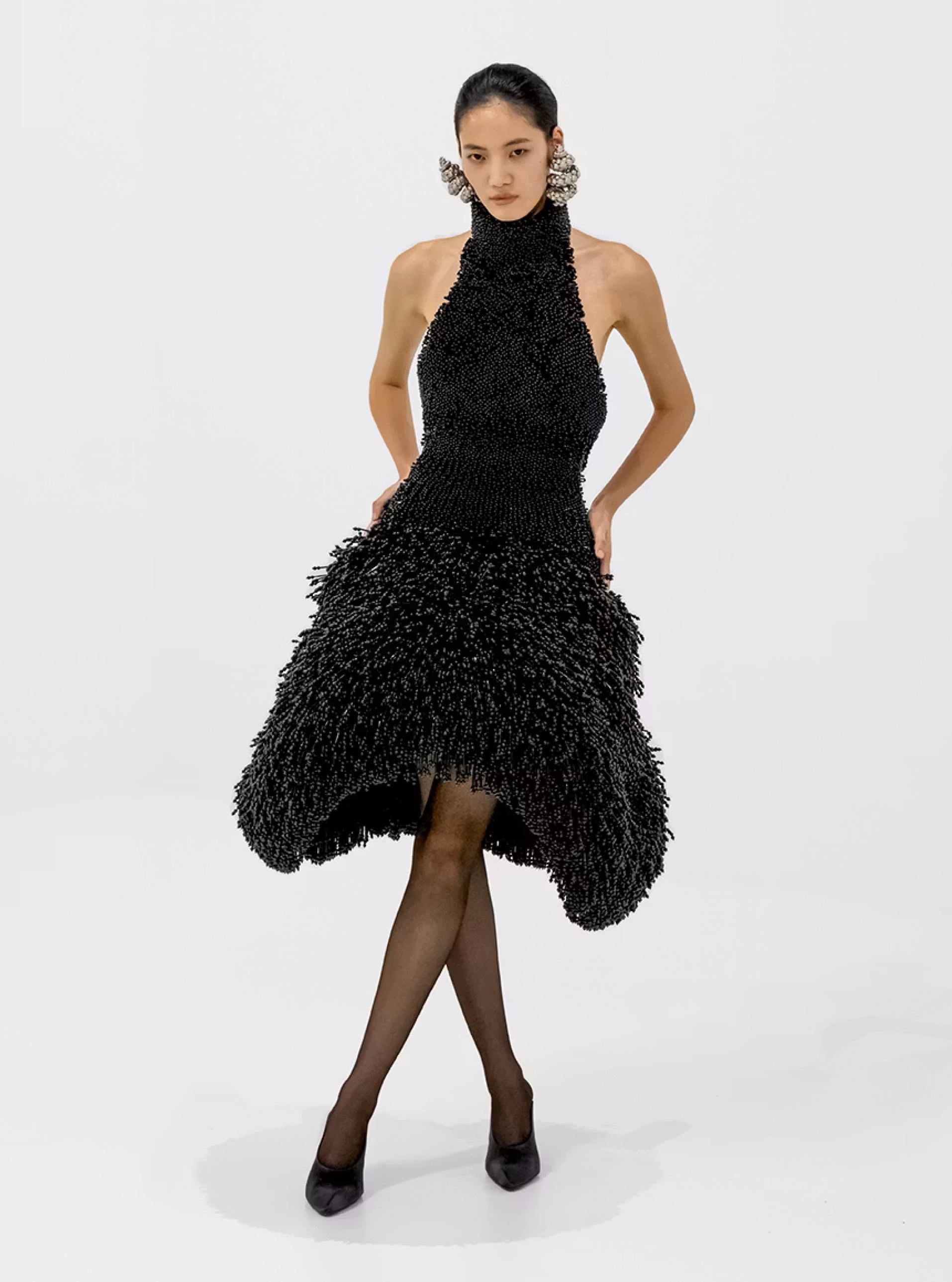
The 1920s are synonymous with glamour and excess, which can make the reference risky if taken too literally. Here, designers delivered the feeling without turning it into a theme. Chanel did it with sheer necklines that felt soft rather than obvious. Fendi leaned into glittering tunics and Art Deco lines, while Schiaparelli made fringe feel like something you’d actually want to move in. There were a few very Gatsby moments, especially from Ashi Studio, whose runway is reliably couture's glitteriest, but enough modern polish to keep the whole thing from feeling too referential. Together, the looks got at what the '20s actually did best: glamour with the stiffness taken out." In bridal, this could be especially chic because it offers glamour without making the whole dress feel overly done.
Organic Matter
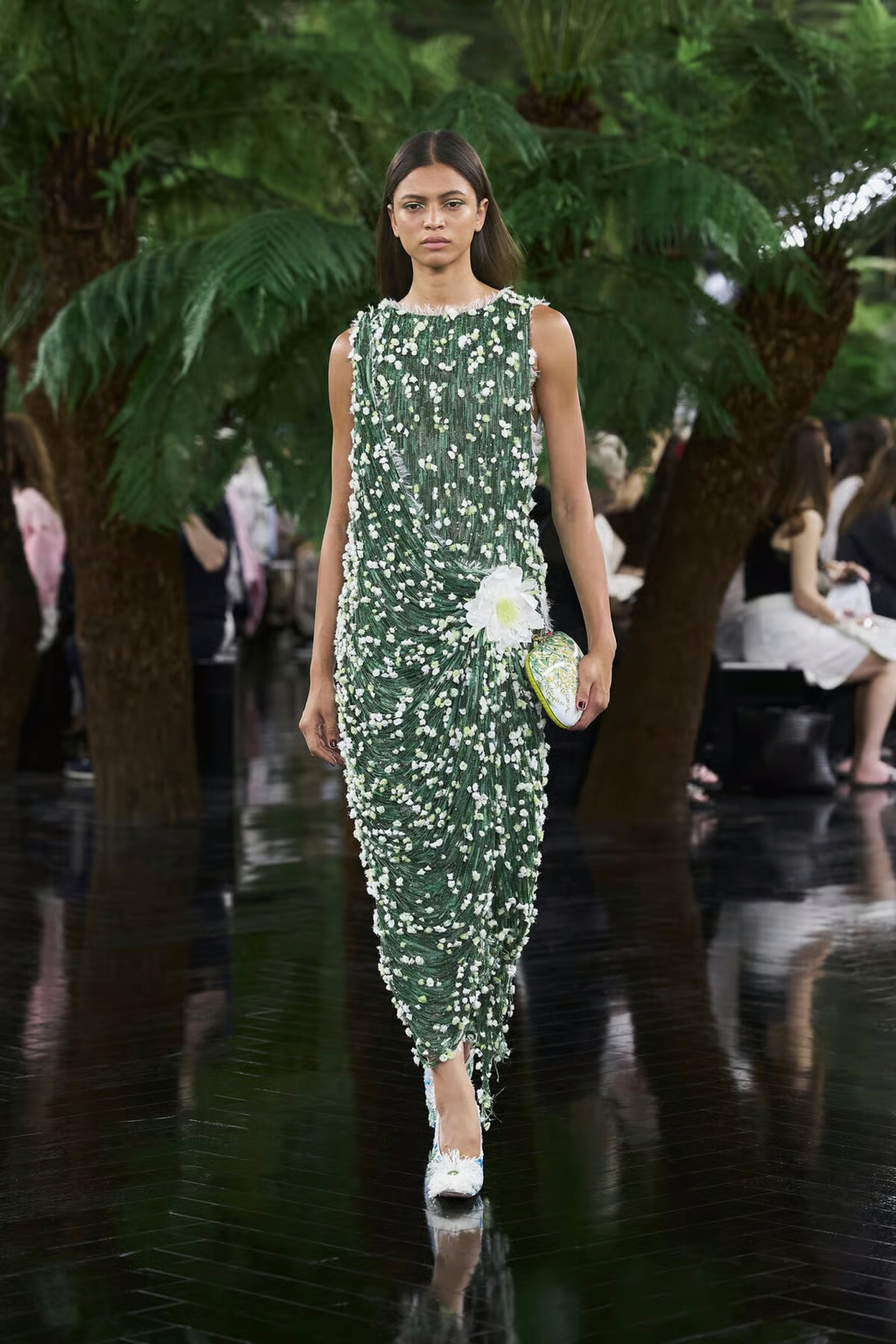
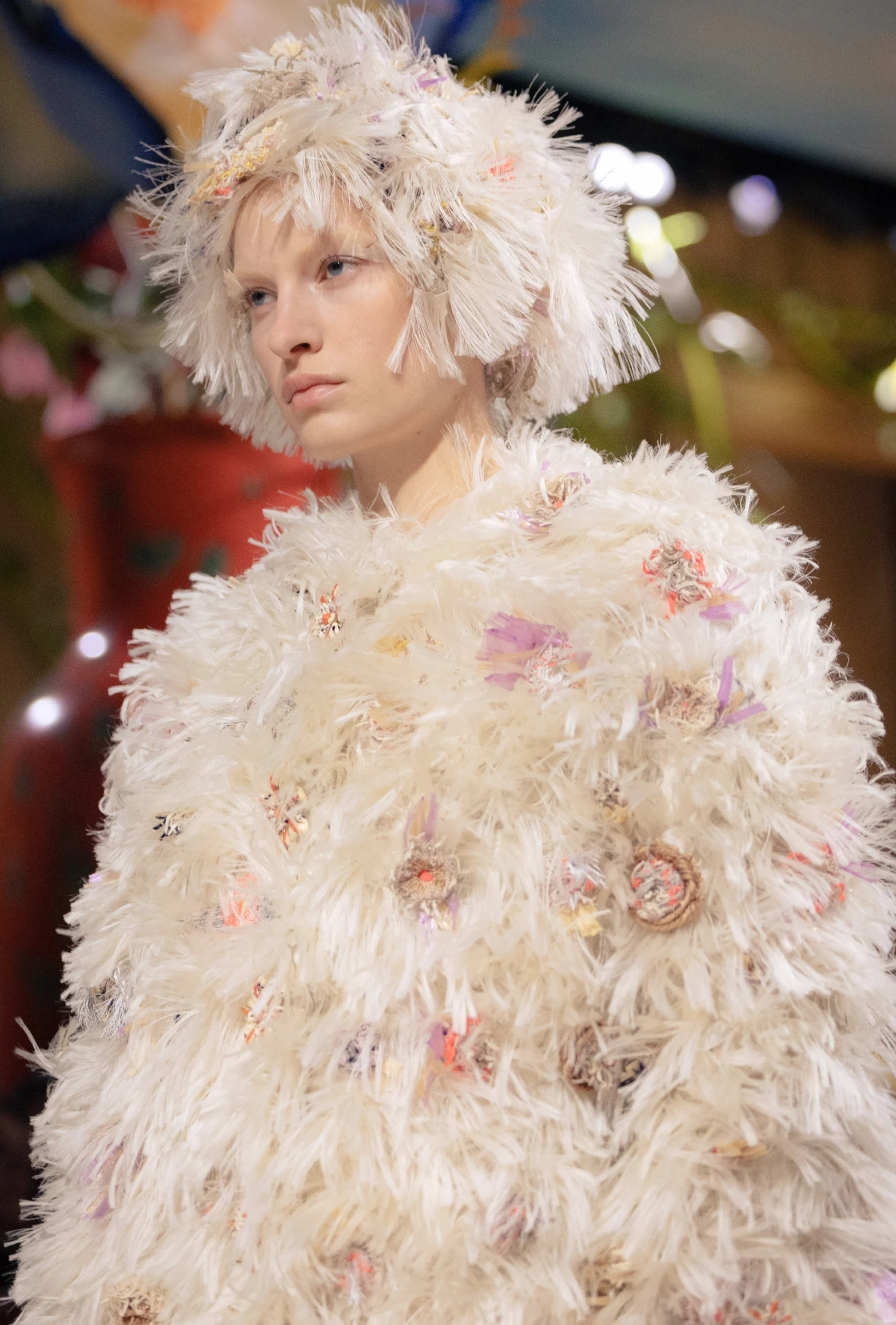
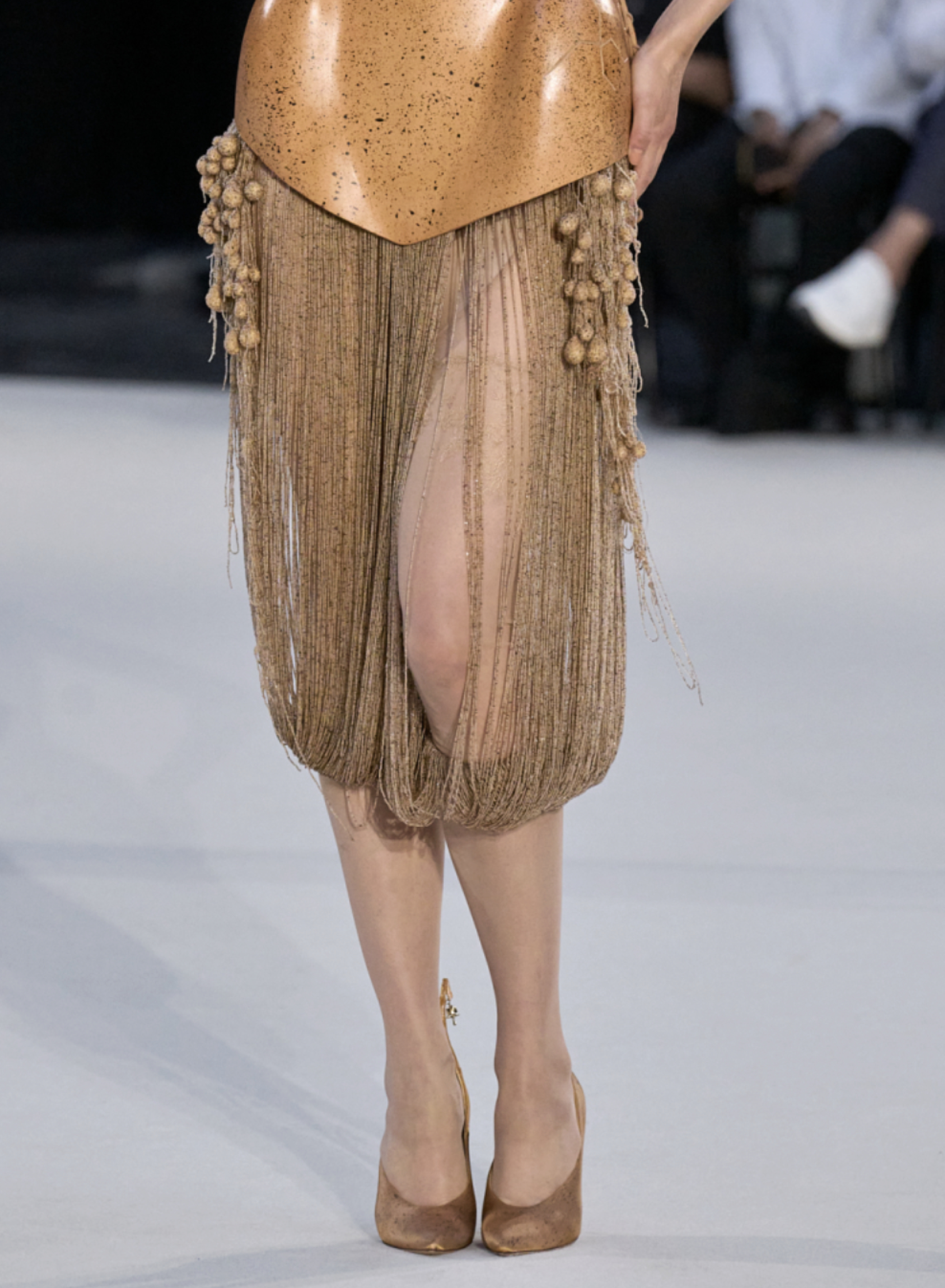
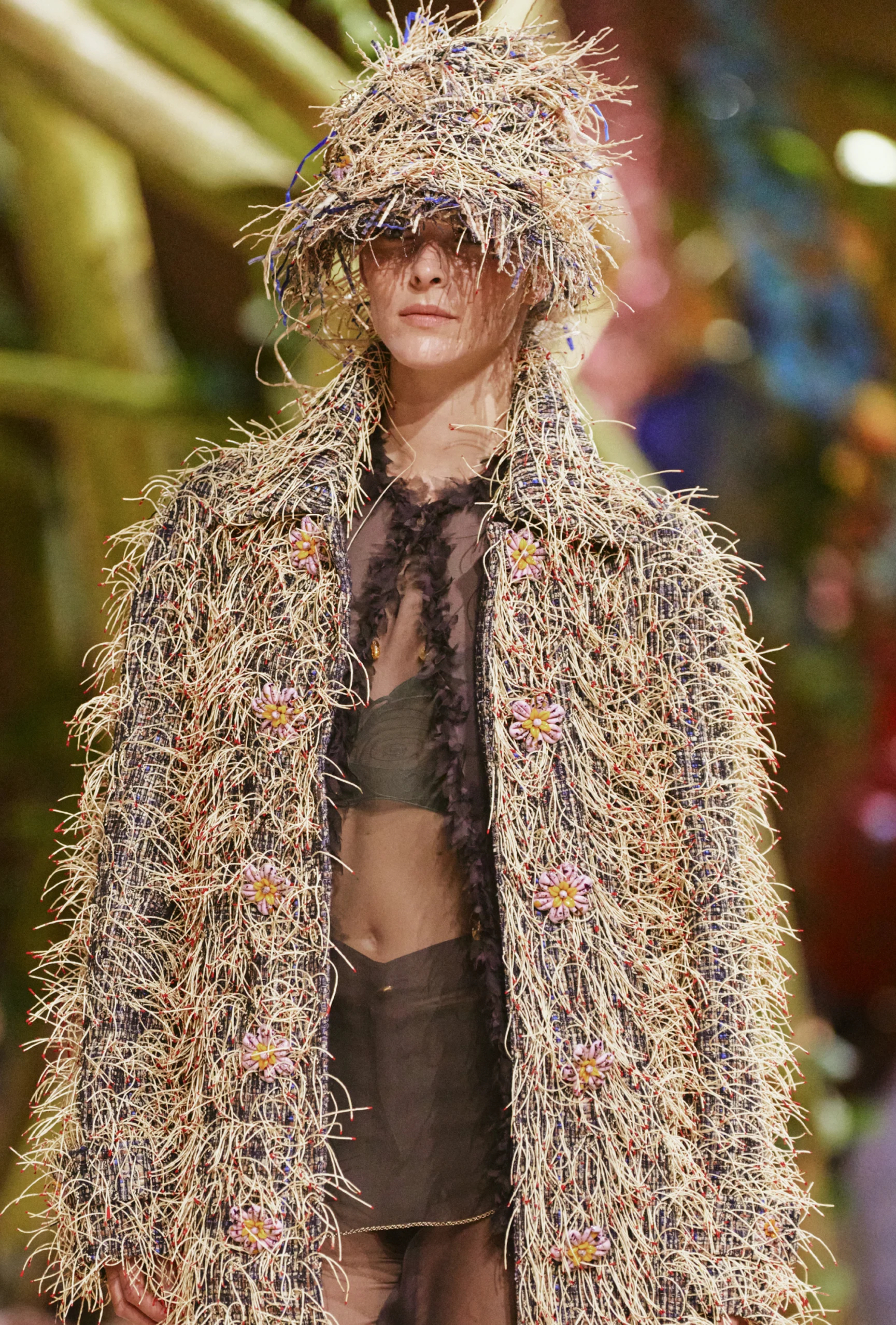
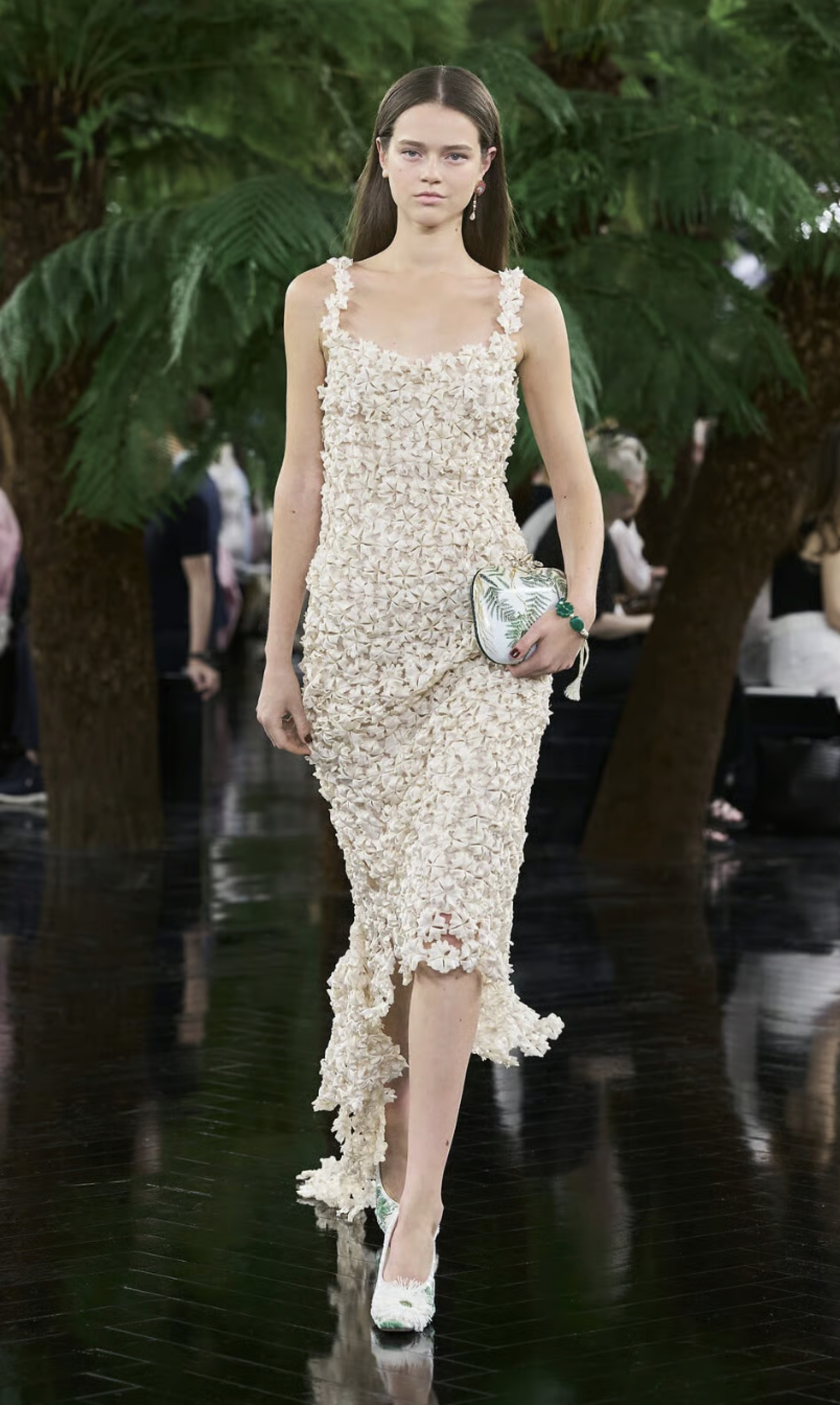
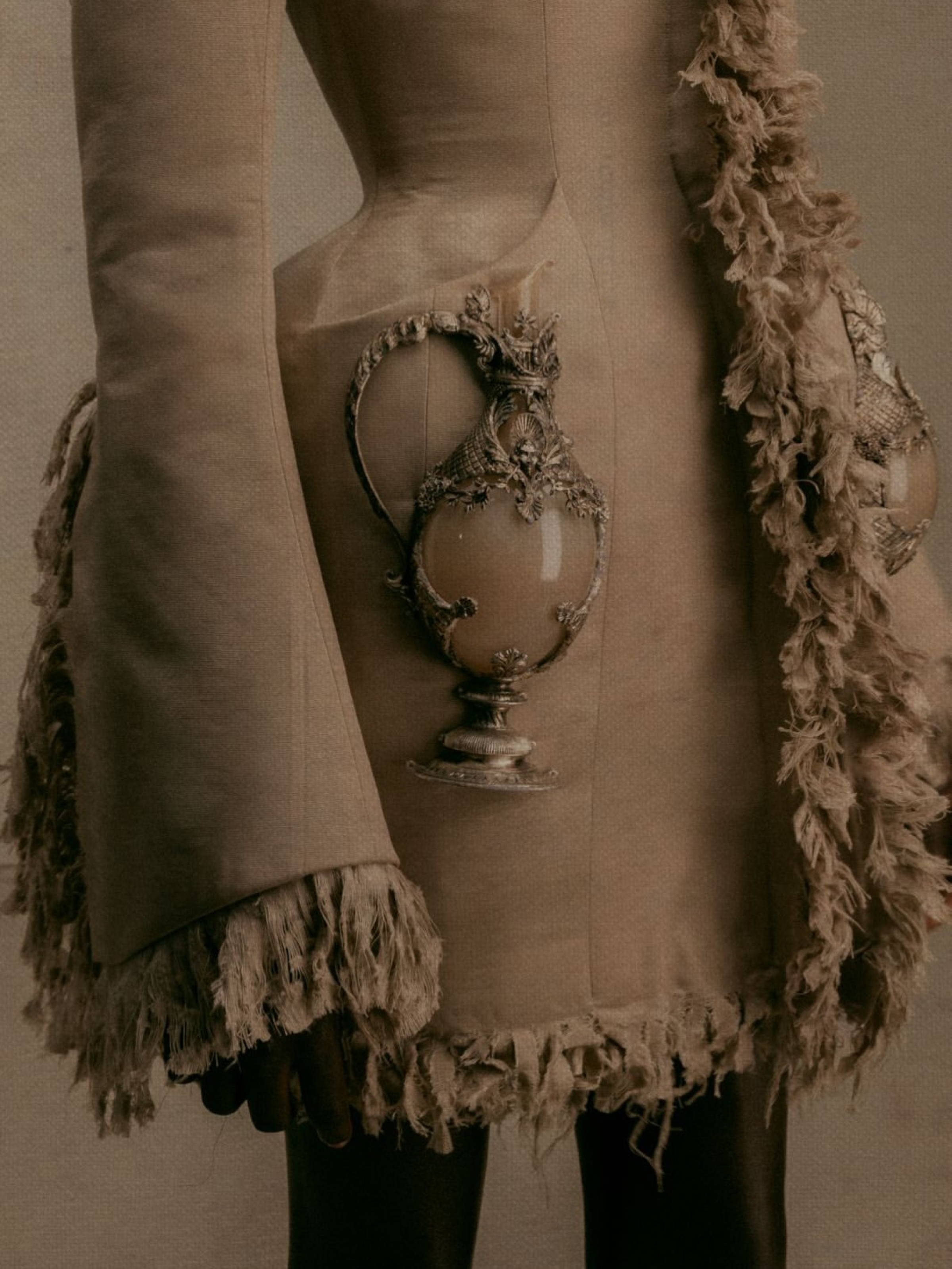
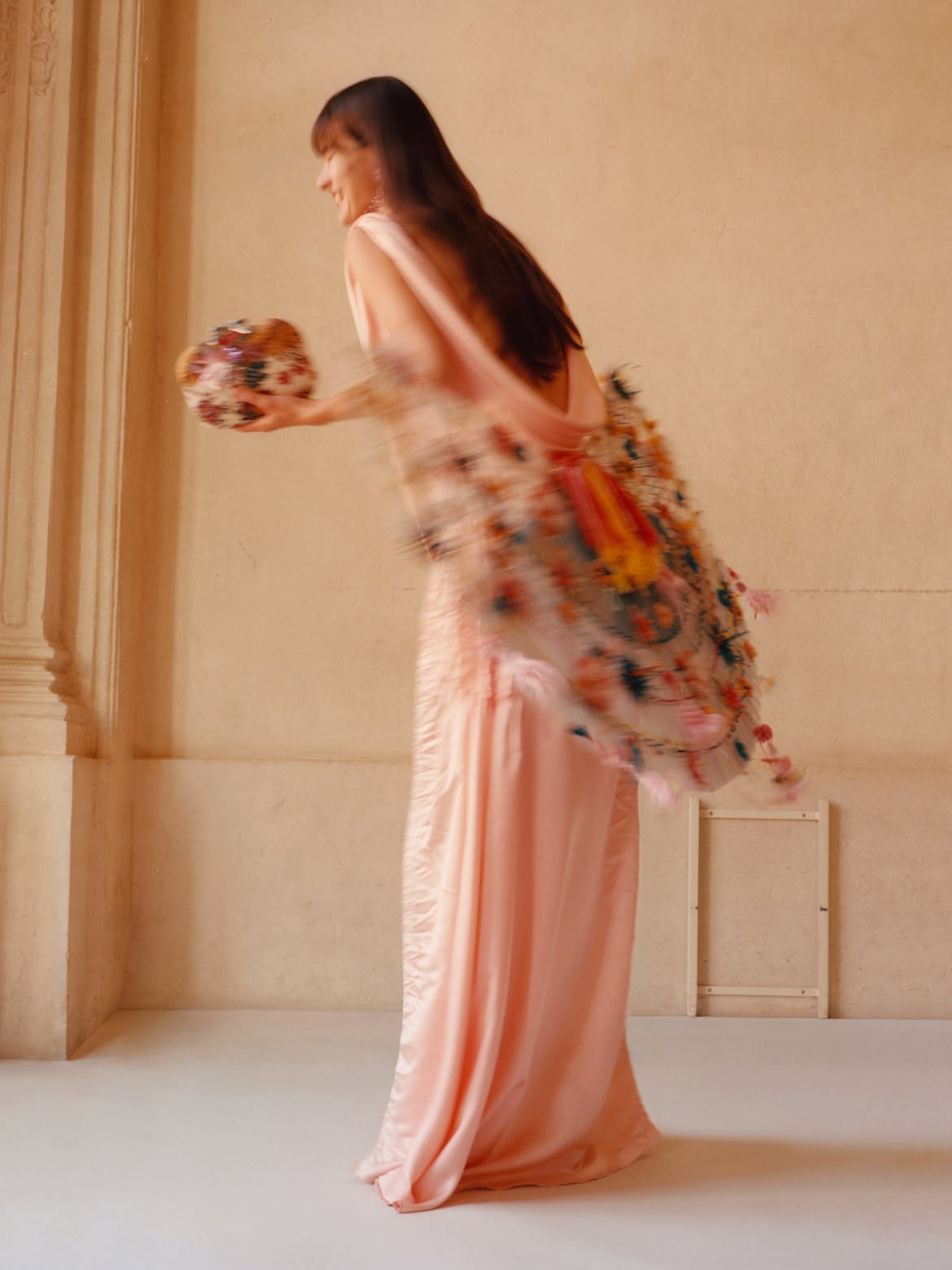
The wild crept into the ateliers this season. Raffia, straw, netting, clay, vines, dried grass, materials you'd sooner expect at a farm stand than on a couture runway, and yet. Chanel surprised the most, with the new creative director Matthieu Blazy, leaning into woven textures, straw jackets, and loose florals that felt genuinely undone for a house built on polish. Dior took a gentler approach, working nature motifs and open, web-like textures into dresses that looked grown rather than sewn. Ashi Studio pushed it somewhere more sculptural: a clay-colored bodice and matching bag that seemed molded by hand before falling away into fringe. This season was proof that organic doesn’t have to mean casual.
Very Victorian
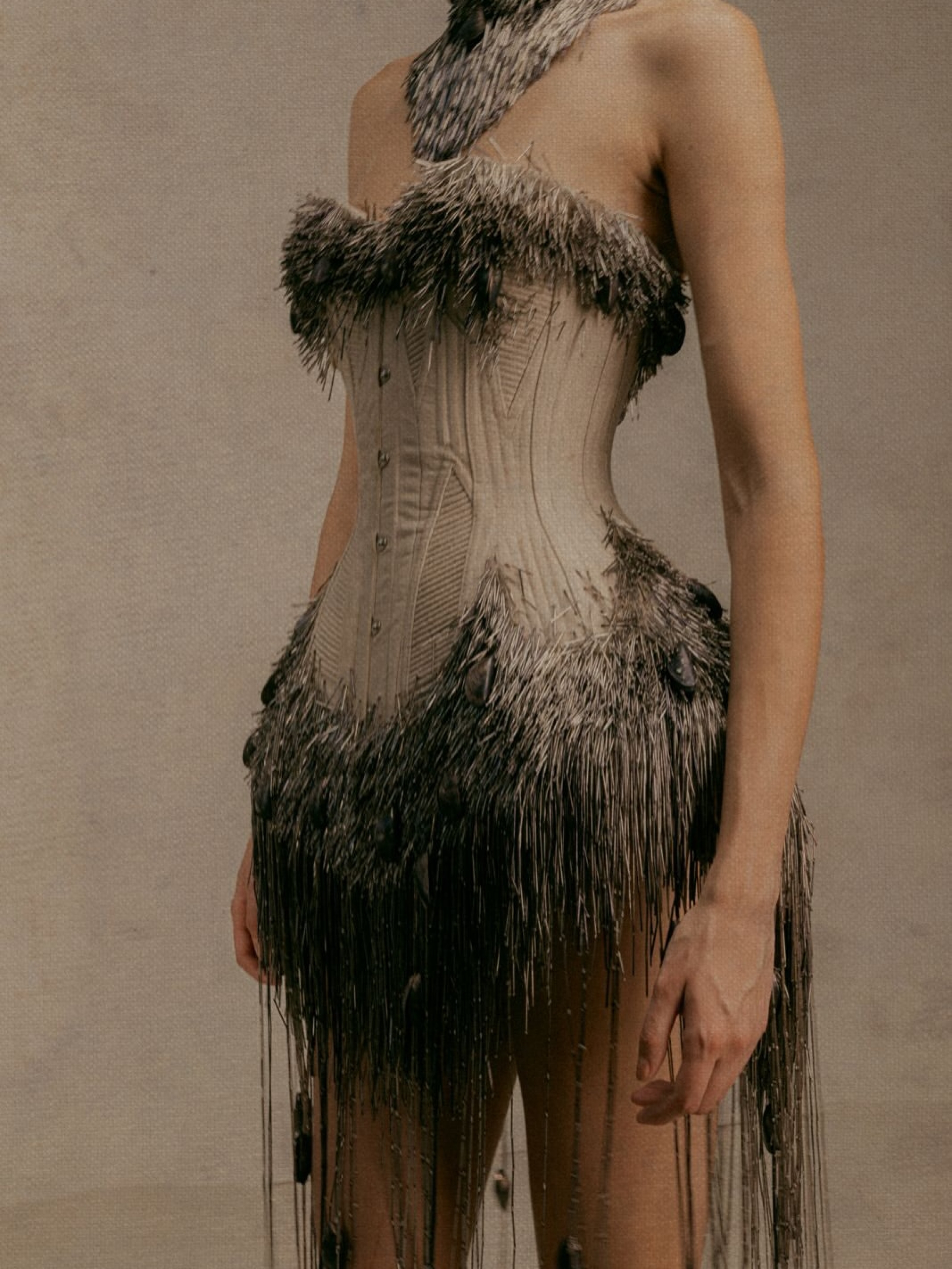
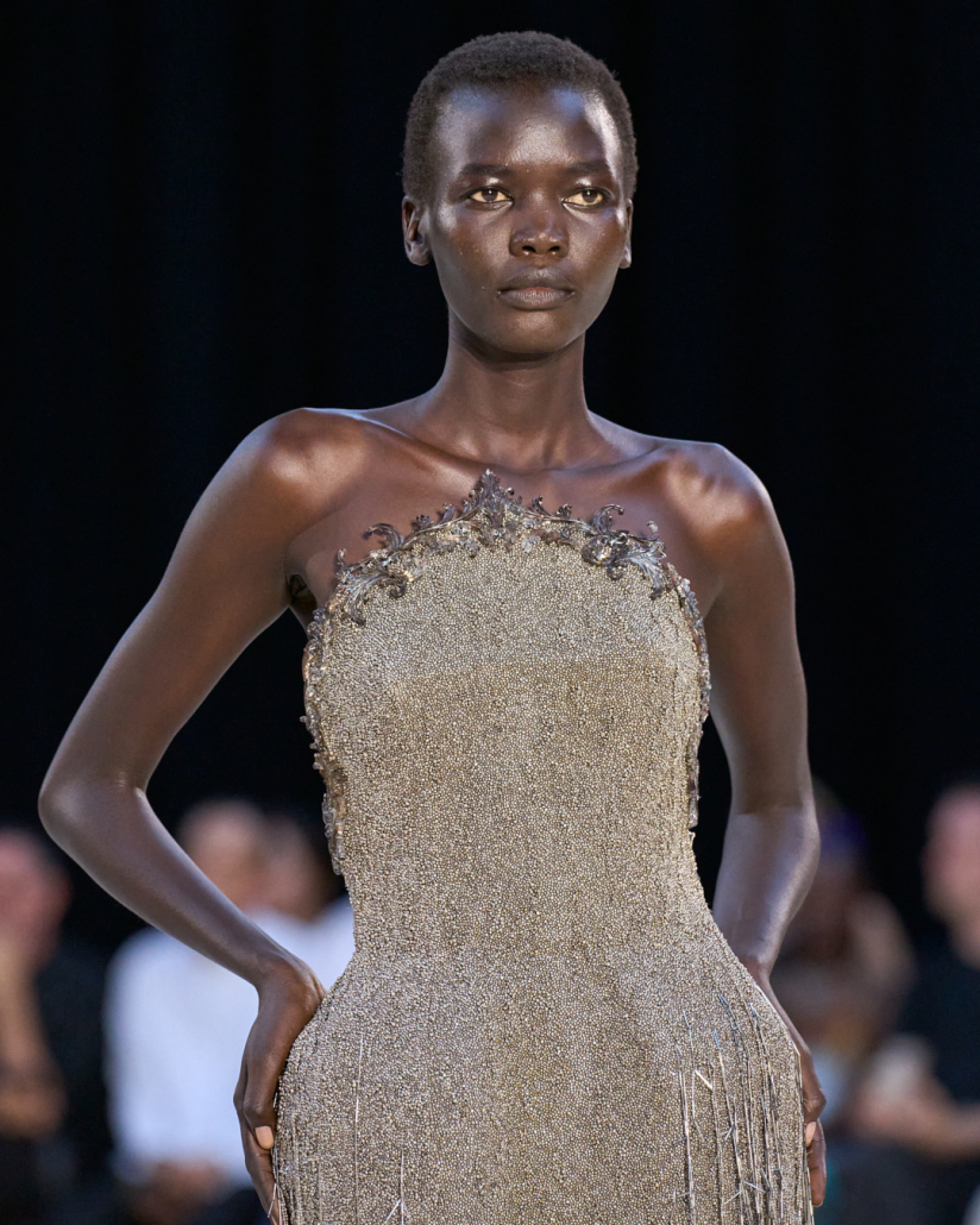
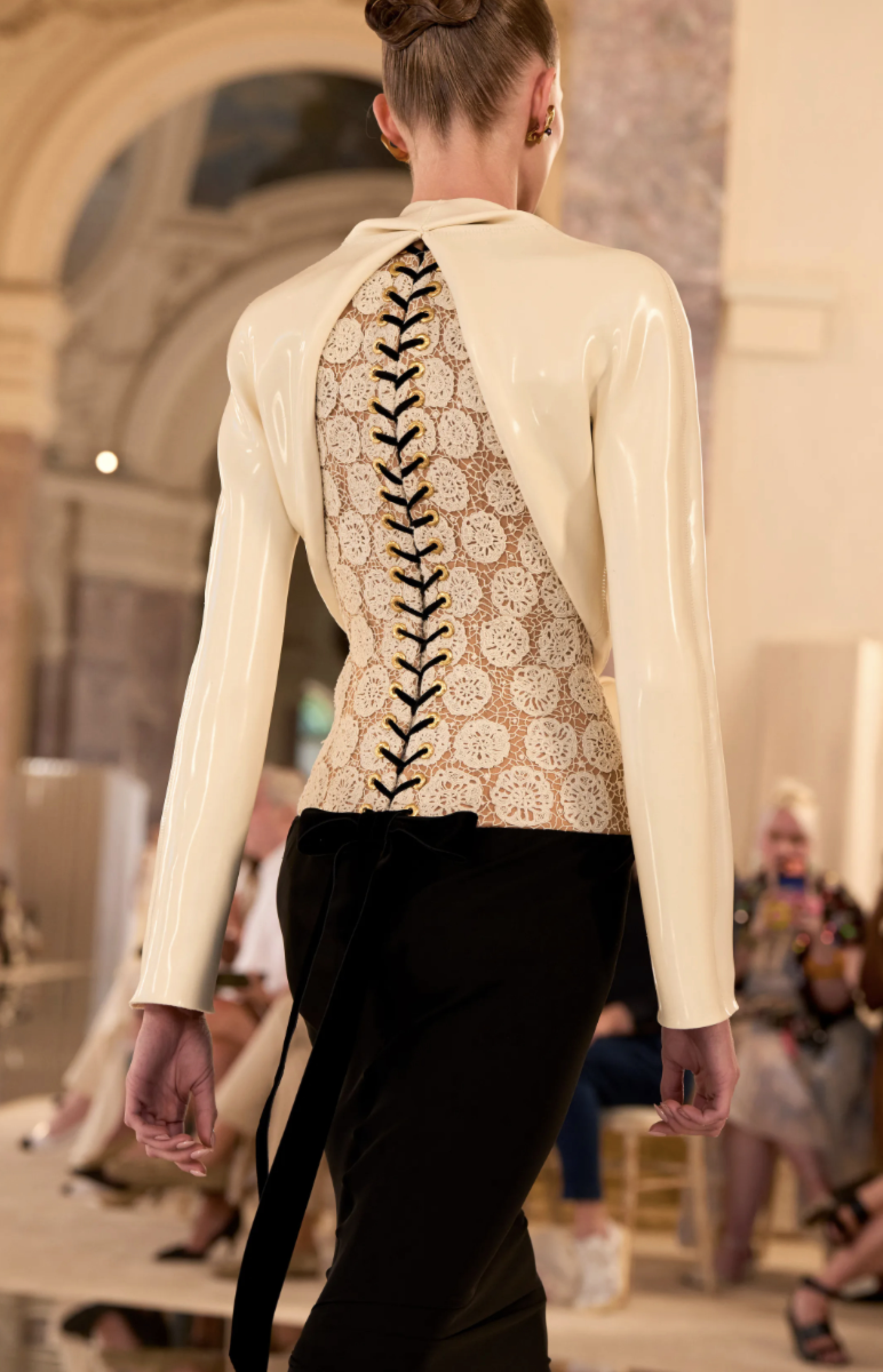
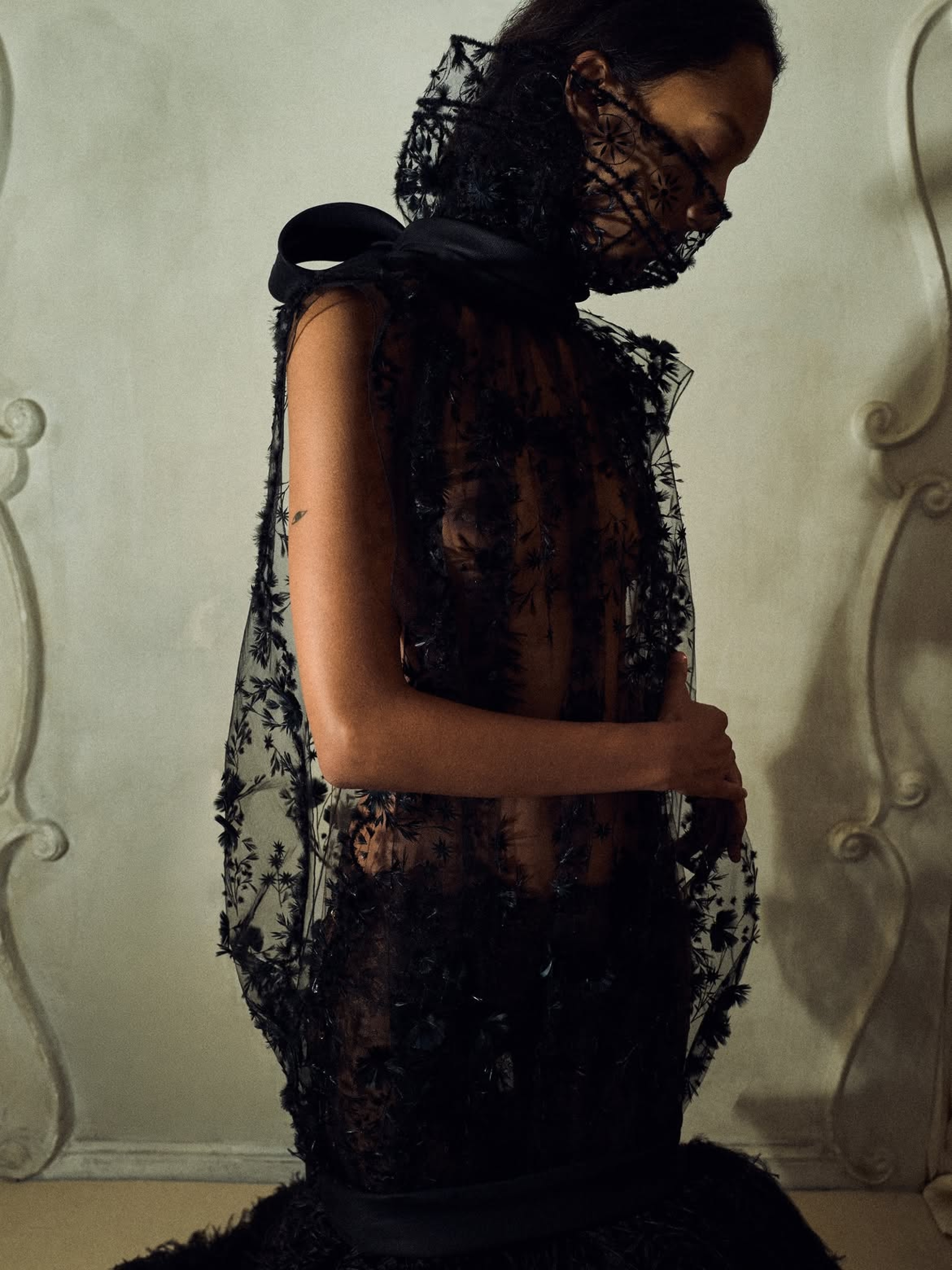
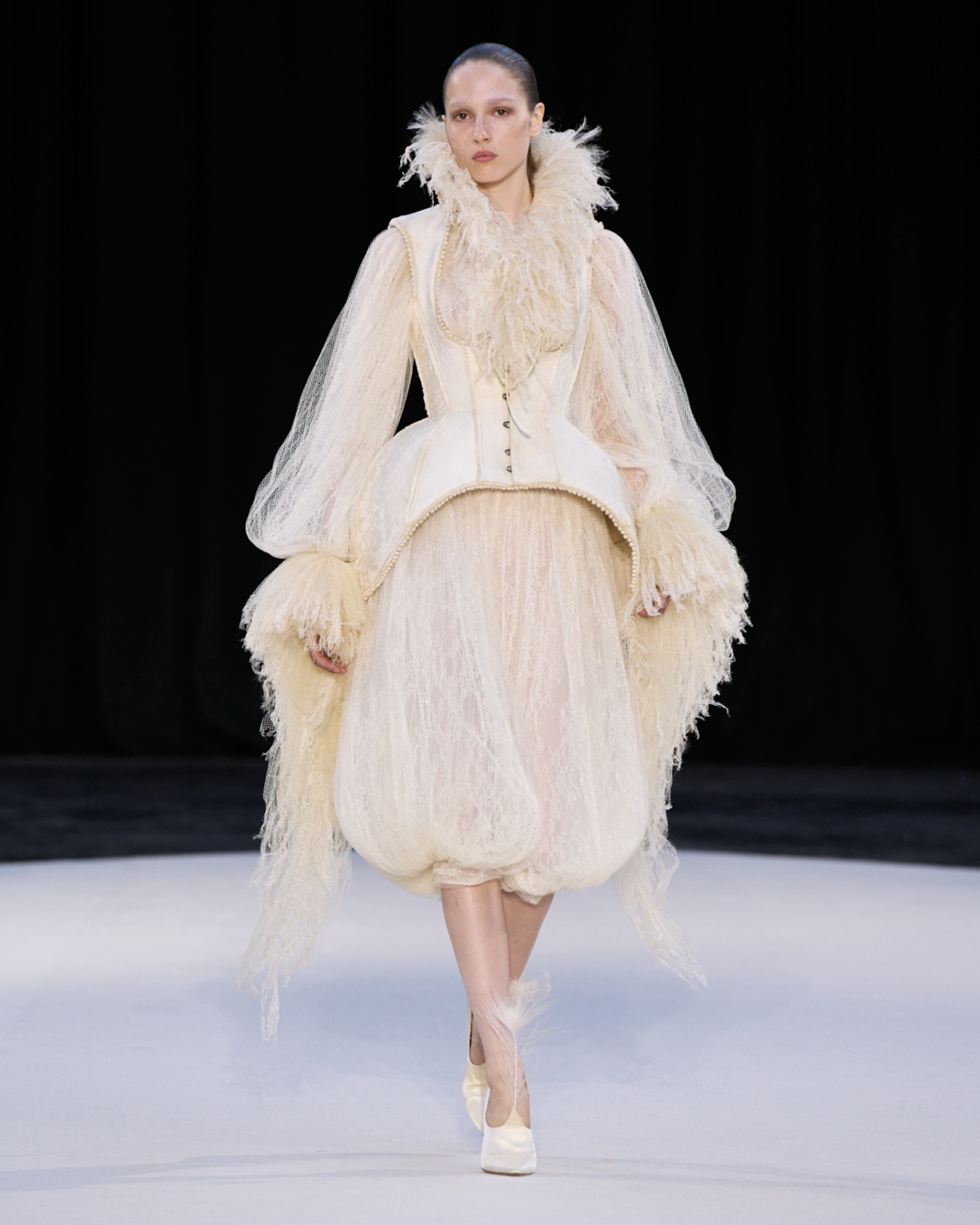
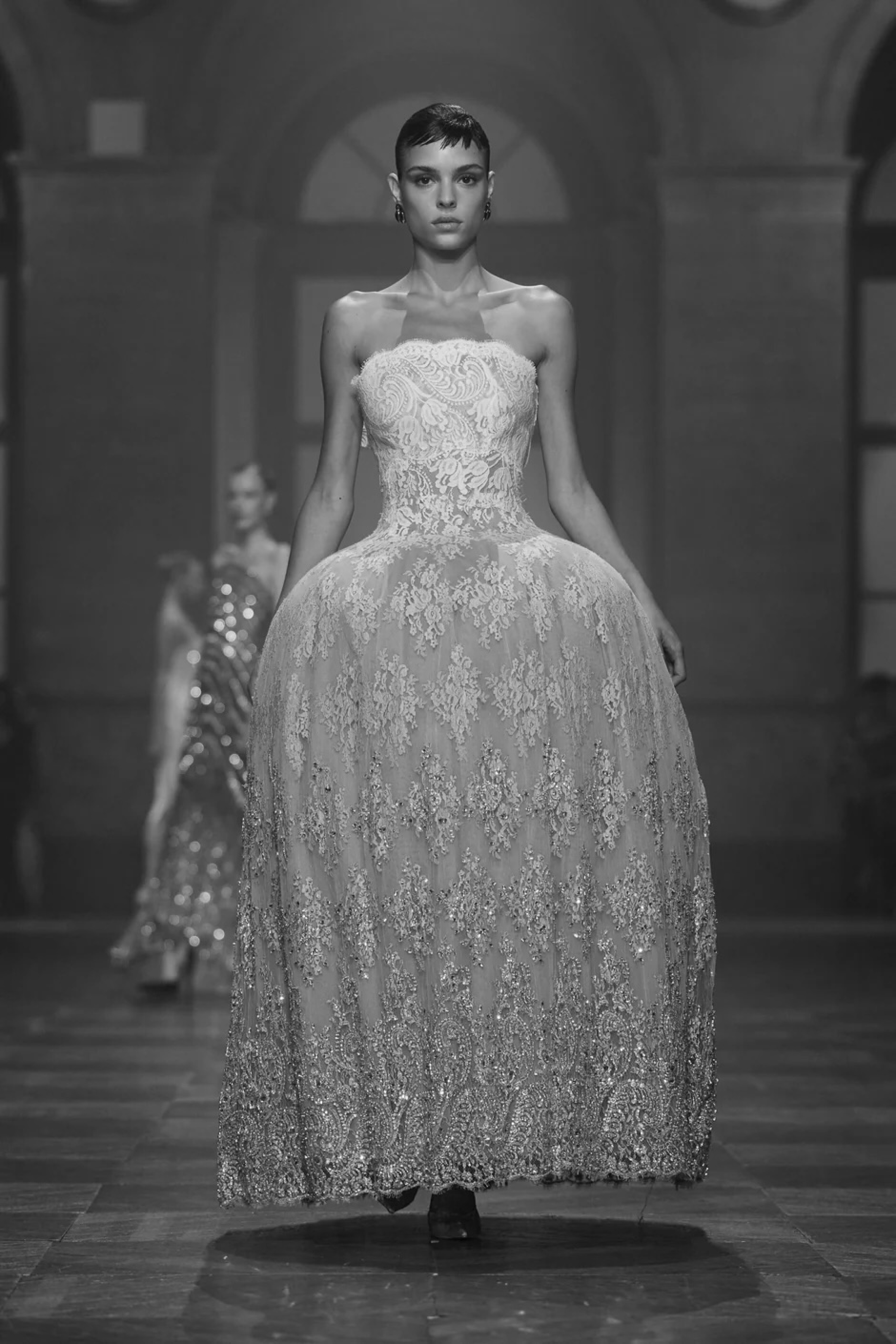
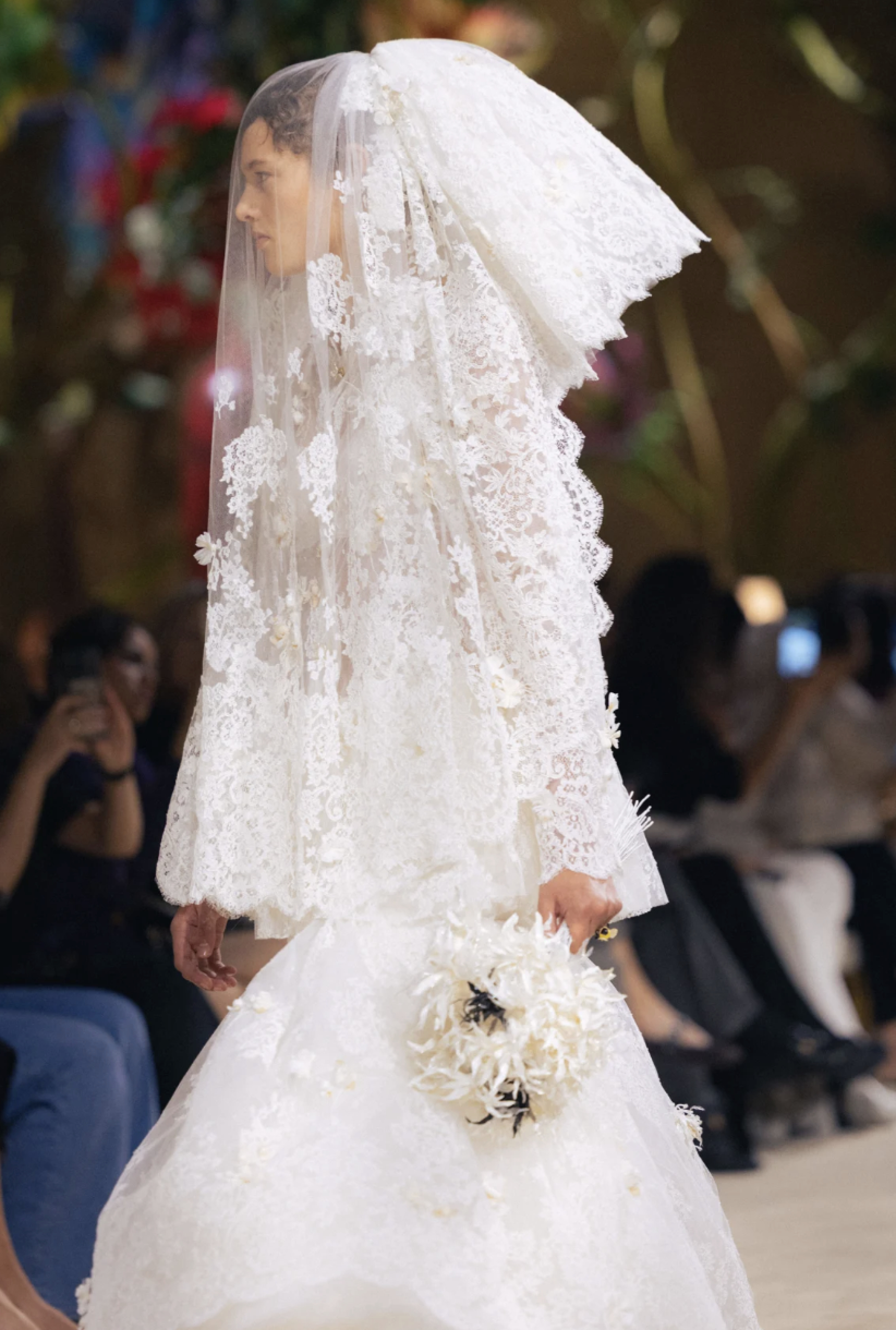
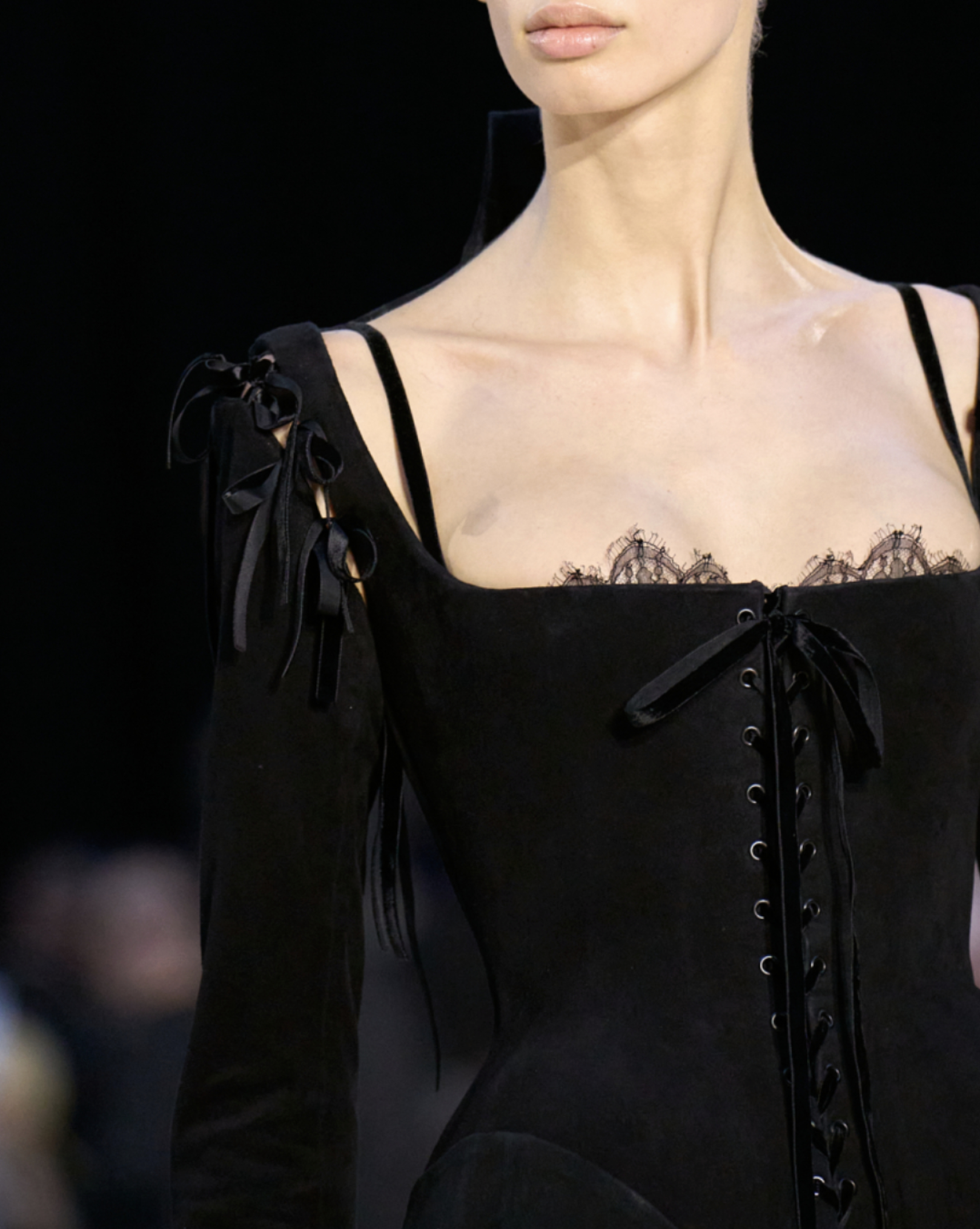
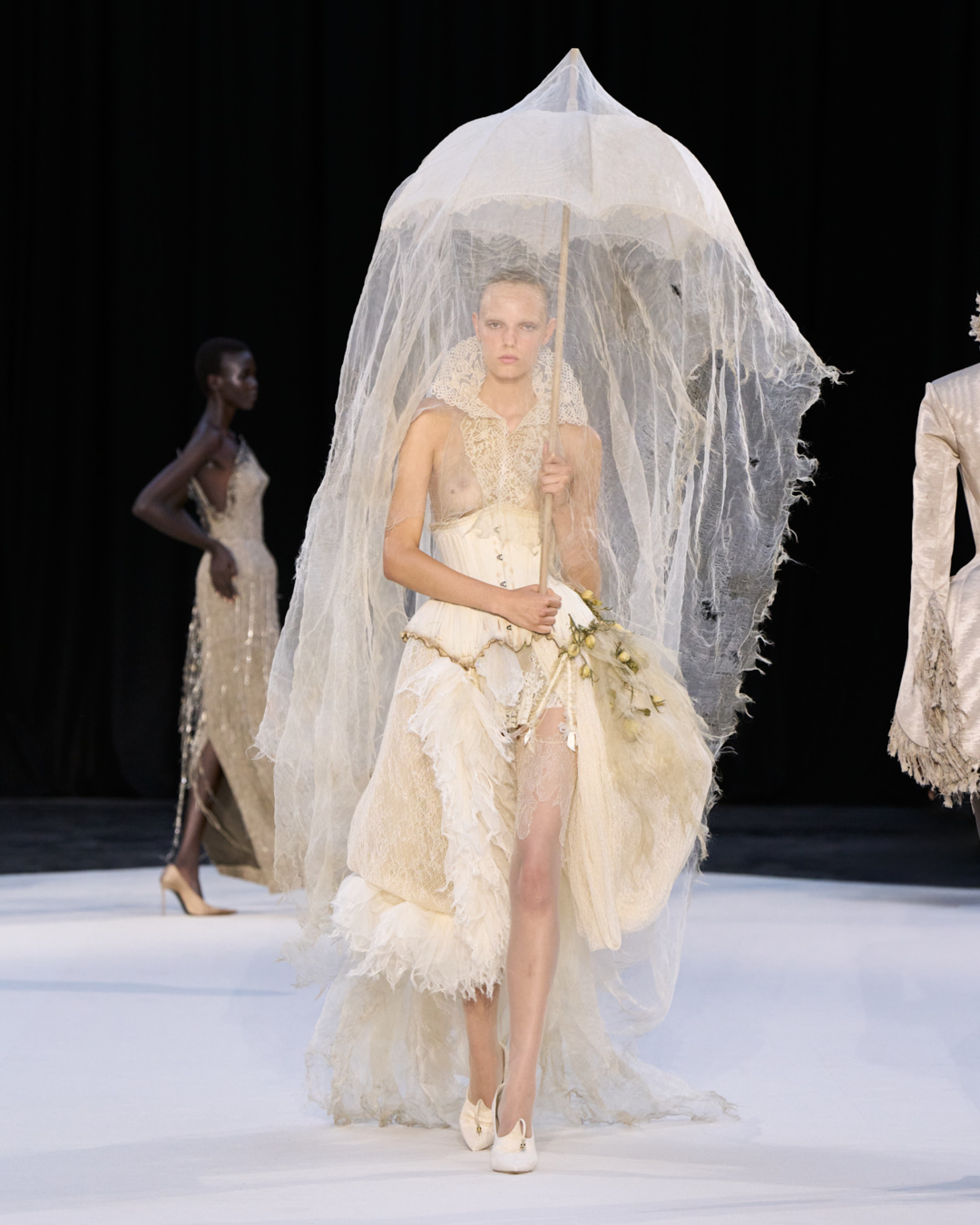
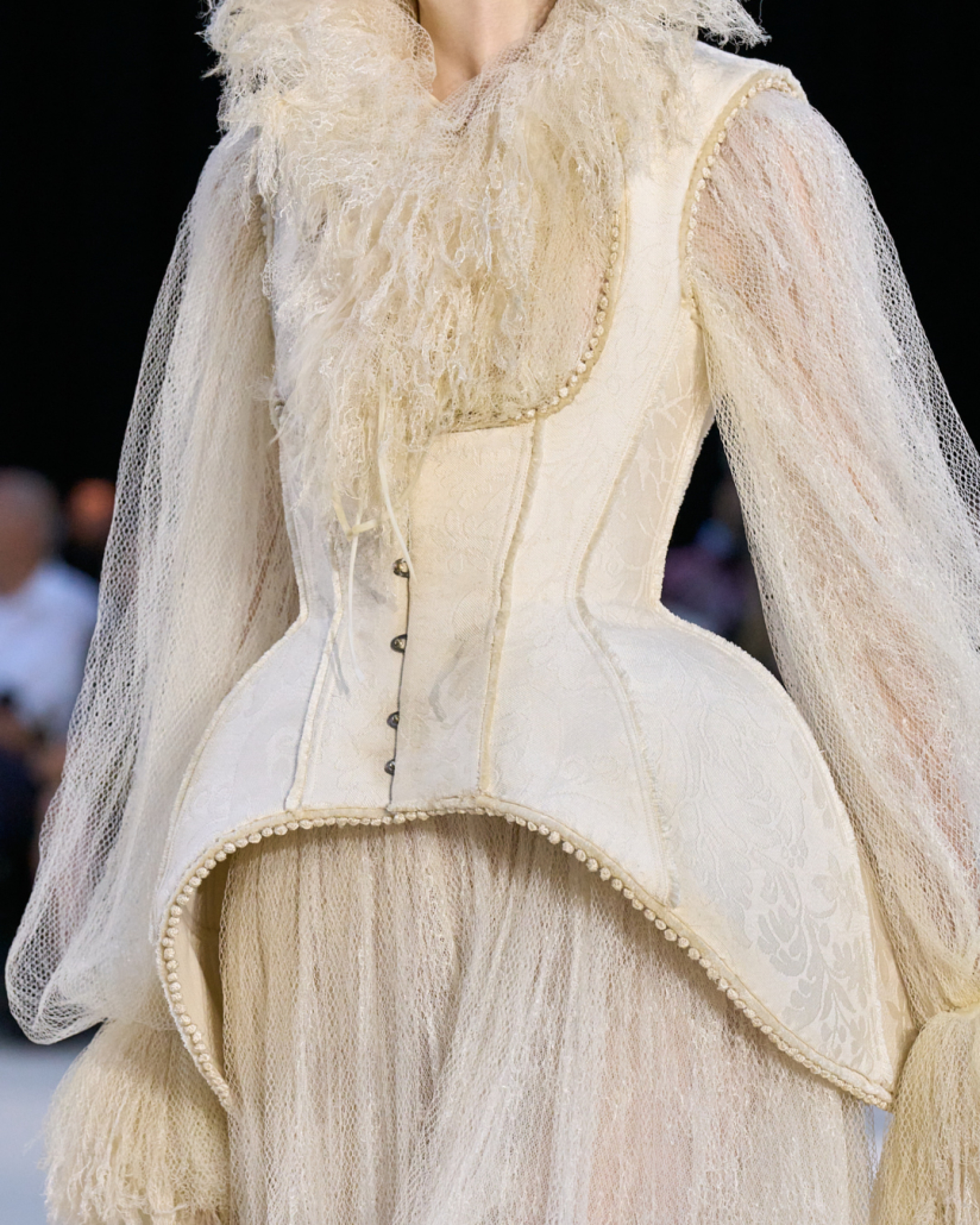
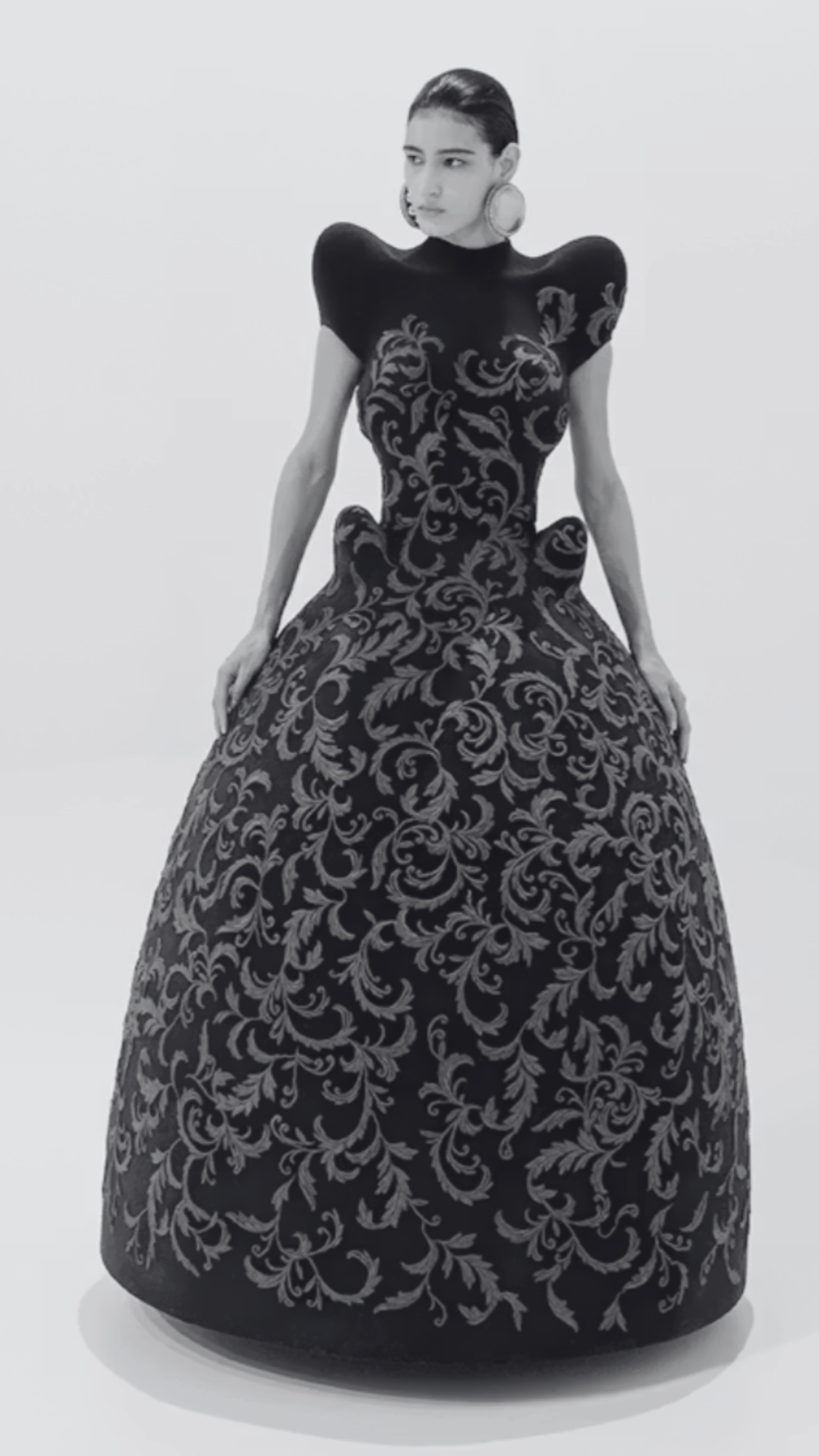
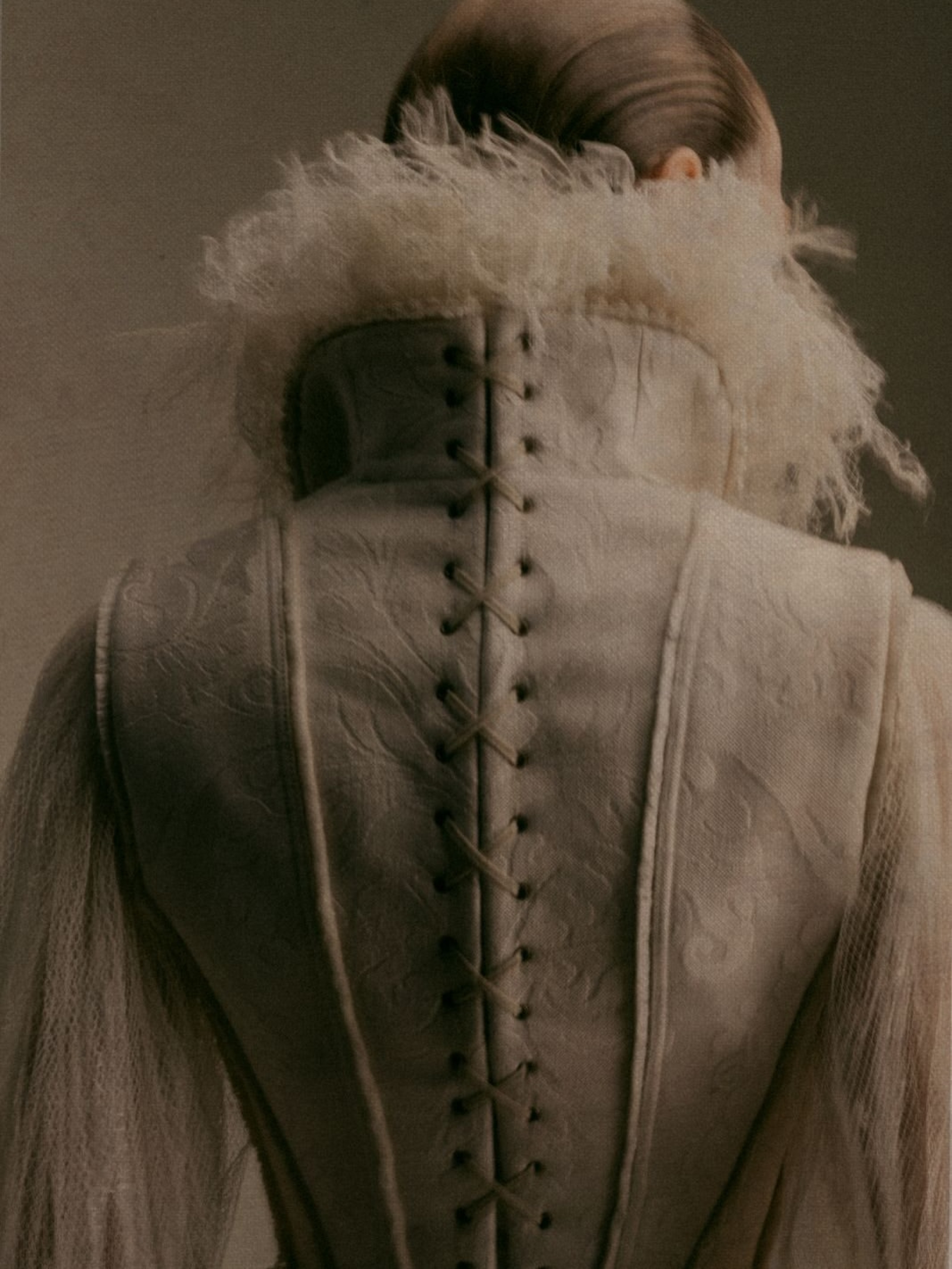
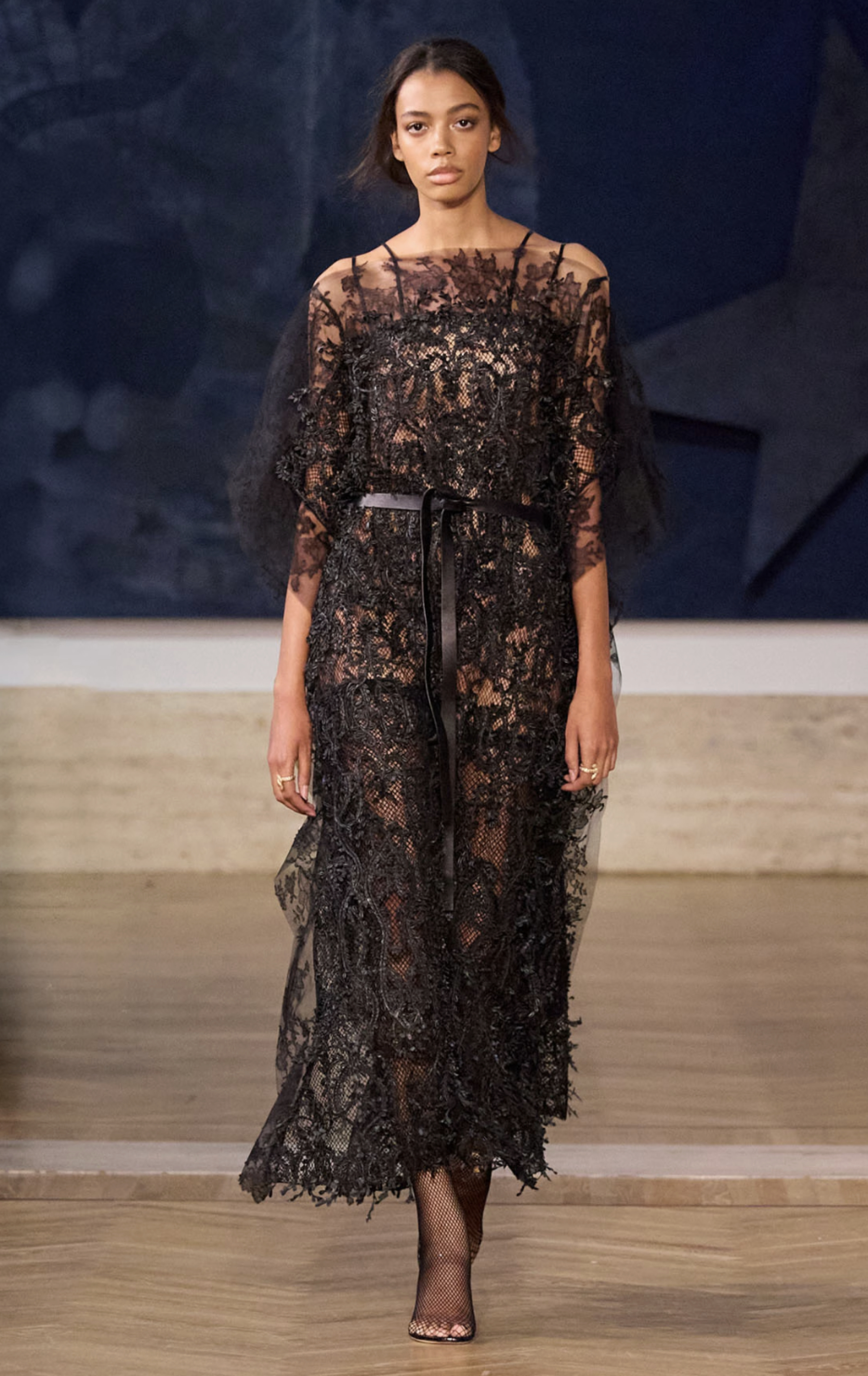
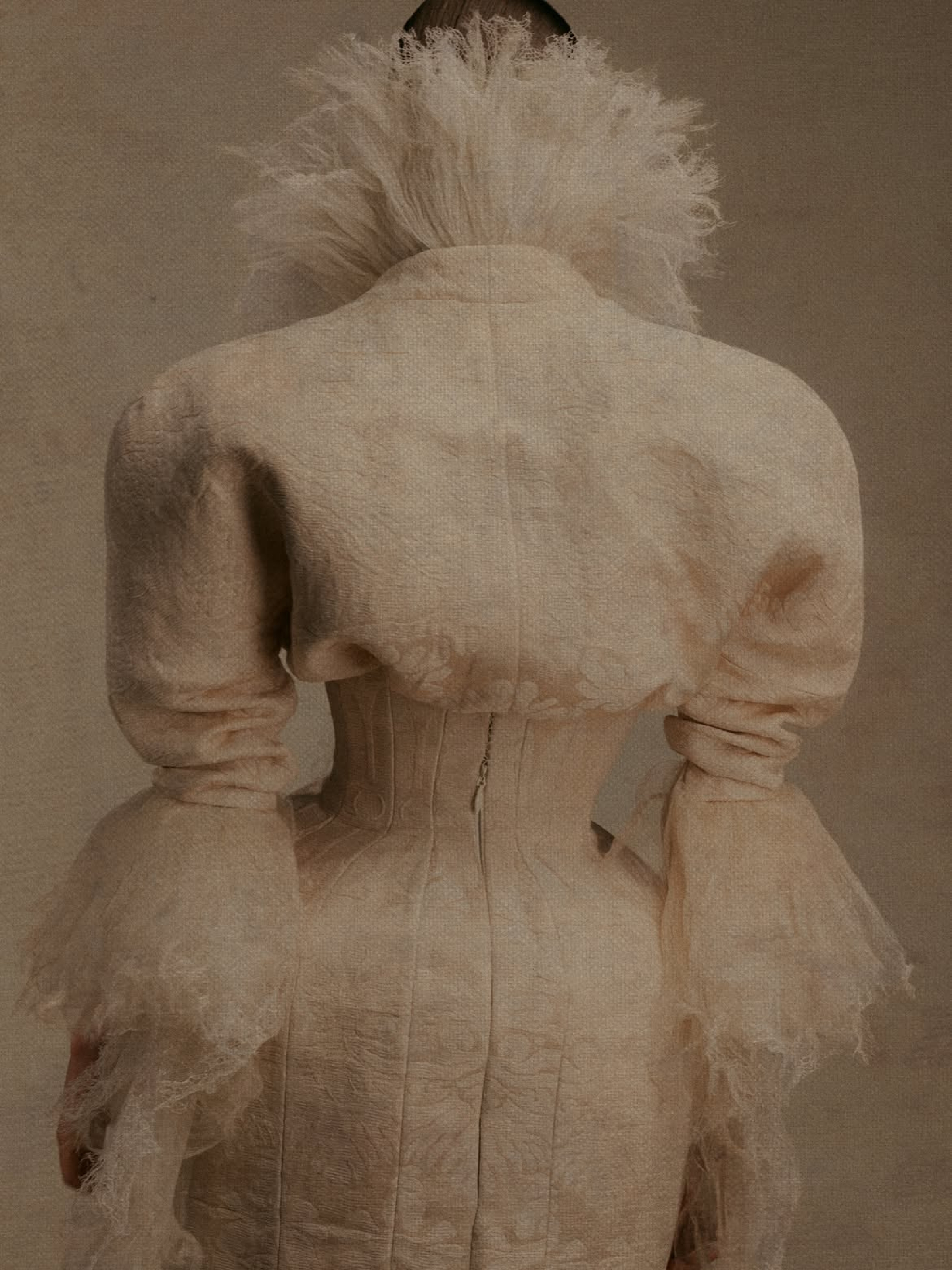
This was Victorian dressing with a little more edge. The lace collars were doing more than adding delicacy; they made everything feel stricter, almost ceremonial. The bodices had that pulled-in, upright quality that instantly changes the posture of a dress. Even the sheer black layers didn’t feel soft in the usual way. They felt controlled and, well... couture. Ashi Studio made the strongest case here with French lace and sculpted bodices, while Balenciaga pushed the mood darker through sheer lace and body-conscious shapes. Then there was Schiaparelli and Jean Paul Gaultier, two houses that understand better than most why the corset keeps coming back. It gave the whole thing a slightly haunted elegance: covered up, tightly constructed, and somehow more seductive because of it. For bridal, this feels almost too easy. Lace collars, corseted bodices, and a little covered-up drama already belong in the wedding world; the difference now is that they feel sharper, moodier, and far less expected.
The New Nude
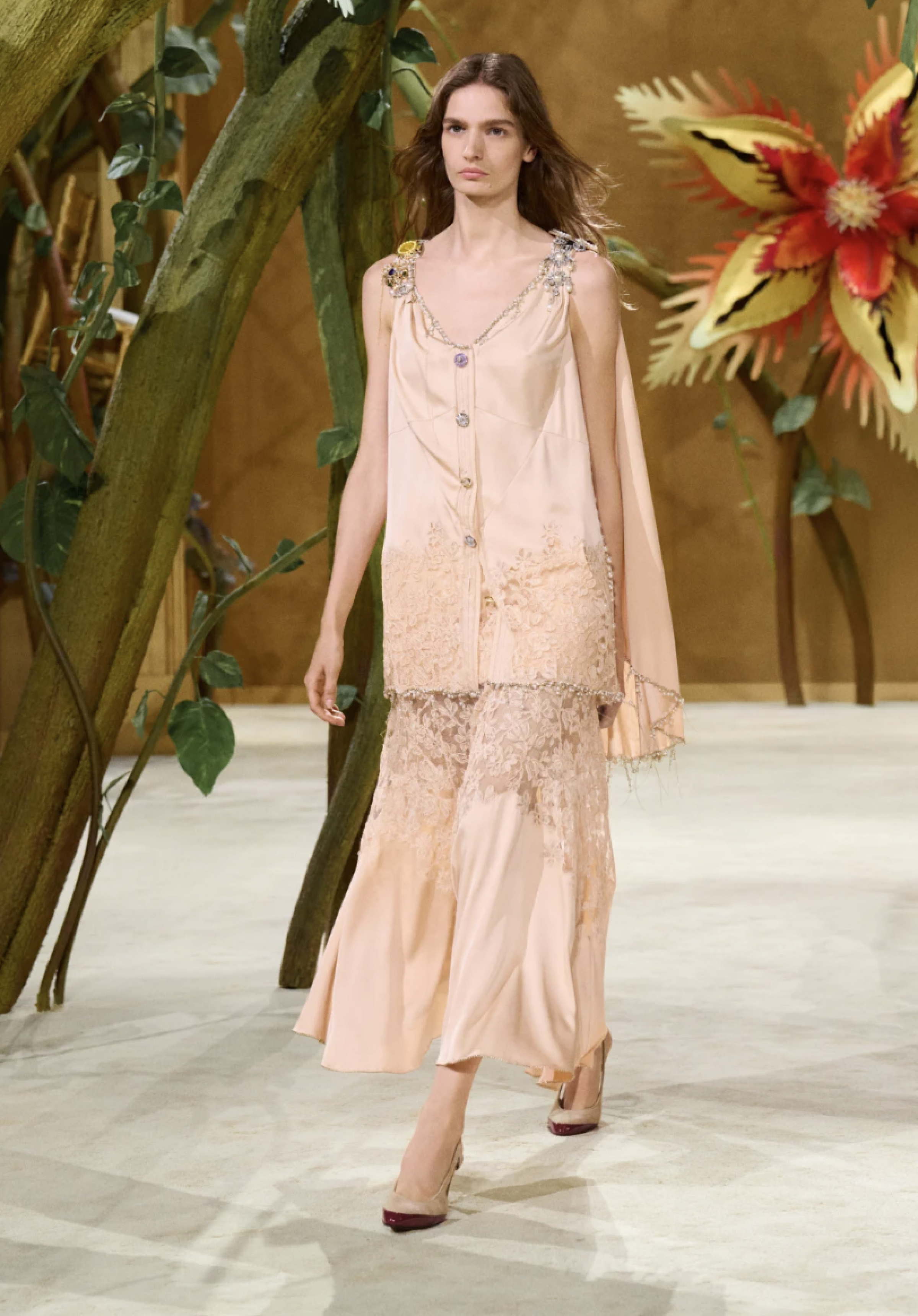
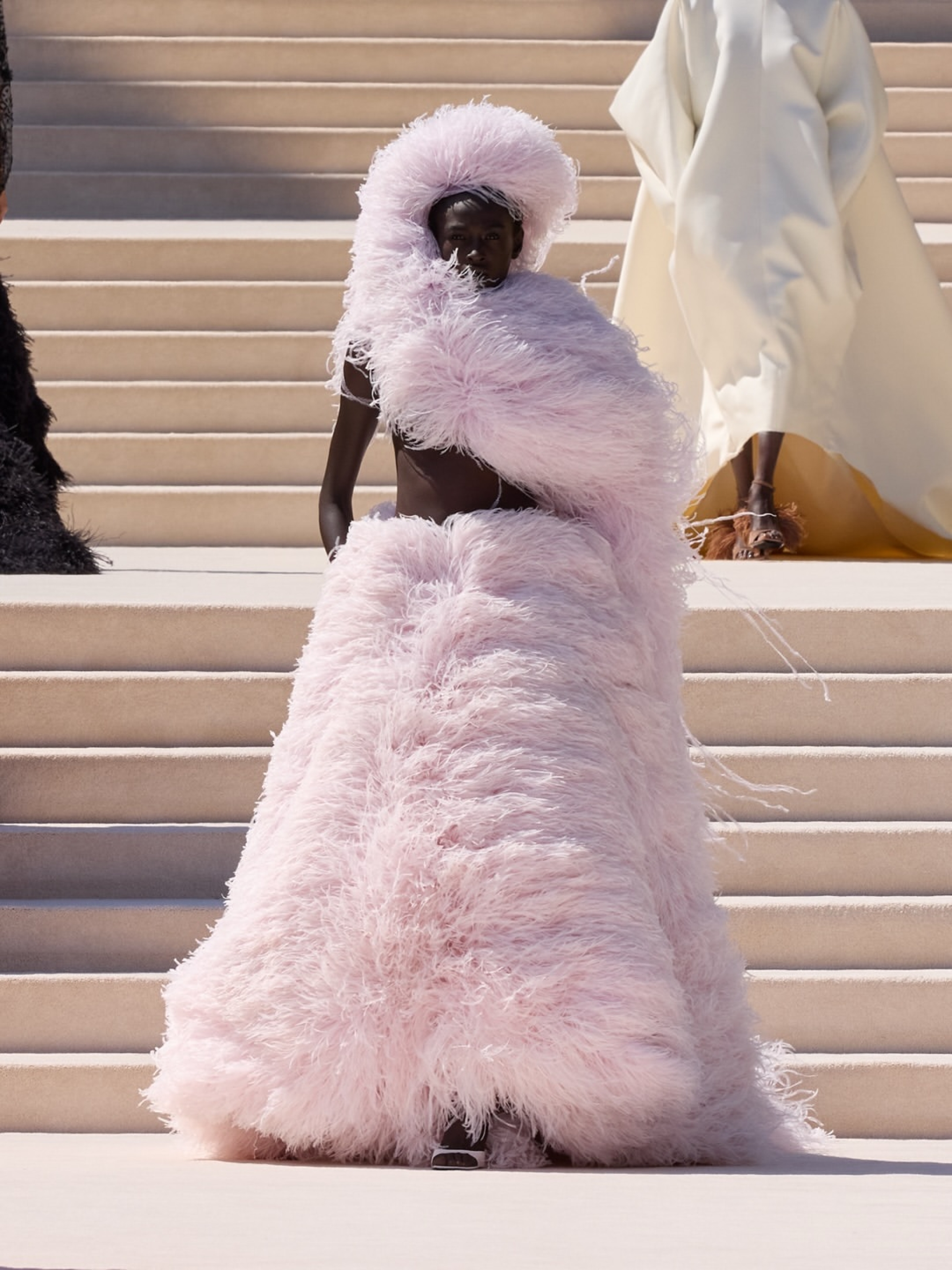
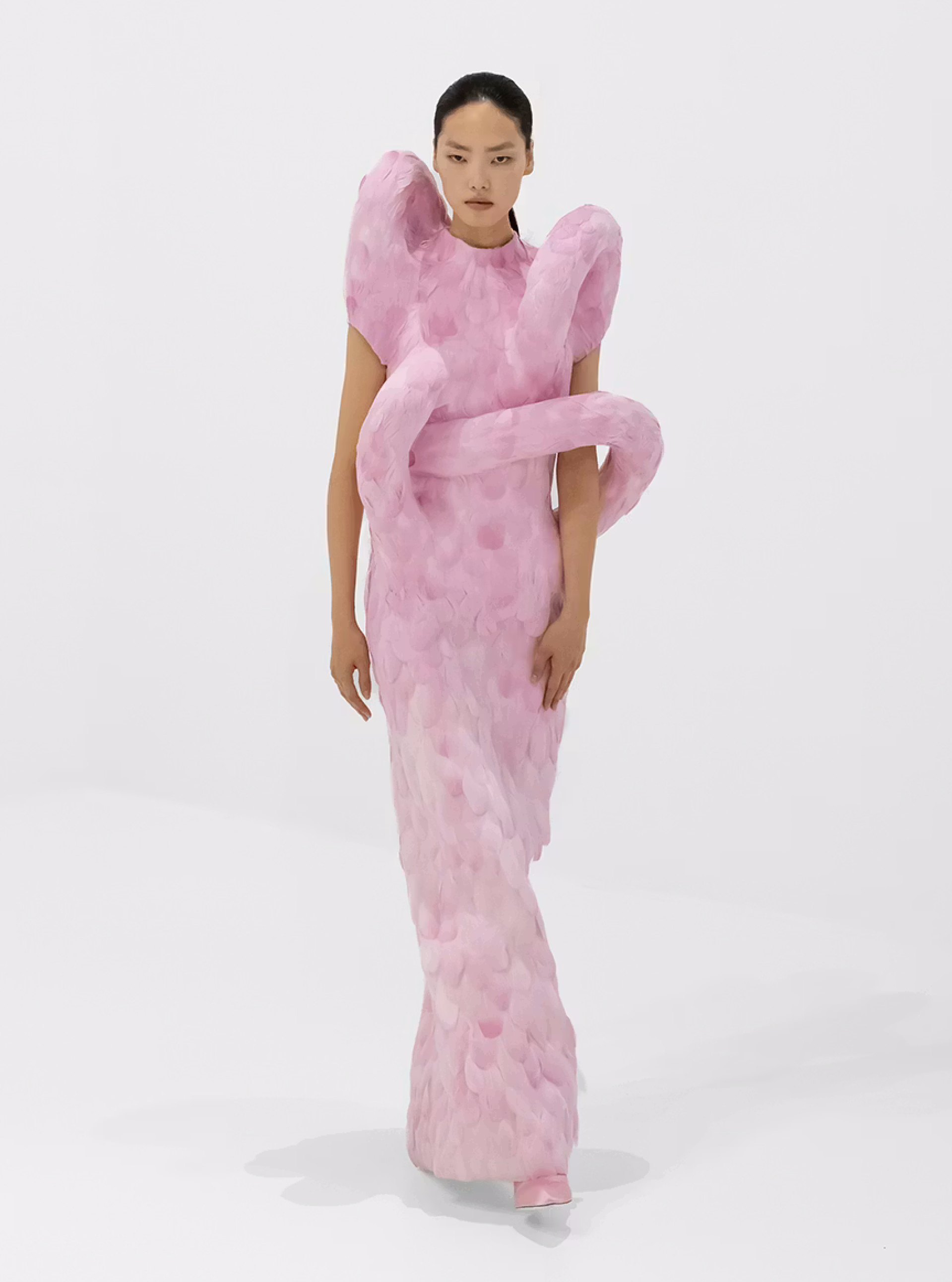
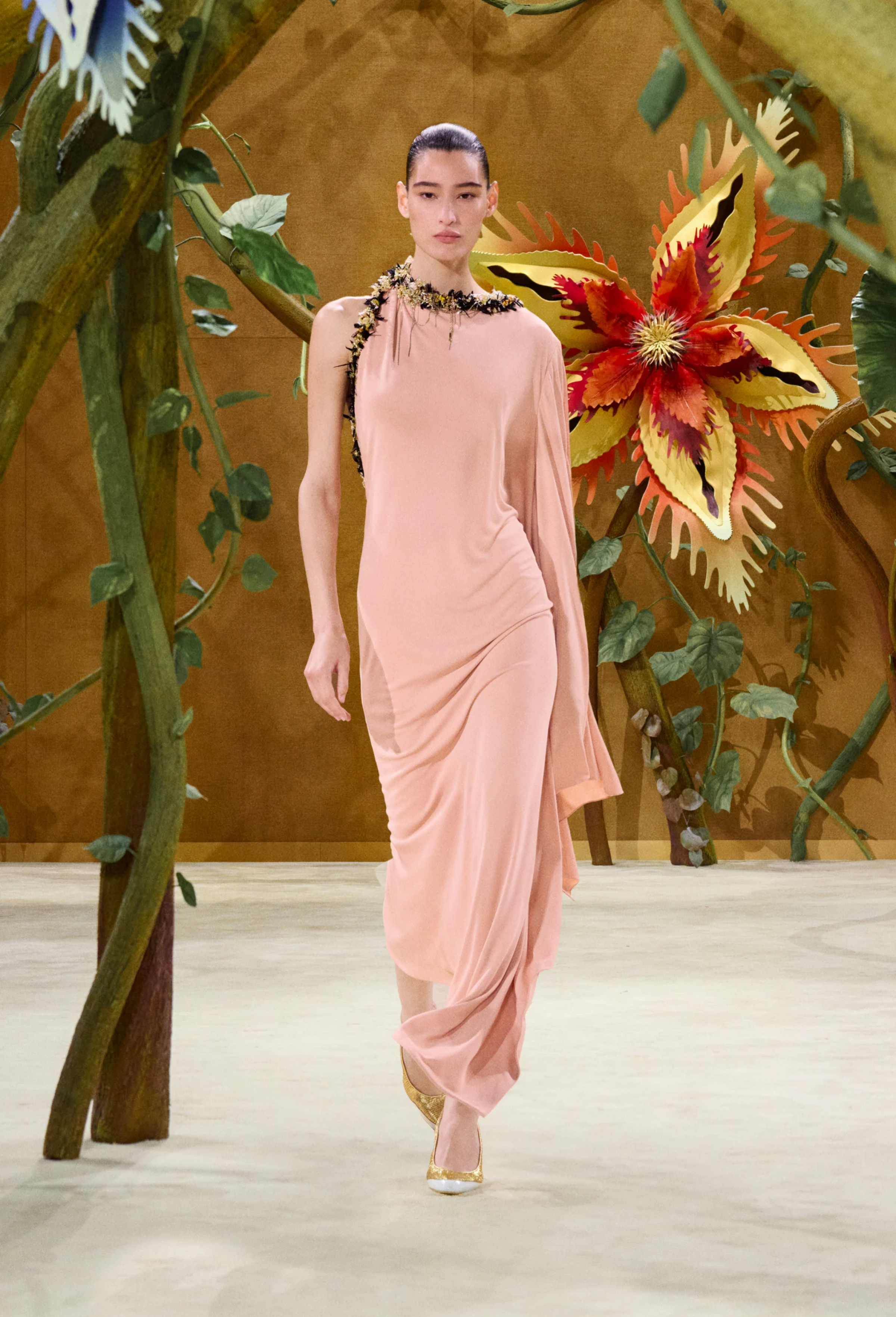
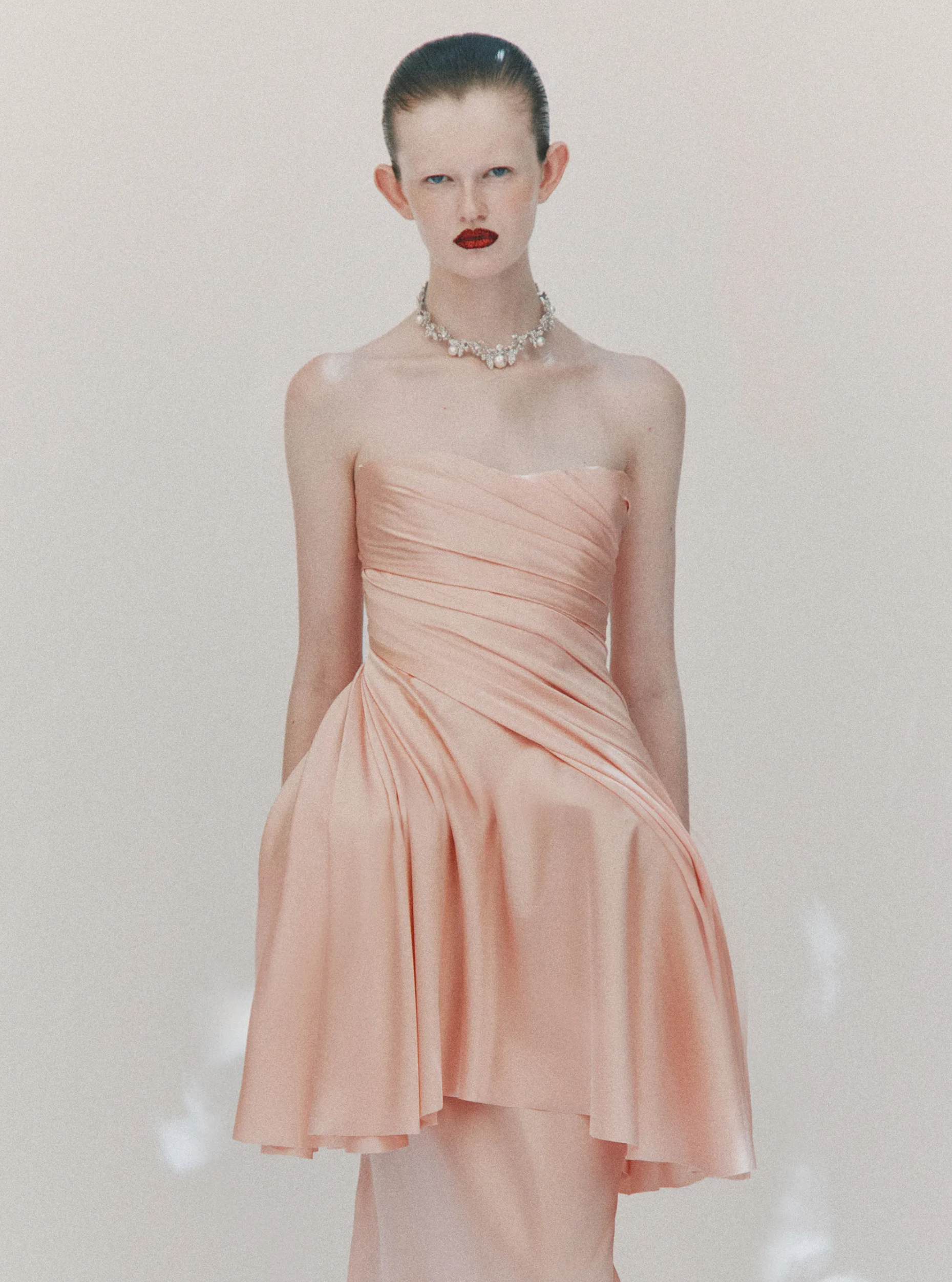
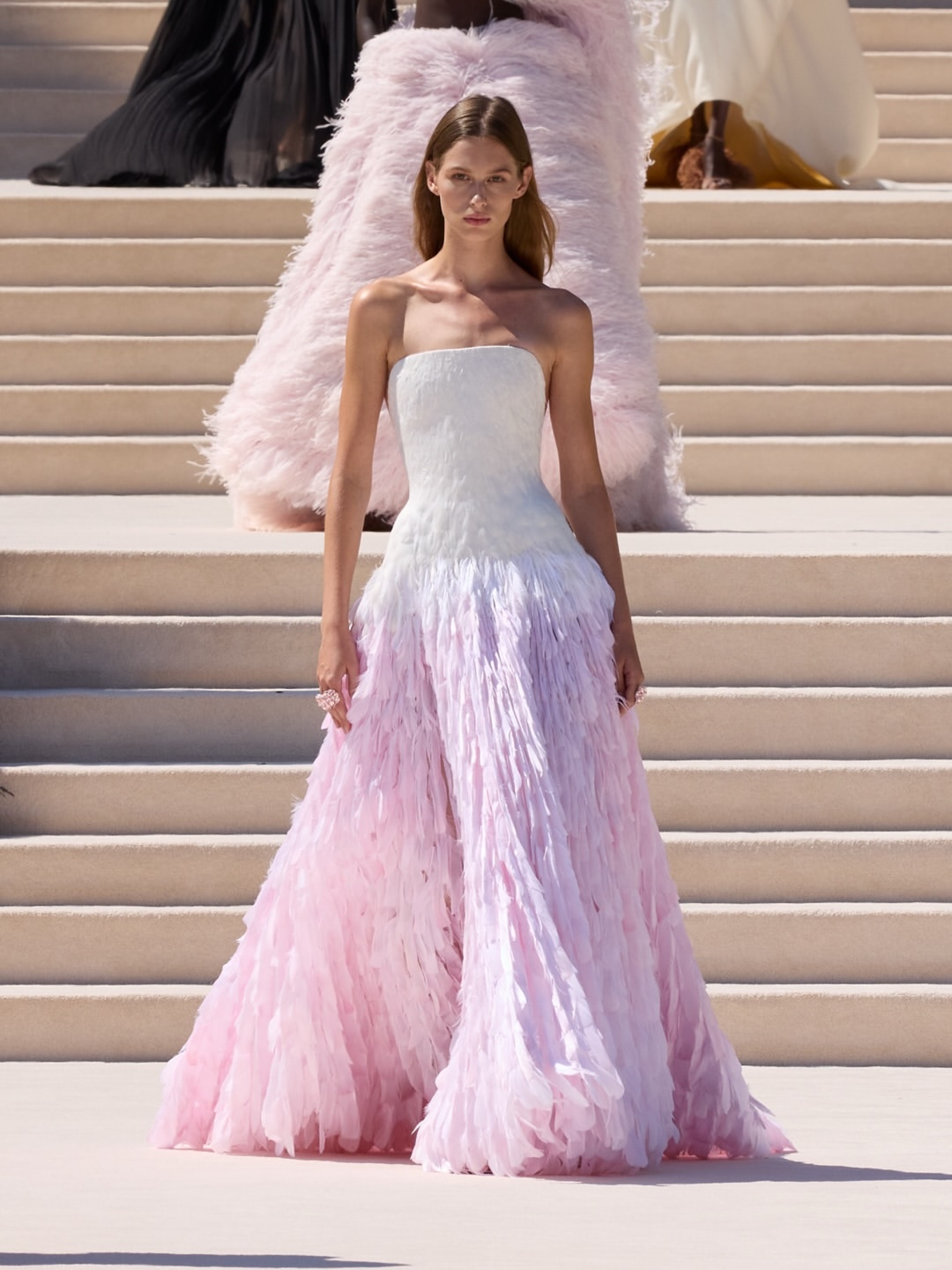
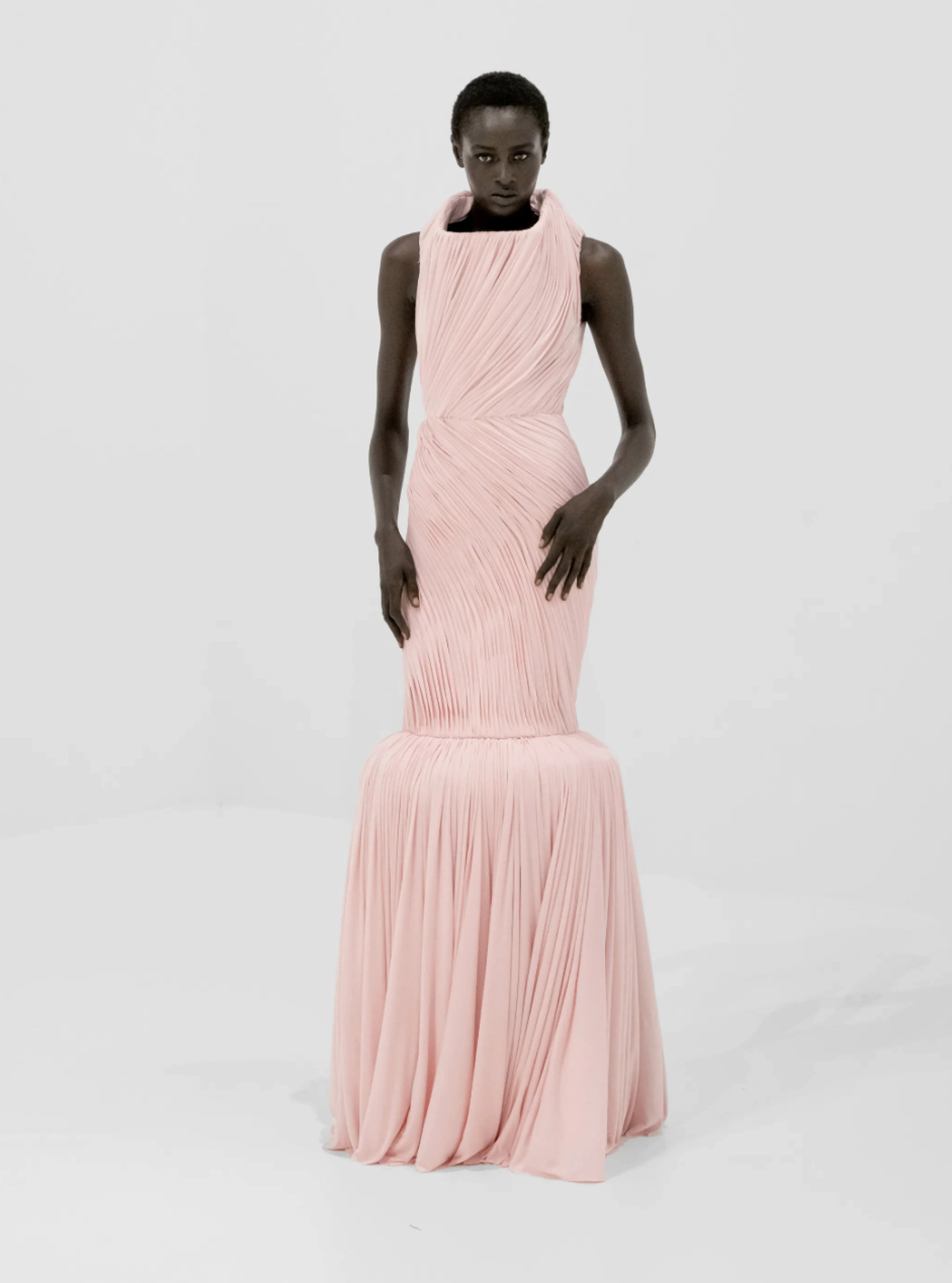
After seasons dominated by unapologetic hot pinks, couture found a softer expression of femininity. This season’s palette shifted toward delicate blushes, powder pinks, peach, and barely-there skin tones that felt almost ethereal against the body. Rather than demanding attention through saturated color, these whisper-soft hues celebrated subtlety, allowing silhouette, texture, and craftsmanship to take center stage. At Balenciaga, the palette was paired with airy feathered textures that felt light as clouds, while Schiaparelli leaned into flesh-like tones that heightened the illusion of the body beneath, creating a striking contrast against its sculptural resin bodices. Chanel and Jean Paul Gaultier explored a gentle apricot hue, bringing depth through intricate gathers, soft drapery, and weightless layers that felt both romantic and quietly powerful. Less confectionery than seasons past, these softened pinks felt grown-up, sophisticated, and undeniably couture.
High Drama Necklines
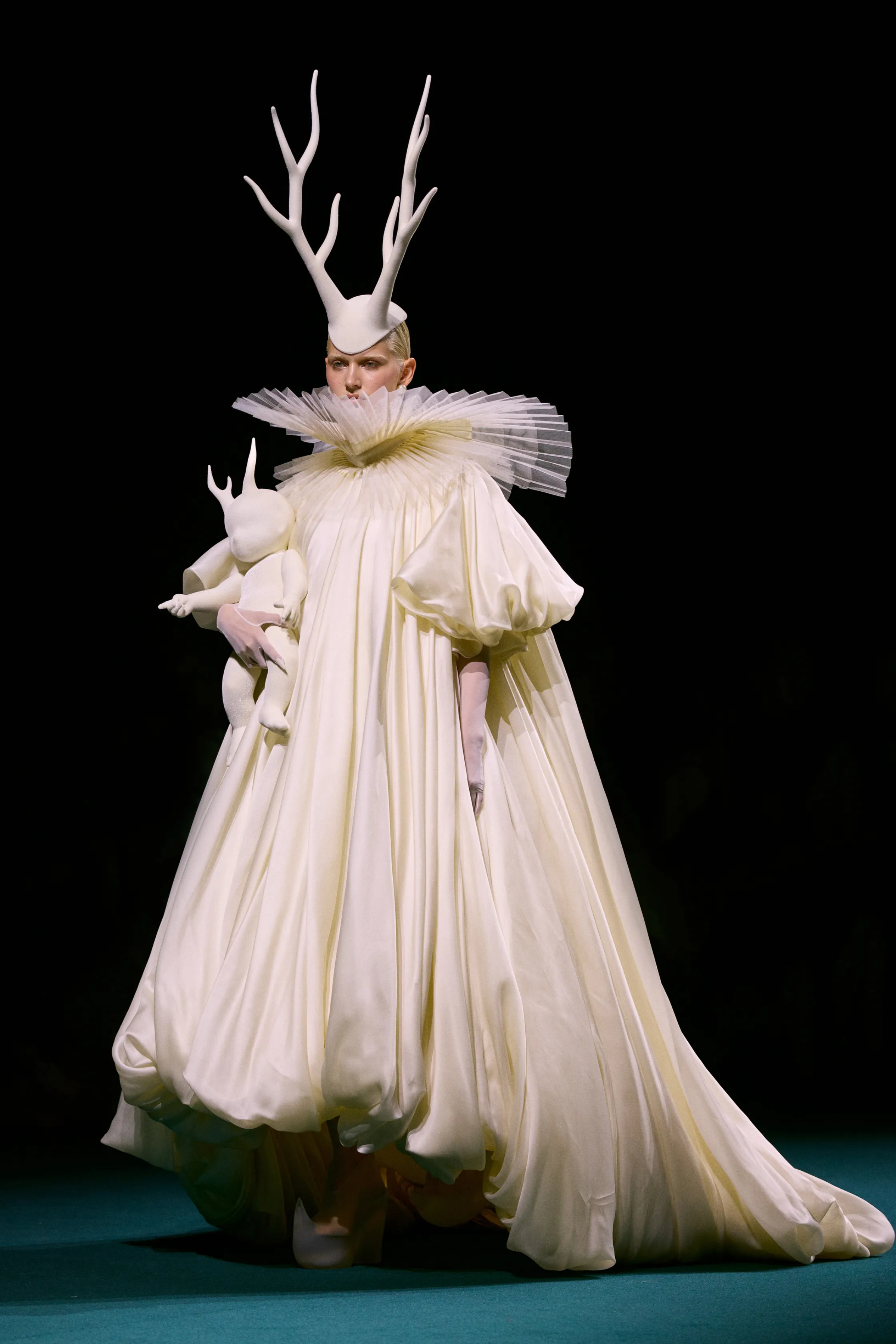
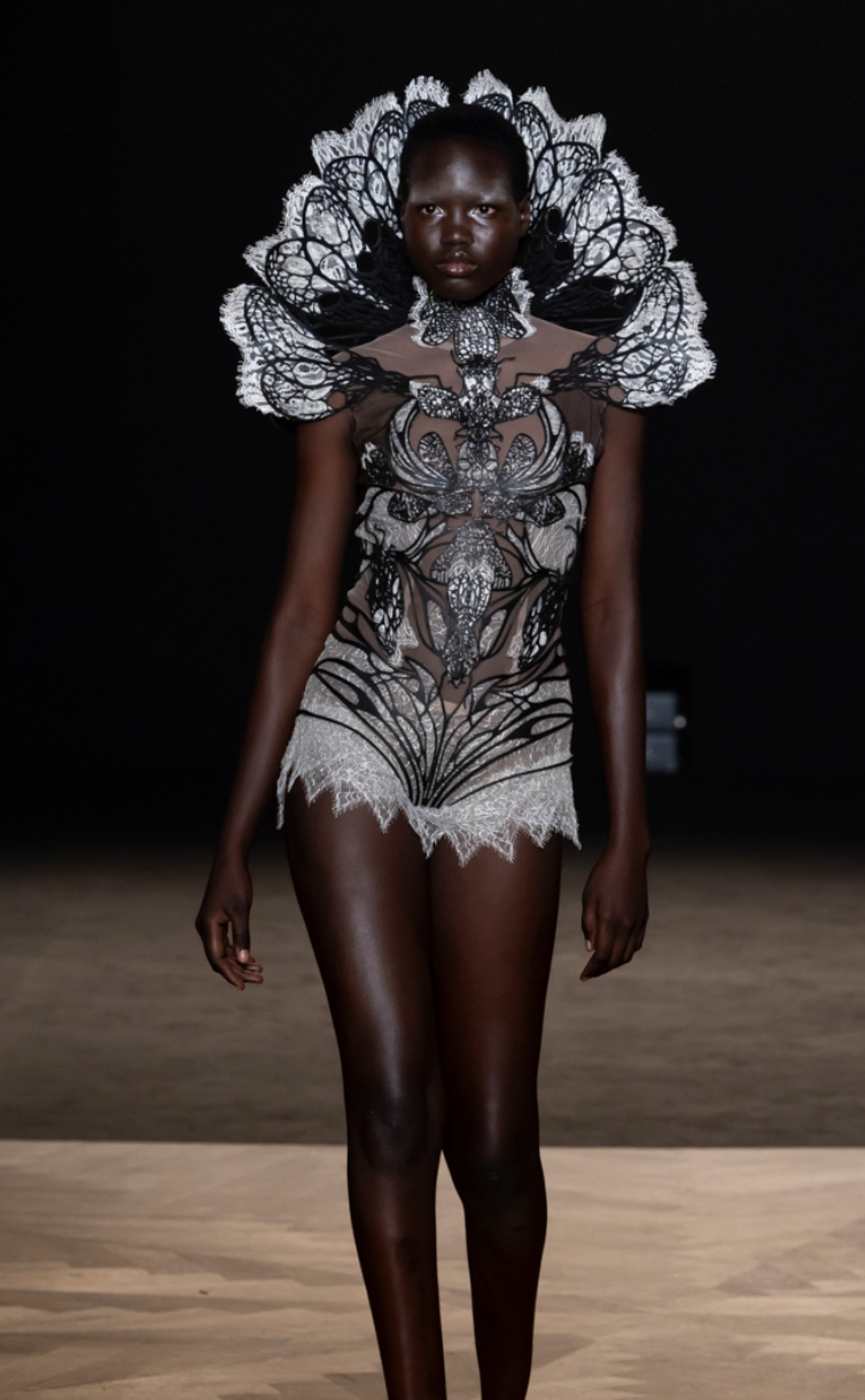
Forget the hemline, this season, the neckline did the talking. Ashi Studio set the tone with collars that sat somewhere between vintage severity and modern polish, the kind of tension that makes you look twice at a silhouette you thought you knew. Robert Wun took the same idea but heightened the drama with avant-garde pleated tulle collars. And leave it to Iris van Herpen to take it furthest: dramatic old-world collars fanned out like Renaissance ruffs, as if a Dutch master portrait had wandered onto the runway. There's an undeniable elegance to a statement made this way, refined with just a little theatricality. For anyone drawn to drama, but not necessarily sparkle or skin, a neckline like this does all the work.
Deep Sea
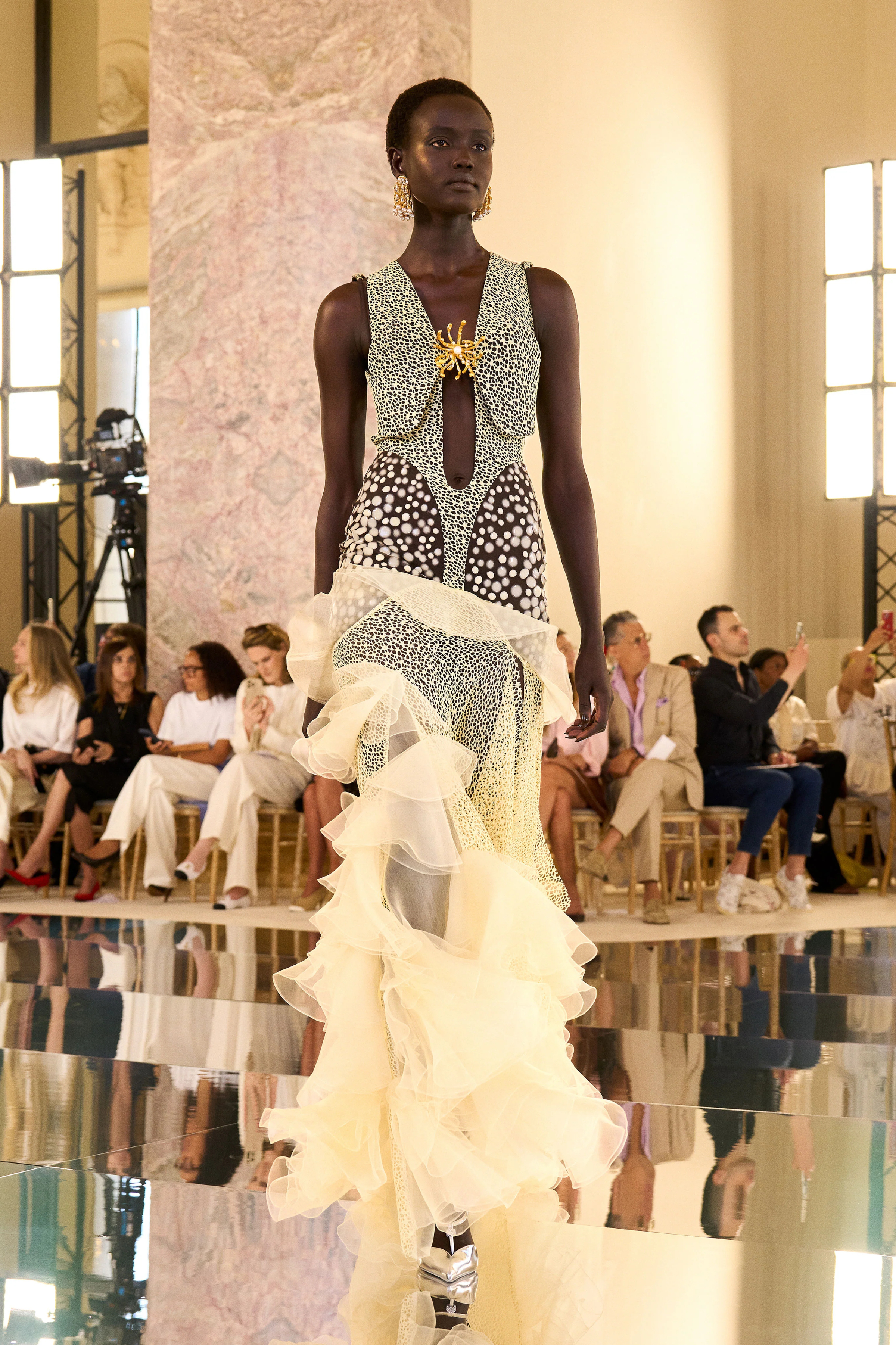
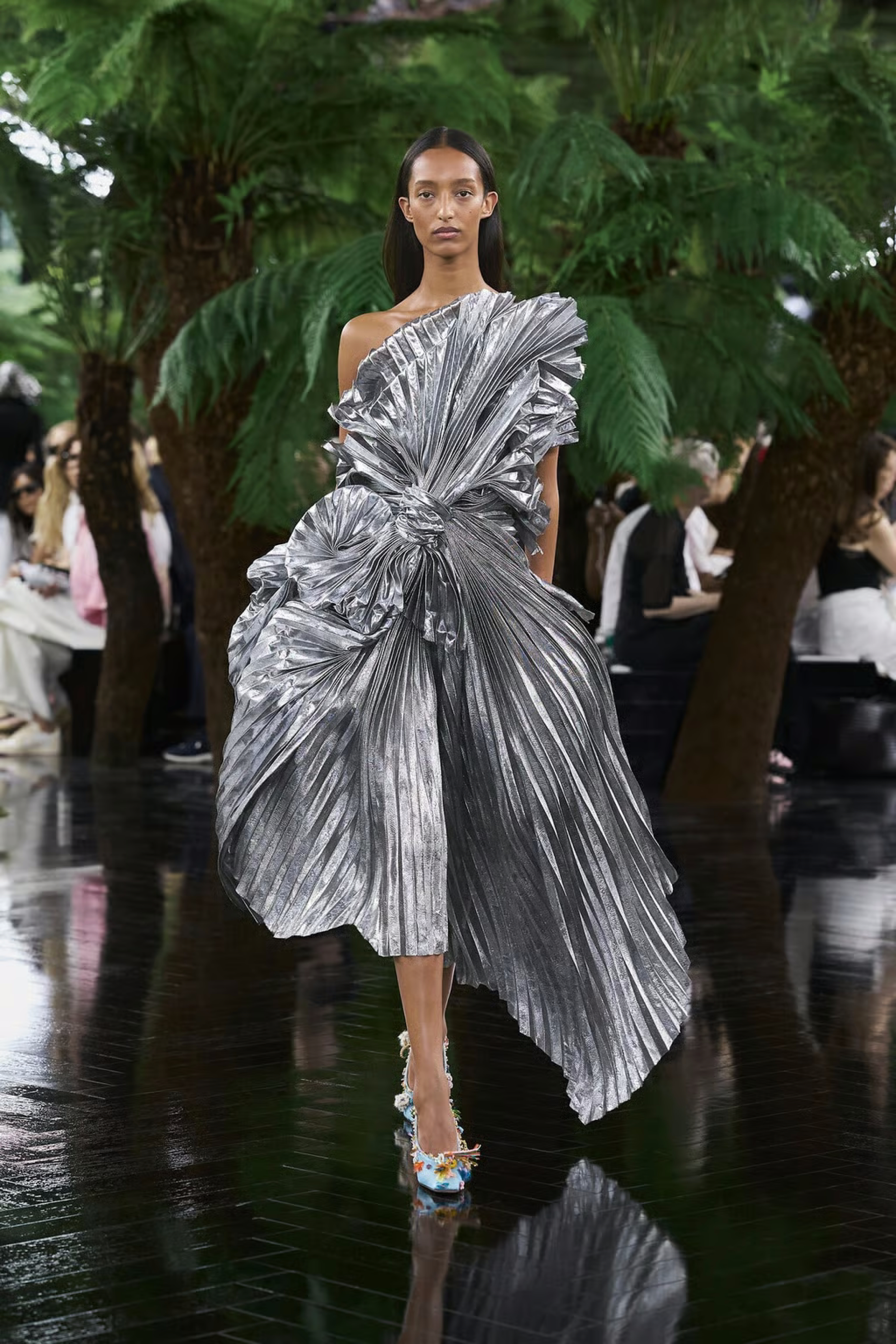
This season designers plunged beneath the surface, trading florals for mollusks, pearls for oysters, and sunlit palettes for the mysterious beauty of the deep sea. Cool metallic pewters, inky blues, oyster greys, and iridescent finishes shimmered across the runway, creating collections that felt dark, otherworldly, and quietly hypnotic. Texture became the defining language. At Georges Hobeika, densely embroidered beadwork glistened like glimmering scales catching the light beneath the water’s surface, while Ashi Studio suspended delicate mollusk-like forms from cascading pewter fringe, transforming the body into something both sculptural and marine. Schiaparelli and Elie Saab explored equally unconventional silhouettes, with sweeping forms, dramatic trimmings, and fluid volumes that called to mind lionfish fins, floating jellyfish, and the strange elegance of creatures rarely seen by daylight. Despite the darker palette, there was nothing heavy about the result. These gowns swayed with an almost weightless quality, balancing the mystery of the ocean depths with an ethereal luminosity that made couture feel beautifully alien.