We live in a digital age, where almost everything is just a click away, and weddings are finding new ways to embrace it. Wedding websites have become an increasingly popular way to bring the many details of a celebration together in one place. Beyond the practical information, they offer couples a chance to introduce the look and personality of their special day. For guests, it's an early introduction to the celebration, offering a taste of what awaits them. In the months leading up to the wedding, the website becomes a familiar place to return to for practical information, travel recommendations, and little previews of what's ahead.
At Avelã White, Portugal-based wedding website designer Katerina Vinogradova and her team see a wedding website as an extension of the celebration itself. It's a space where visual storytelling meets thoughtful hospitality, bringing together the aesthetic details and practical information that shape the guest experience. Drawing on their expertise, the team has gathered the principles that can help you create a wedding website that's as considered as the celebration it introduces.
Think of Your Website as
the Beginning of the Wedding
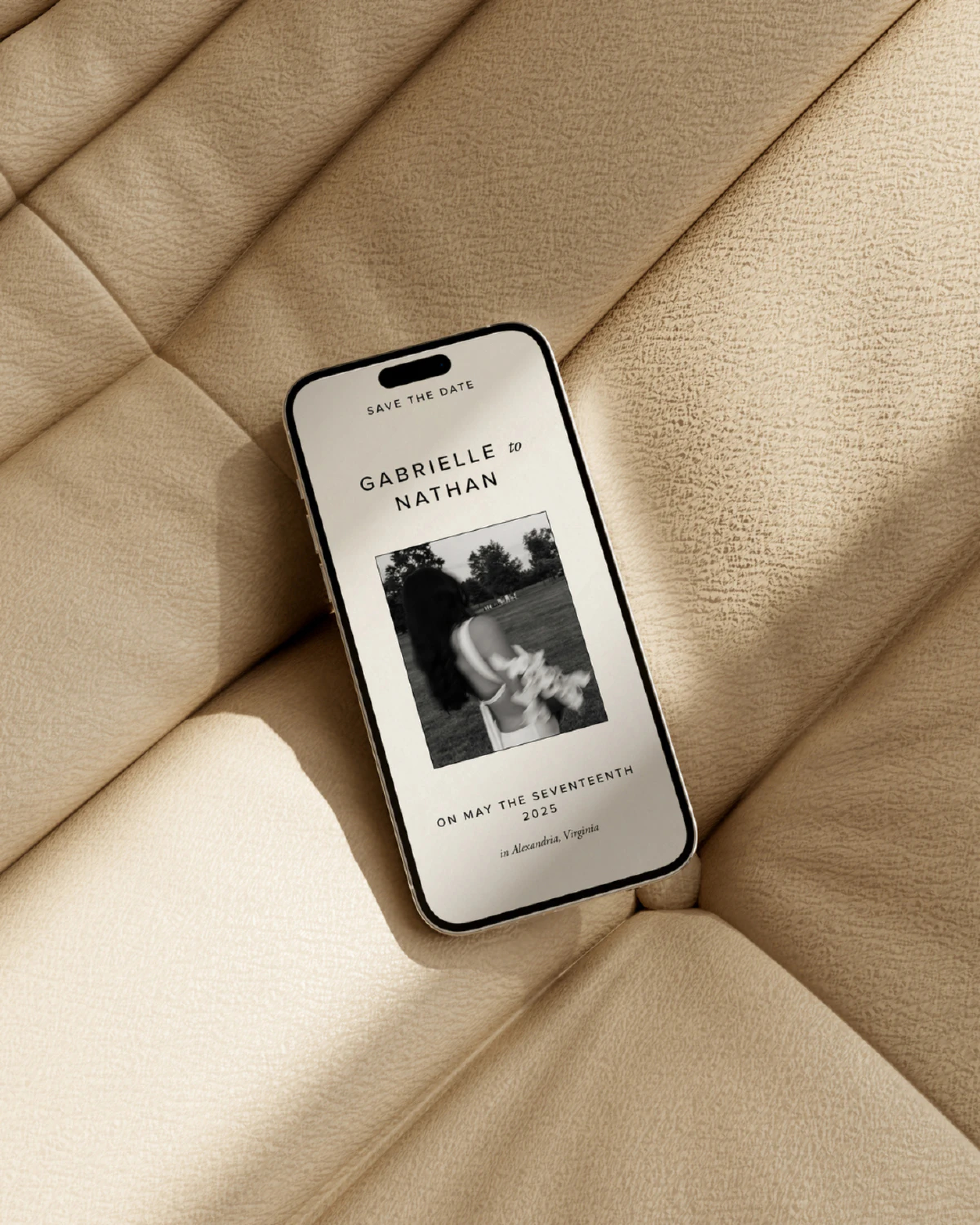
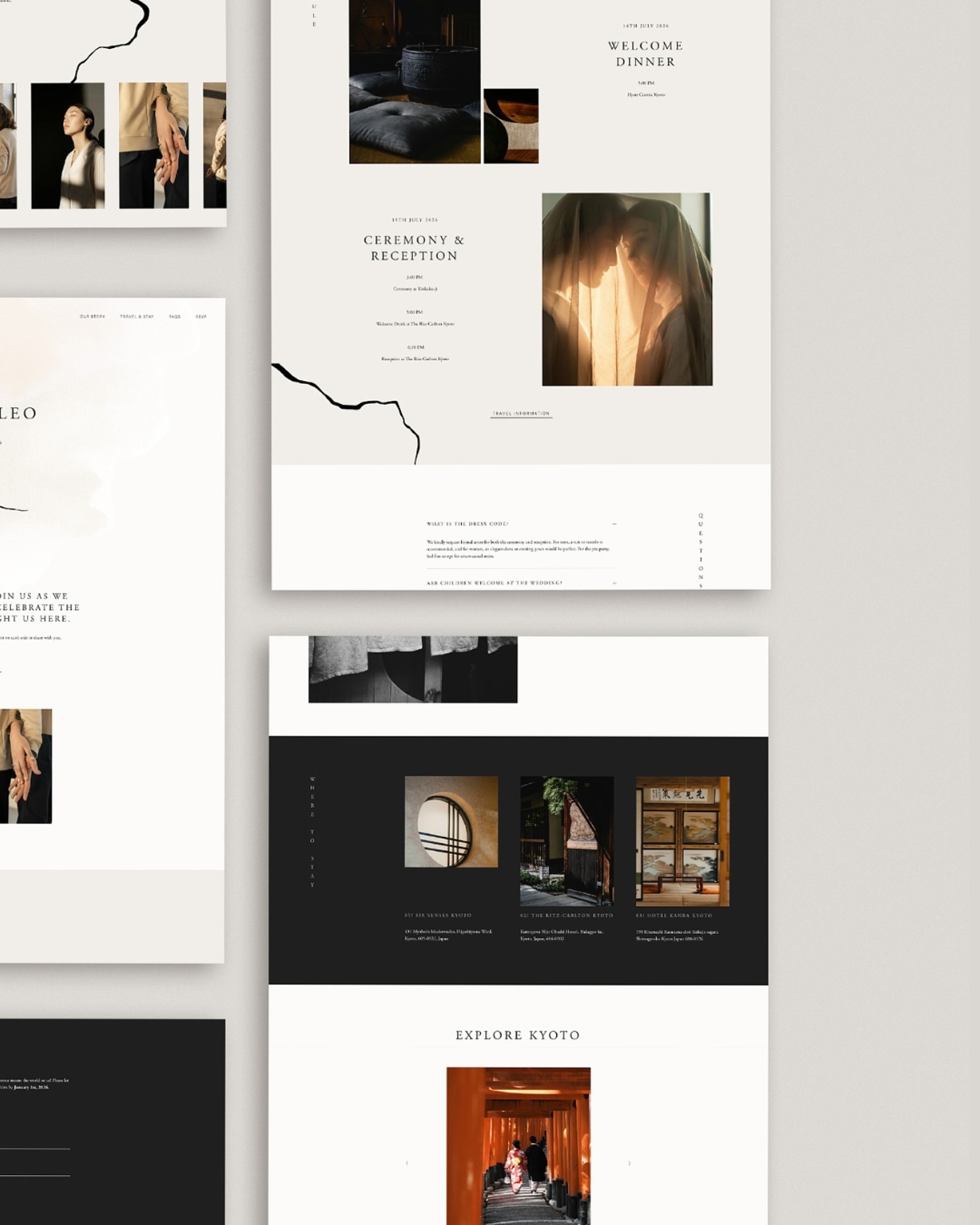
Your wedding doesn't begin when guests arrive at the ceremony, it begins with the first impression you create. A website can introduce the atmosphere of your celebration months before the day itself, offering a glimpse into its setting, character, and personality. Consider how you want guests to feel when they first open it: intrigued, excited, welcomed, or perhaps transported somewhere entirely different. The imagery, typography, colors, and even the way guests navigate the pages can all contribute to that feeling. Rather than thinking of your website as a digital information board, approach it as the opening chapter of the experience you're creating.
Create a Visual Connection With the Celebration
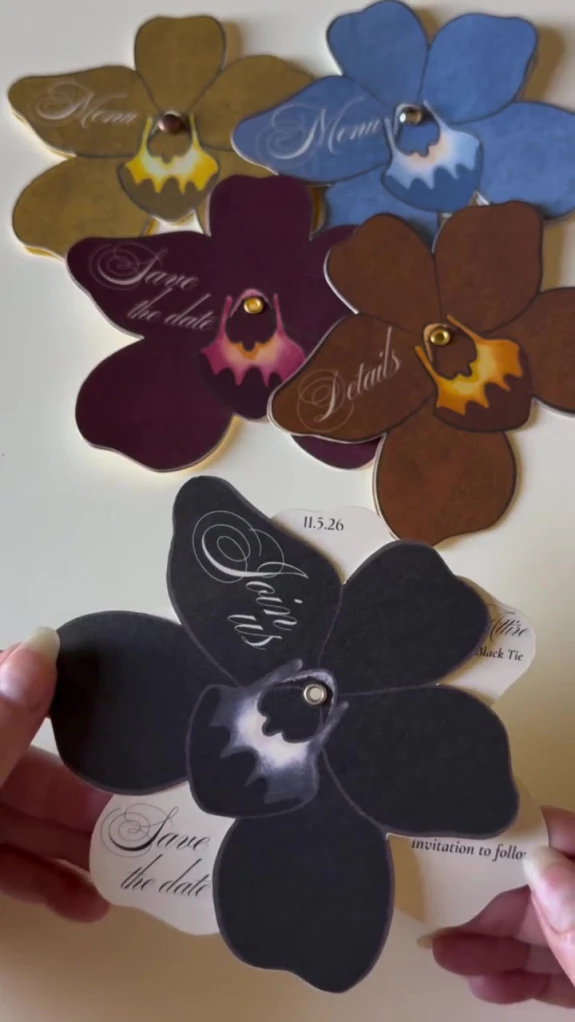
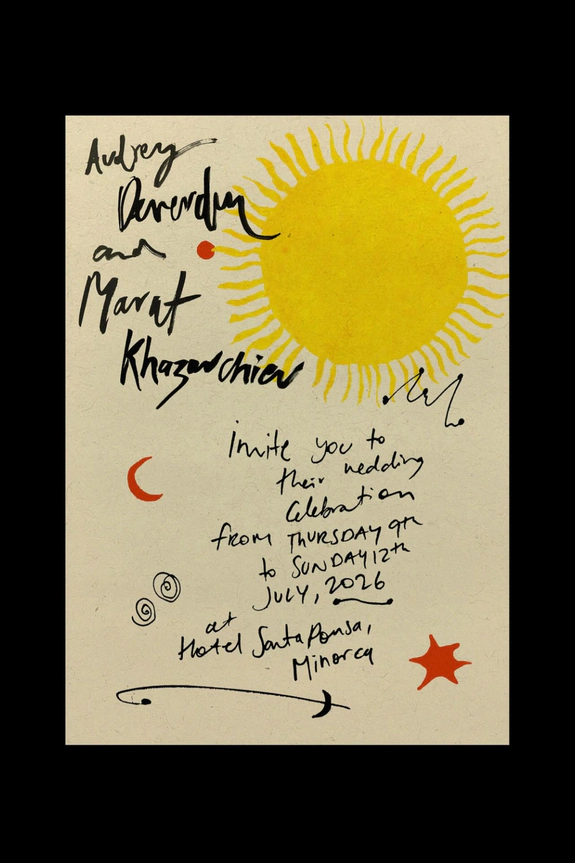
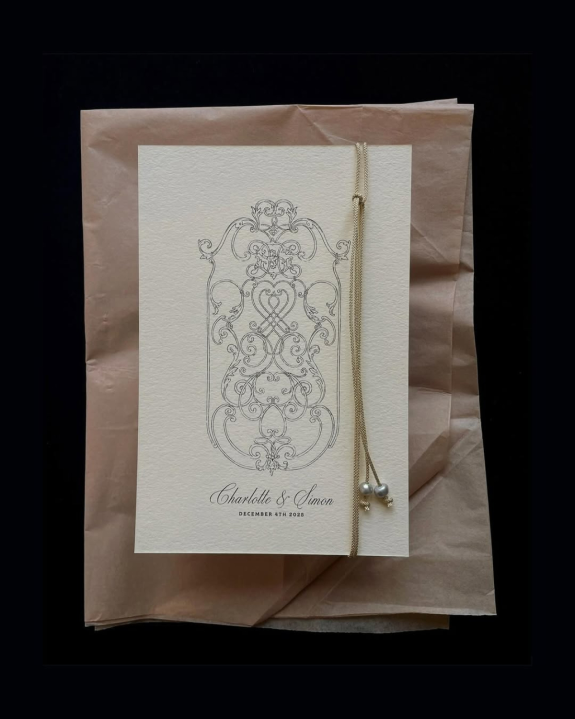
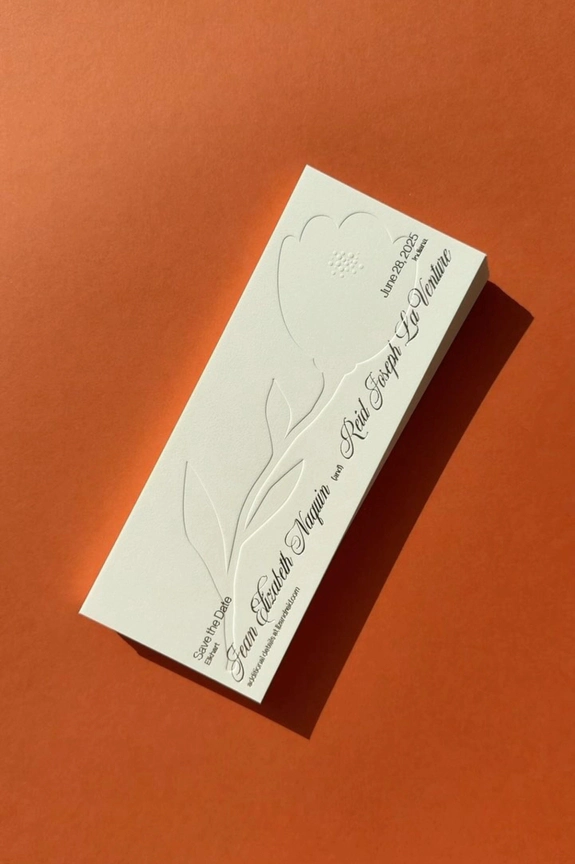
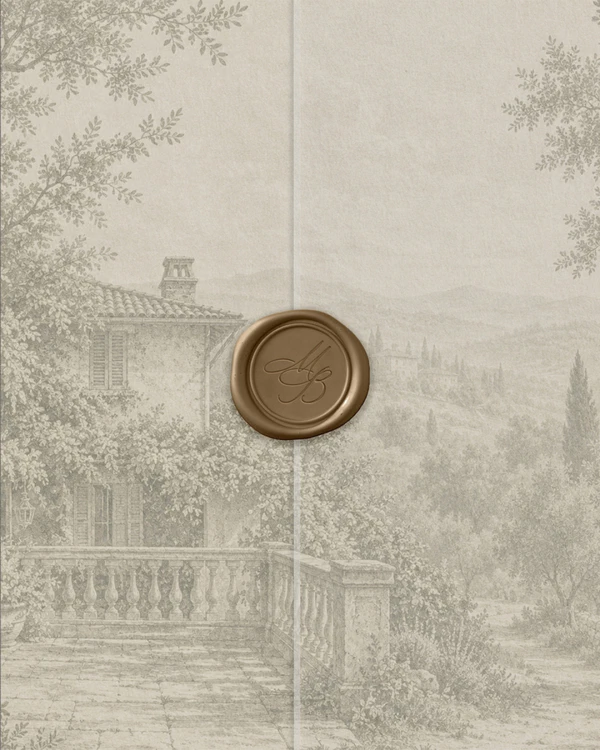
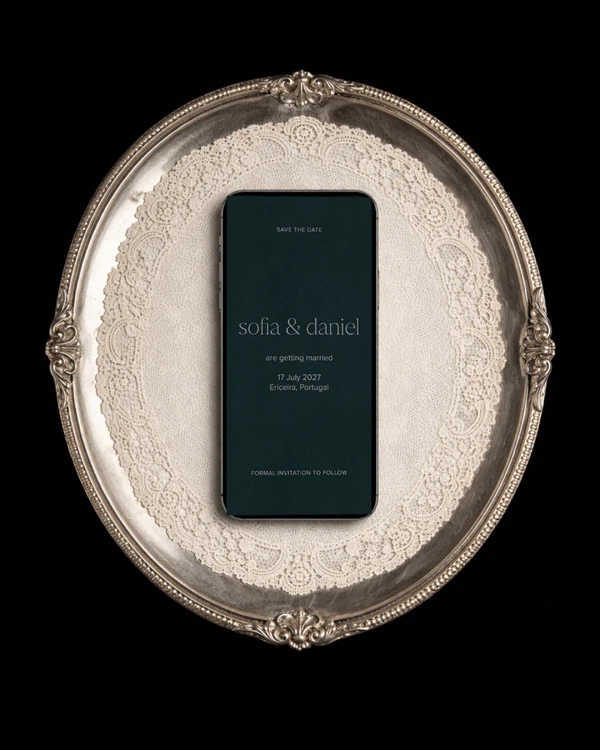
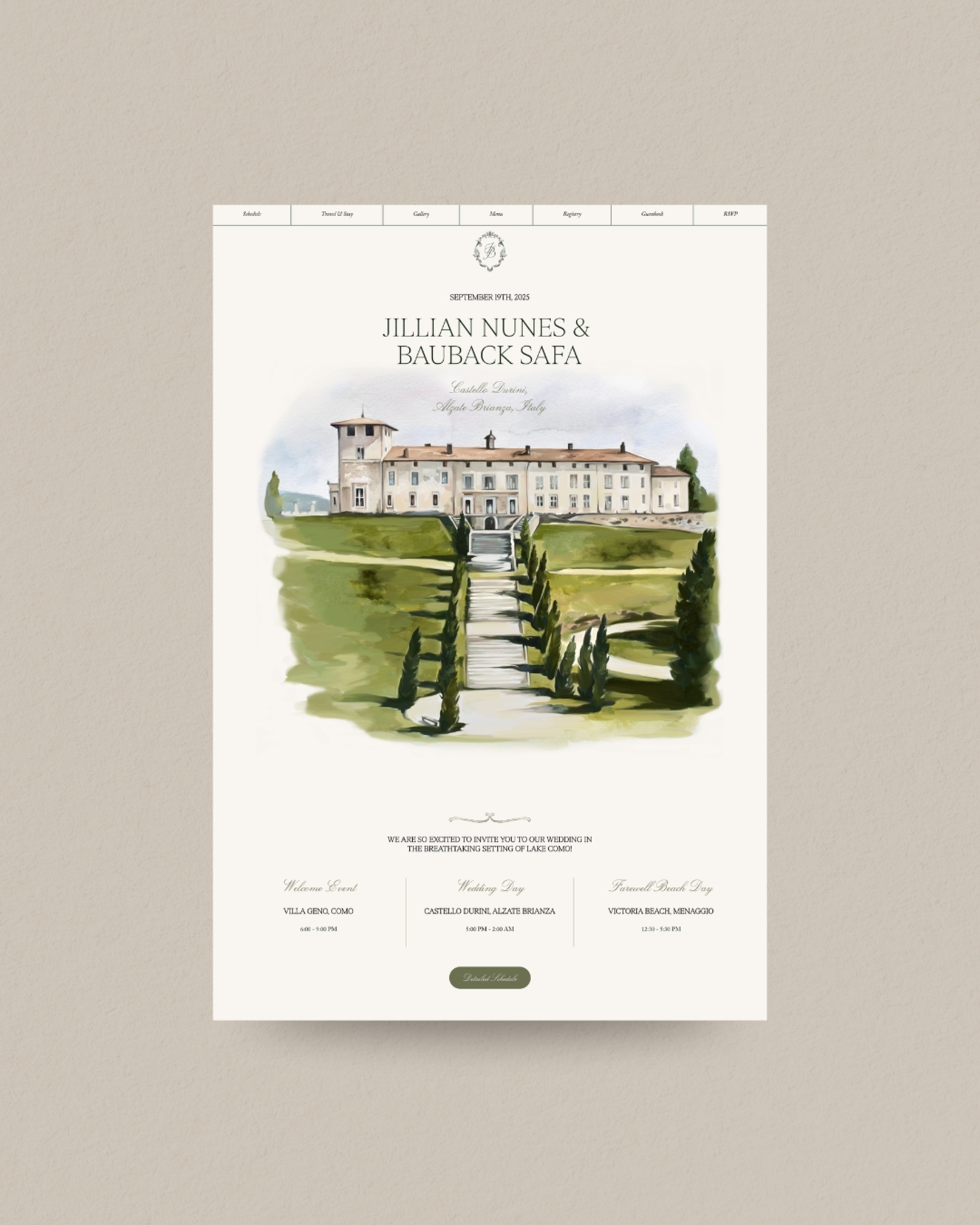
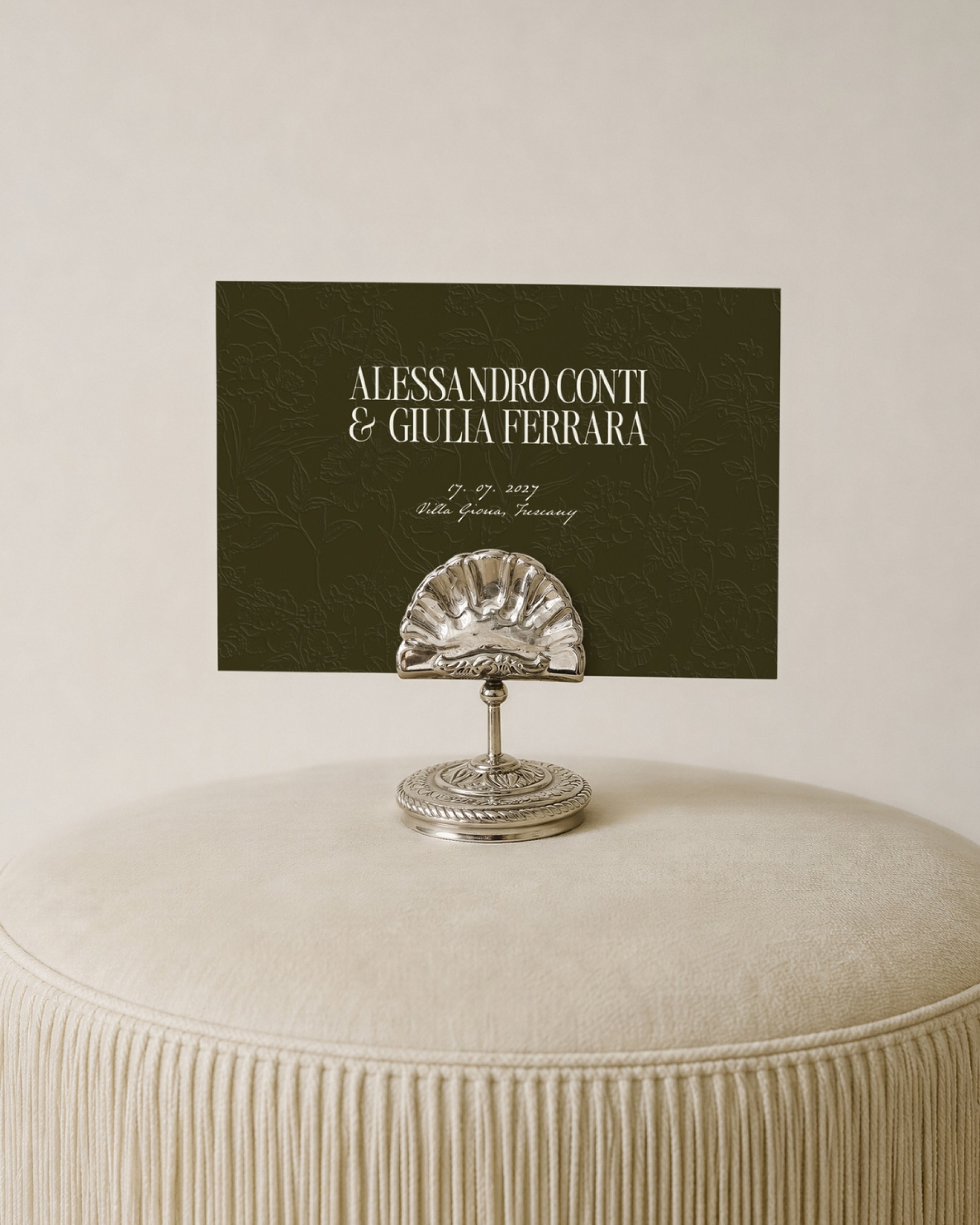
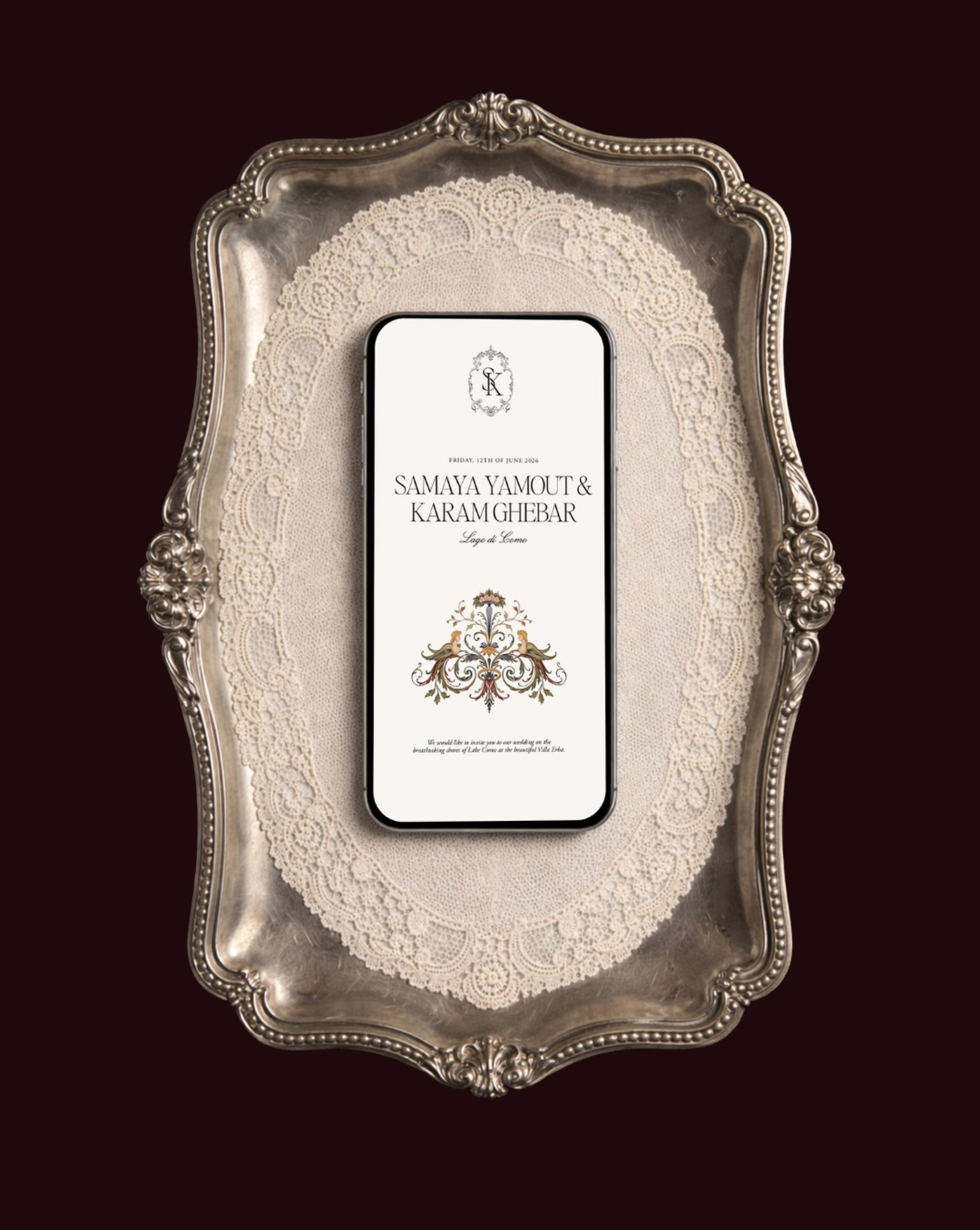
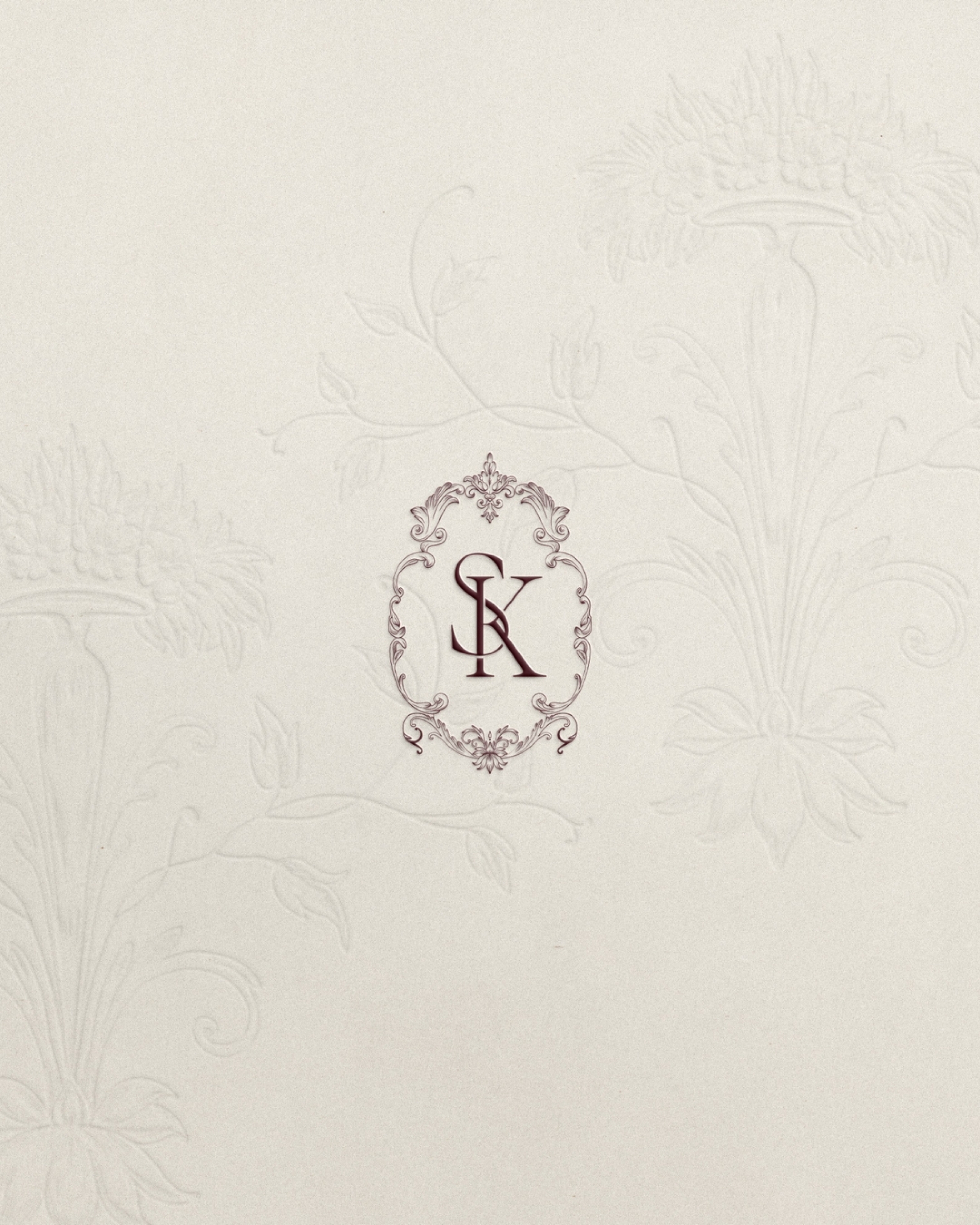
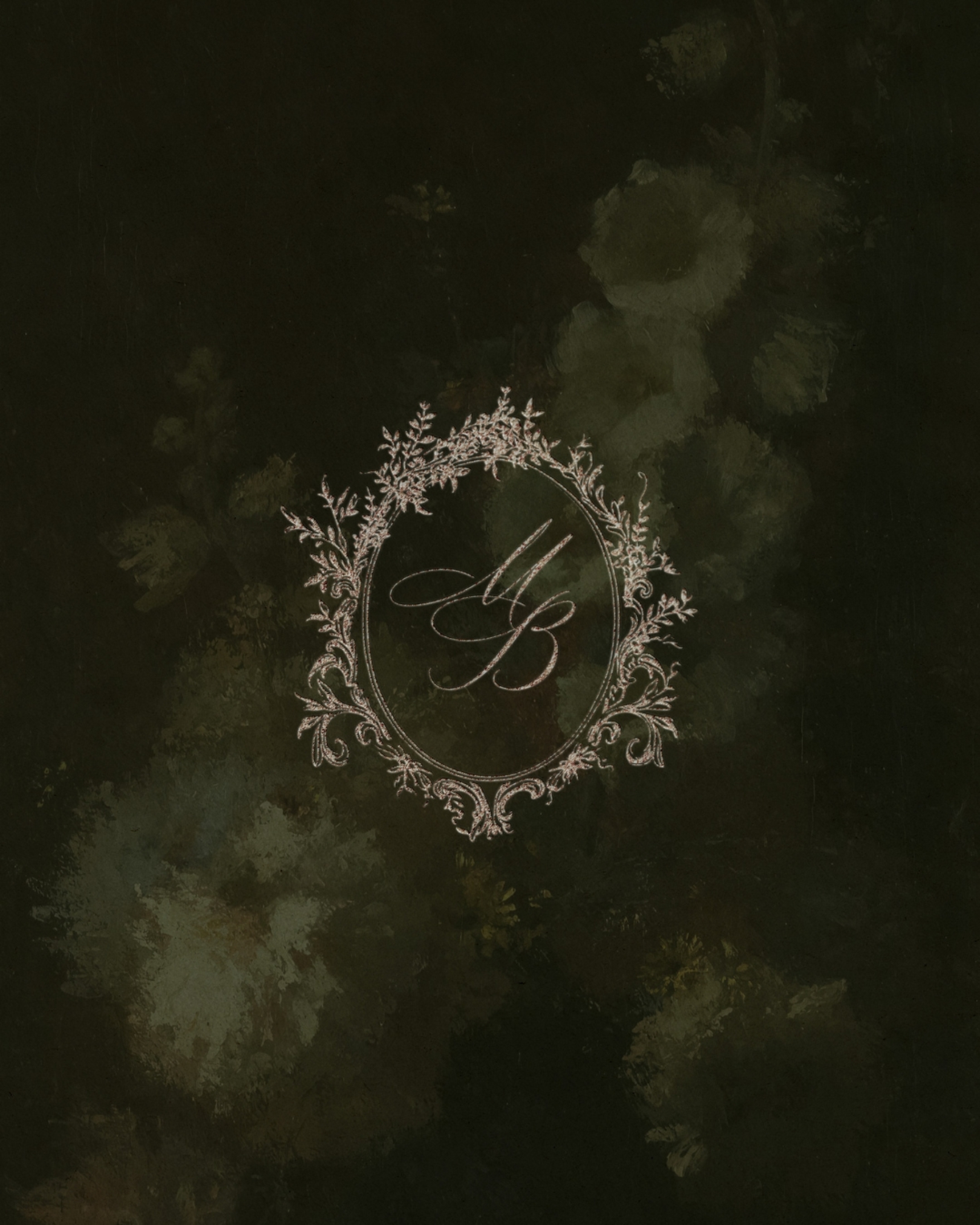
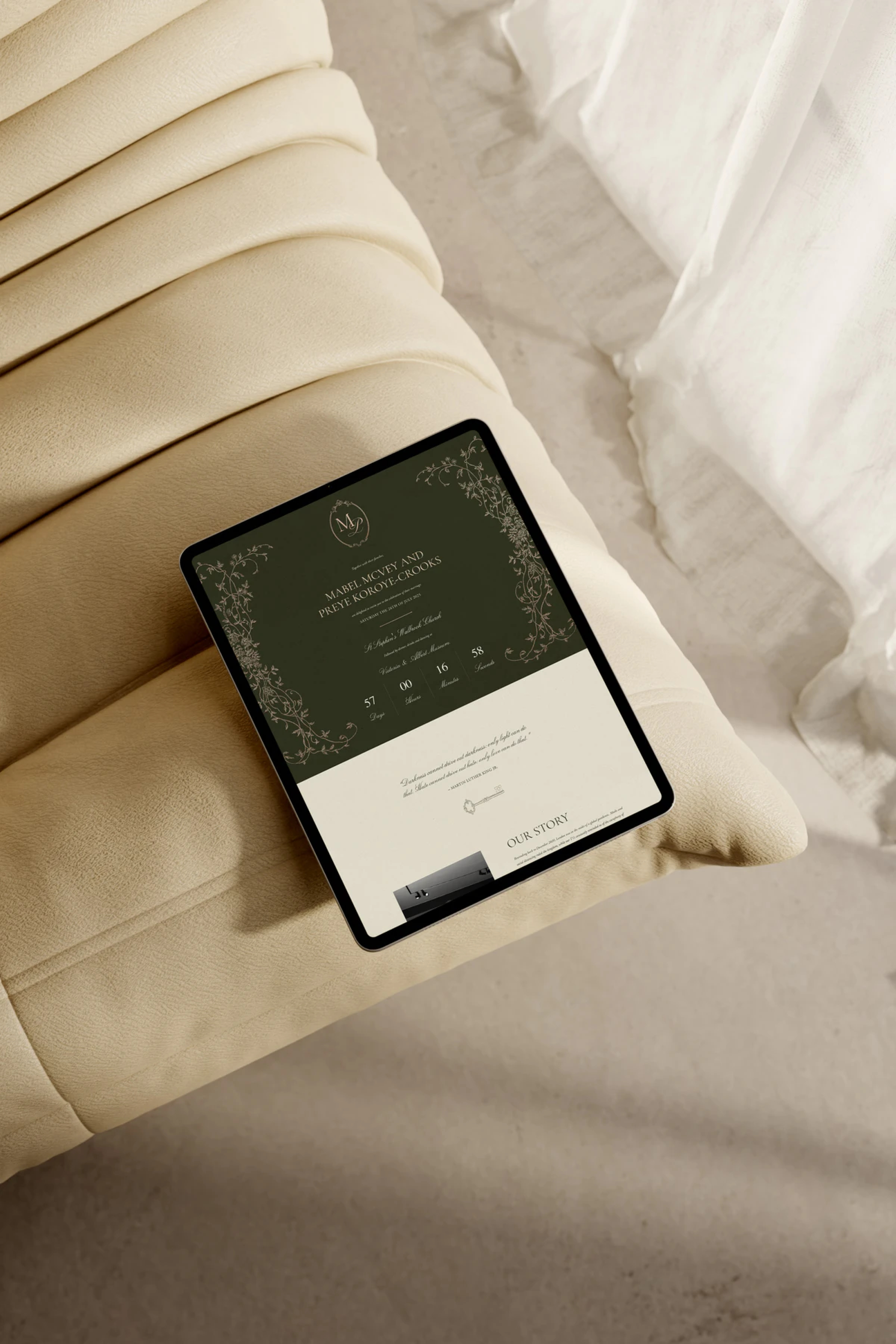
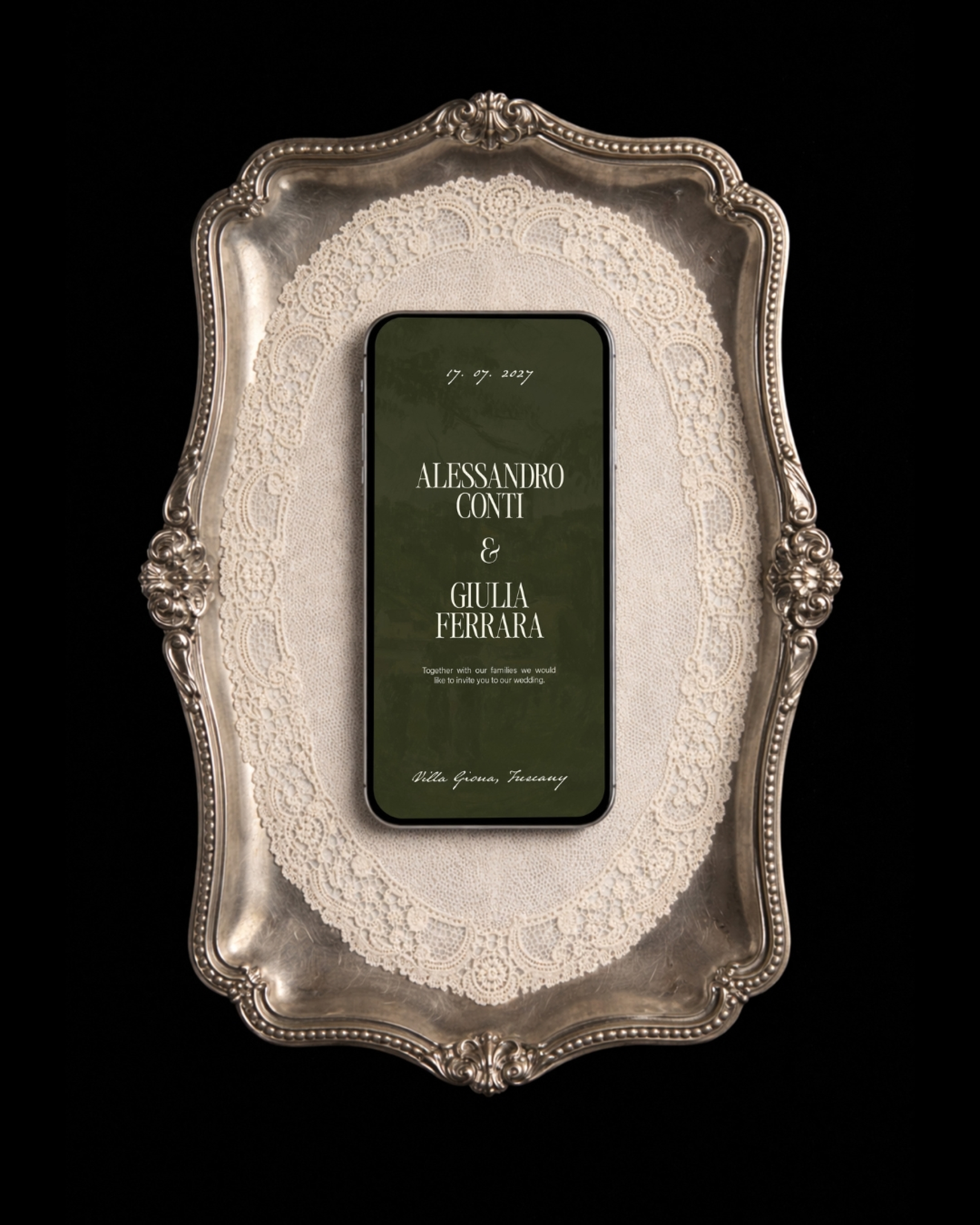
One of the most common mistakes we see is designing a wedding website in isolation from everything else. Your website doesn't need to match your invitations, florals, or tablescape exactly, but there should be a visual relationship between them. This might come through a shared color palette, a distinctive typeface, an illustration inspired by your venue, or a bespoke monogram that appears across digital and printed details. We often look to architecture, landscapes, personal references, and the atmosphere of a destination when developing a creative direction. Even with a semi-custom website, considered choices in photography, typography, and color can create a cohesive result. The aim isn't to make everything identical, but to give the celebration a recognizable visual language.
“Rather than thinking of your website as a digital information board, approach it as the opening chapter of the experience you're creating.”
Put the Guest Experience First
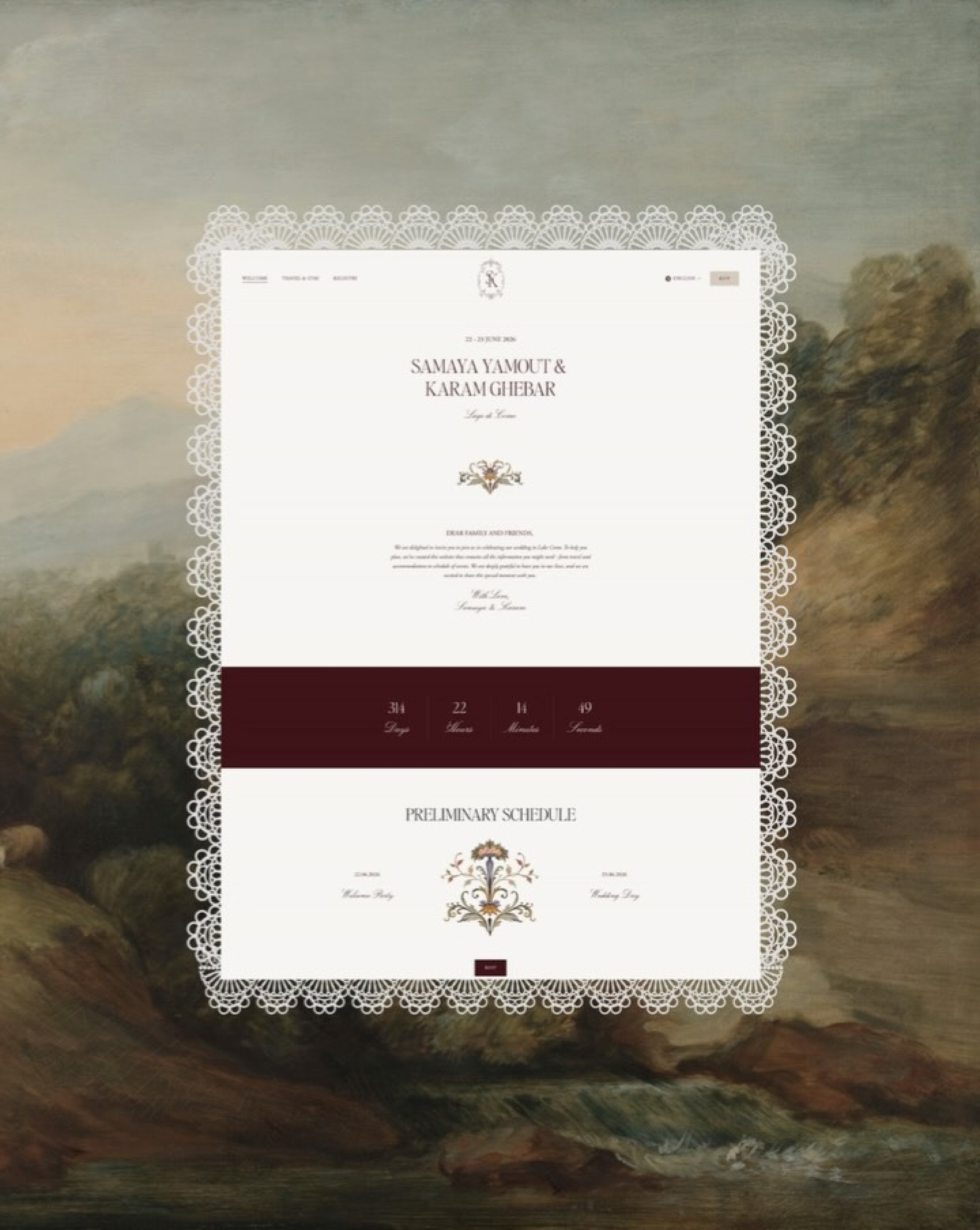
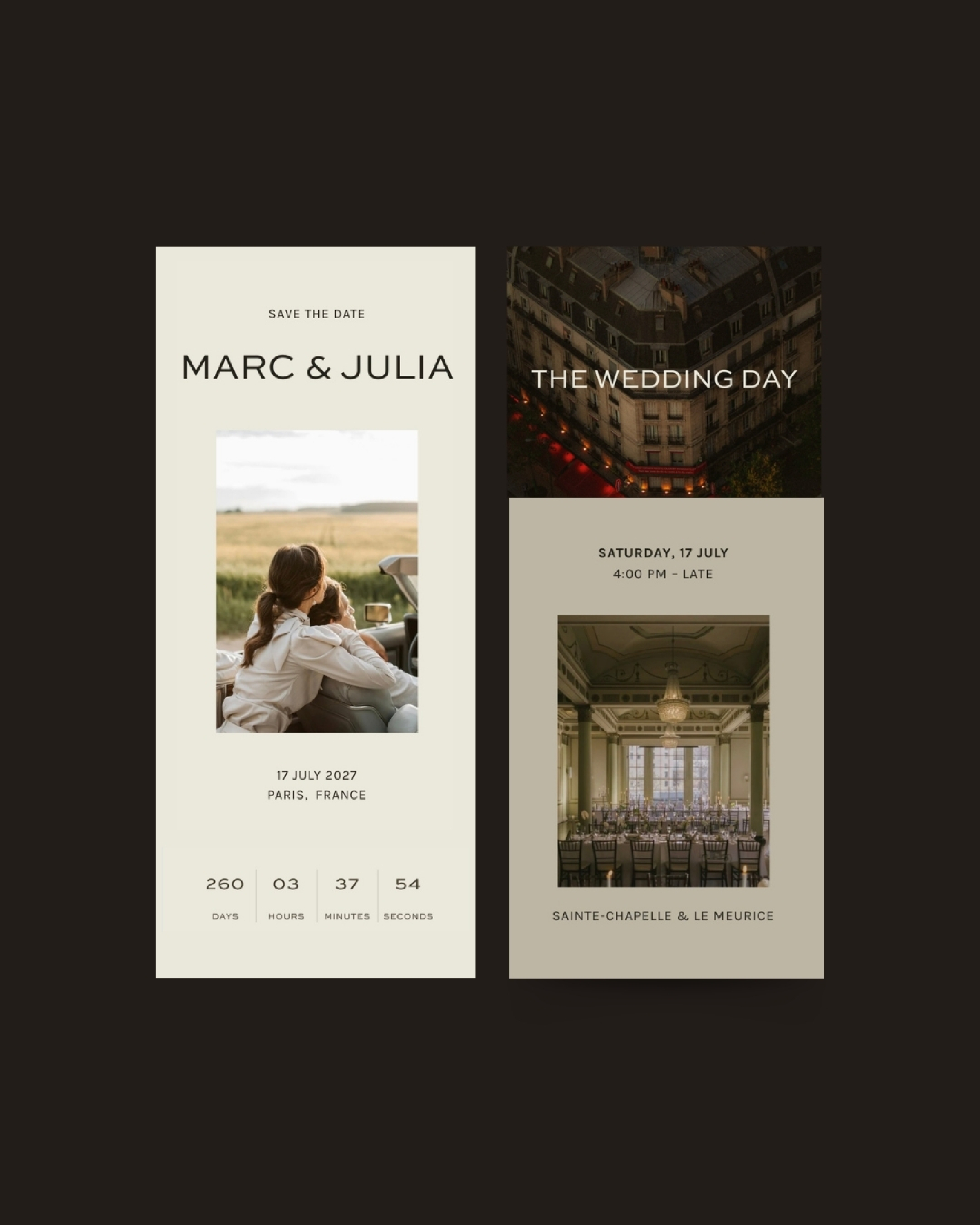
A beautiful wedding website should feel just as intuitive as it is visually considered. We always encourage couples to explore their website from a guest's perspective, particularly someone who may be unfamiliar with the destination or less comfortable navigating digital platforms. Can they immediately find the wedding date, venue, dress code, and RSVP? Is the information easy to navigate without searching through multiple pages or deciphering decorative text? The most sophisticated design often comes from knowing what to simplify, not what to add. Clear navigation, thoughtful organization, and an intuitive experience across devices should be considered just as carefully as the visual details.
Give Every Event Its Own Sense of Occasion
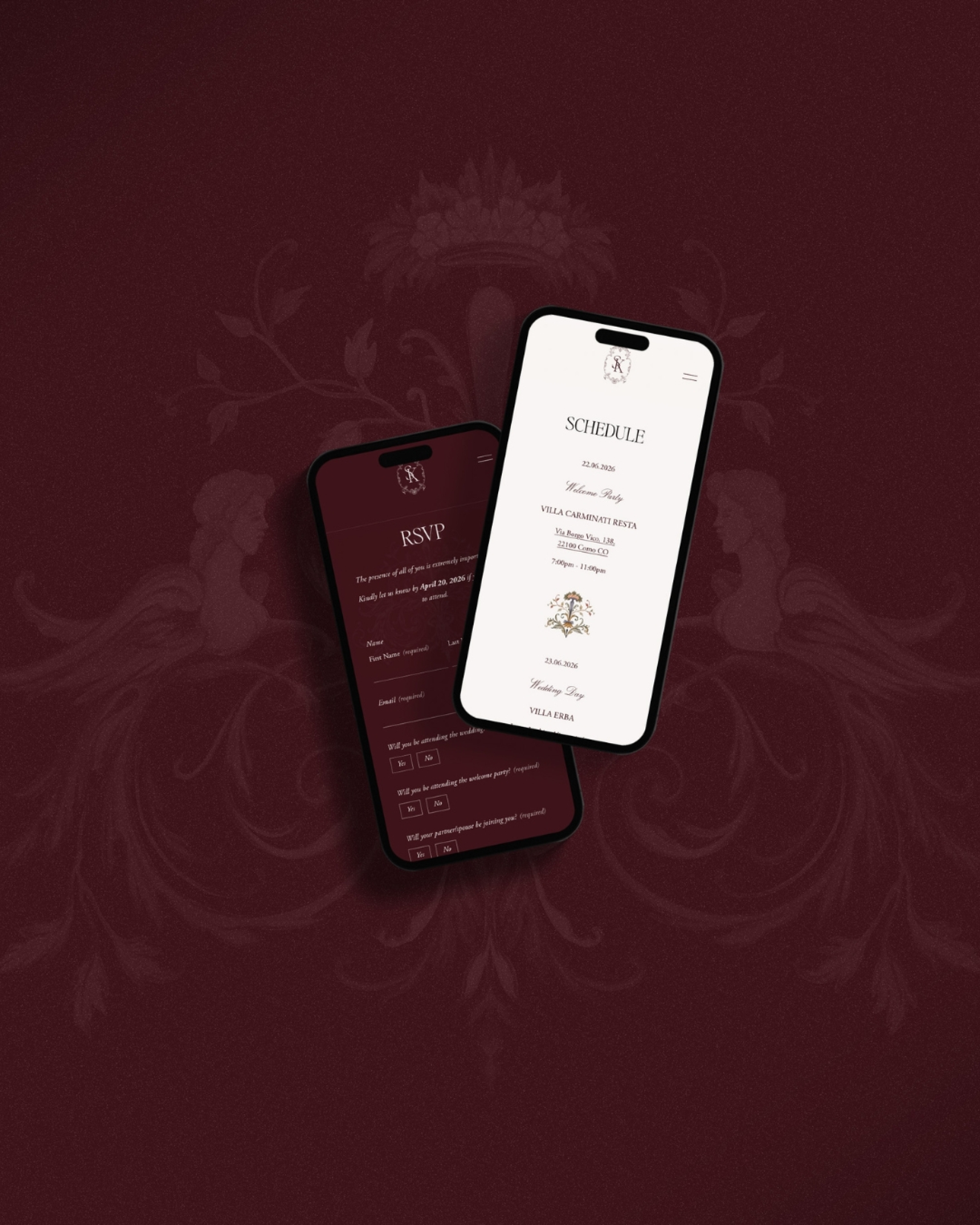
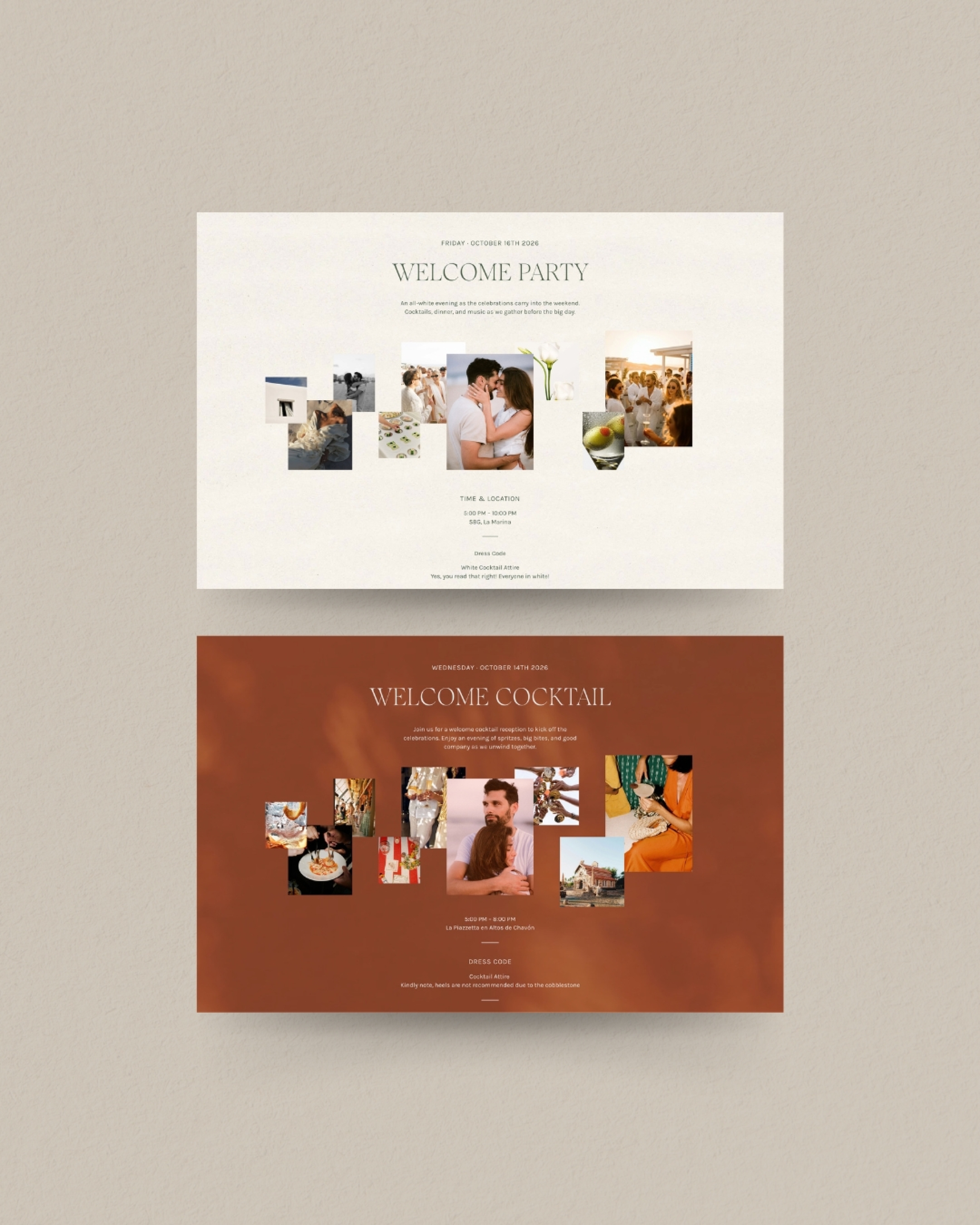
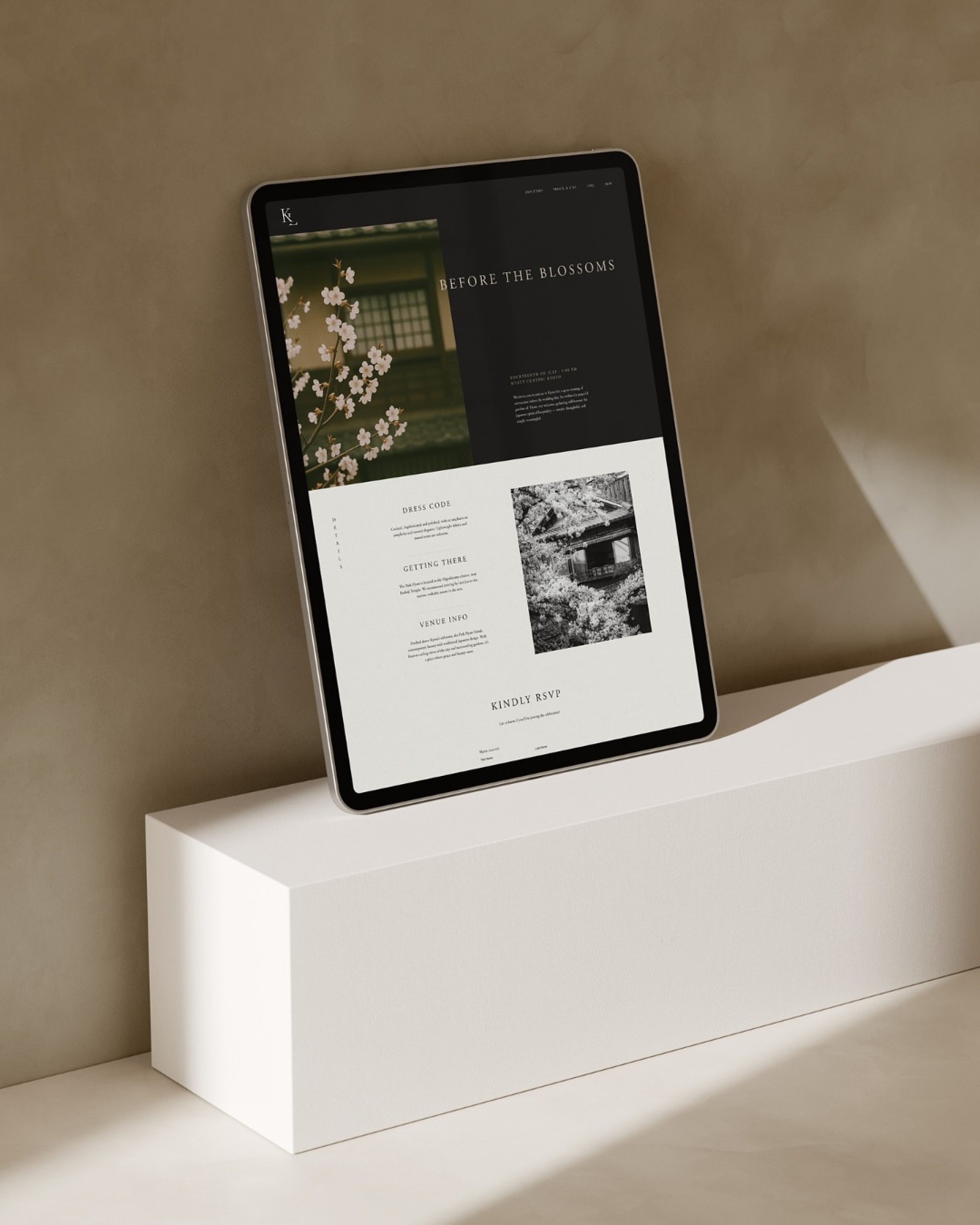
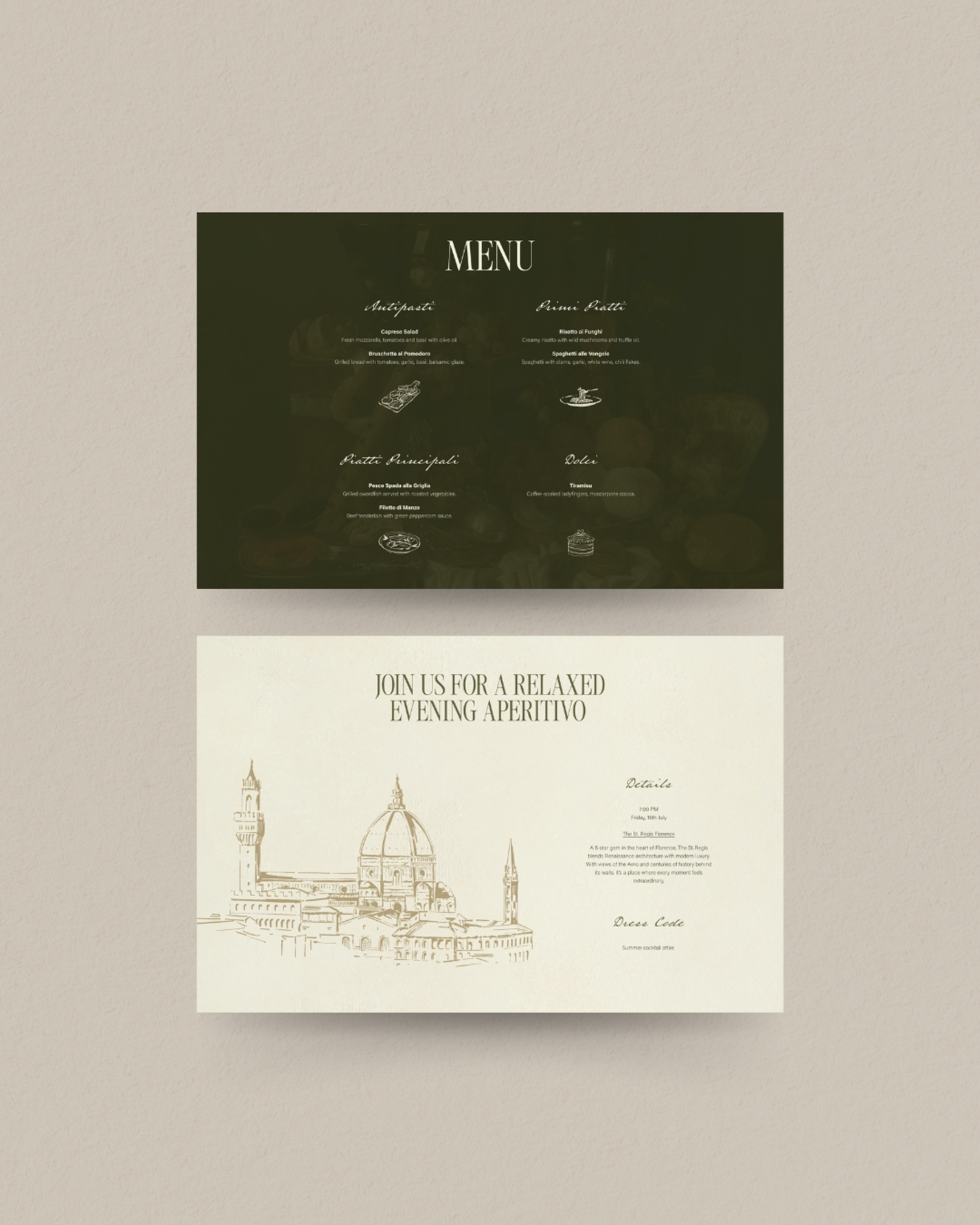
For multi-day weddings, a simple list of dates and times rarely tells the whole story. A welcome dinner, wedding ceremony, and farewell gathering may take place in completely different settings, each with its own atmosphere, dress code, and practical requirements. We love finding ways to express those differences through photography, color stories, illustrations, or subtle interactive elements while keeping the overall website cohesive. Each event should also have its own clearly presented information, including location, arrival time, dress code, and transportation arrangements where relevant. This helps guests understand not only where they need to be but what kind of experience awaits them. It's an opportunity to build anticipation while making a complex itinerary feel wonderfully straightforward.
“The most sophisticated design often comes from knowing what to simplify, not what to add.”
Treat Travel Information as an Act of Hospitality
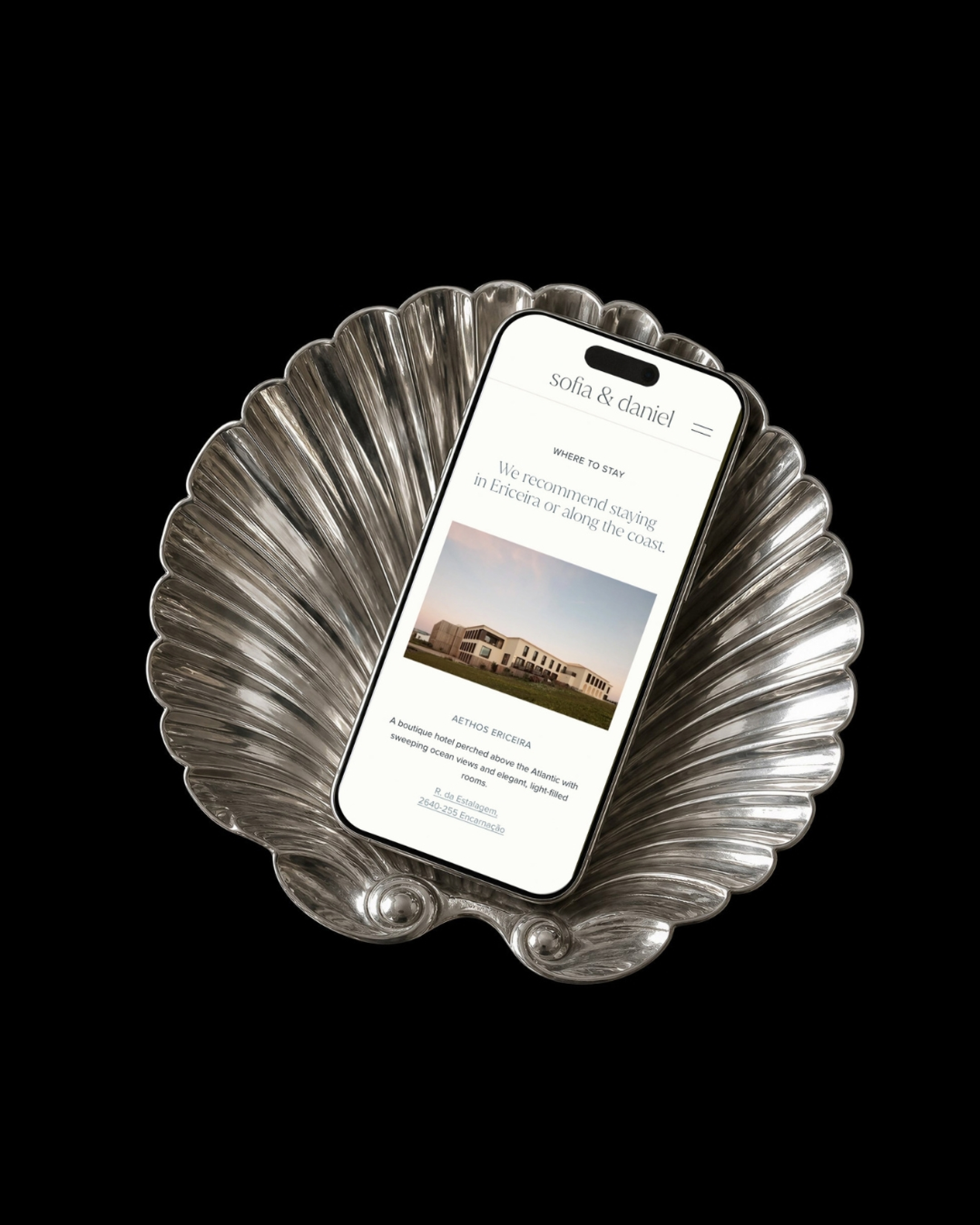
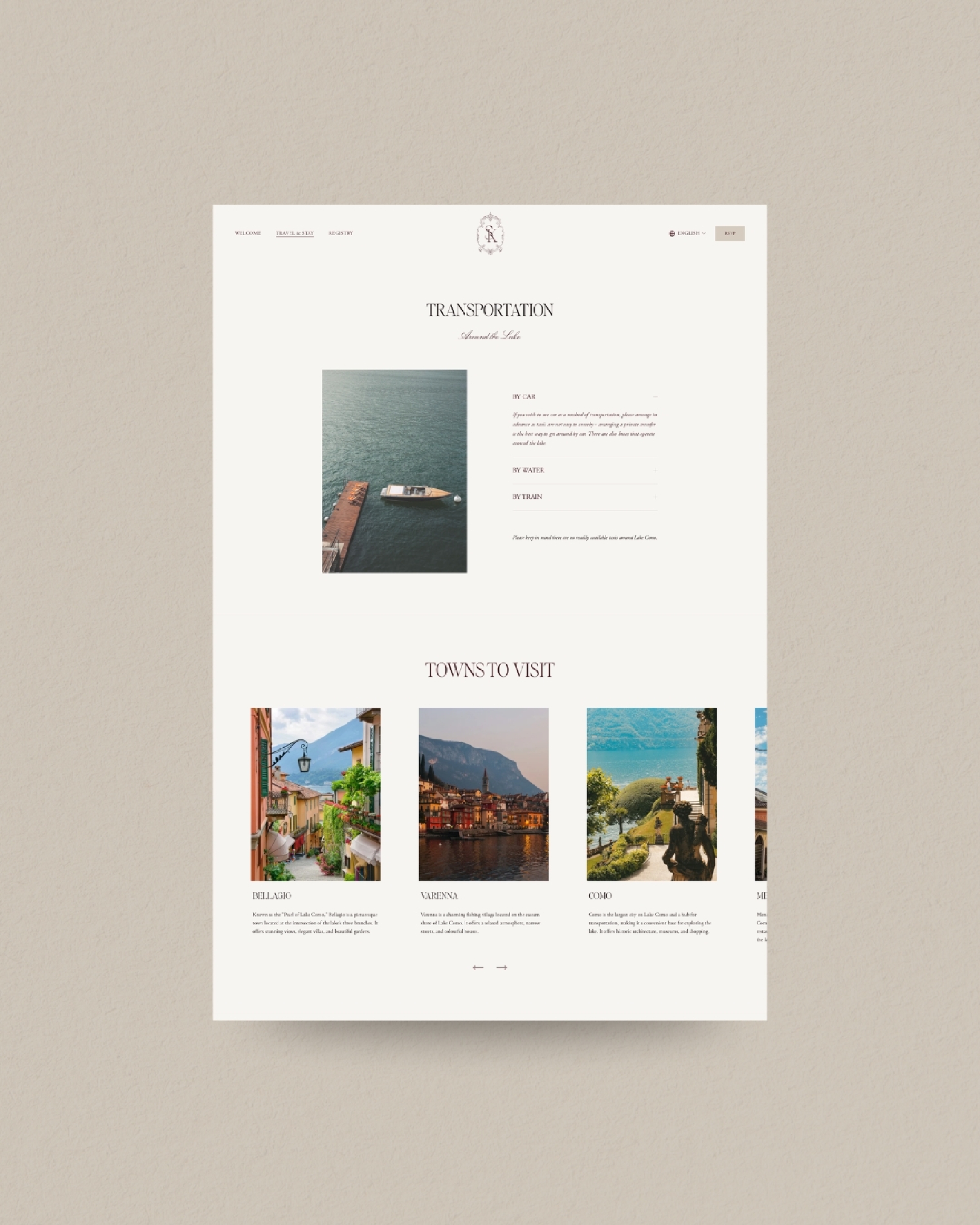
For destination weddings, your website can become one of the most valuable resources you offer your guests. Rather than simply listing the nearest airport and a few hotels, consider the questions someone visiting the destination for the first time might have. Explain how to reach the venue, where to stay, whether transportation will be provided, and what guests should know about local weather, currency, or practical arrangements. We also love including a thoughtfully curated local guide with favorite restaurants, cafés, cultural experiences, and places worth discovering. These recommendations make the trip feel more personal and allow guests to experience the destination beyond the wedding itself. Good hospitality often begins with anticipating a question before someone needs to ask it.
Make the RSVP Experience Effortless
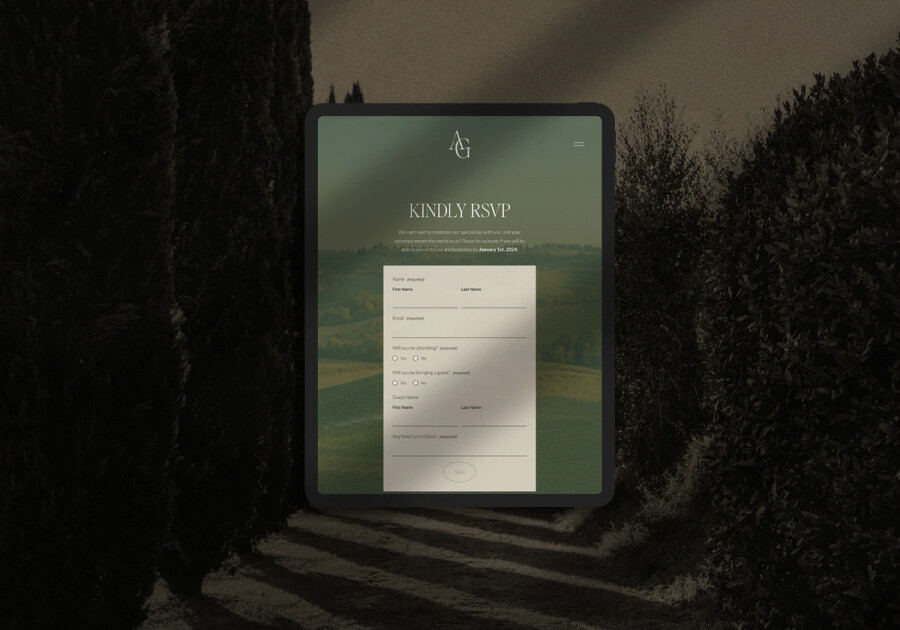
An RSVP form might seem like a small detail, but it has an enormous influence on both the guest experience and the planning process. Keep the questions relevant, the instructions clear, and the number of steps to a minimum. For celebrations with multiple events, guests should only be asked to respond to the occasions they're actually invited to, rather than navigating an unnecessarily complicated form. Think carefully about the information your planner or caterer will need, including dietary requirements, accessibility considerations, and attendance at individual events. We also recommend testing the entire RSVP journey before sending invitations. Consider what happens after guests submit their responses, whether they receive a confirmation, and how easily they can correct or update their details. A well-designed RSVP should feel simple to guests while providing beautifully organized information behind the scenes.
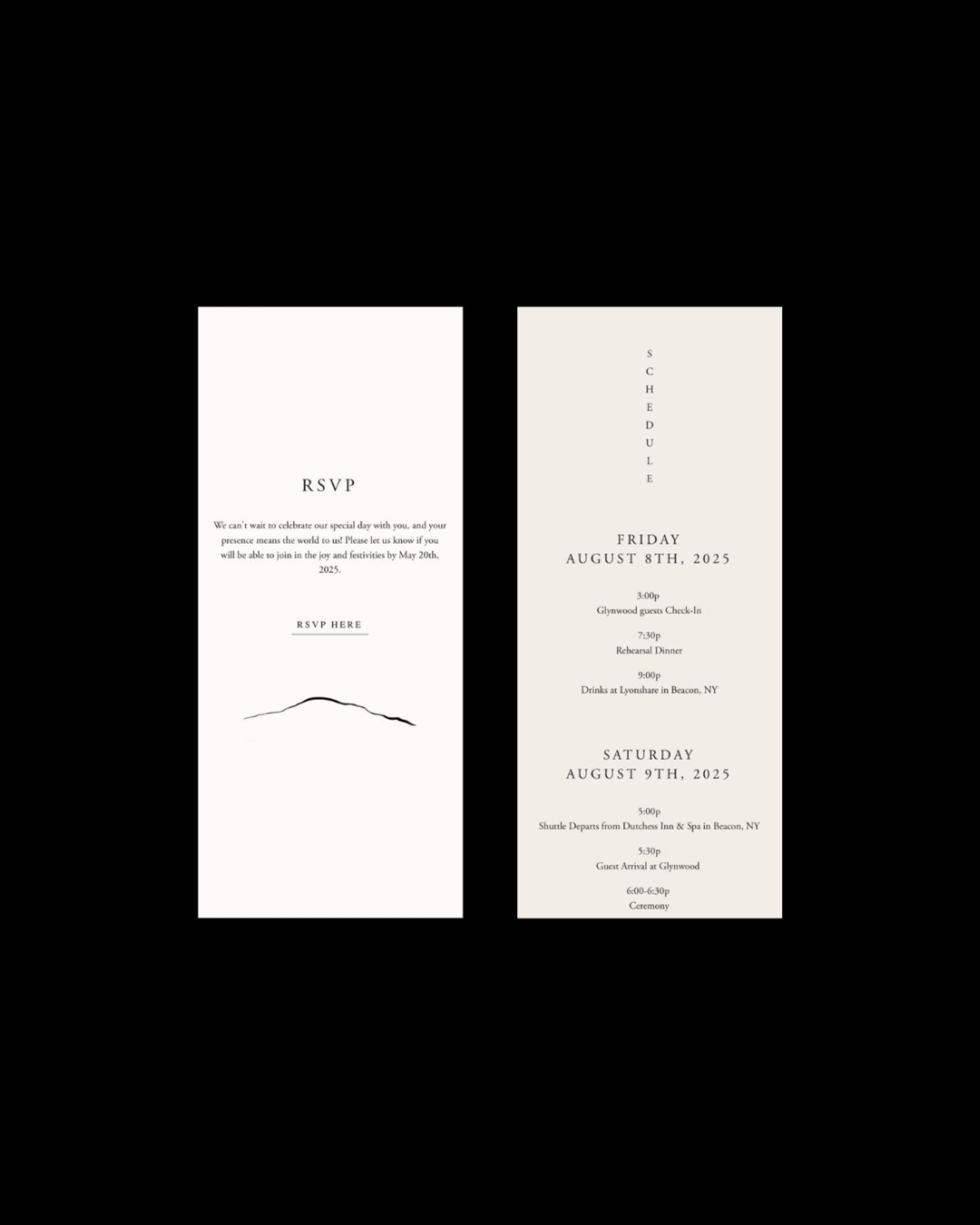
“A well-designed RSVP should feel simple to guests while providing beautifully organized information behind the scenes.”
Make It Personal
A beautifully designed template can be an excellent starting point, but it's the personal details that make a wedding website feel truly yours. Think beyond simply adding your names and wedding date: a few favorite photos, a sweet story about how you met, or a personal note to your guests can bring so much character to the experience. You don't need to share an elaborate love story or reveal every detail of your relationship — sometimes the smallest references are the most meaningful. Consider how your personalities might come through in the words you choose, the imagery you share, or even the little unexpected details throughout the website. Whether you're playful and expressive or quietly understated, let that individuality show. The most memorable wedding websites don't necessarily reveal everything about a couple, they simply feel unmistakably like them.
Remember That Your Website Is a
Living Part of the Planning Process
Unlike an invitation that's sent once, a wedding website remains part of the celebration for months, often becoming the central point of reference for guests throughout the planning process. They'll return to check event details, explore travel recommendations, submit their RSVPs, and revisit important information as the date approaches. Meanwhile, plans evolve: schedules change, transportation arrangements become clearer, and new details need to be communicated. It's worth considering from the beginning who will maintain the website, manage responses, and ensure everything remains accurate. For more complex celebrations, dedicated digital guest management can be particularly valuable, bringing together ongoing website updates, RSVP coordination, and thoughtful guest communications in one considered experience. Beautiful design creates the first impression, but the care given to everything that follows is what makes the experience truly exceptional.