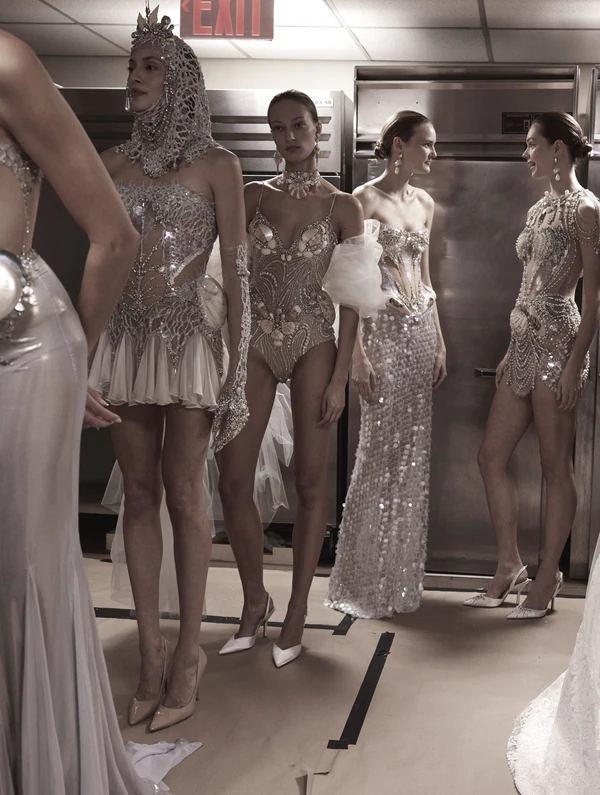
Fashion has always been something of a mirror to the world around us, and bridal is no exception. Against a backdrop of economic uncertainty and an increasingly unpredictable cultural landscape, perhaps it was inevitable that designers would find themselves drawn back to the familiar. This New York Bridal Fashion Week, the Fall 2027 collections marked a quieter chapter in bridal’s ongoing evolution, one where tradition took precedence over experimentation and the needle moved, if only ever so slightly. There were moments that genuinely moved and inspired us, certainly, though these were less about breaking new ground and more about the artistry of reimagining what we already know.
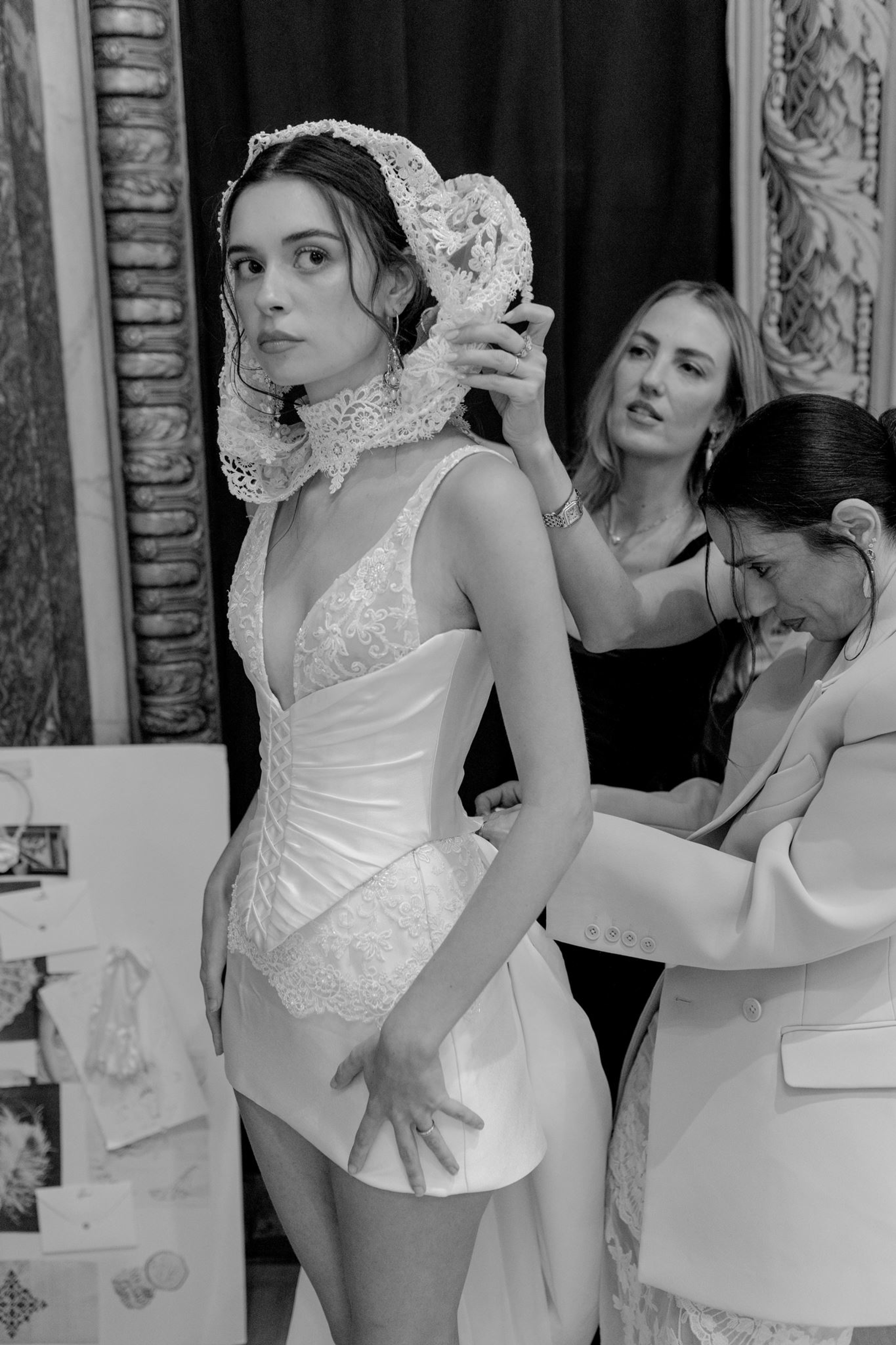
From the languid elegance of 1930s eveningwear to the overt femininity of ballet-inspired silhouettes, designers revisited familiar chapters of fashion history, finding fresh expression in established bridal codes rather than seeking to reinvent them entirely. But restraint should never be mistaken for a lack of imagination. From Floure’s intimate, 1950s-inspired couture atelier presentation to the extraordinary textures and embellishments at Marmar Halim, and the rare glimpses inside the ateliers of House of Gilles and backstage at Alon Livné, there were moments that reminded us precisely why we fall in love with bridal fashion season after season. Perhaps the story this season wasn’t about rewriting the rules, but finding new beauty within them. THE WED was there to witness it all, and here, we breakdown the ten defining trends shaping the next chapter of bridal.
Sense & Sensibility
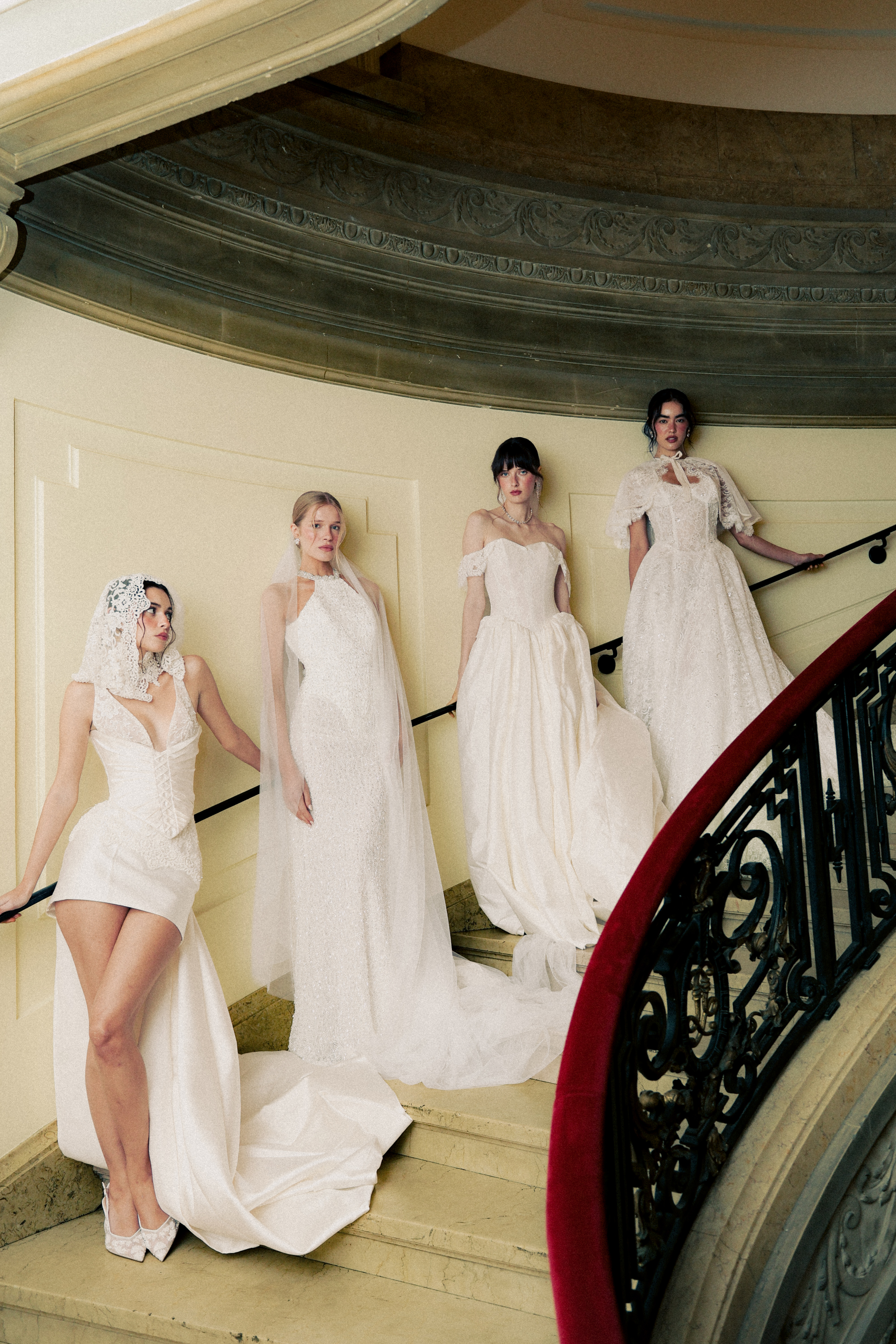
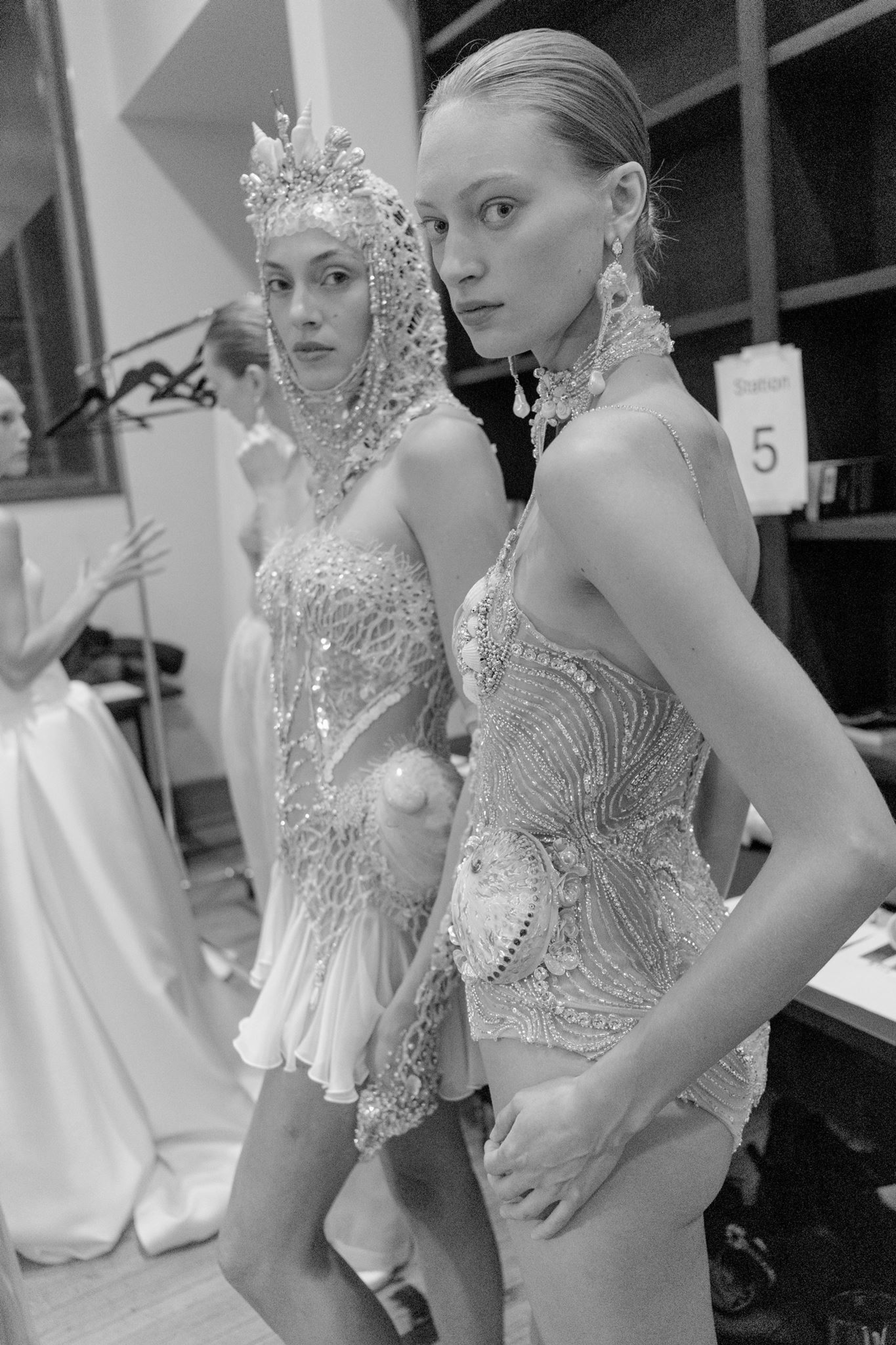
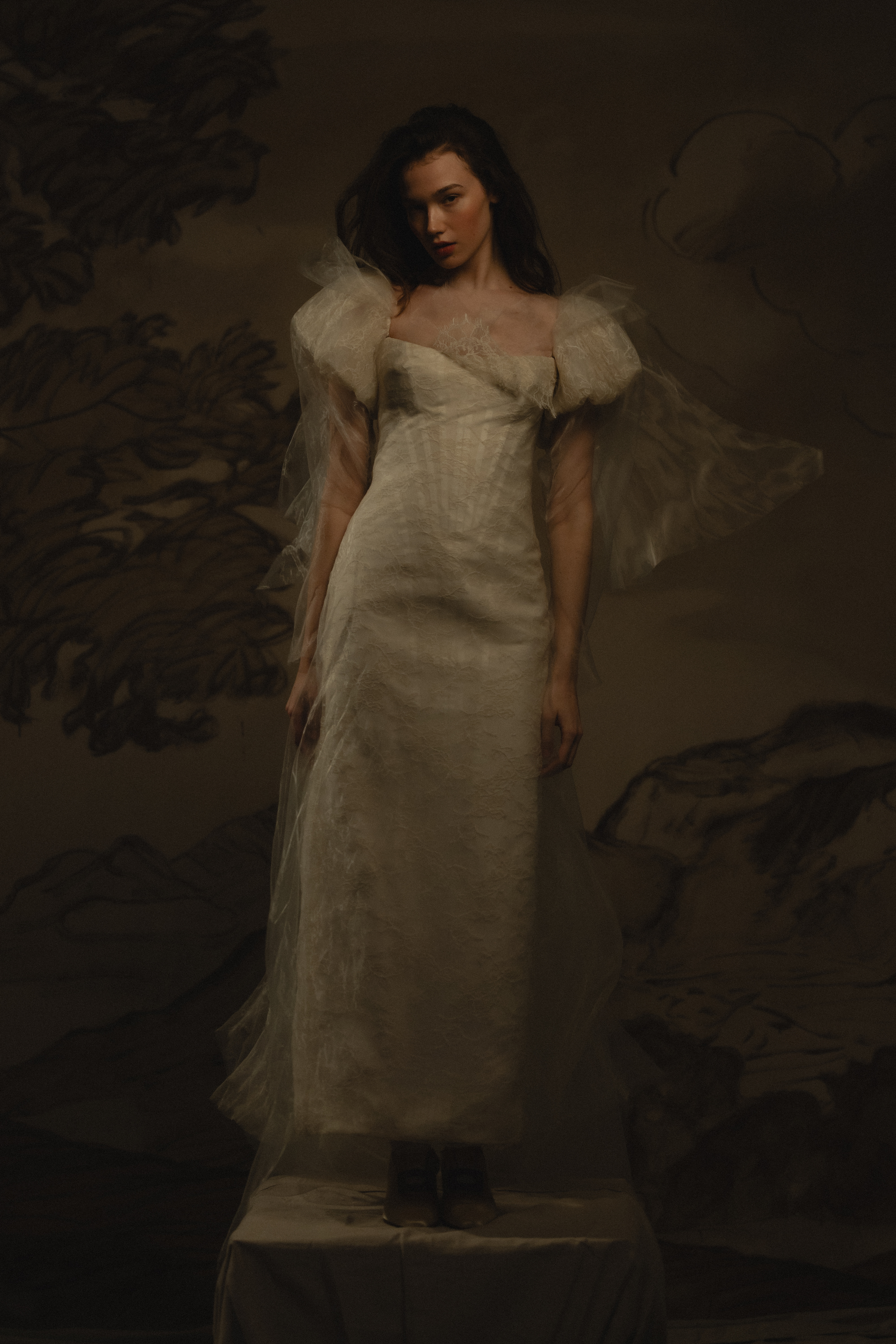
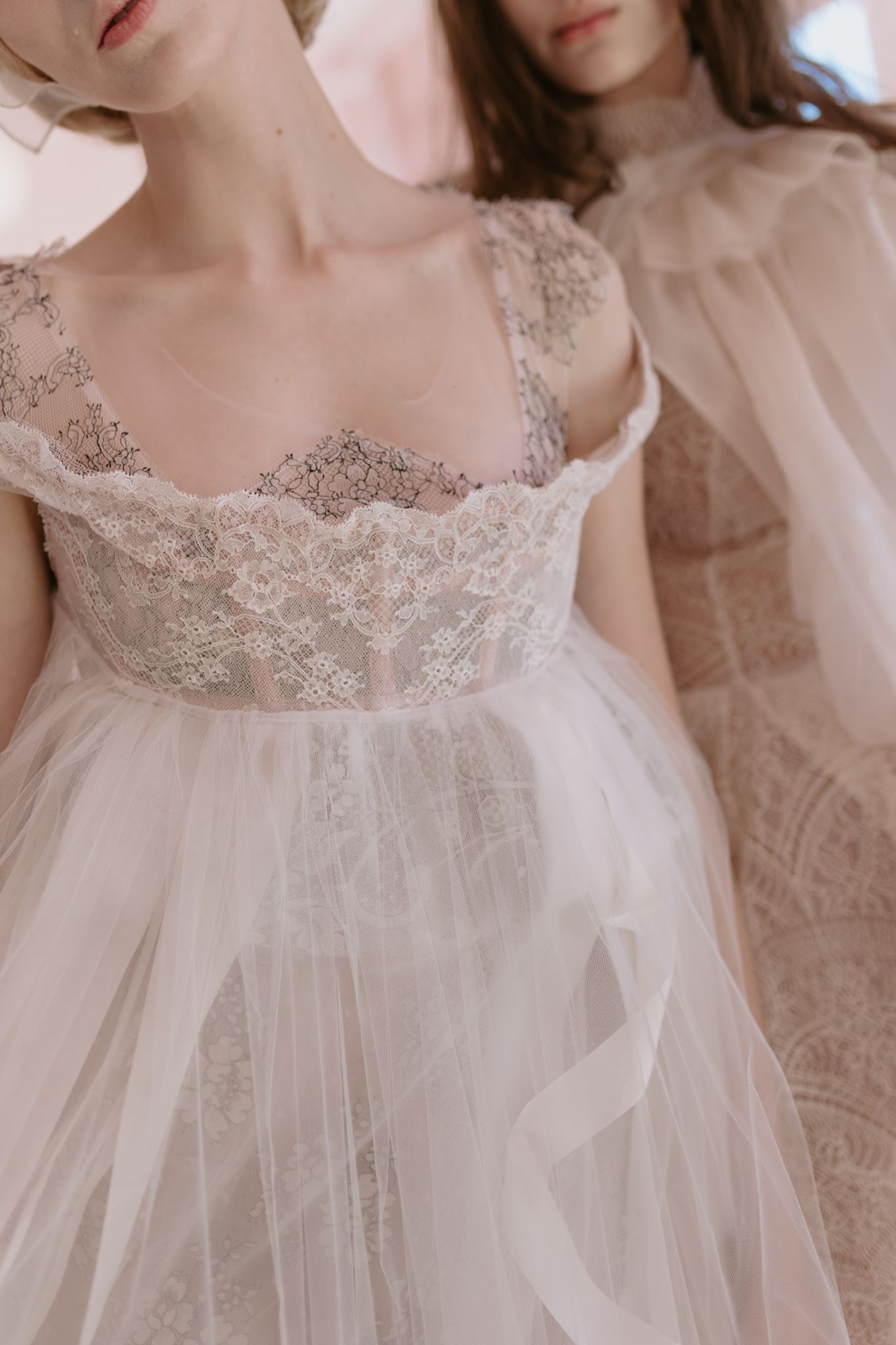
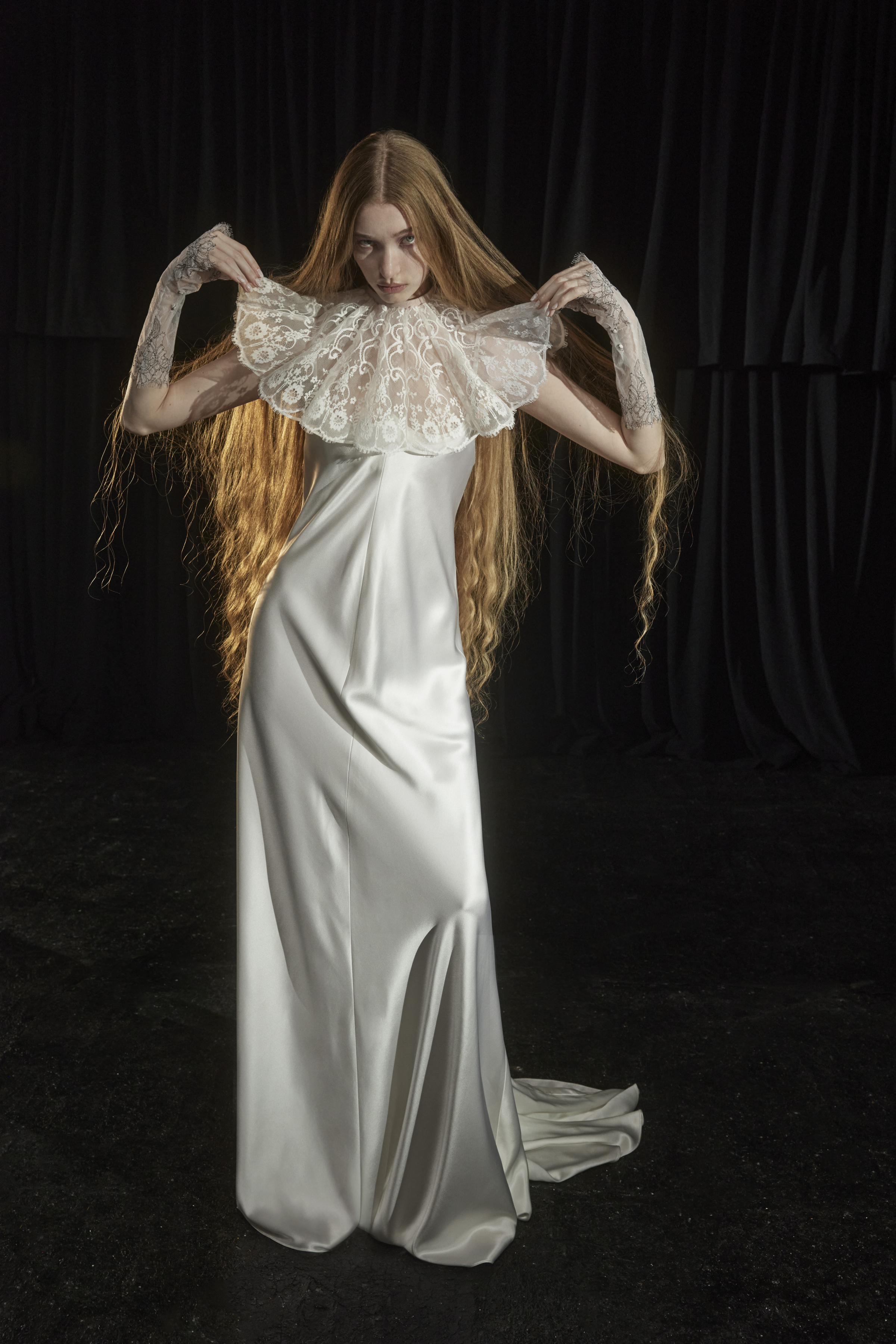
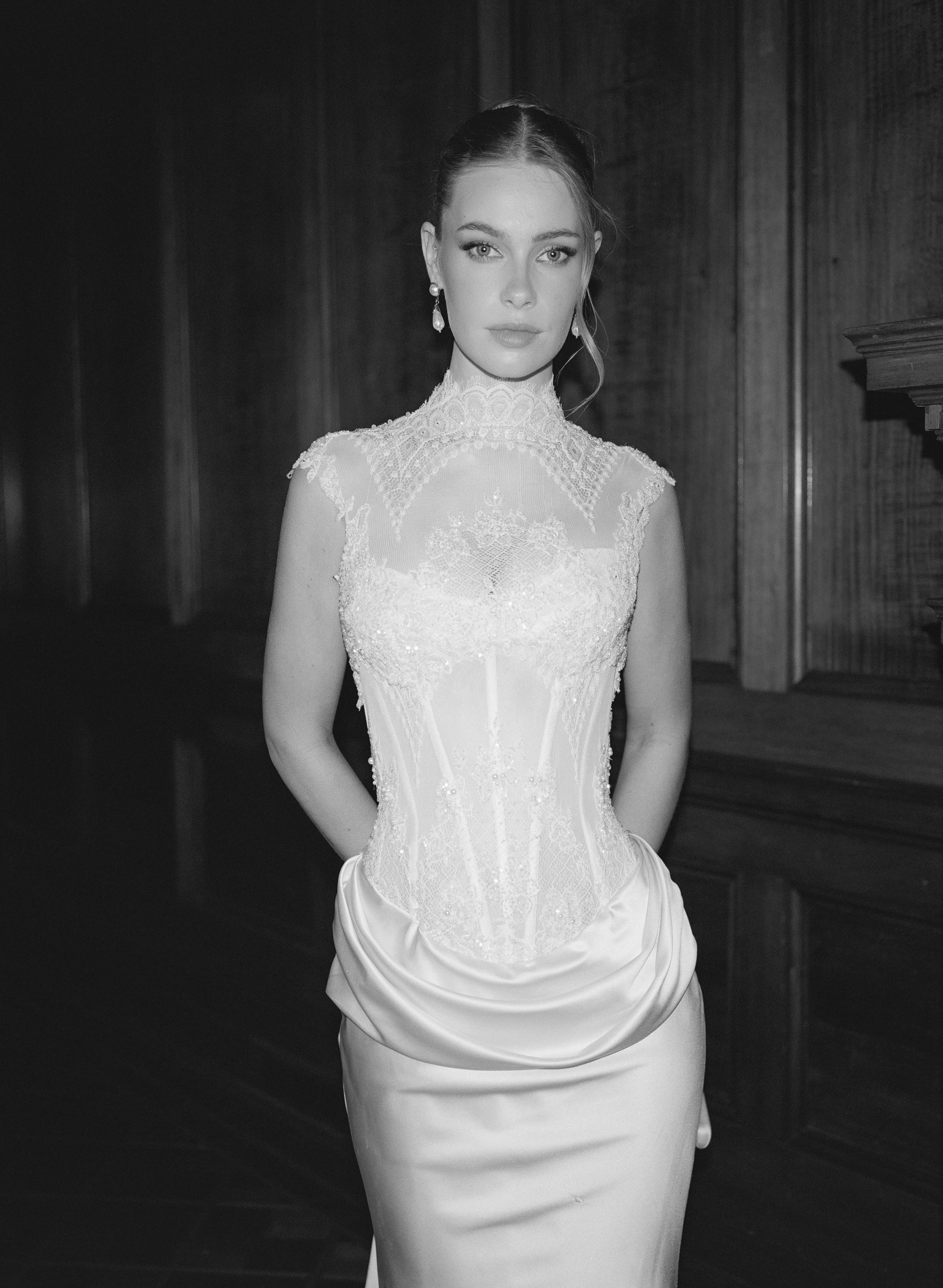
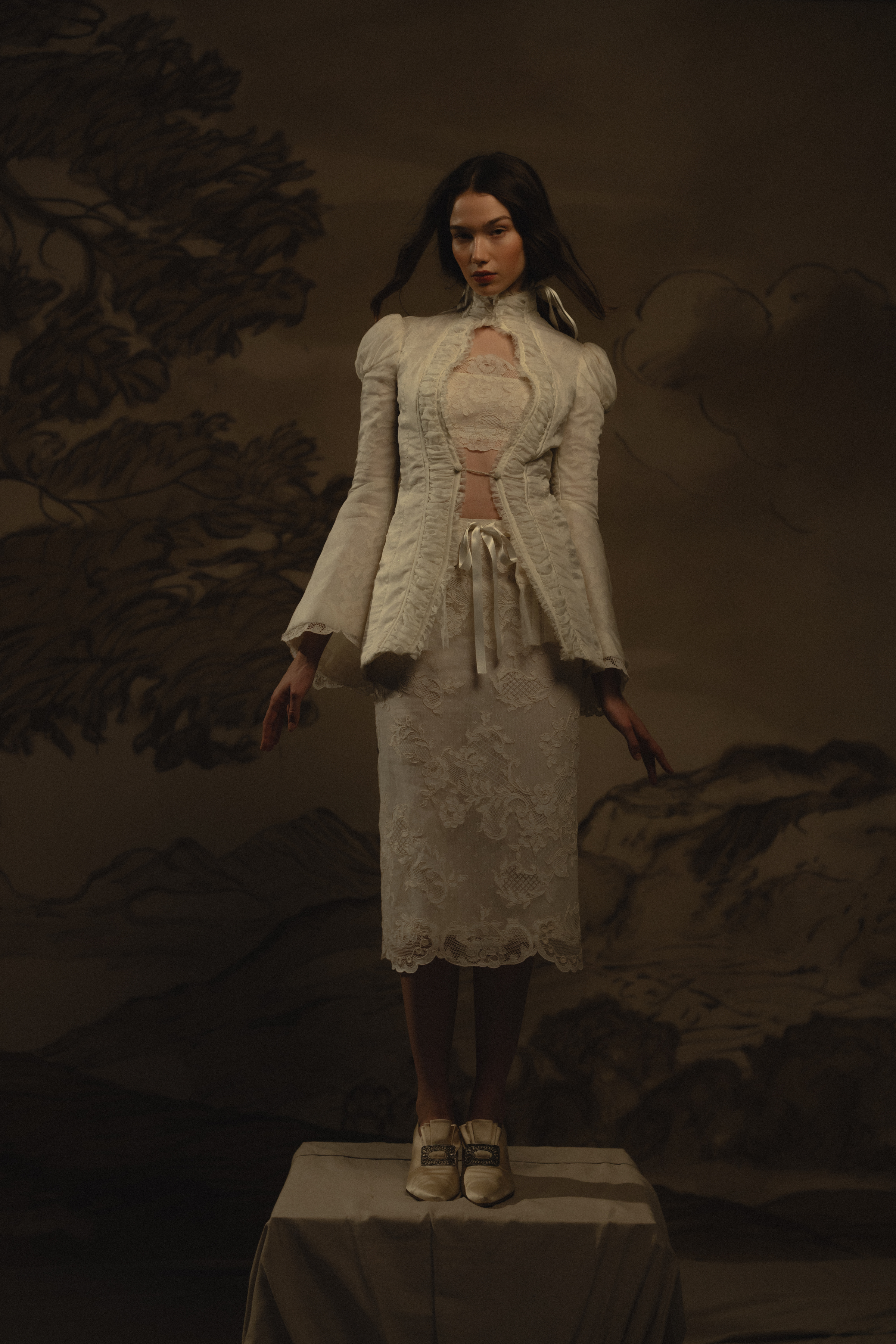
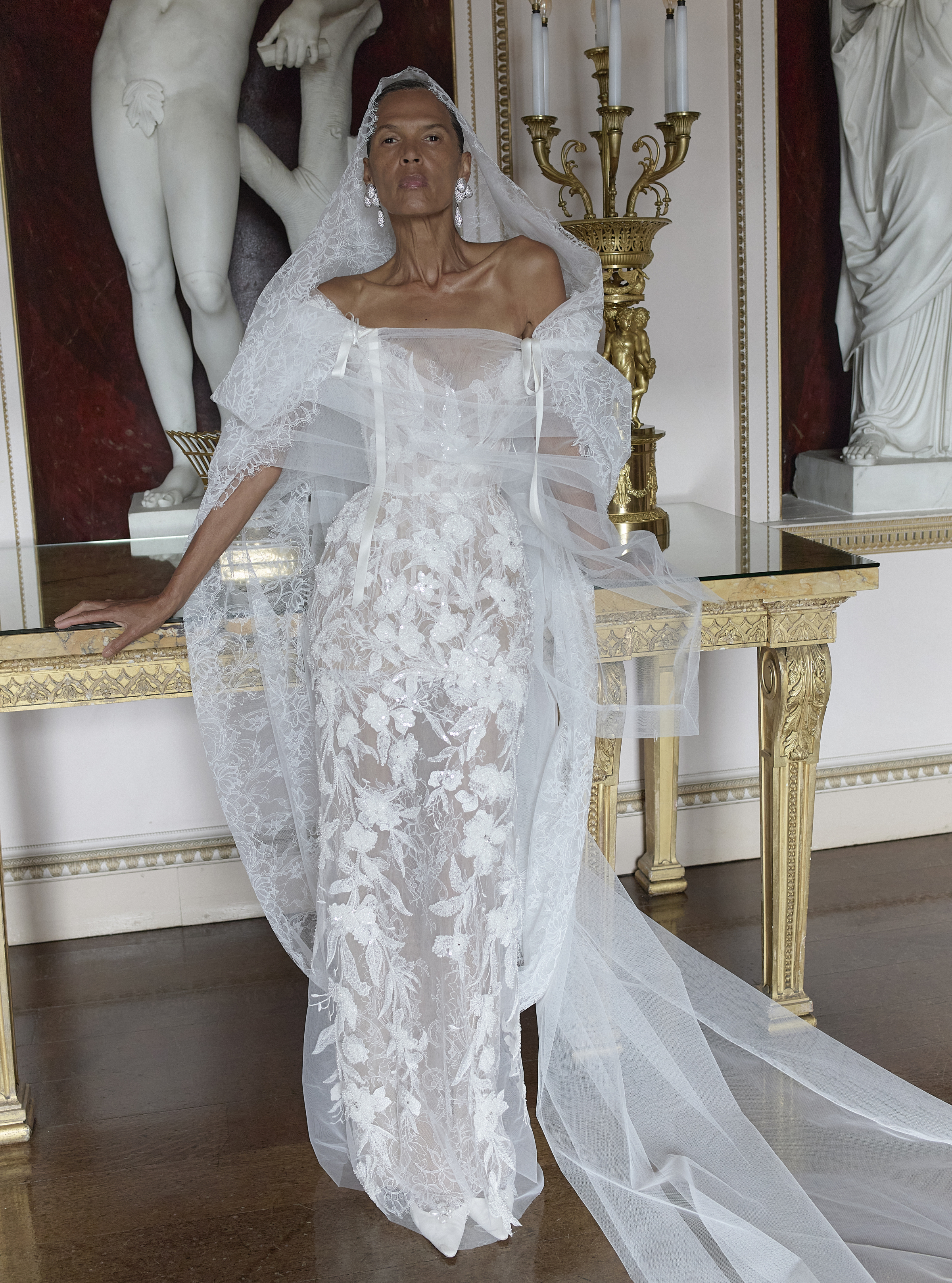
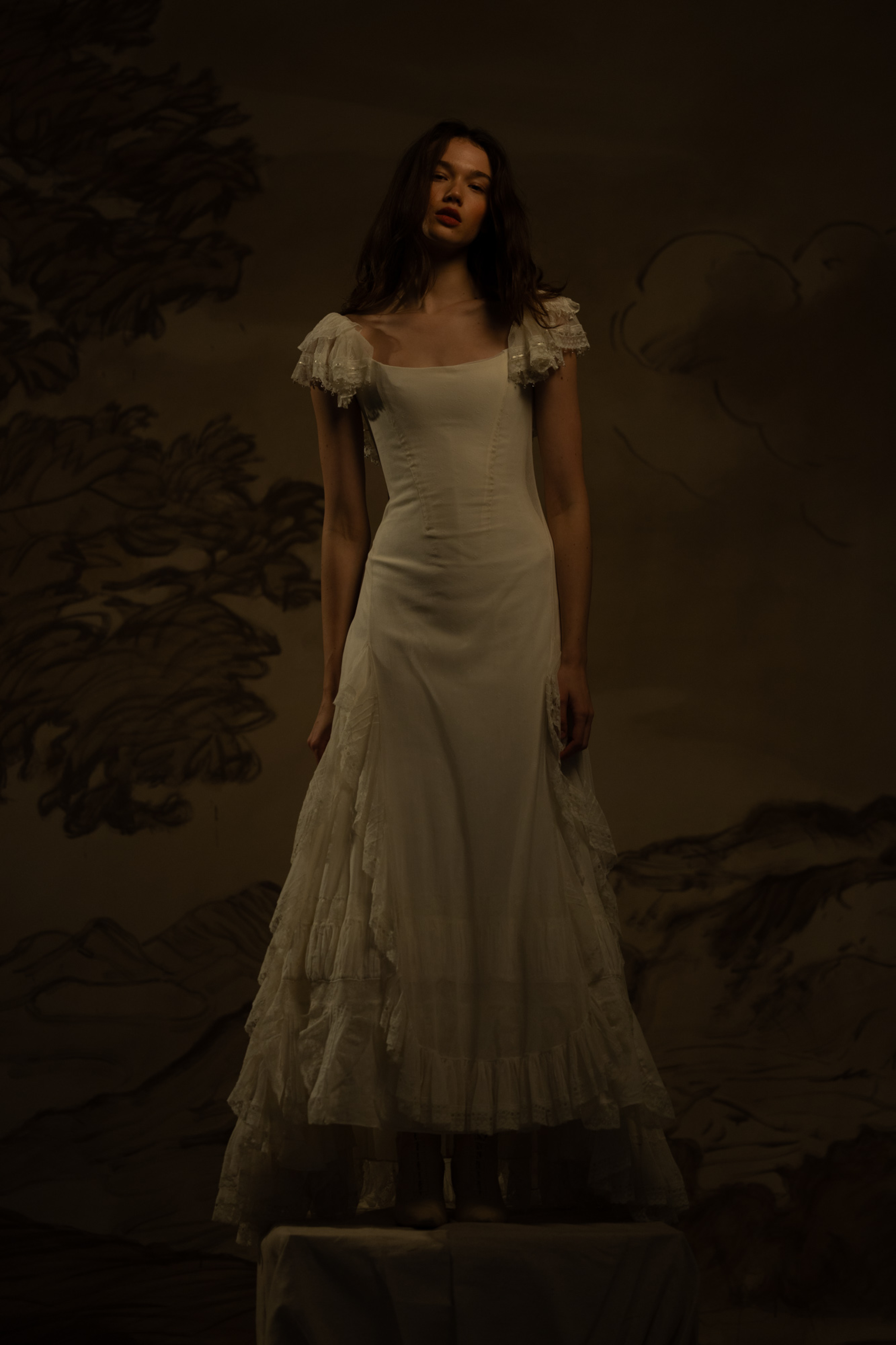
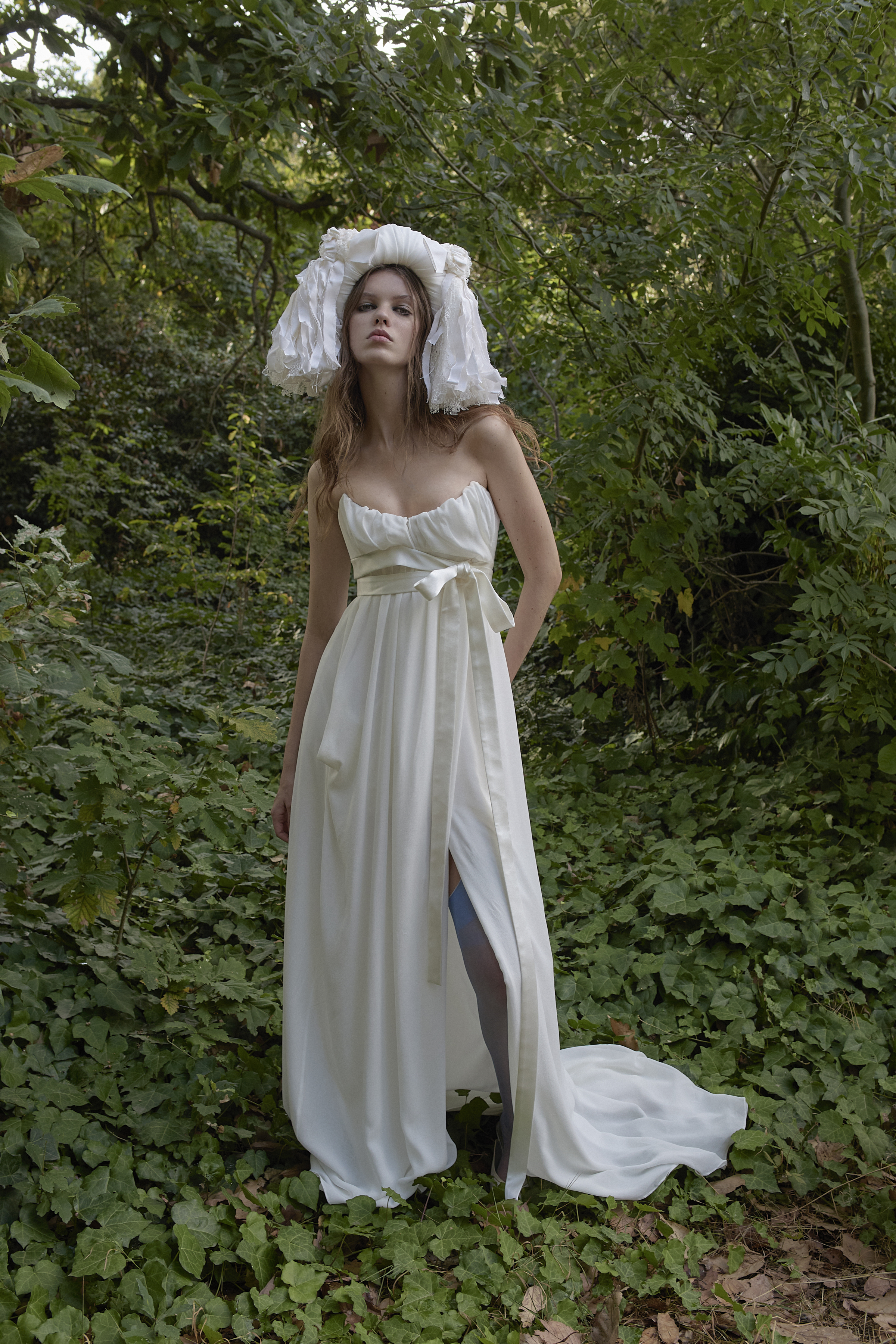
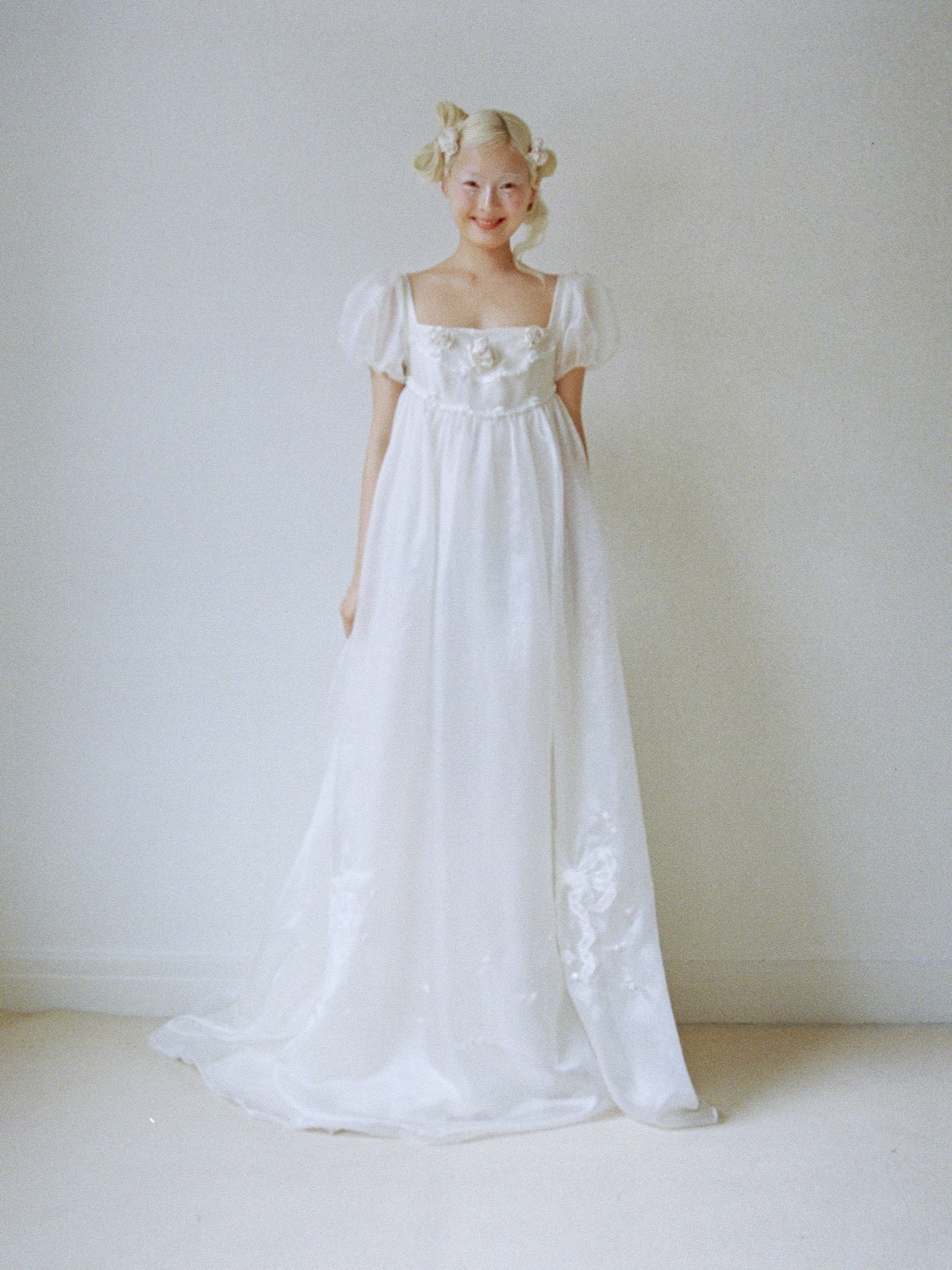
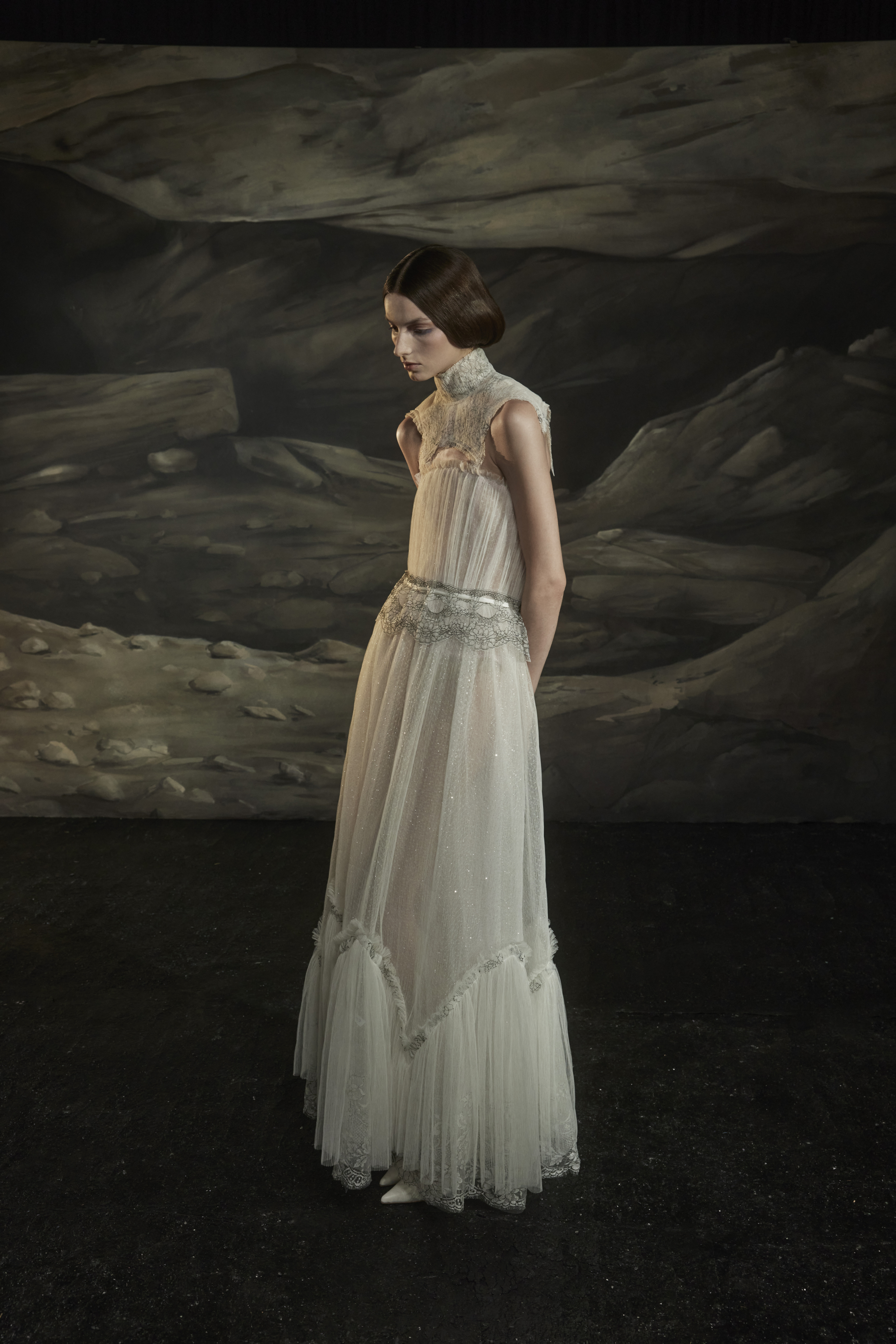
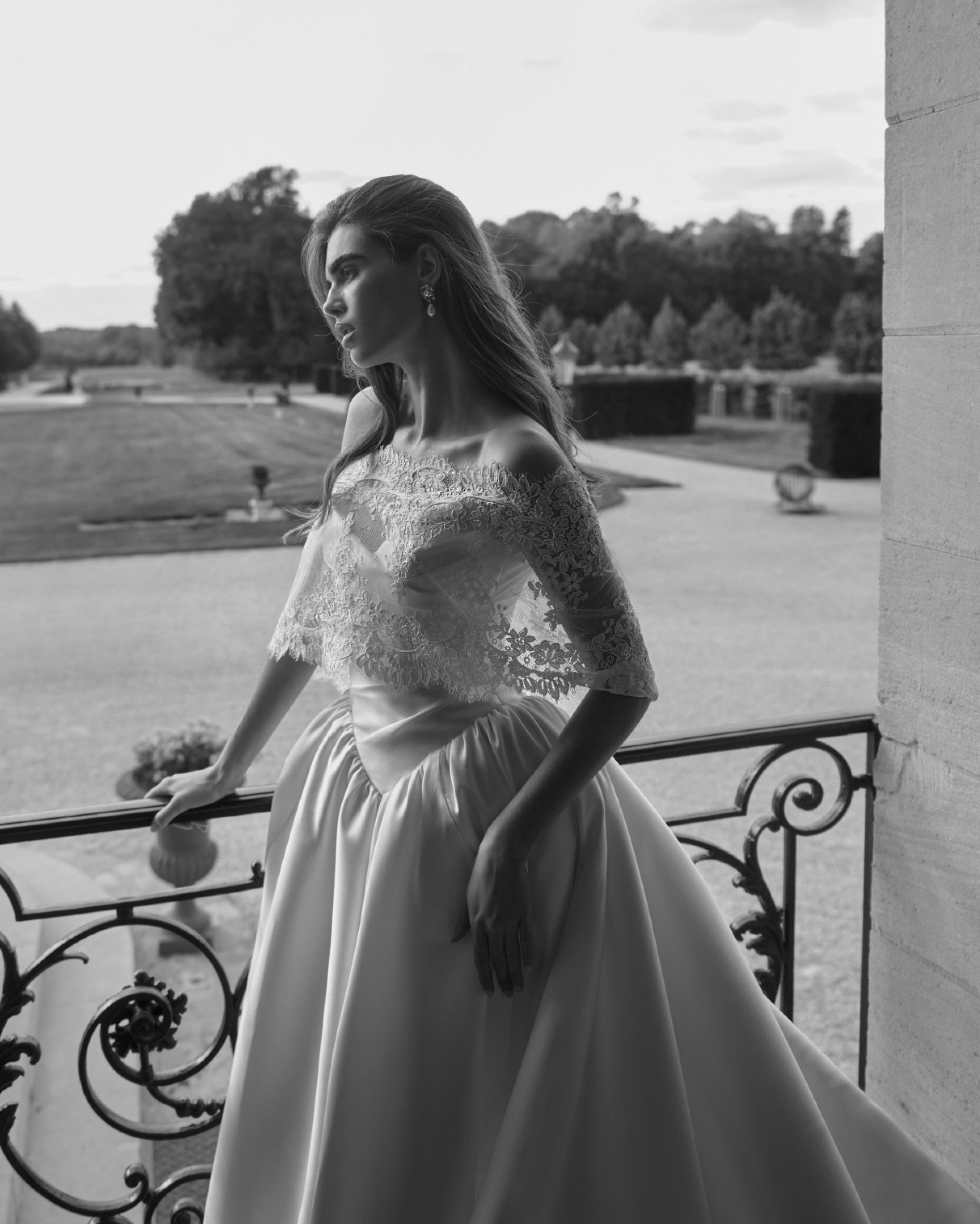
With Daisy Edgar-Jones’s Sense and Sensibility and the upcoming adaptation of Pride and Prejudice, a renewed fascination with Jane Austen’s world is ushering in a cultural renaissance of Regency-era romance. And it seems bridal designers have also fallen under her spell. Drawing on the romantic codes of early 19th-century dressing, empire waistlines, delicate lace, and ethereal silhouettes made a poetic return this Fall 2027 season, recalling a time when femininity was expressed through softness, restraint, and understated elegance.
At Cinq and Marrow, raised waistlines gave way to elongated, flowing skirts, while high necklines and delicate lace capelets at Honor, Leah Da Glória, and Vivienne Westwood evoked the modest romance of the period. There was a certain nostalgia to it all, a longing for the romance of another time, when a stolen glance across a ballroom might have been enough to inspire an entire love story. Consider it Regency romance for the modern-day heroine, with just enough contemporary sensibility to make Austen herself proud.
The Sweetheart Revival
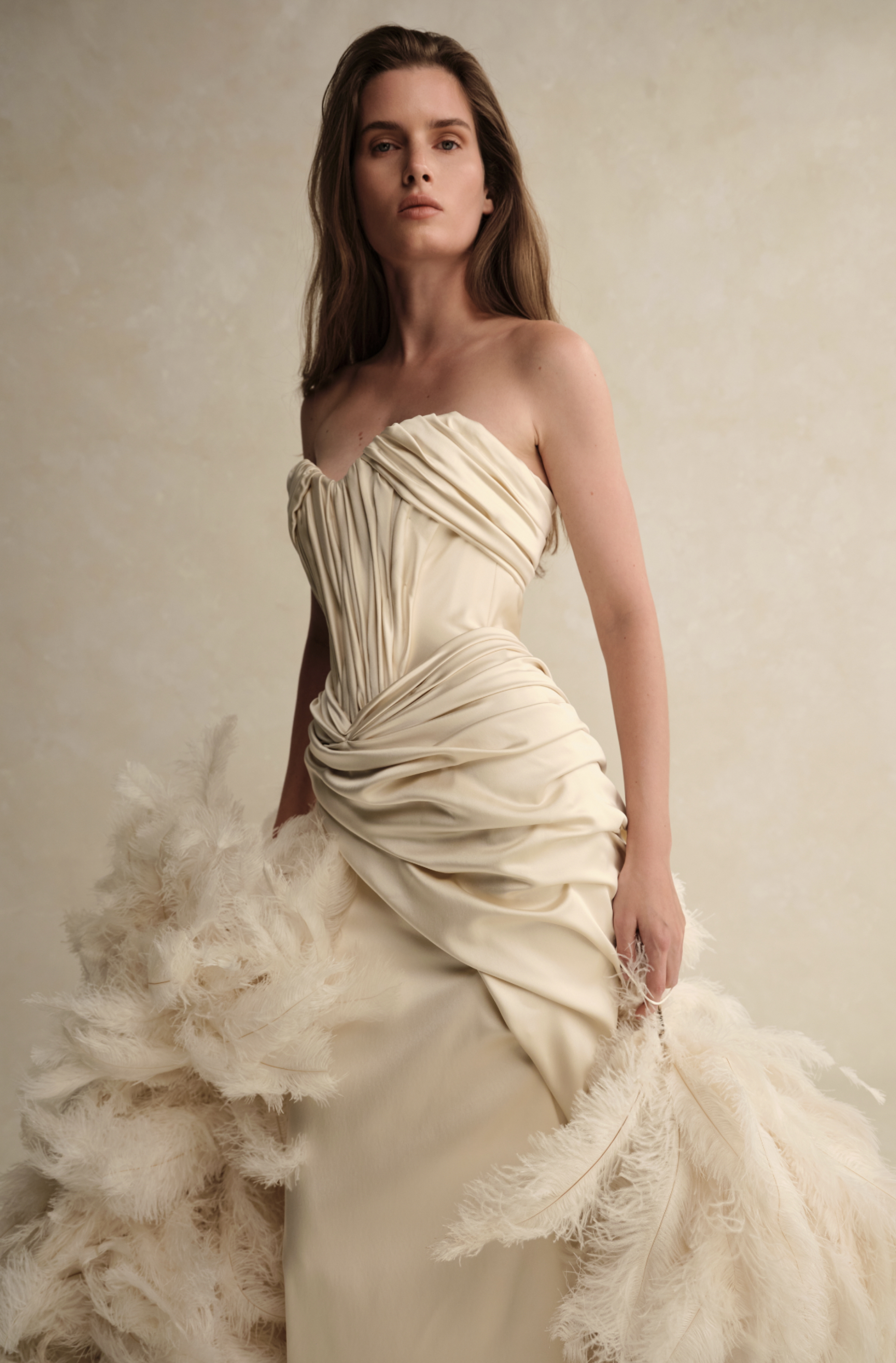
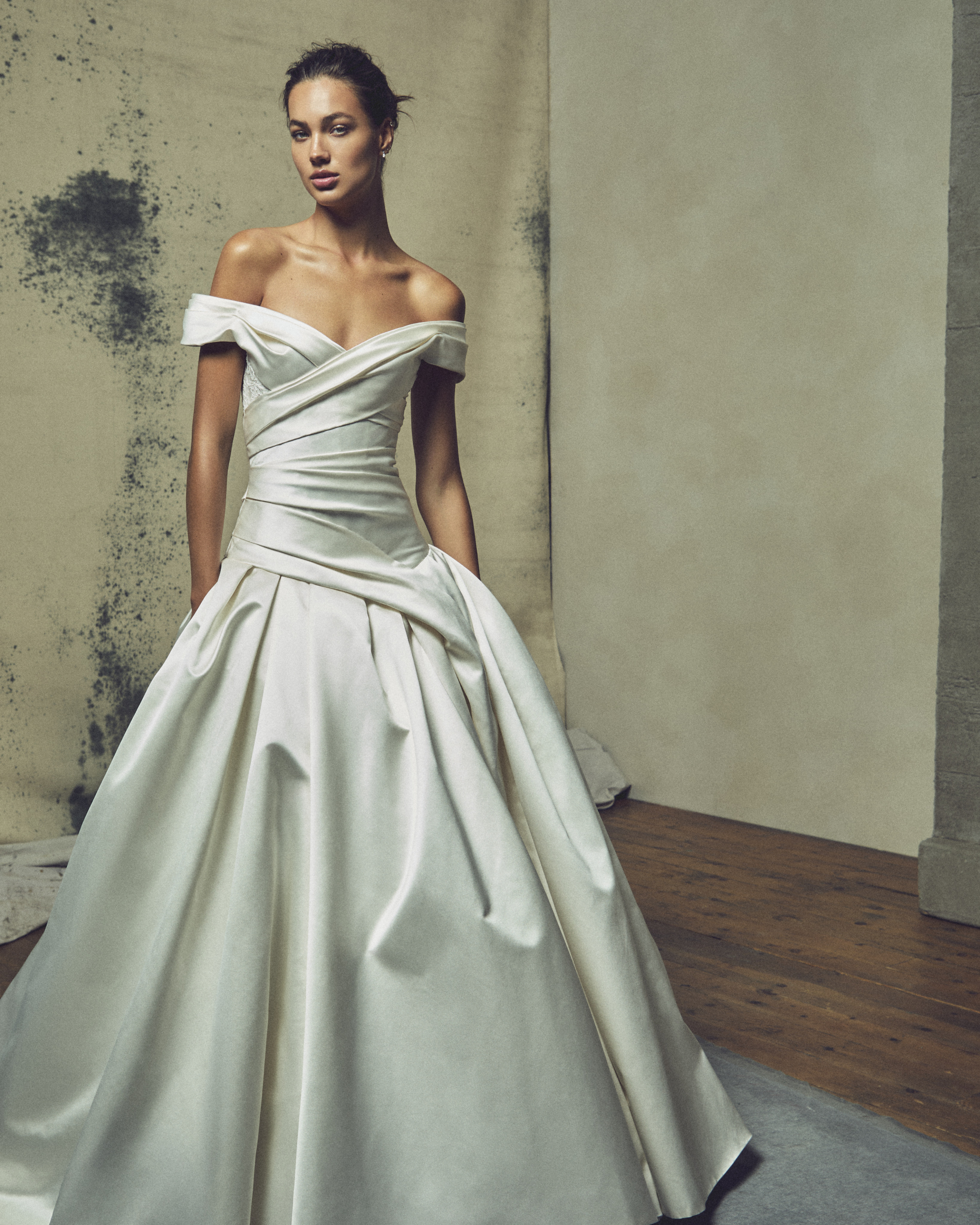
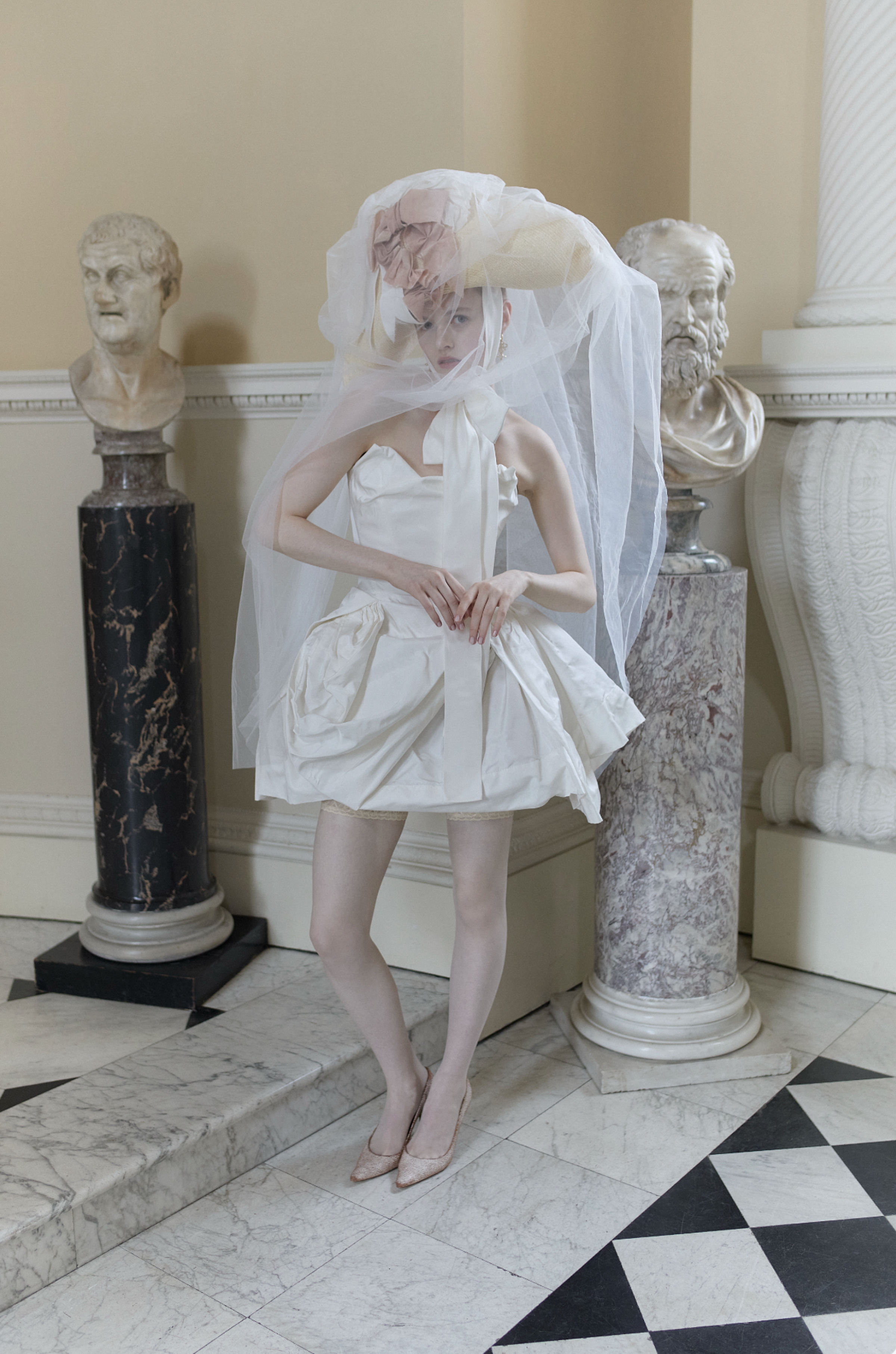
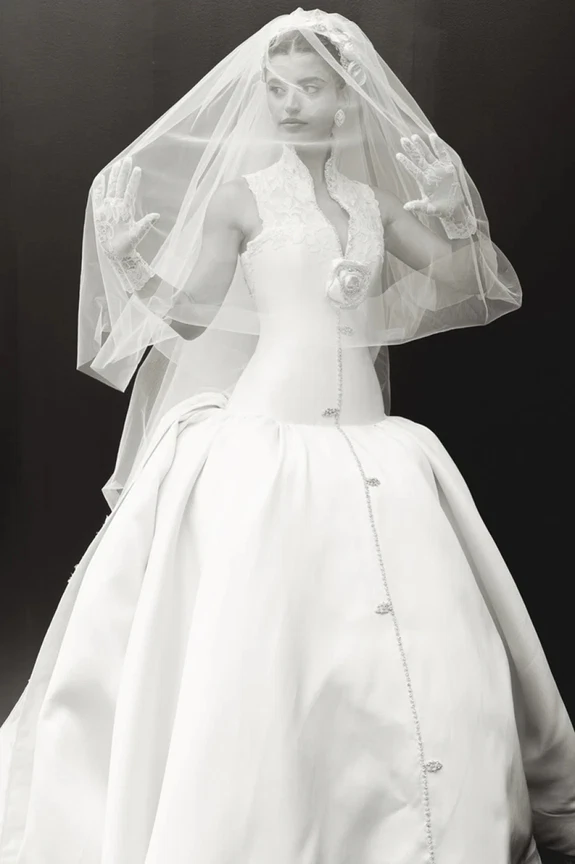
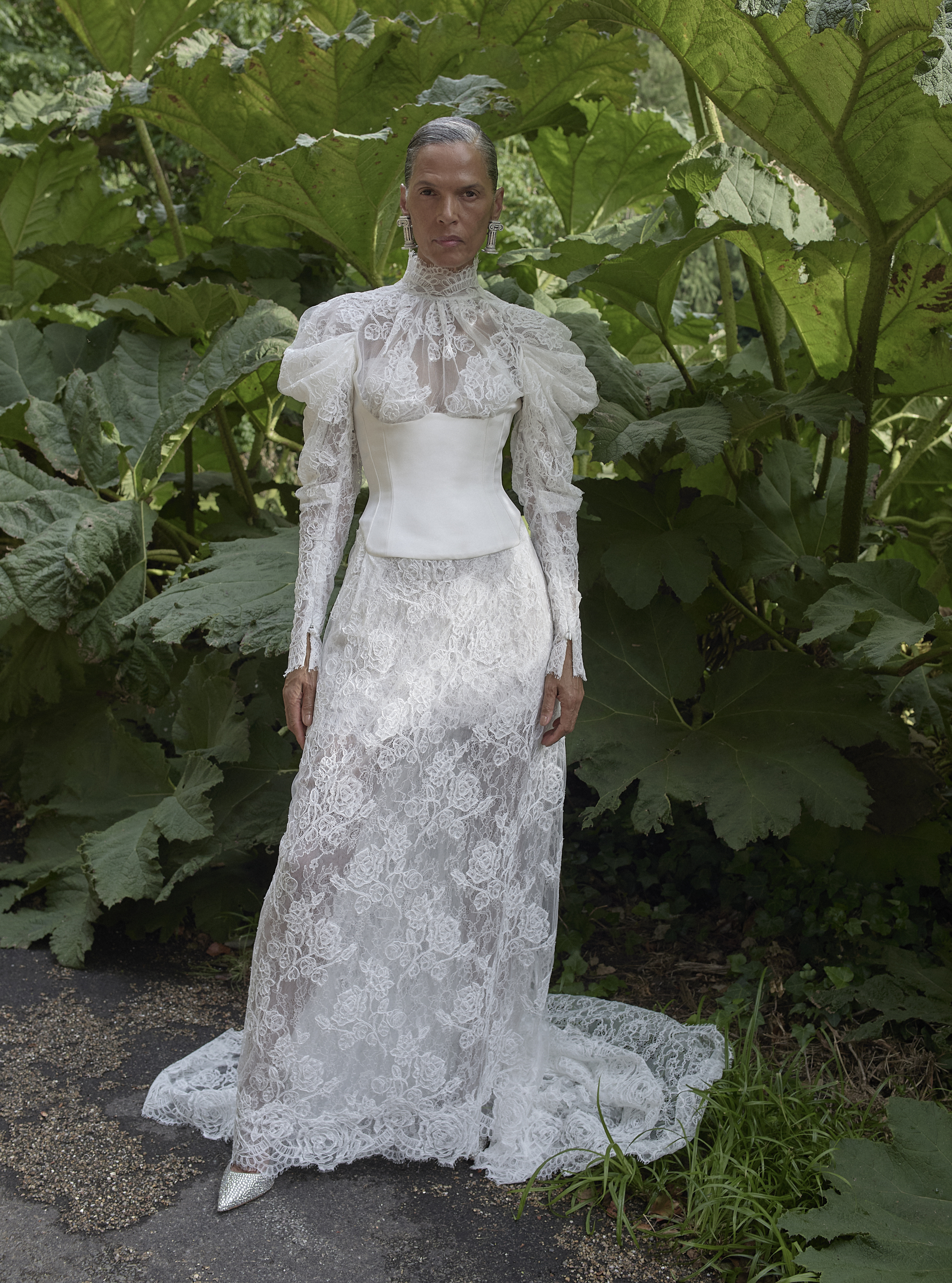
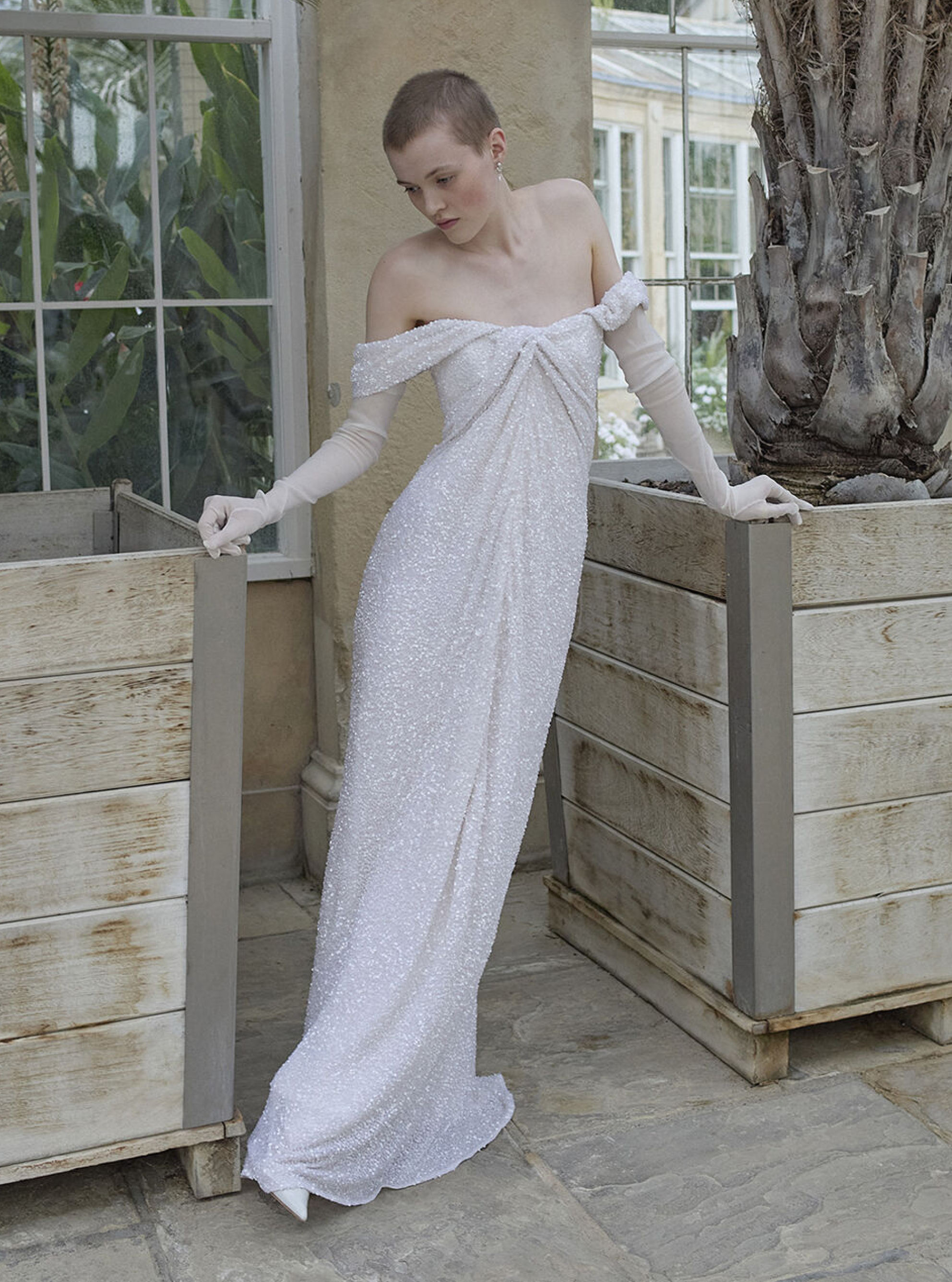
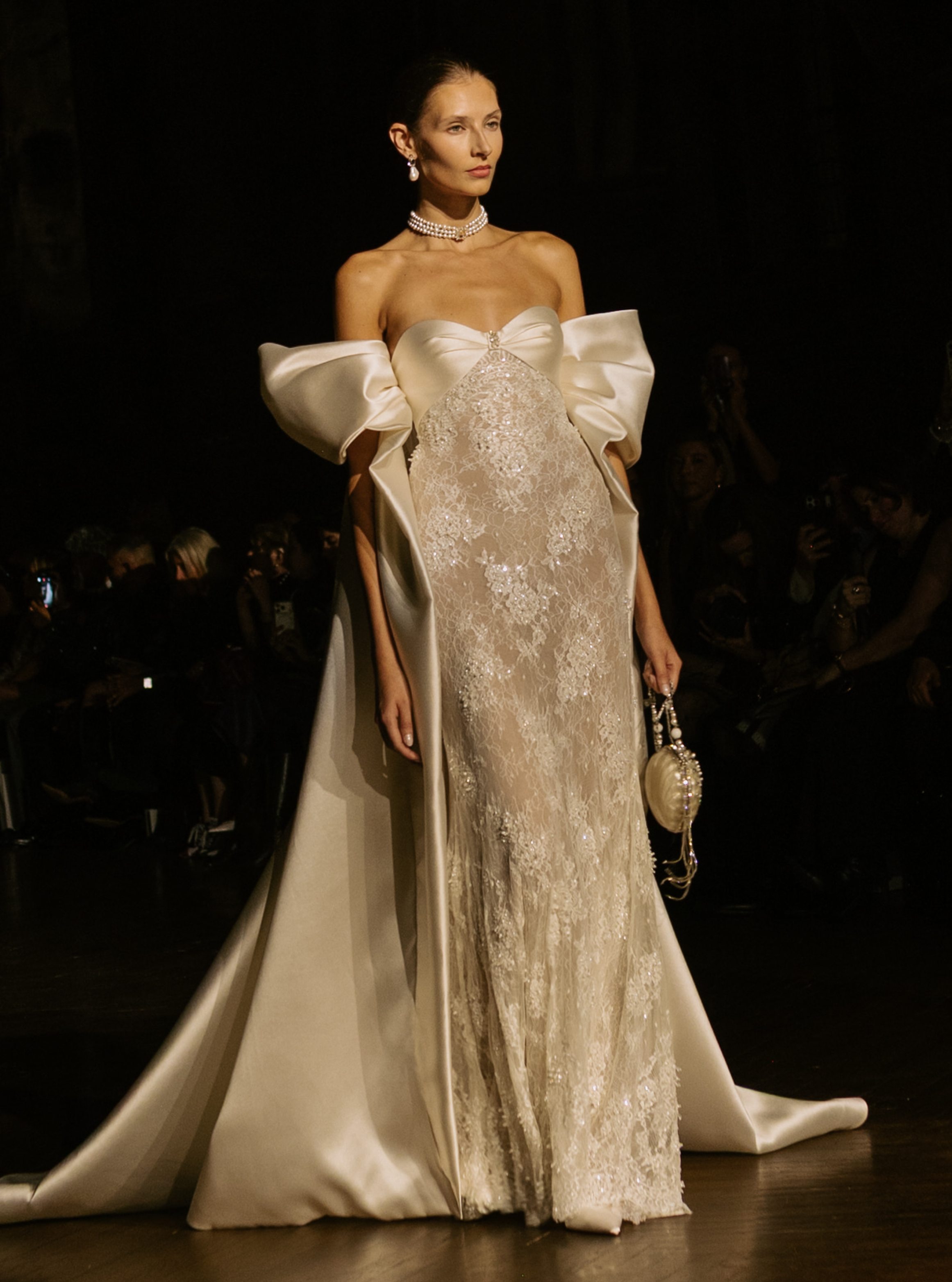
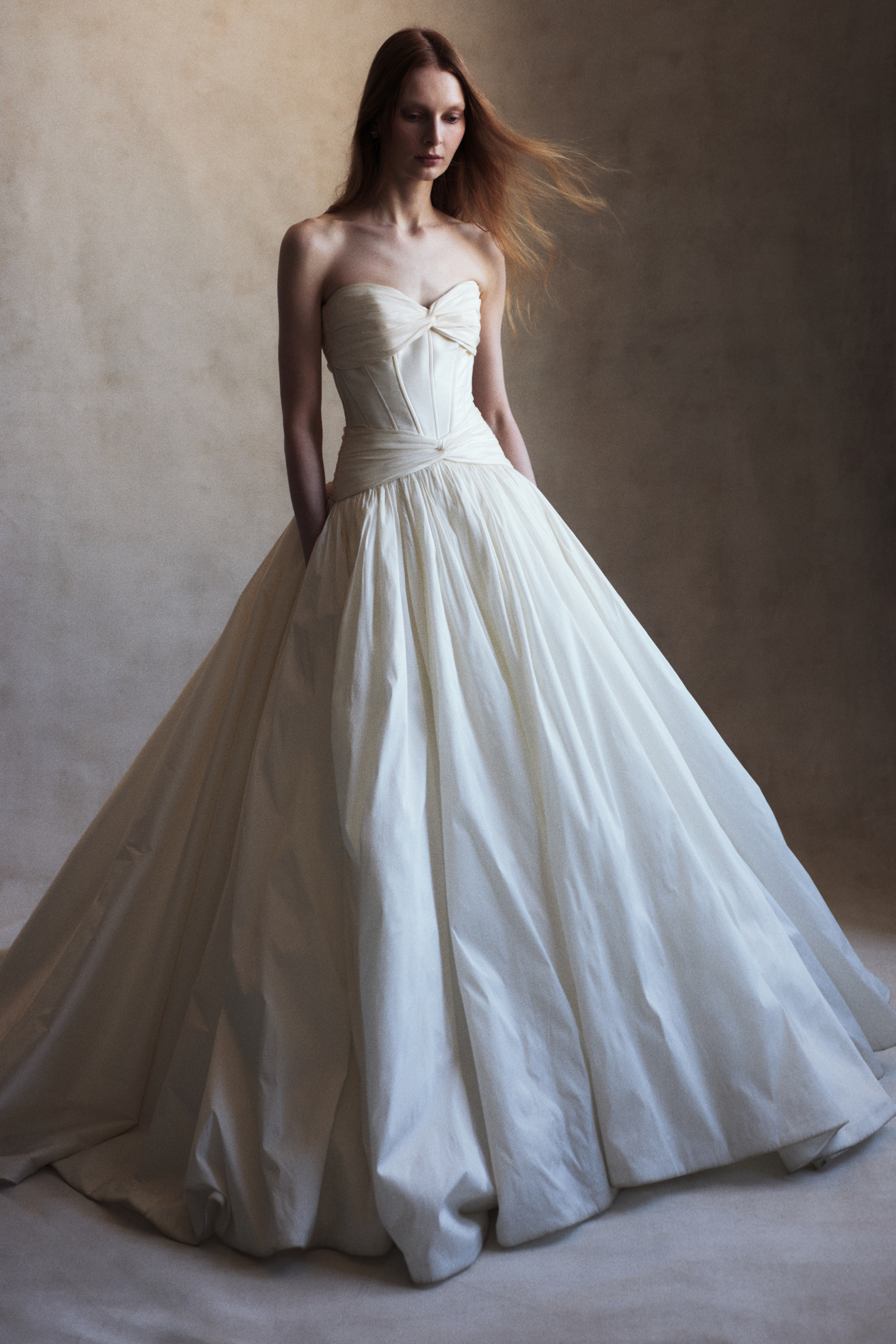
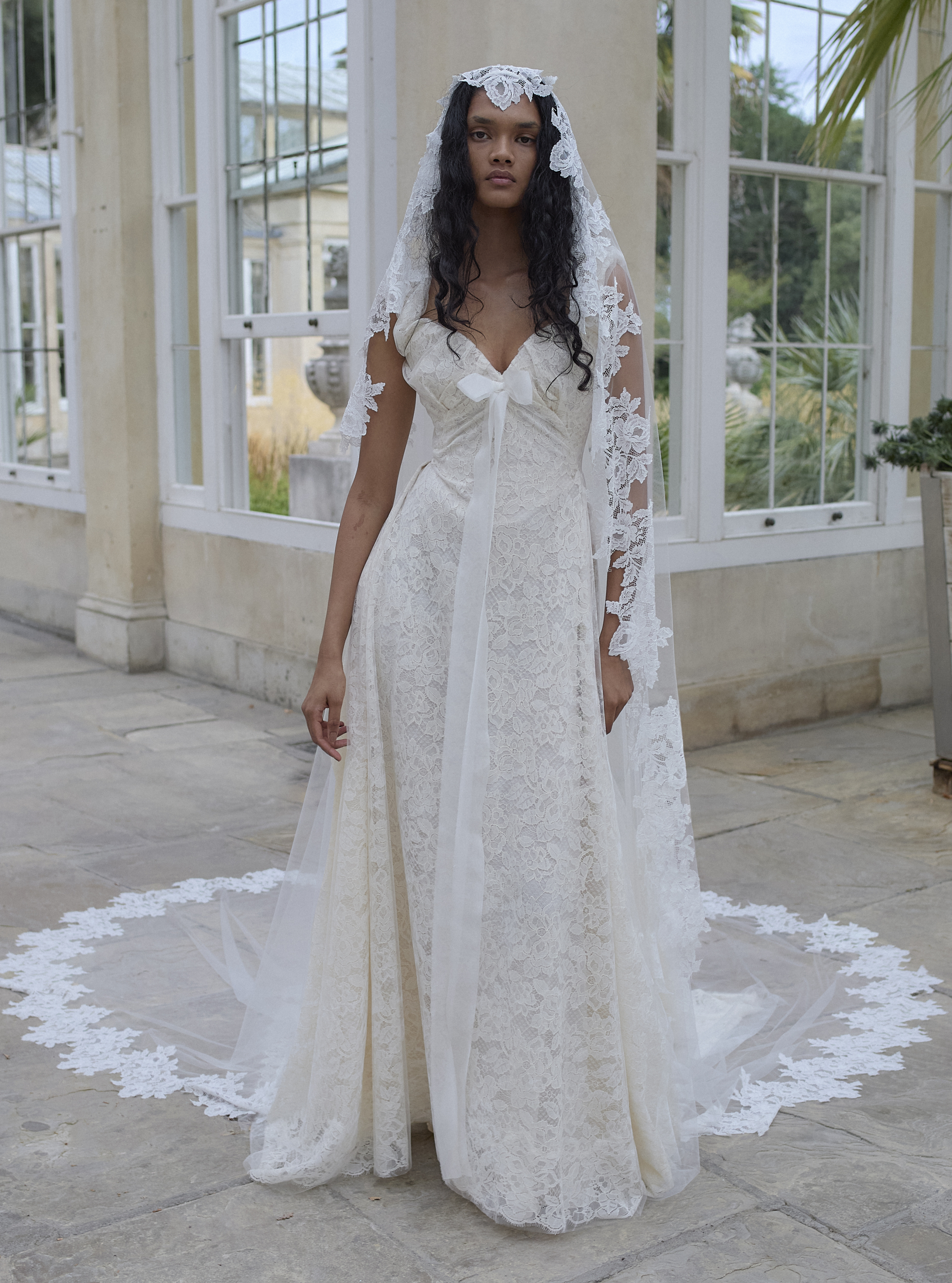
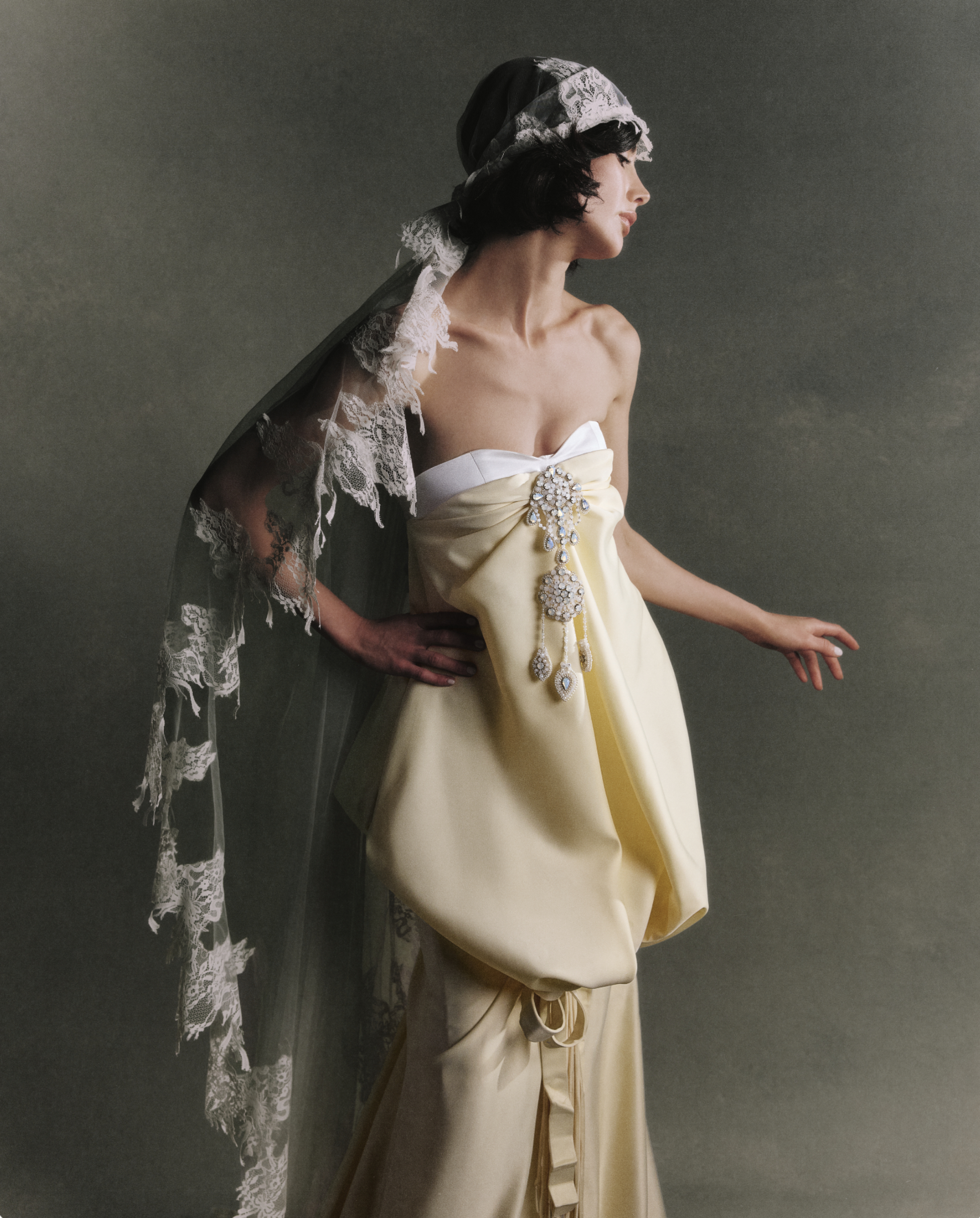
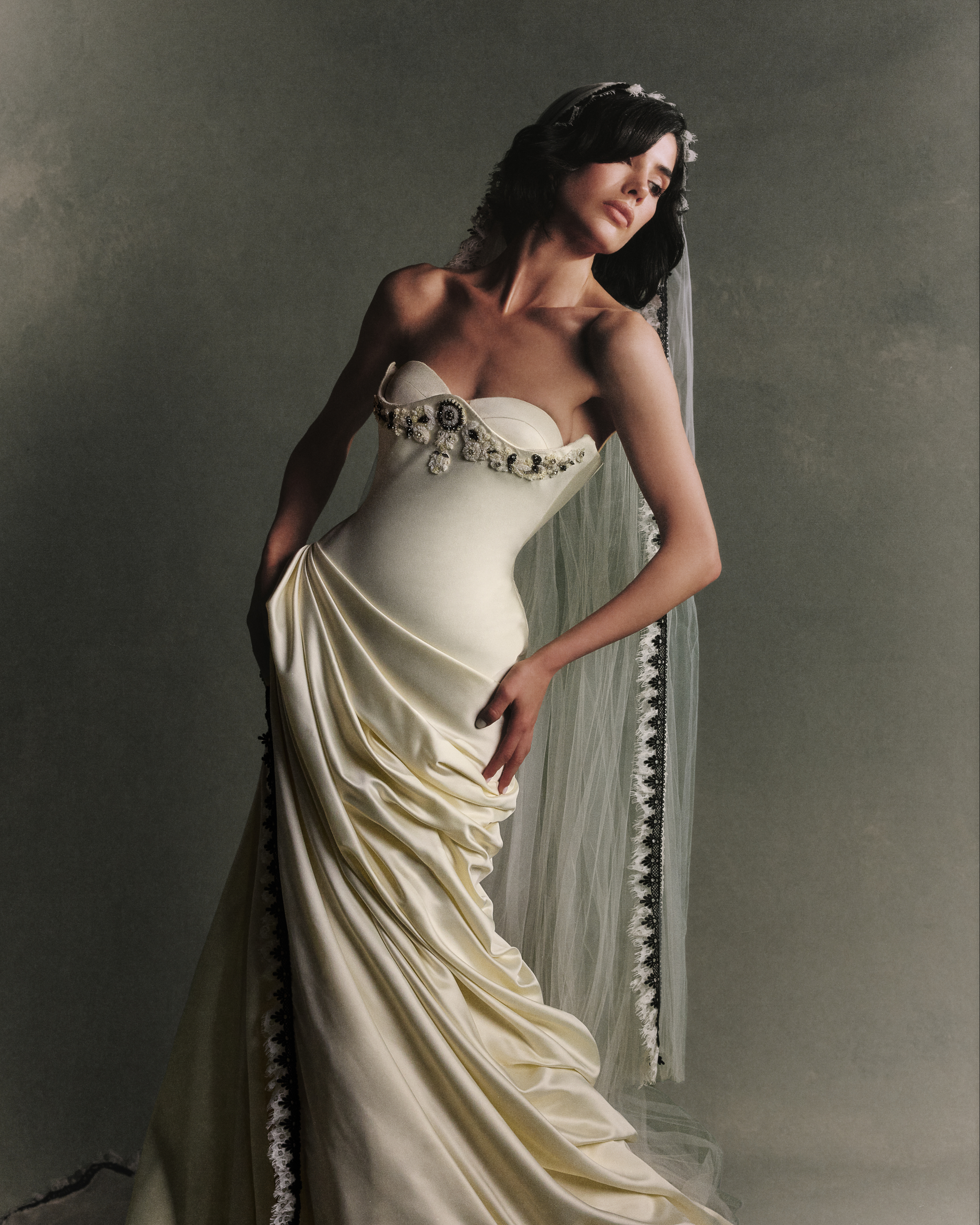
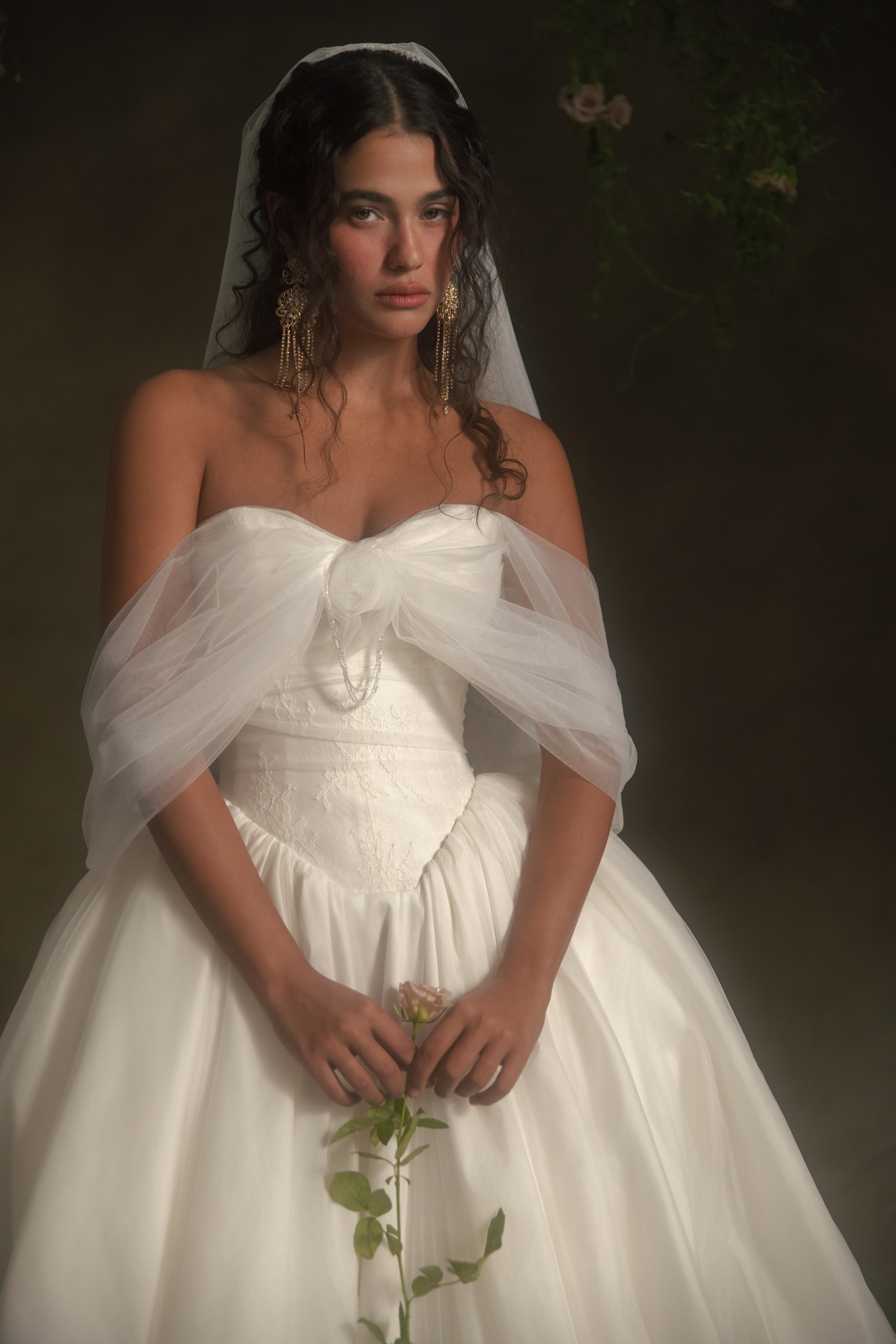
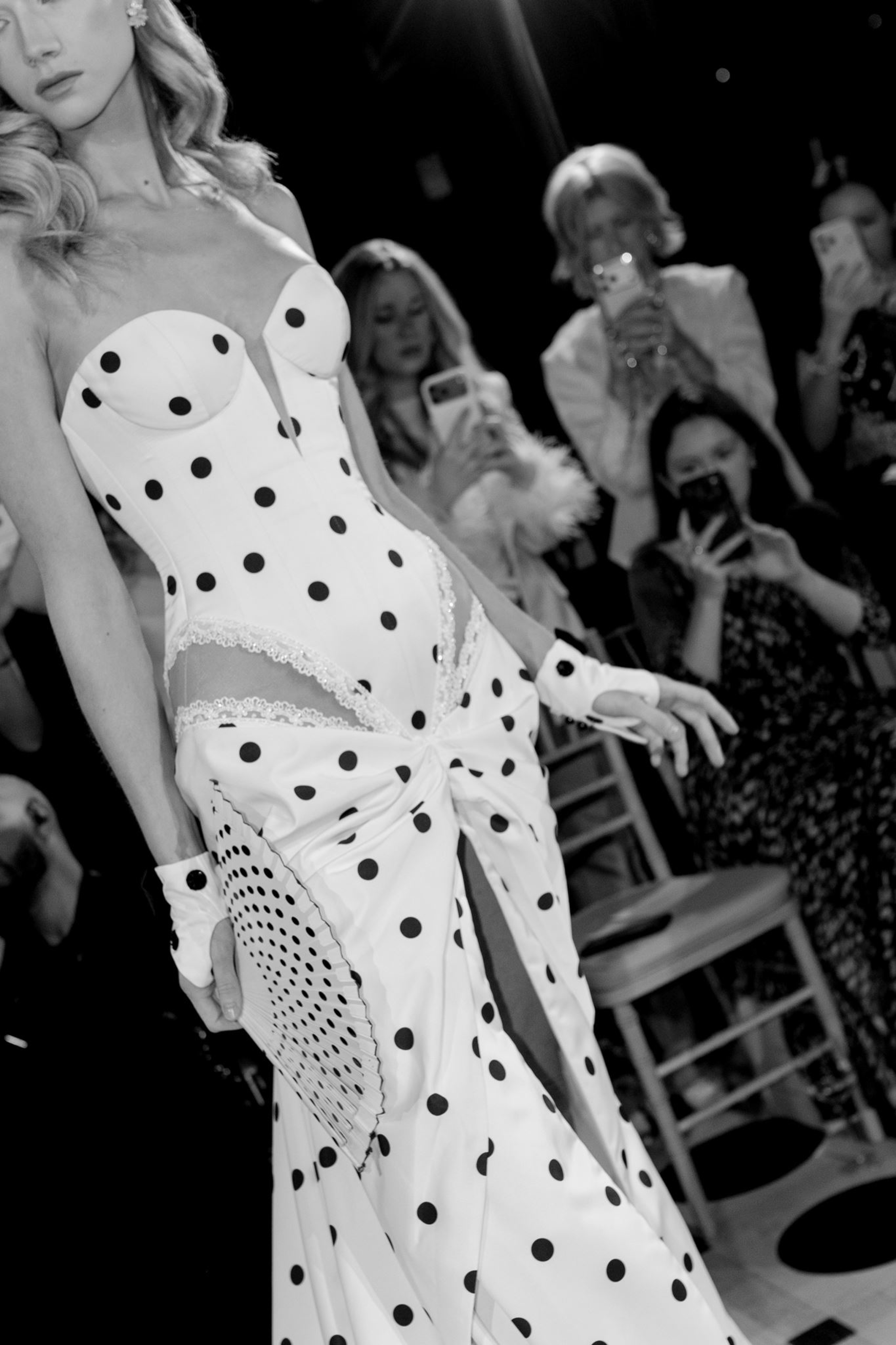
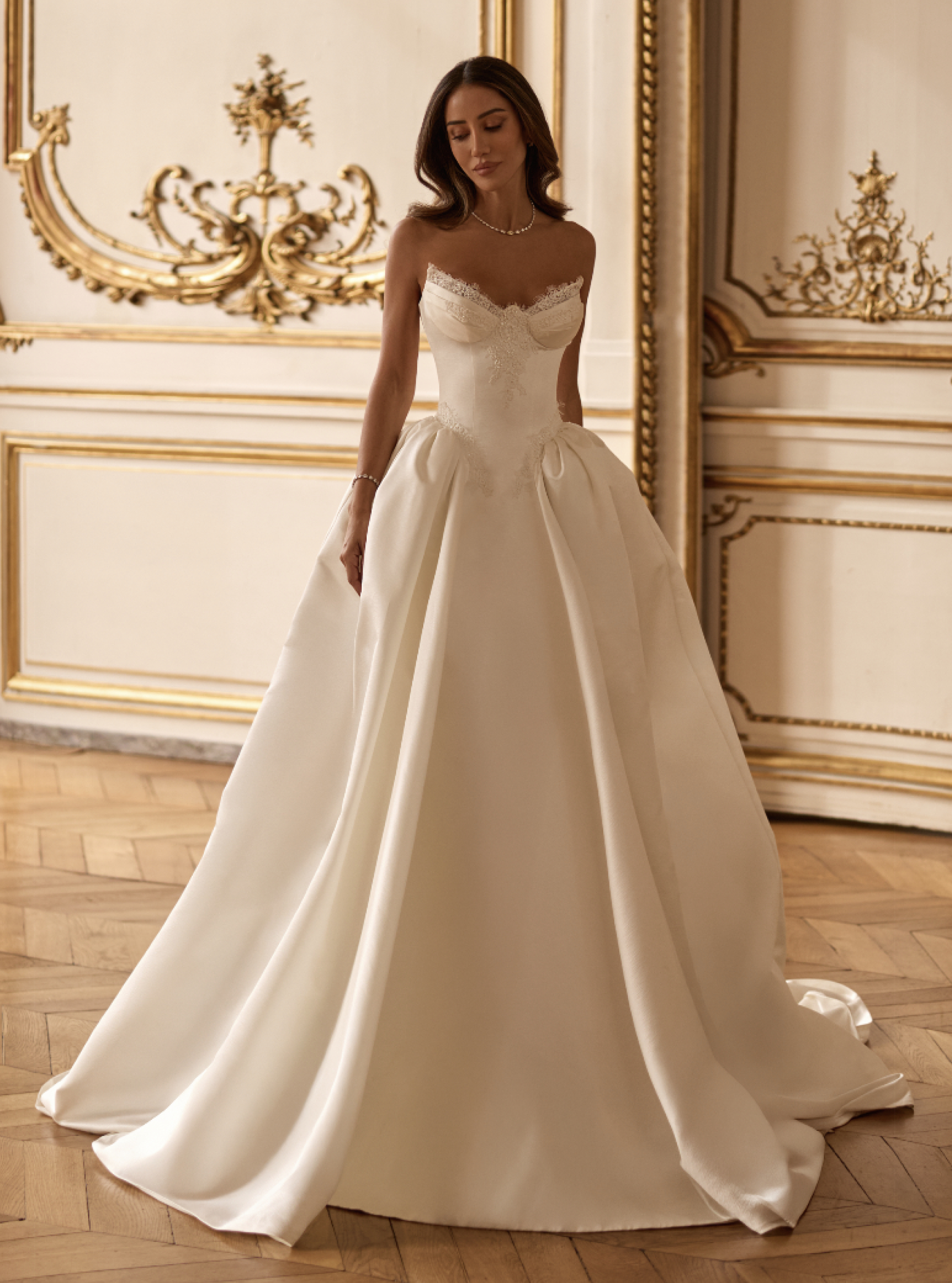
Some things never lose their romantic appeal, and the sweetheart neckline is certainly one of them. A bridal mainstay for decades, its familiar heart-shaped curves are hardly revolutionary, but this season, designers found new ways to make the classic feel decidedly fresh. Recalling the ultra-feminine silhouettes of the 1940s and ’50s, the bustline took on a more sculptural, sophisticated quality, balancing nostalgia with modern restraint. At Shahira Lasheen, Maison Margot, and Vivienne Westwood, softly gathered and pinched bodices lent the silhouette an almost coquettish charm with delicate bows, rosettes, and jeweled adornments, adding a playful flourish to the familiar shape, while Amsale and Elly Sofocli offered cleaner, more contemporary interpretations. The result was a little less saccharine, a little more sophisticated, proving that even bridal’s most enduring romantic signatures can still surprise us.
Heavy Metal
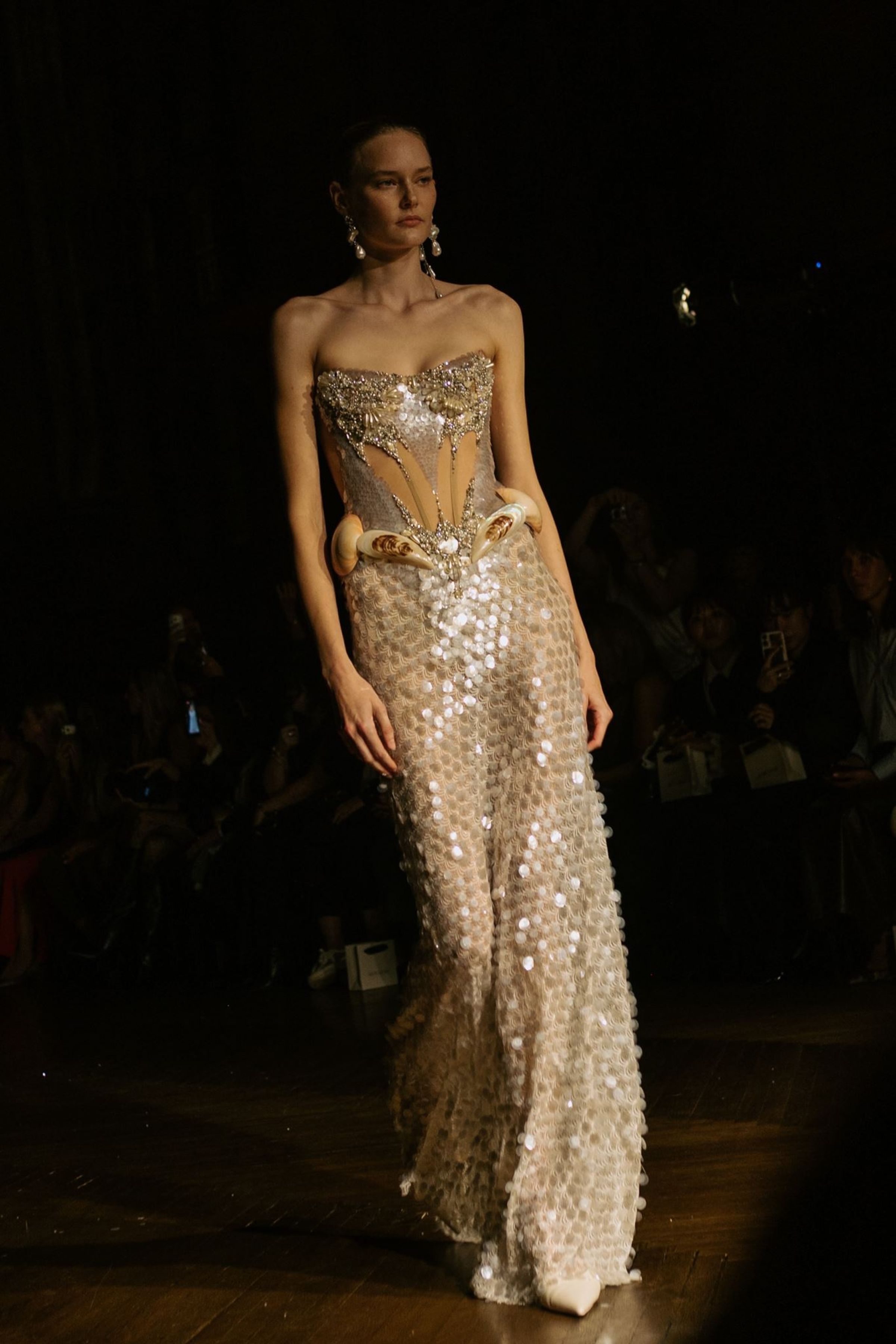
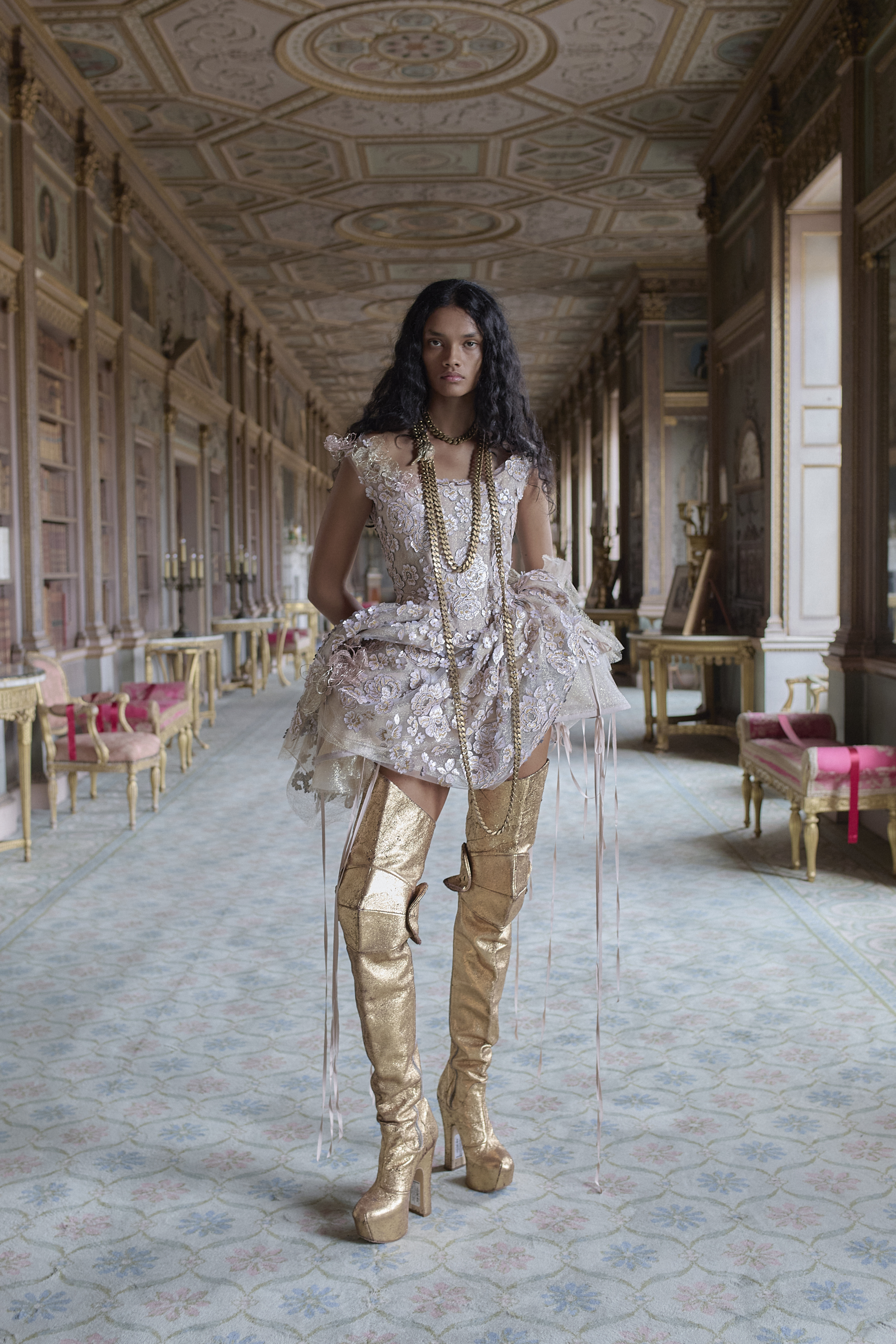
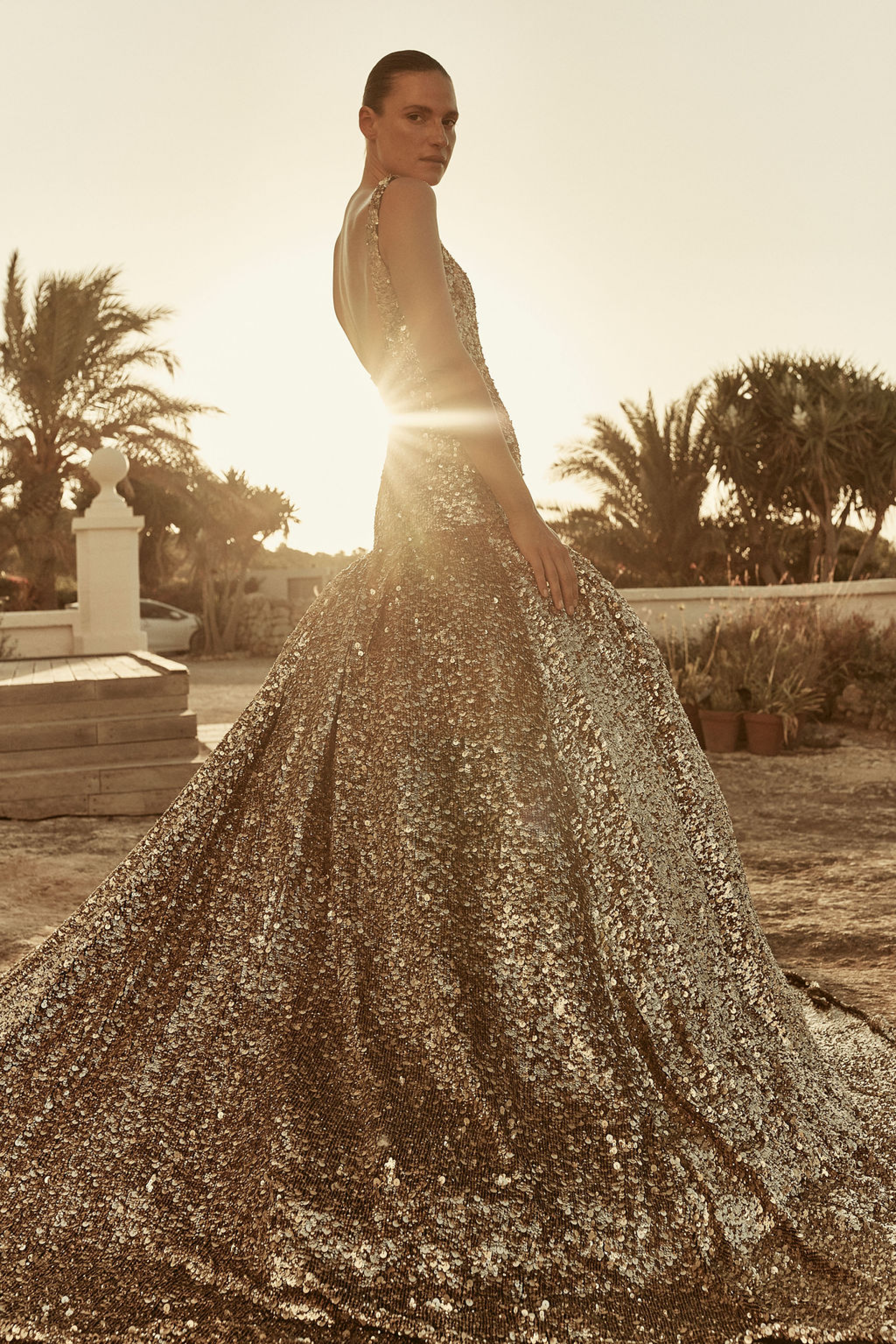
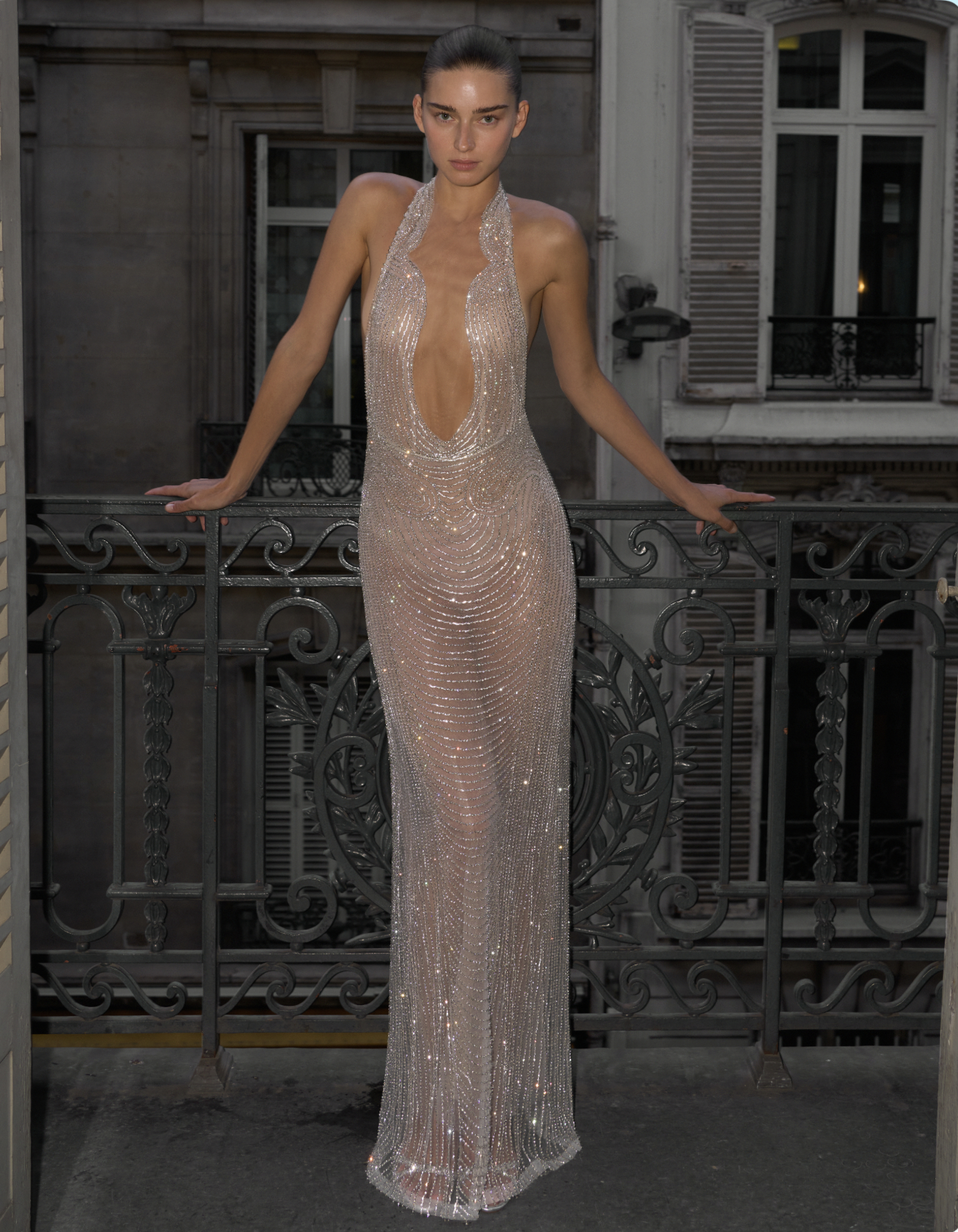
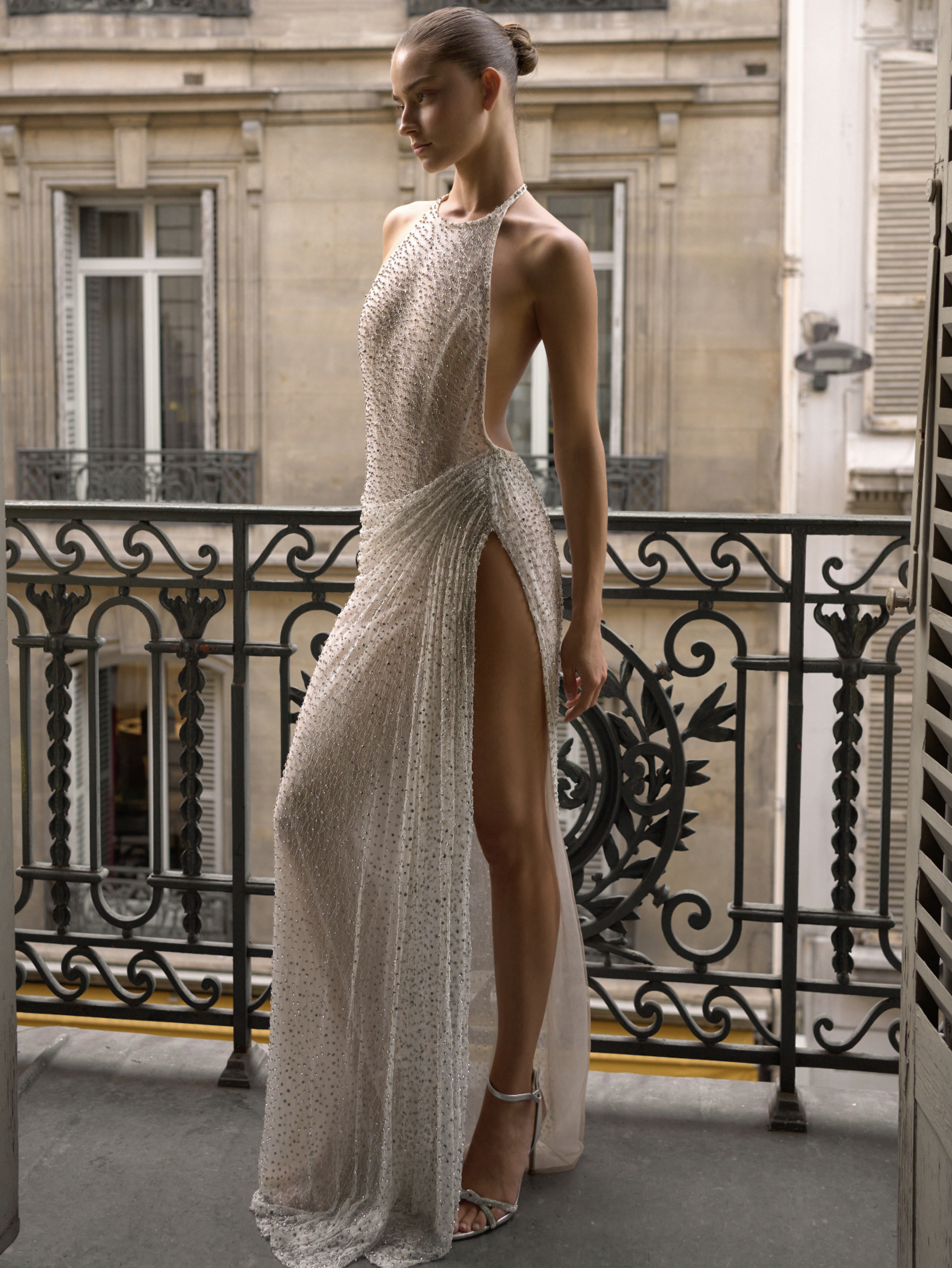
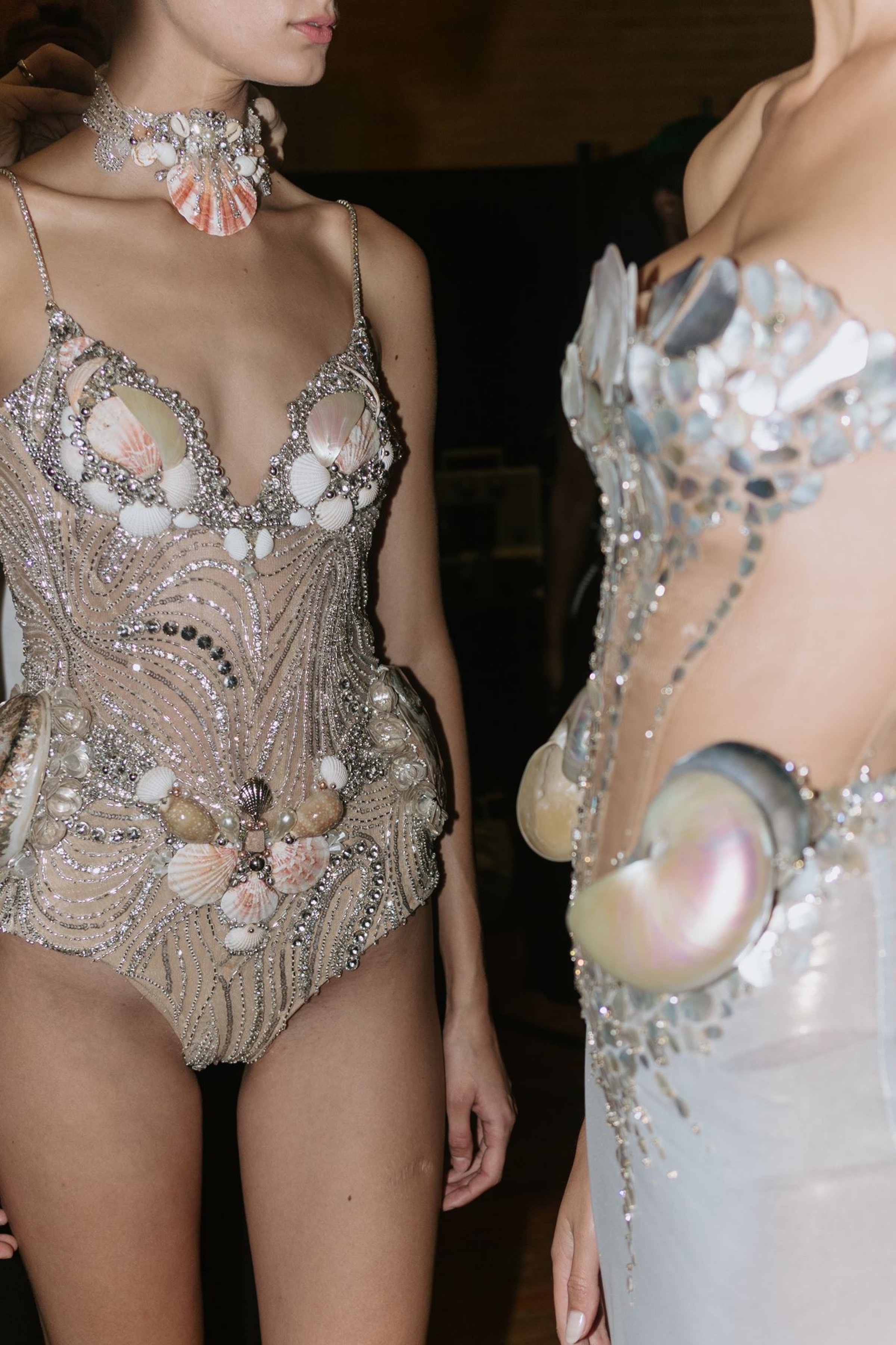
Who says bridal has to be all white? Metallics are hardly new territory for the after-party wardrobe, but this season, designers turned up the shine, embracing everything from antique silver to liquid gold with unapologetic extravagance. At Vivienne Westwood, shimmering metallic lace offered a more refined interpretation, lending an almost heirloom quality to silhouettes that felt every bit as appropriate for the ceremony as the dance floor. Elsewhere, Alon Livné and Noy Eliyahu dialed up the decadence with high-shine sequins, intricate beadwork, and jewel-encrusted embellishments that caught the light from every angle. Kyha Bride took the glamour a step further with a spectacular gold gown that wouldn’t have looked out of place beneath the disco ball at Studio 54. Equal parts 1970s hedonism and modern bridal fantasy, these were looks designed to make an entrance, and perhaps an even more memorable exit.
Balletcore
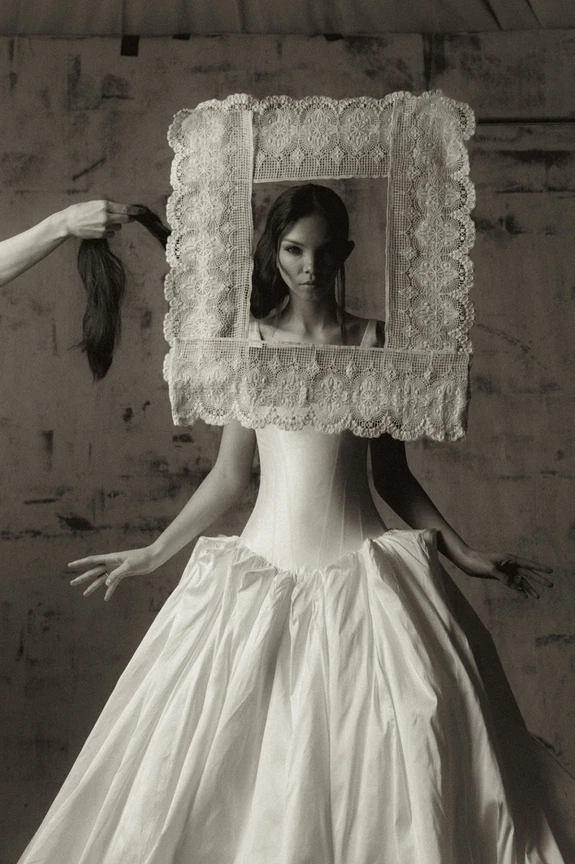
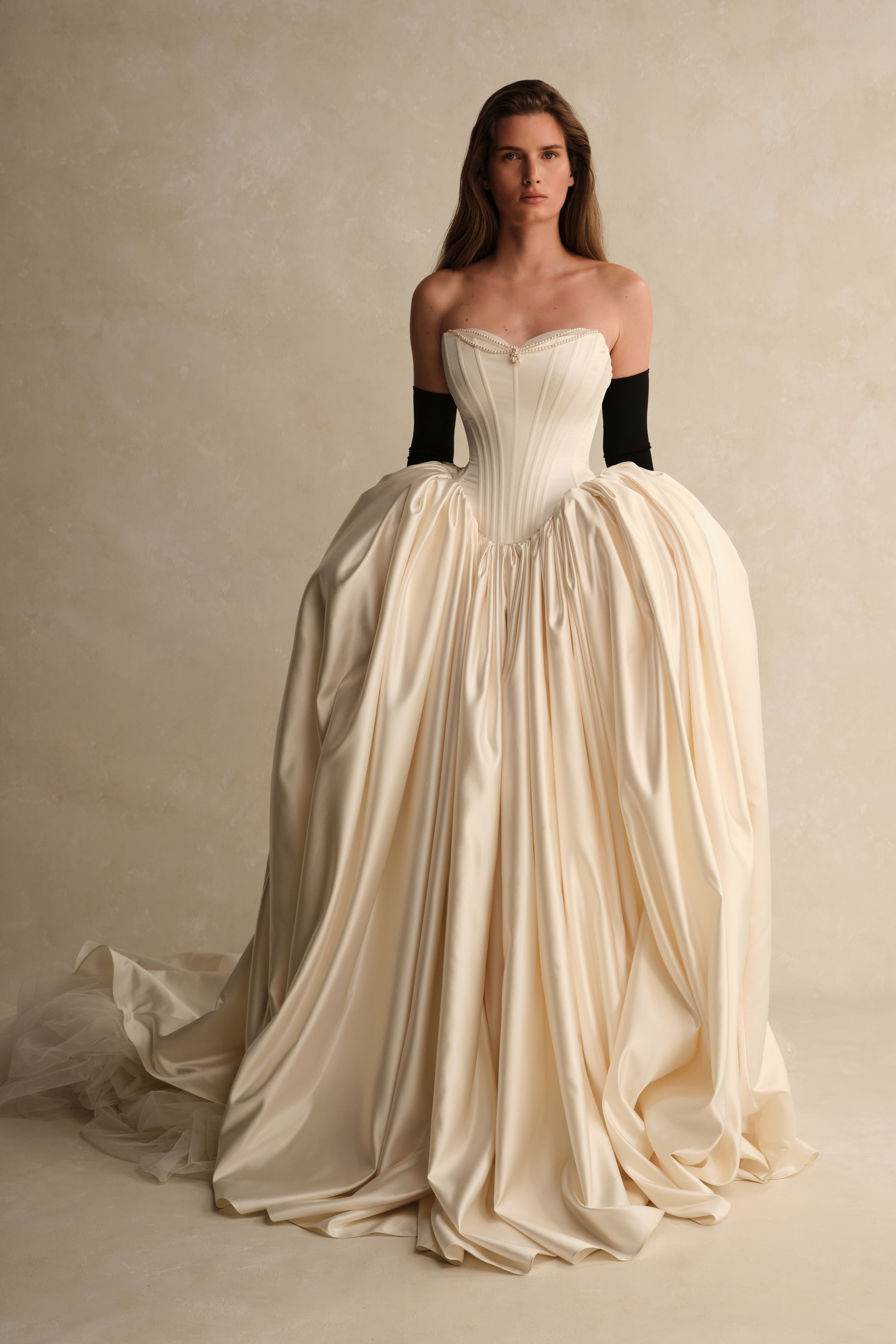
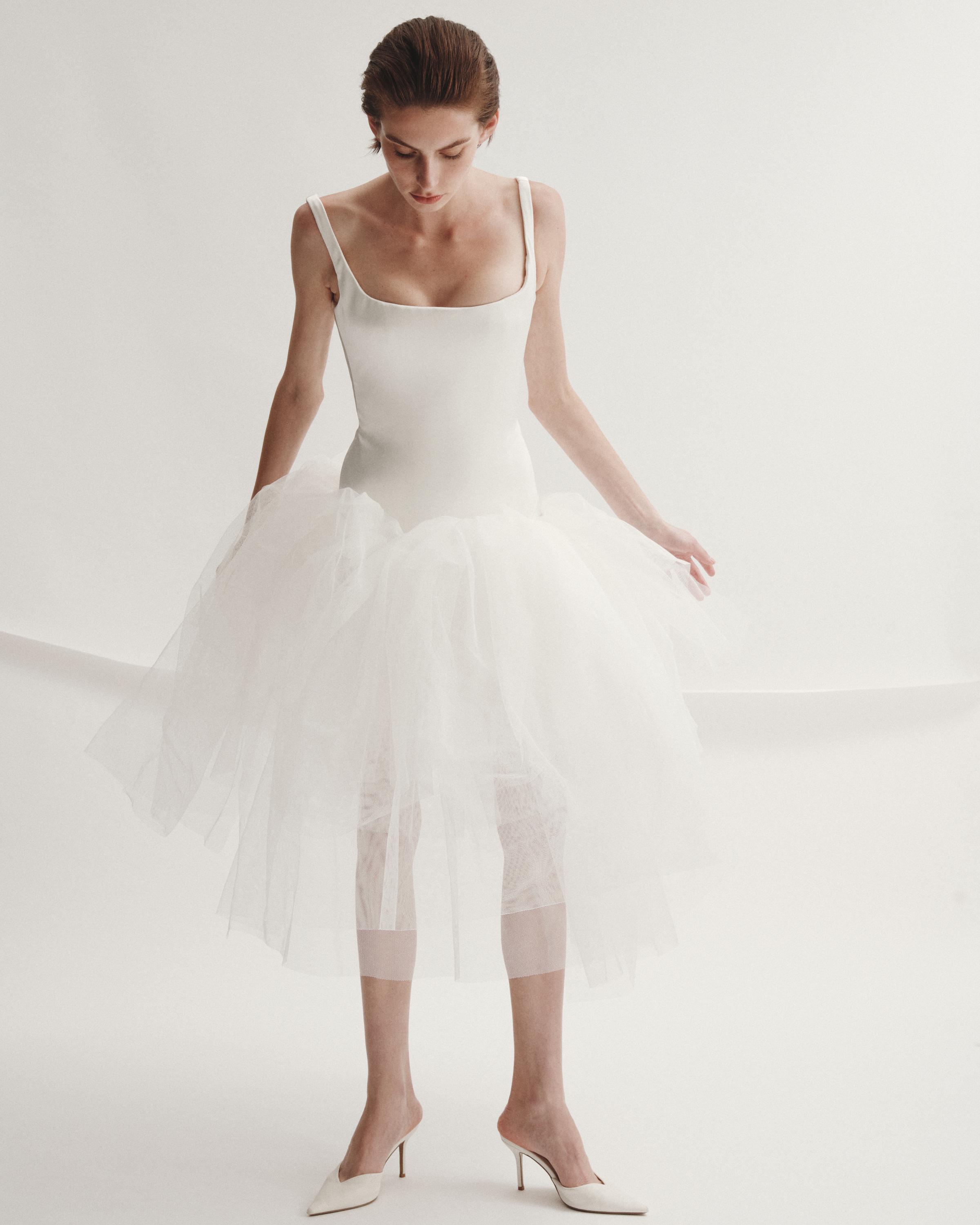
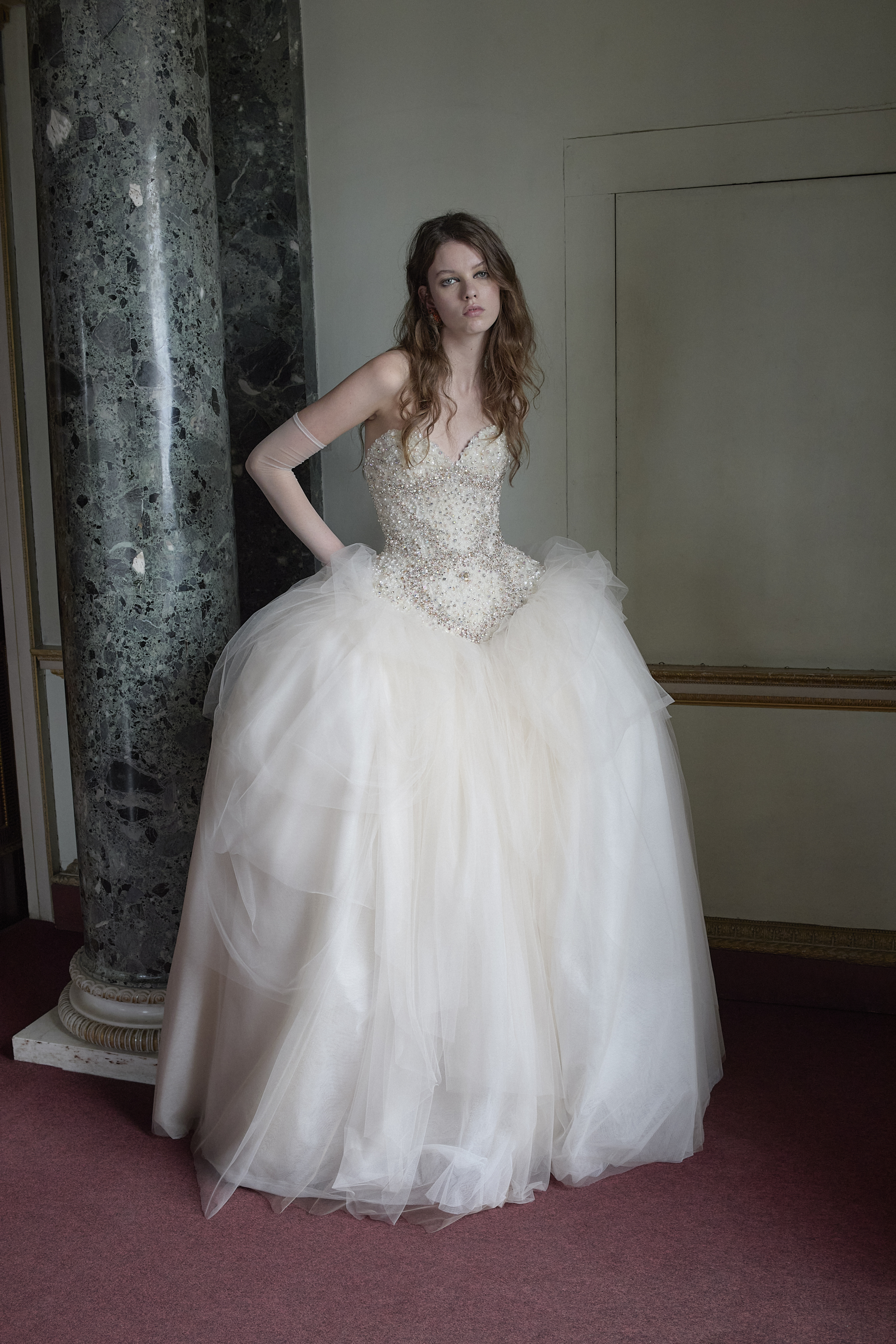
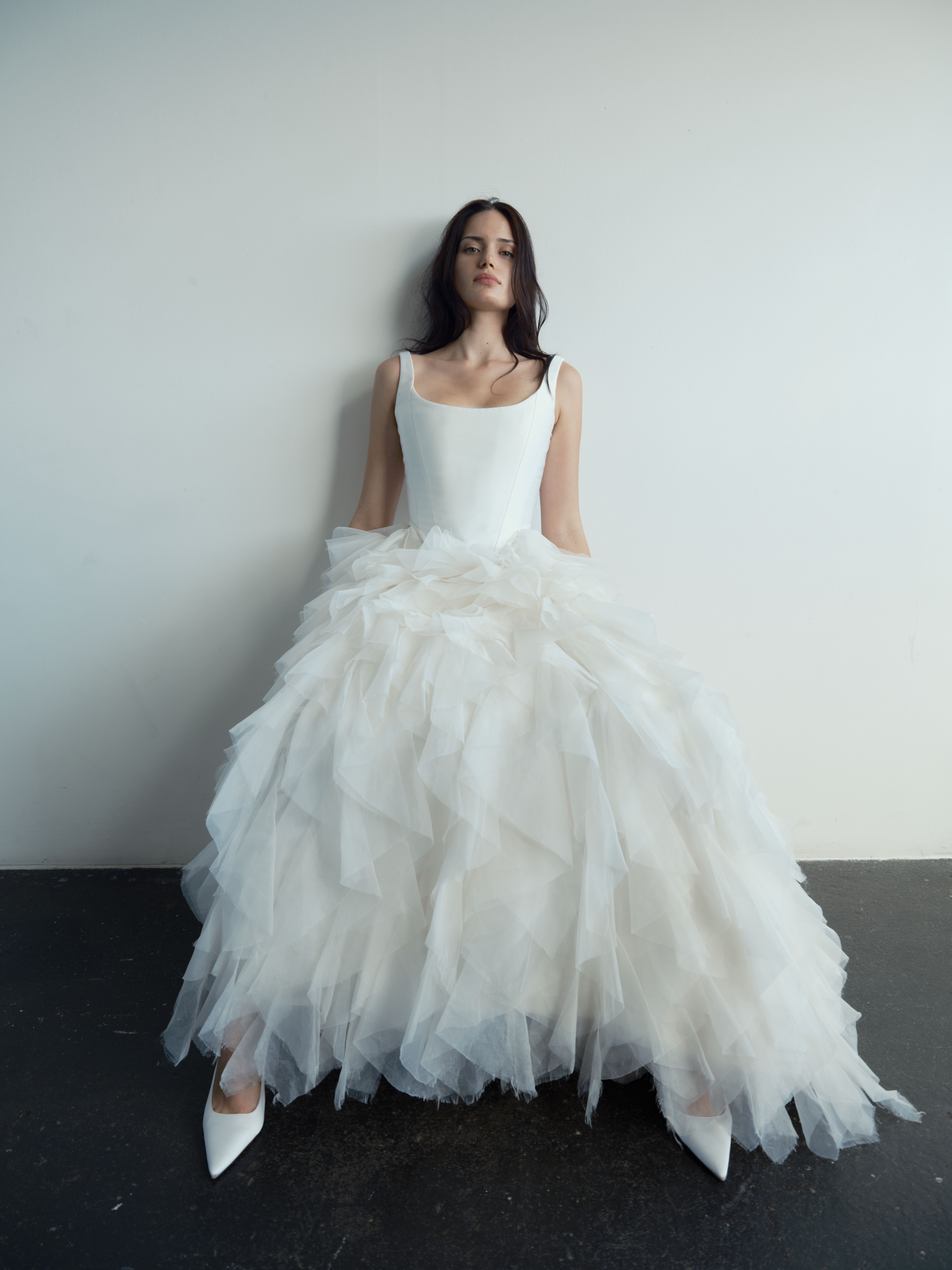
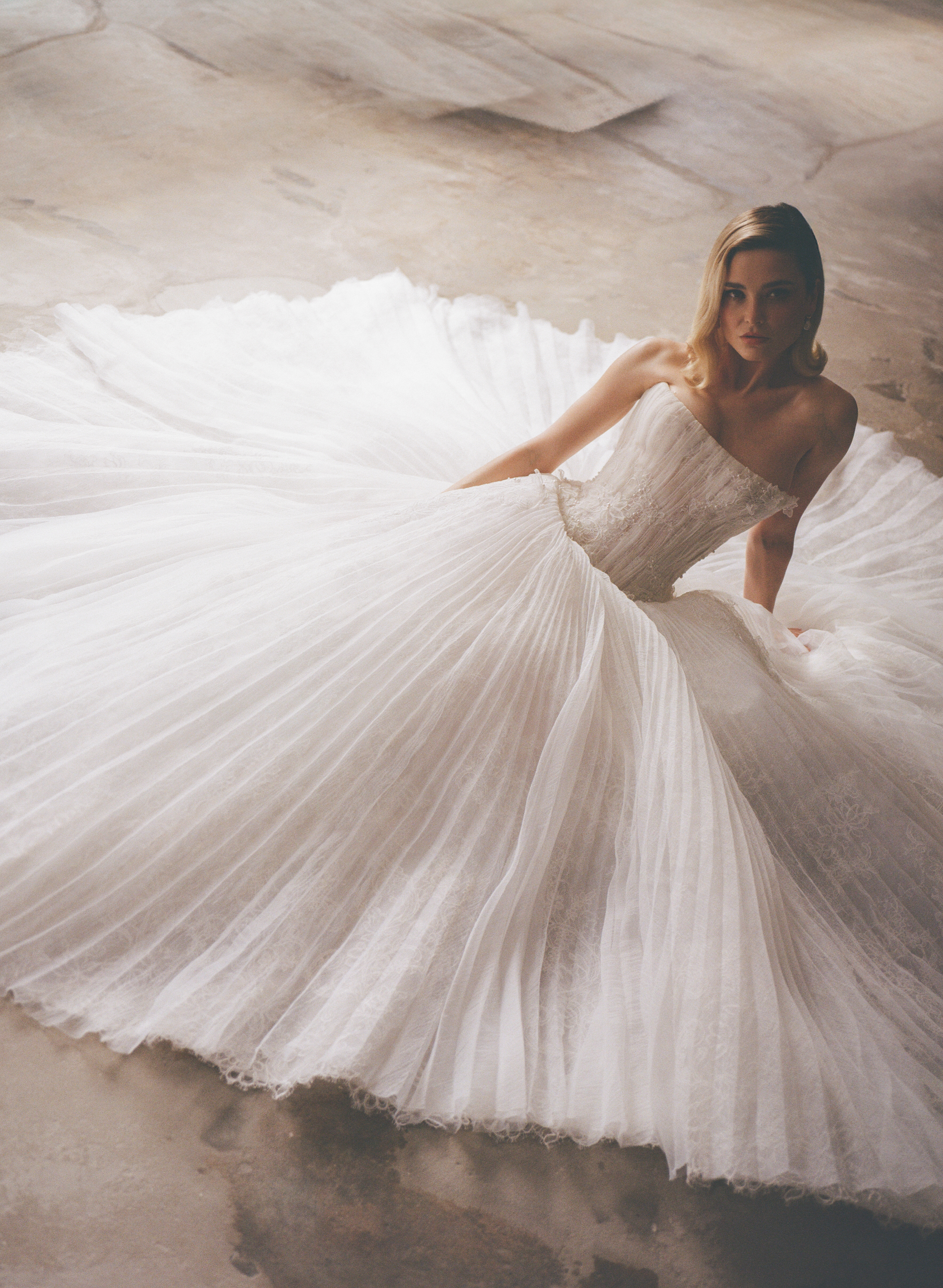
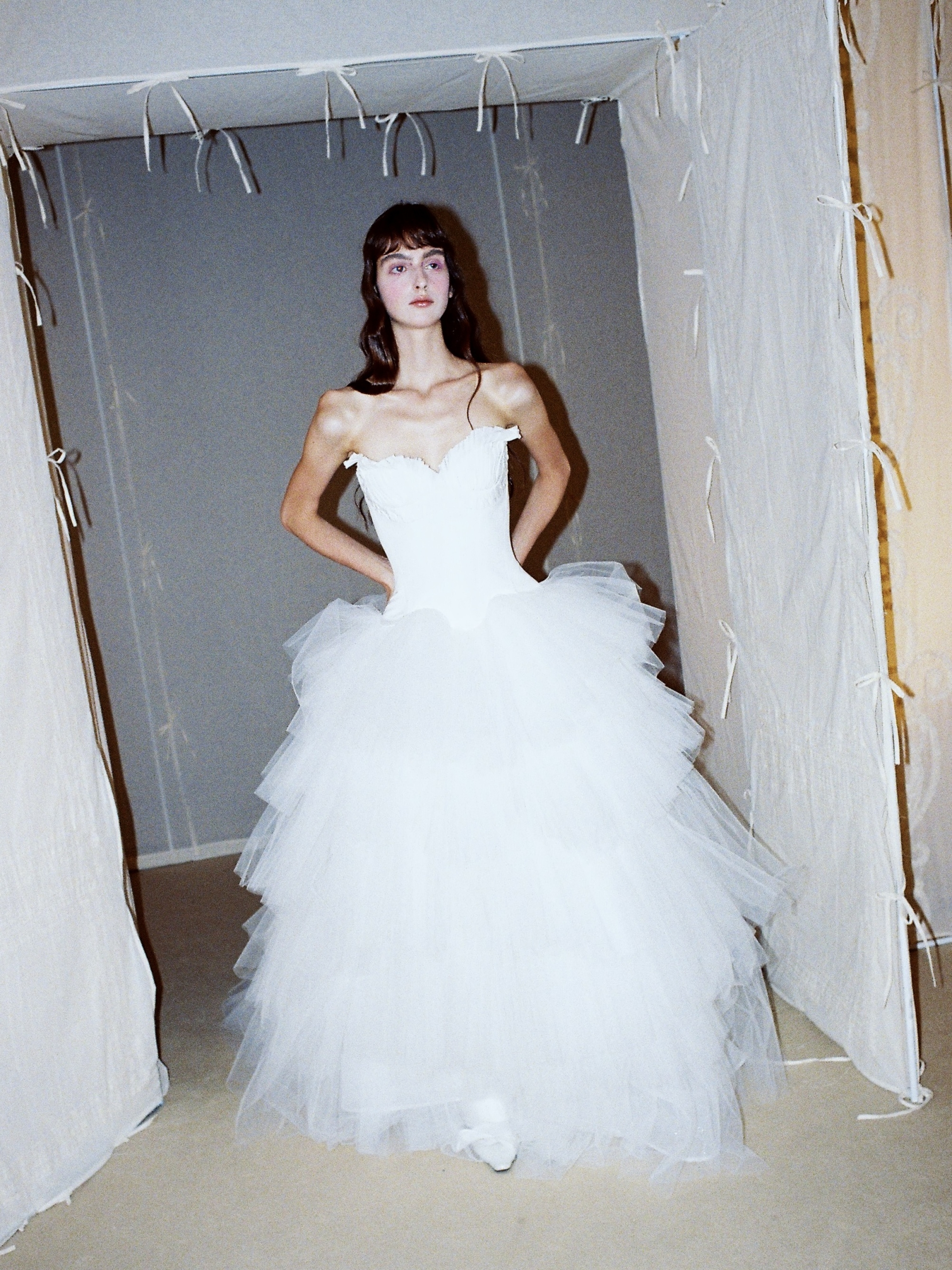
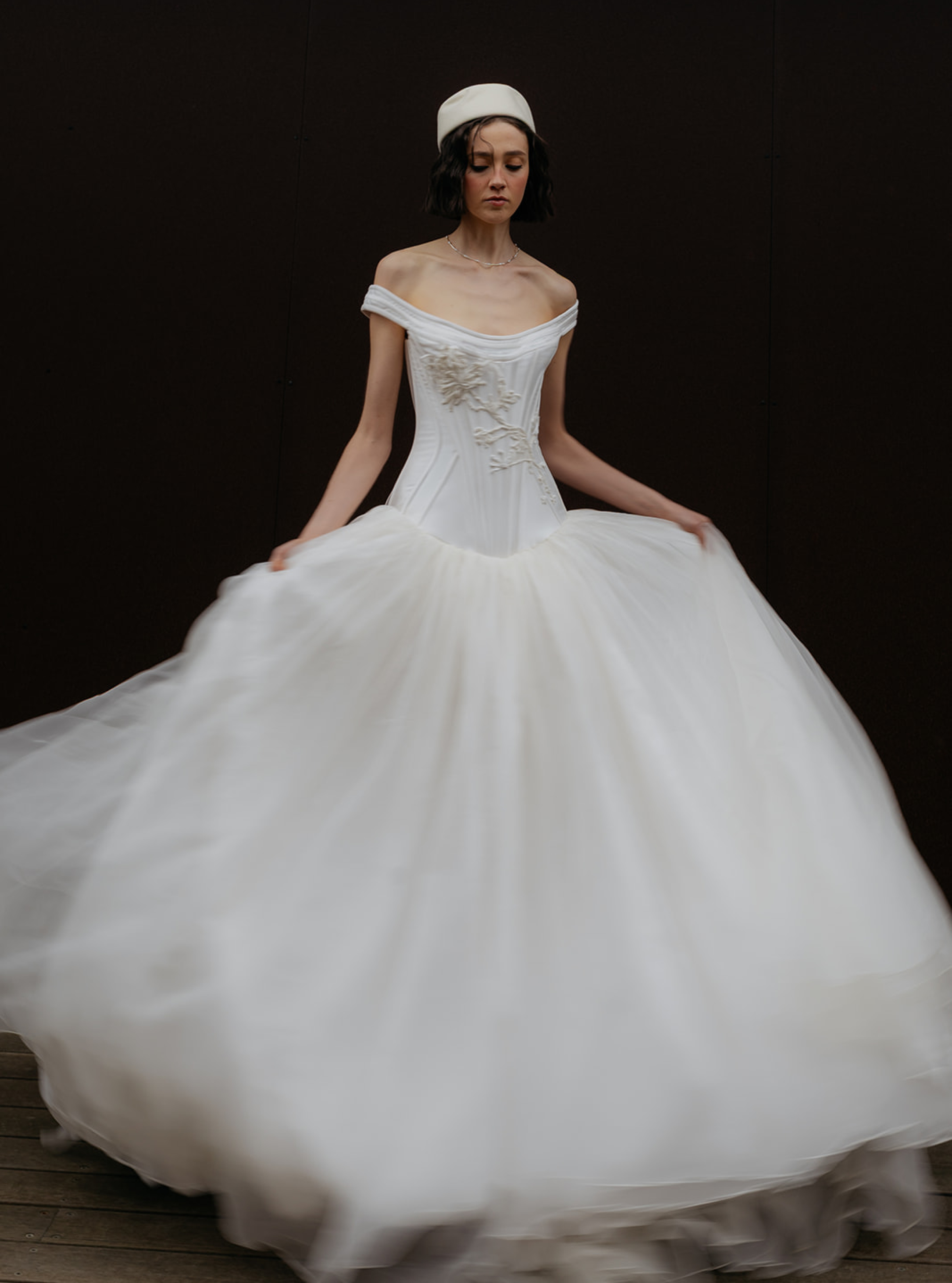
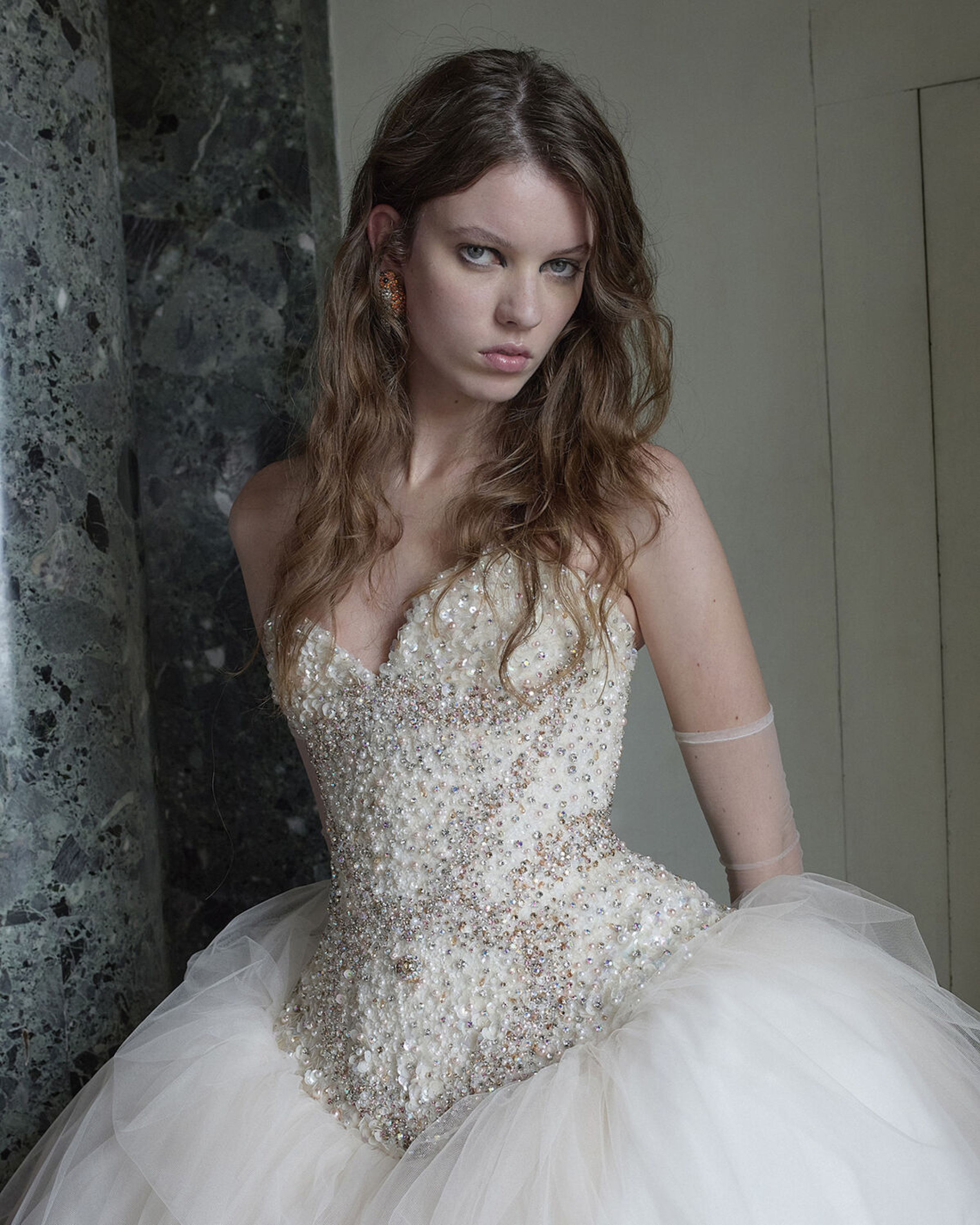
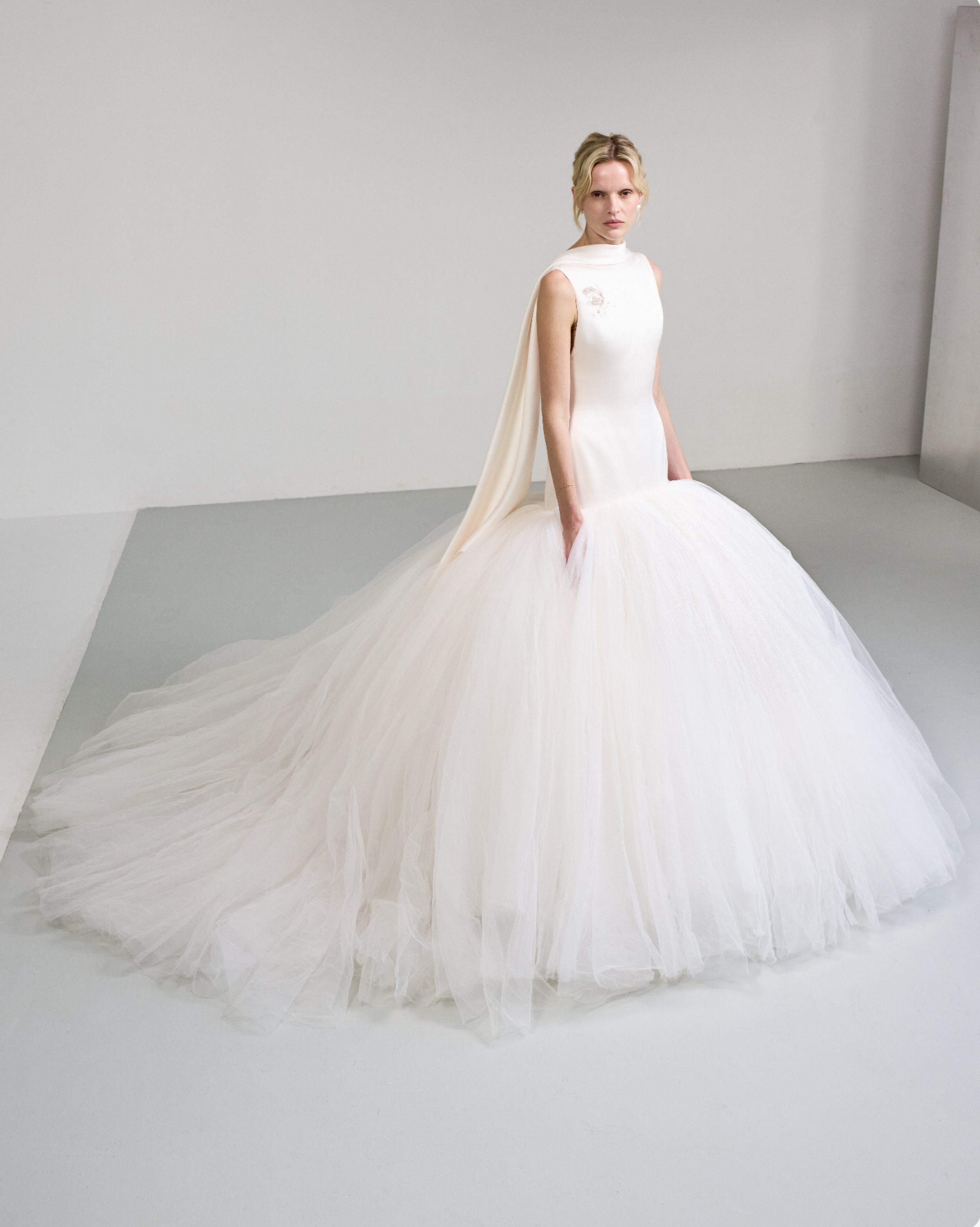
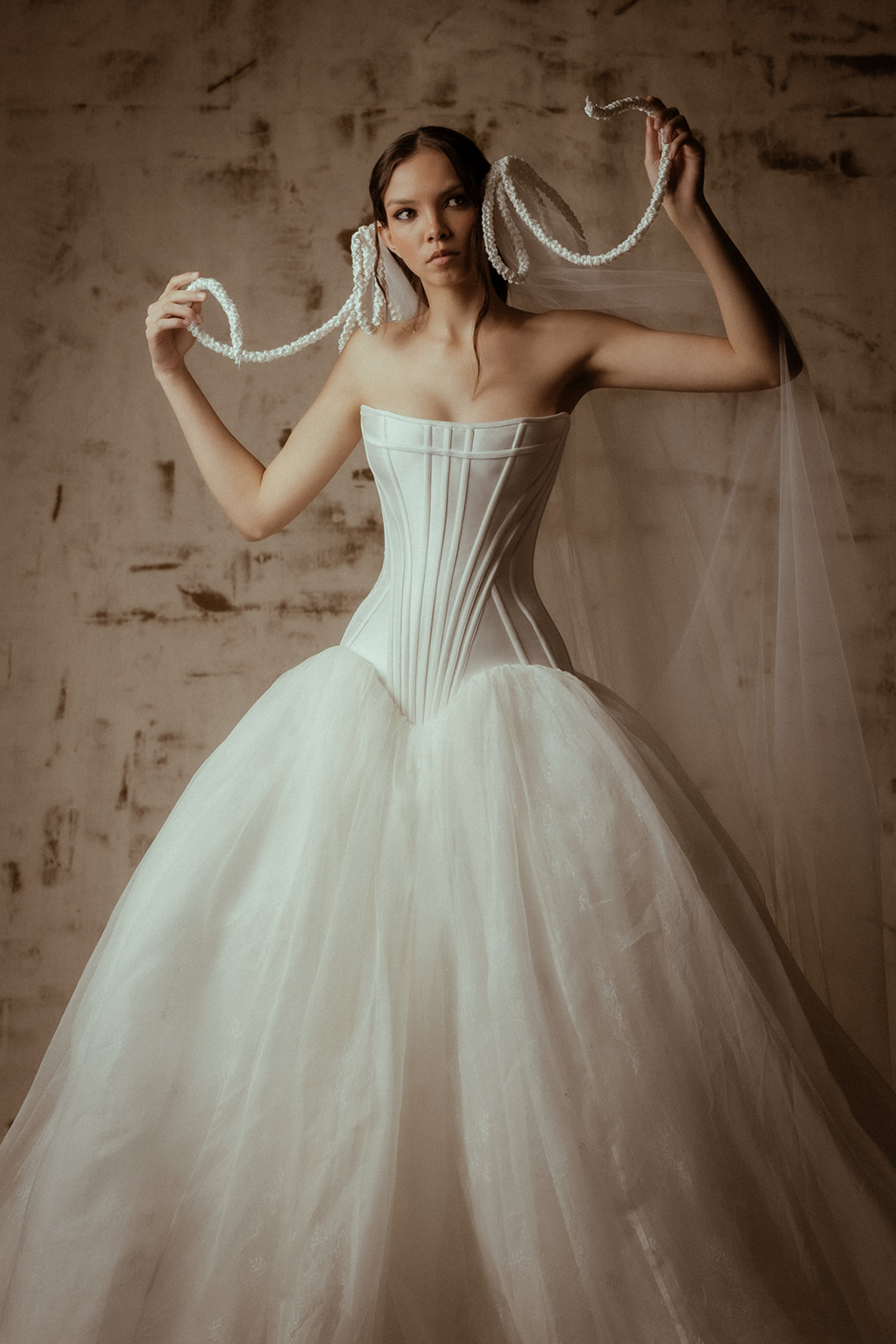
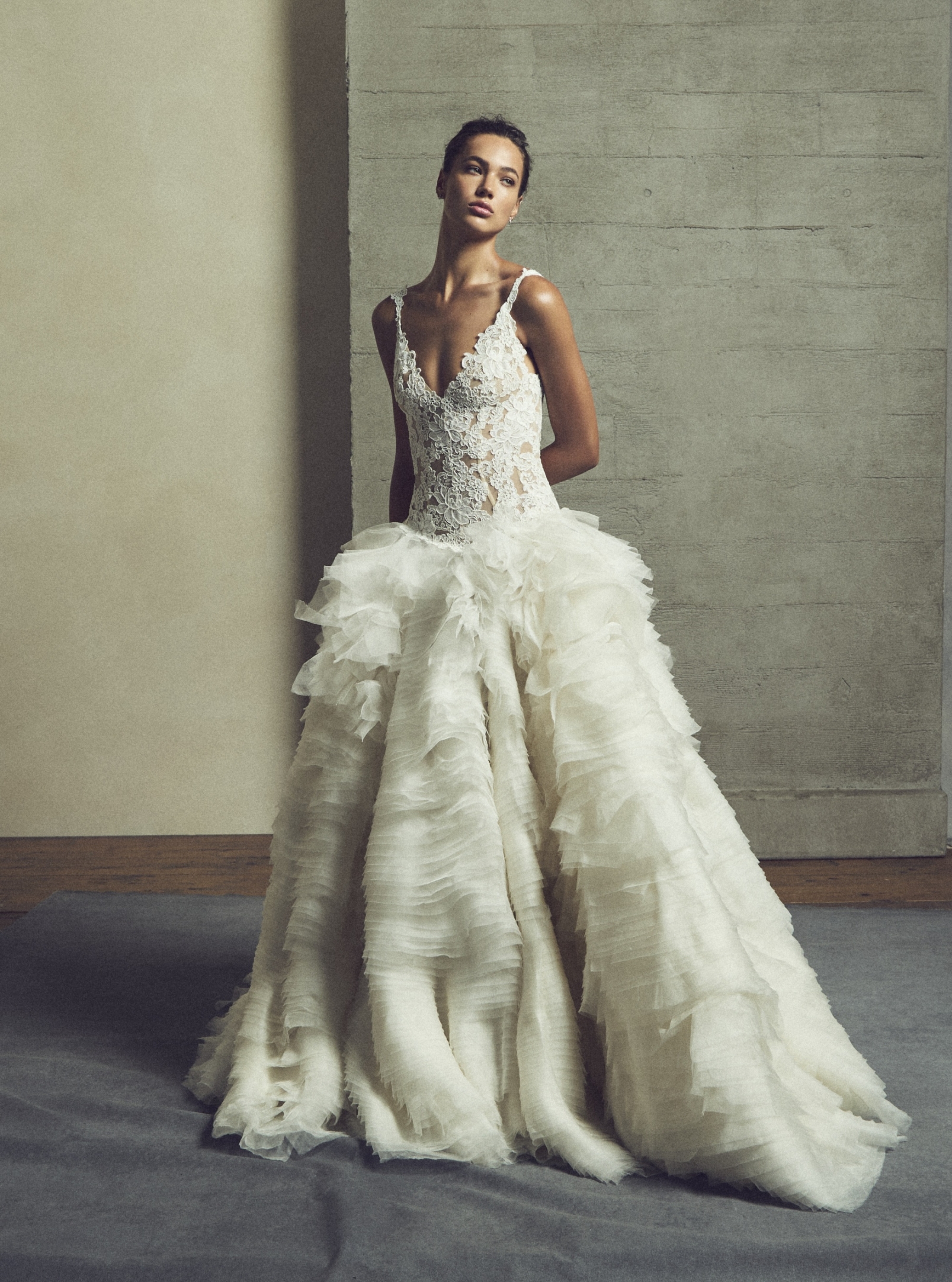
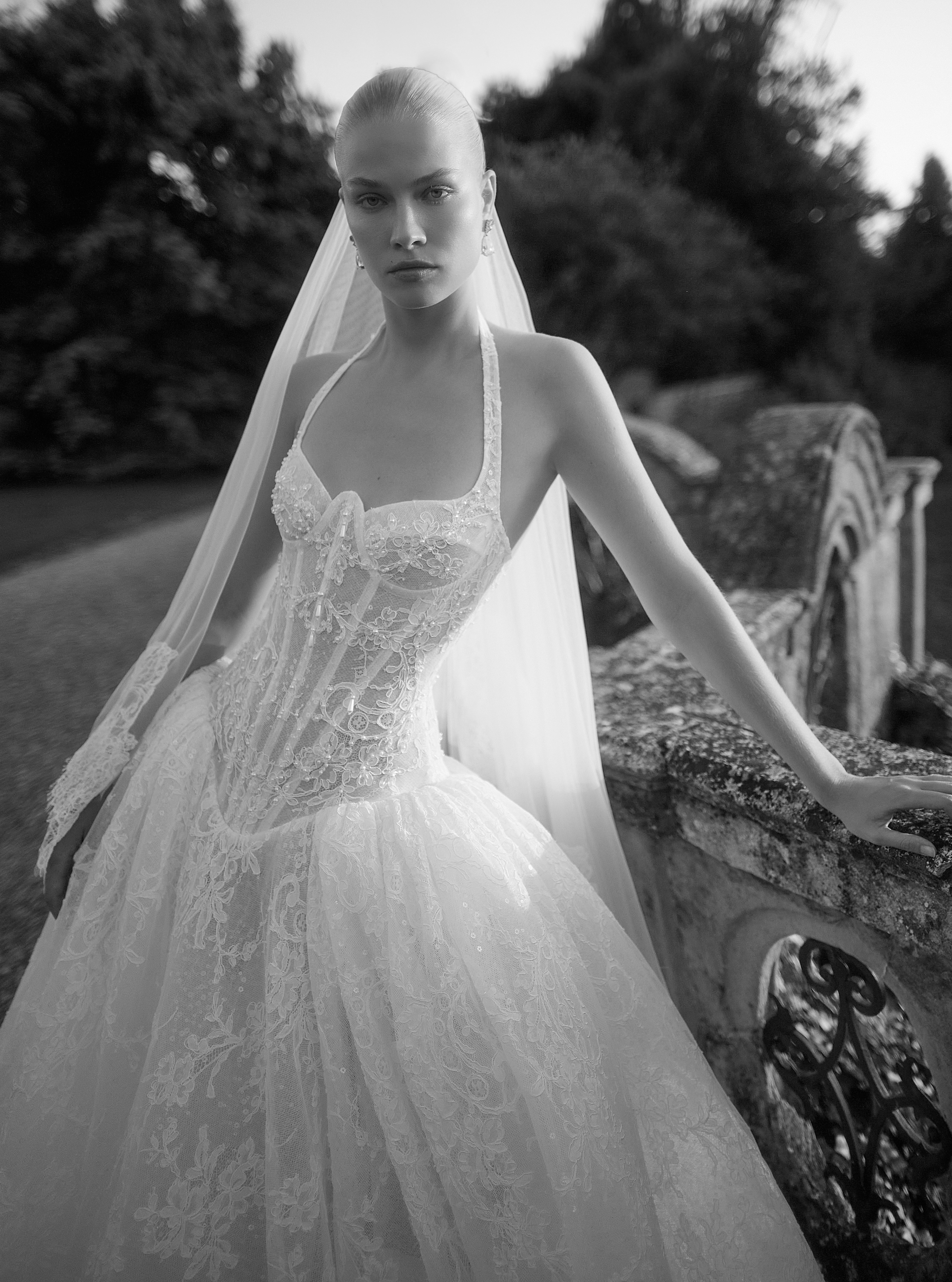
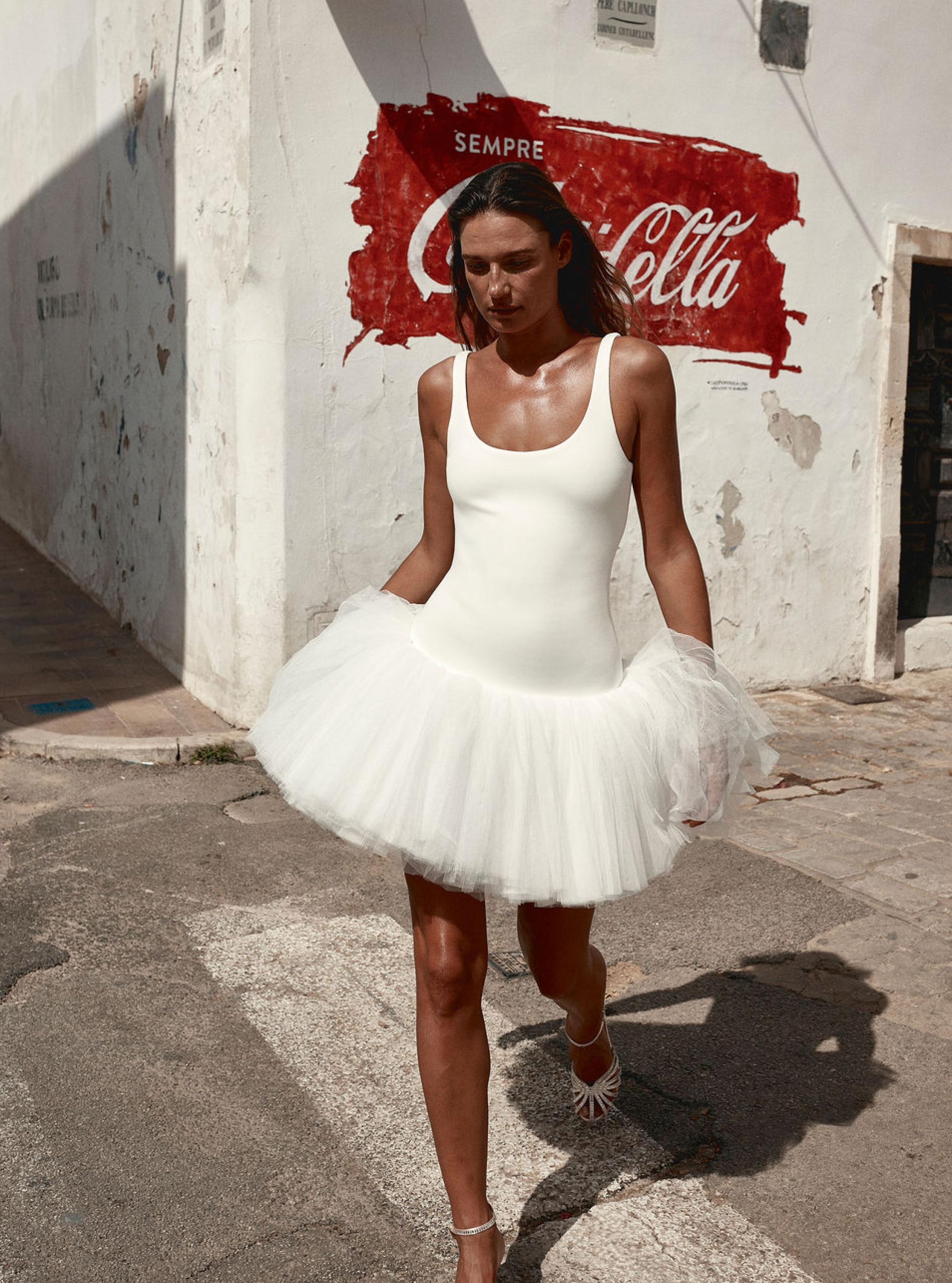
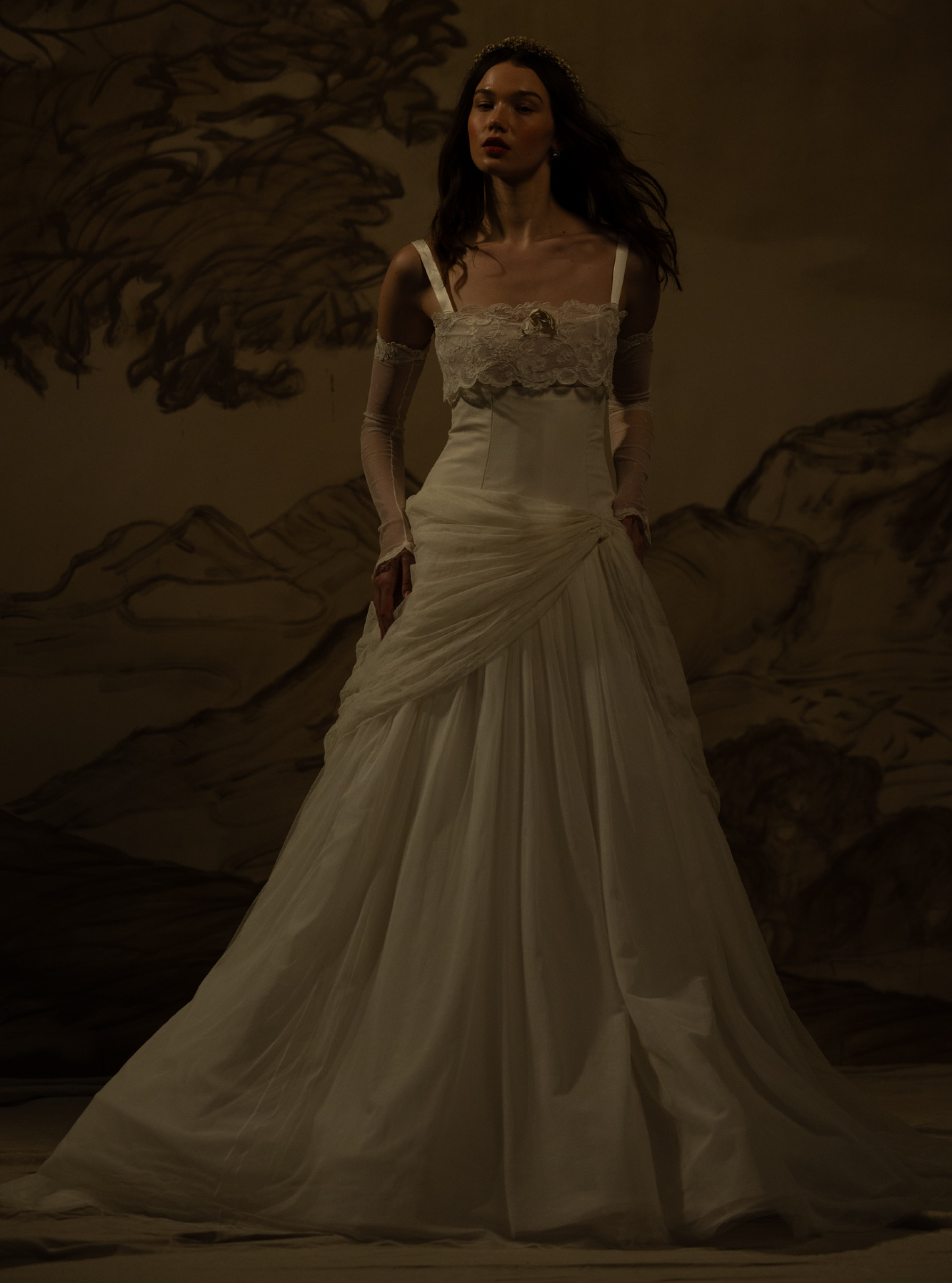
Somewhere between an Edgar Degas painting and the ballet stage, bridal found its inner ballerina this season. An ode to femininity in its most romantic form, ballet-inspired silhouettes emerged with cinched corsetry and clouds of sheer tulle, silk, and chiffon spilling dramatically from the hips. There was something reassuringly familiar about the look, a return to bridal’s more traditional codes of beauty, albeit with a theatrical flourish.
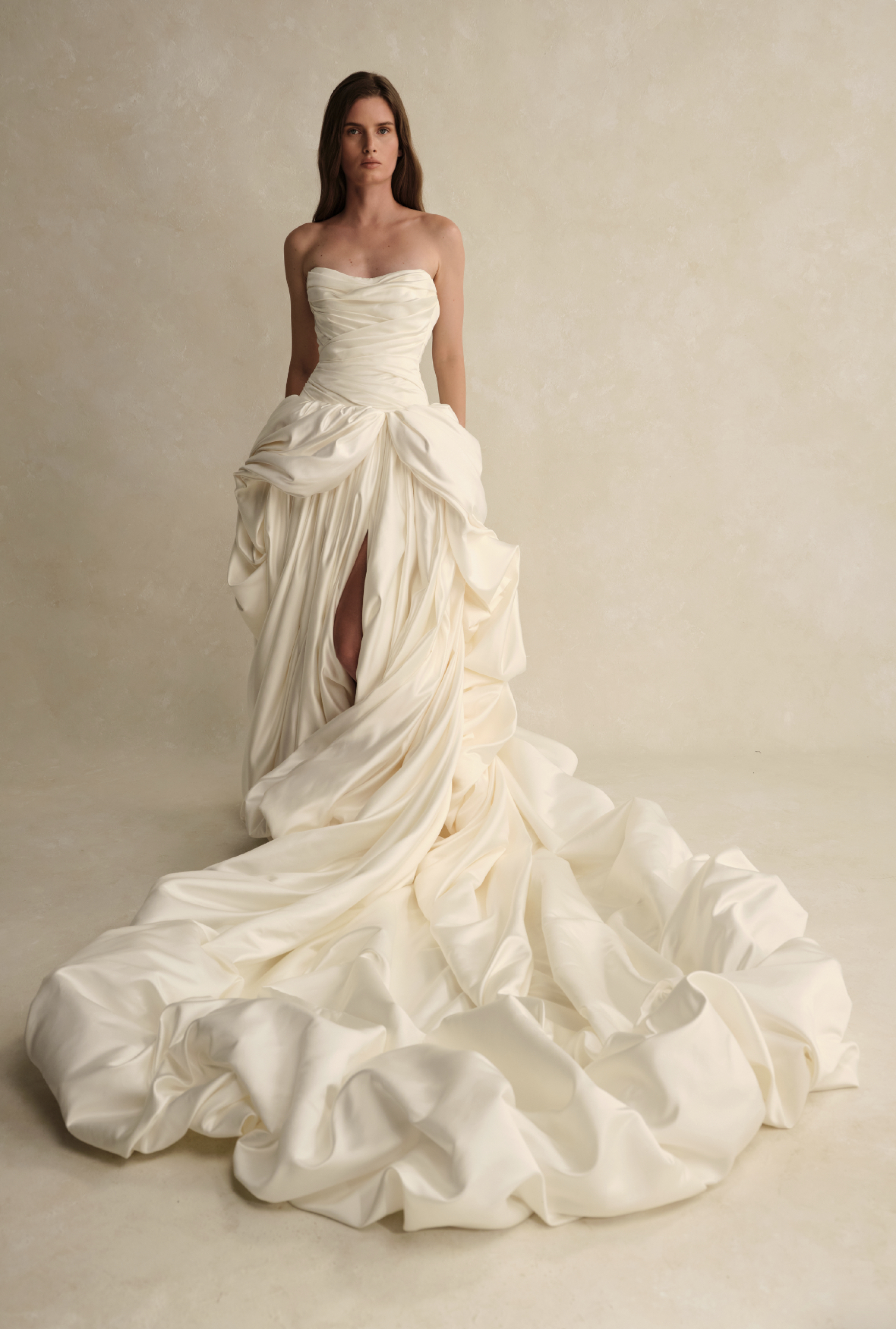
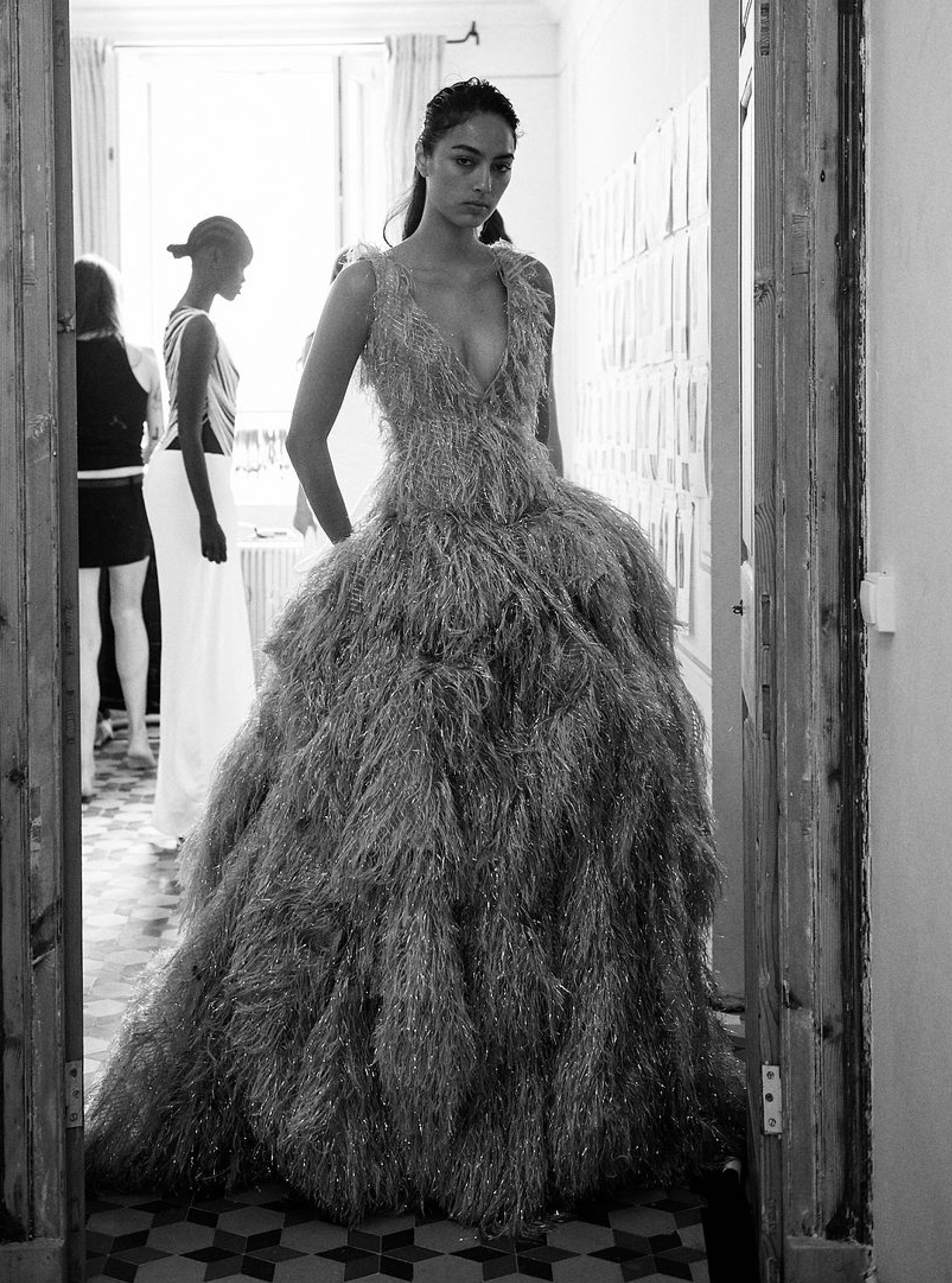
At Halfpenny London, delicate tiers of chiffon cascaded into soft, ruffled volume, while Marrow offered a more exuberant interpretation with layers of tulle that nodded to the excess of the 1980s. Leah Da Glória and Eden Aharon took a softer, more romantic approach, layering delicate lace, while Marmar Halim introduced a drop-waist mermaid silhouette with a dramatically voluminous train. For something a little less prima ballerina and a little more after-hours, Kyha Bride reimagined the tutu as a playful mini dress, made for the engagement party or the dance floor. Pretty? Undeniably. Groundbreaking? Perhaps not. But sometimes there’s something rather lovely about a little old-fashioned romance.
The Golden Age
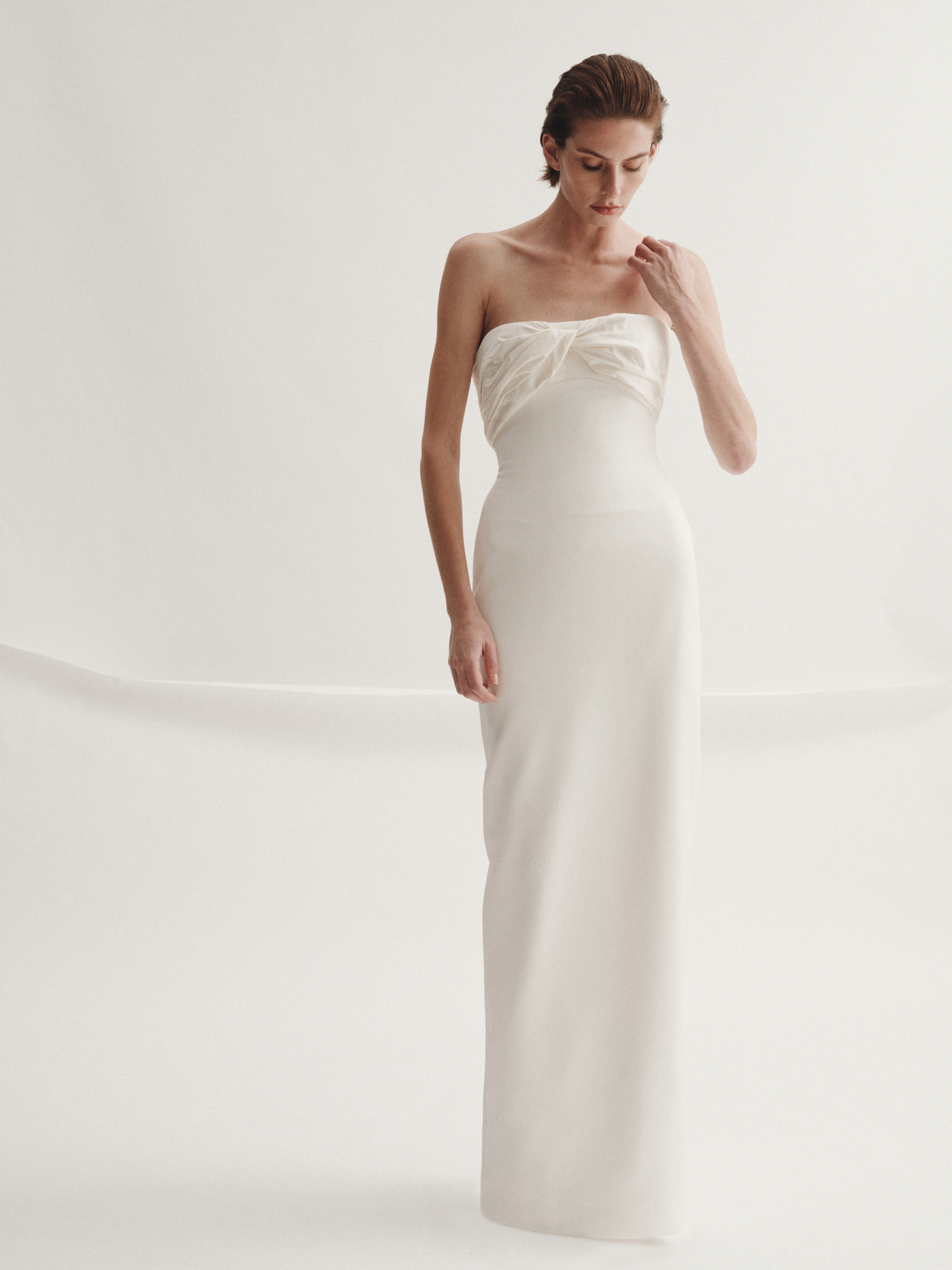
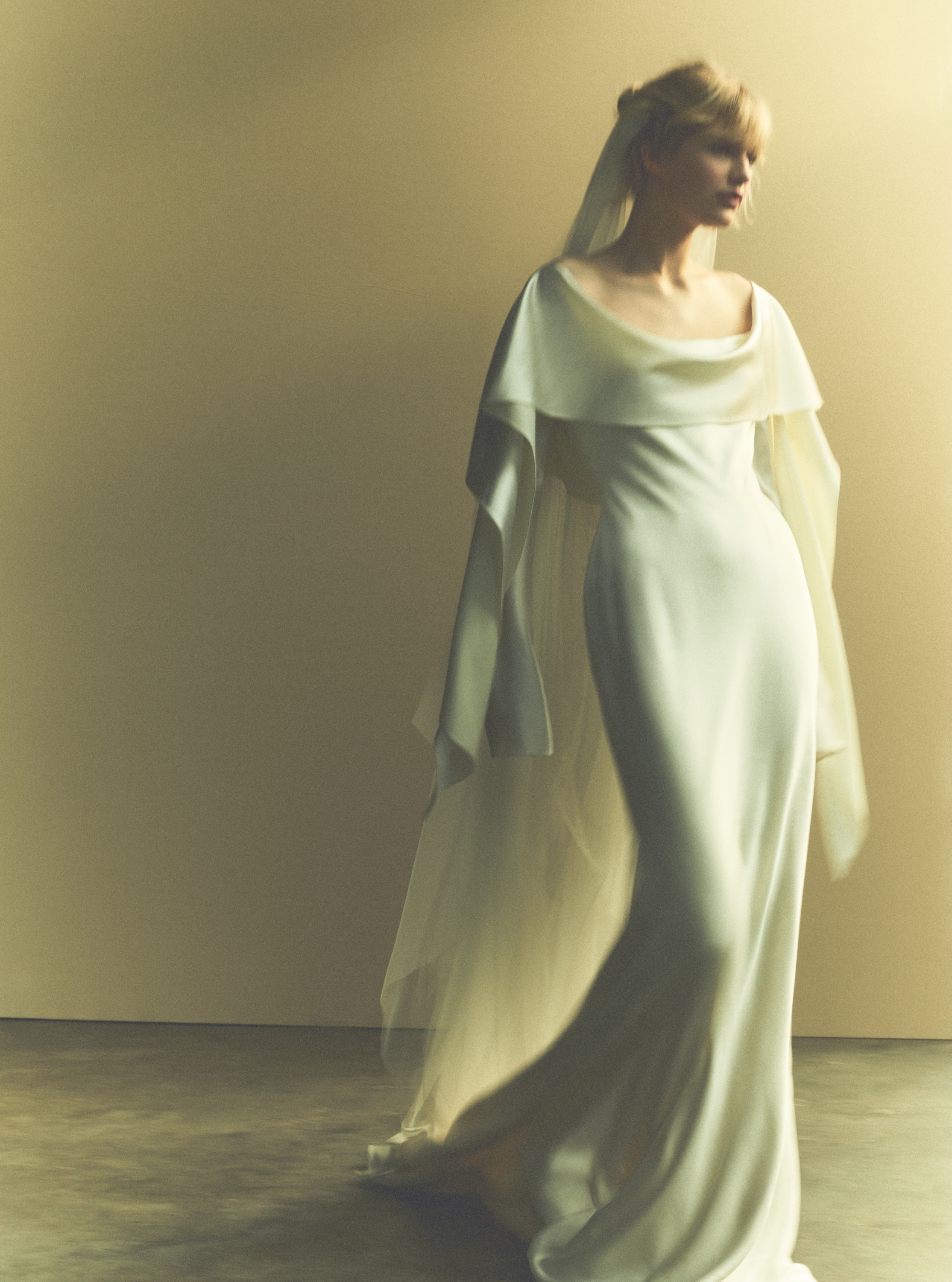
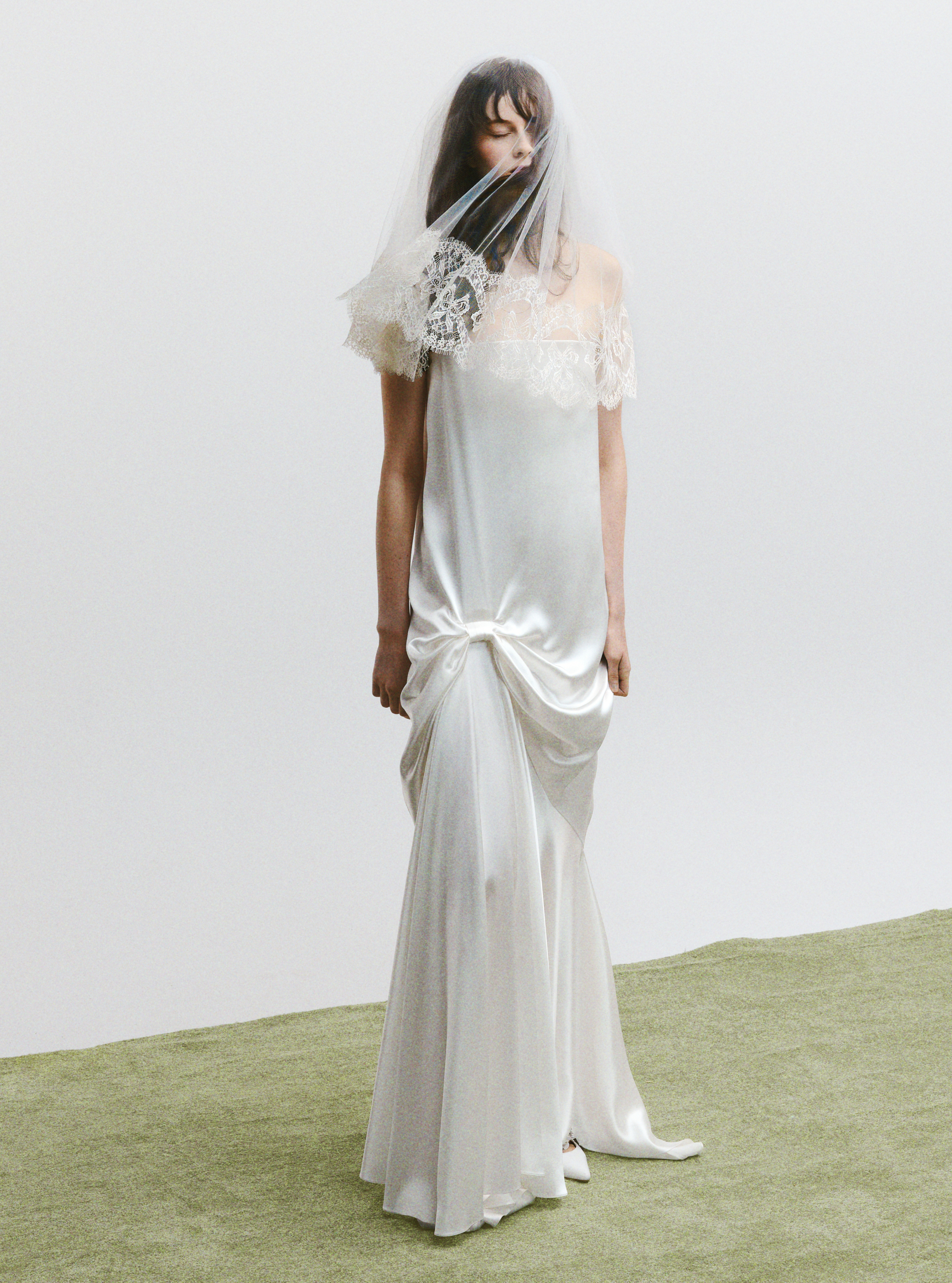
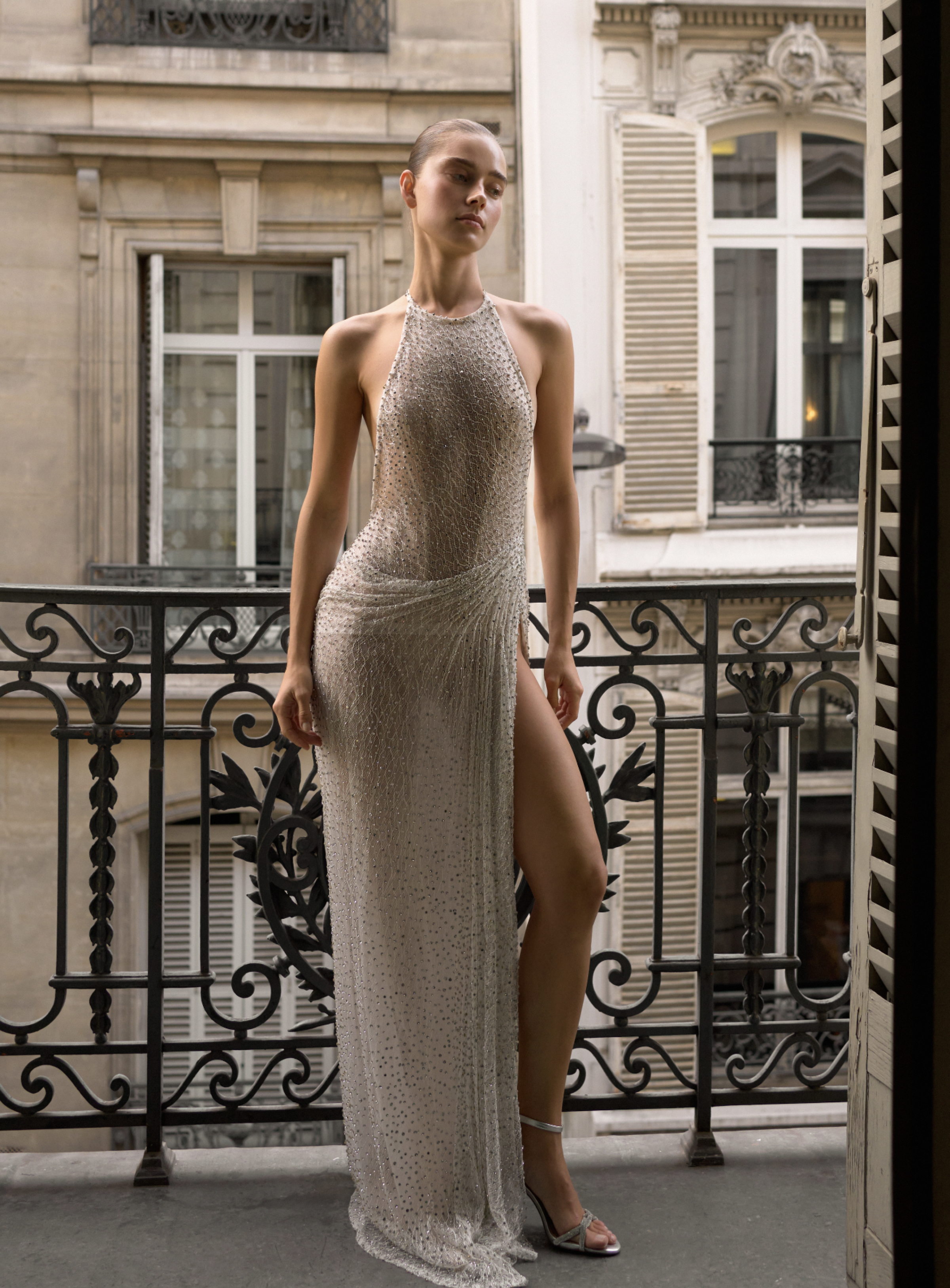
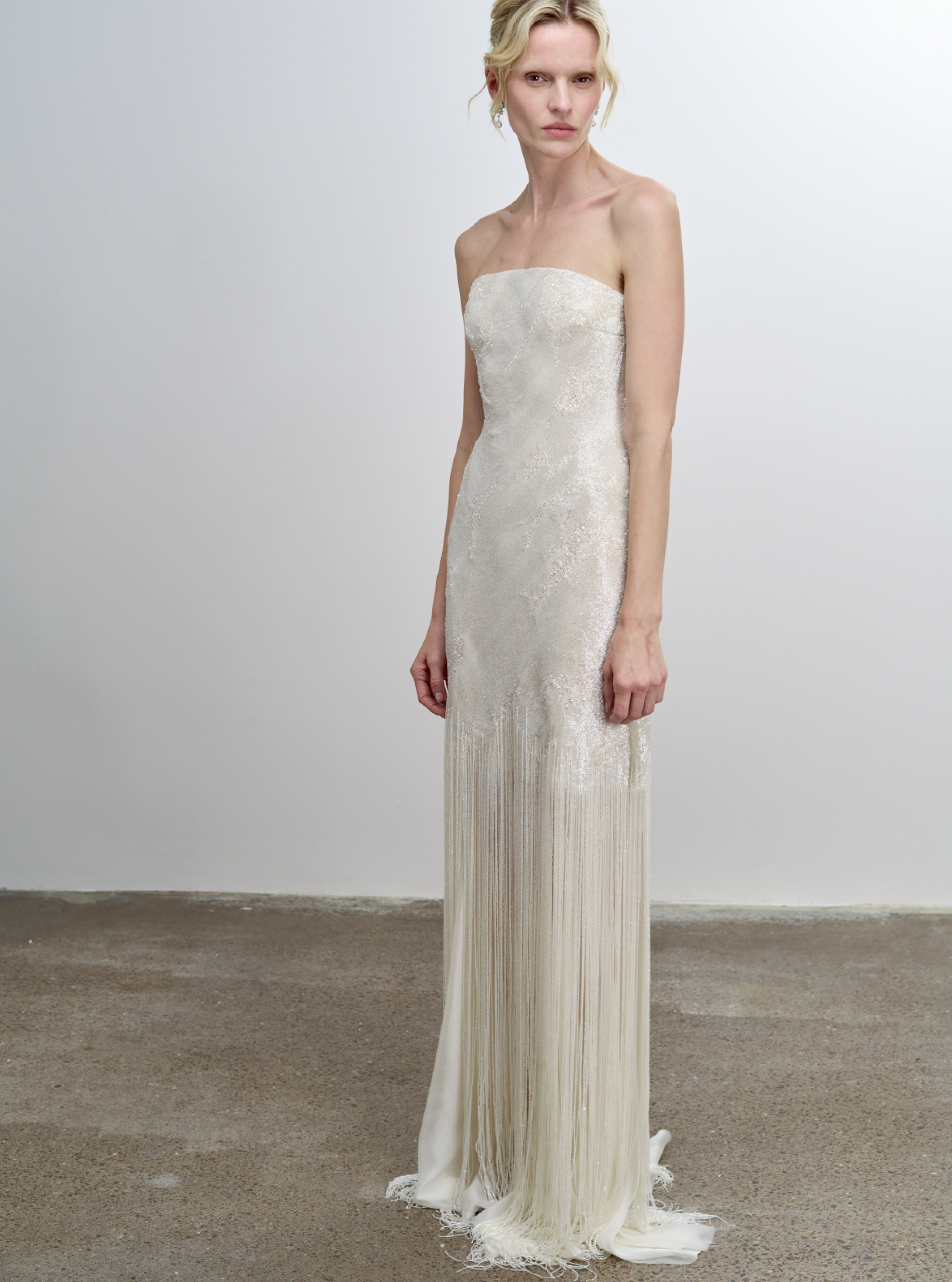
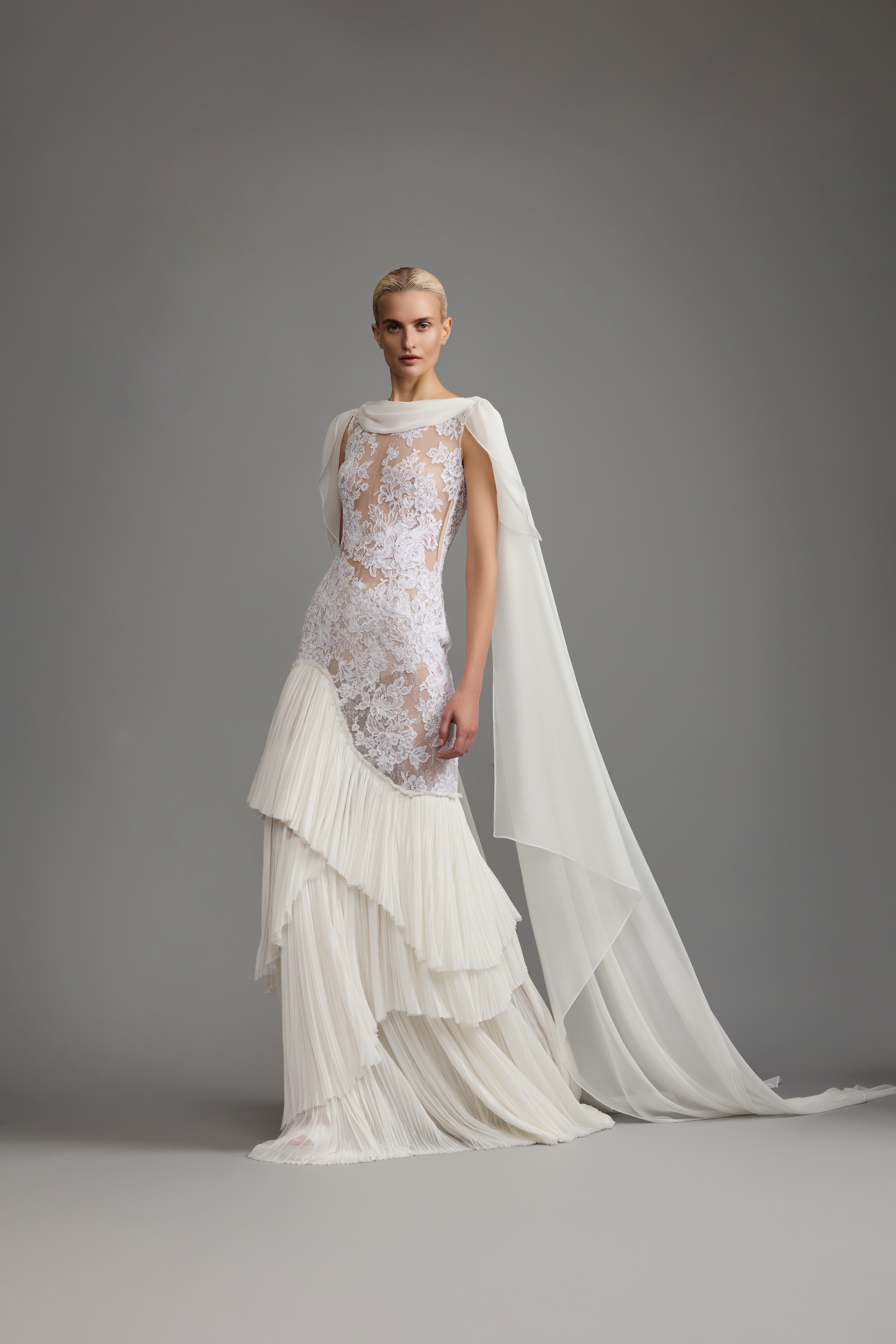
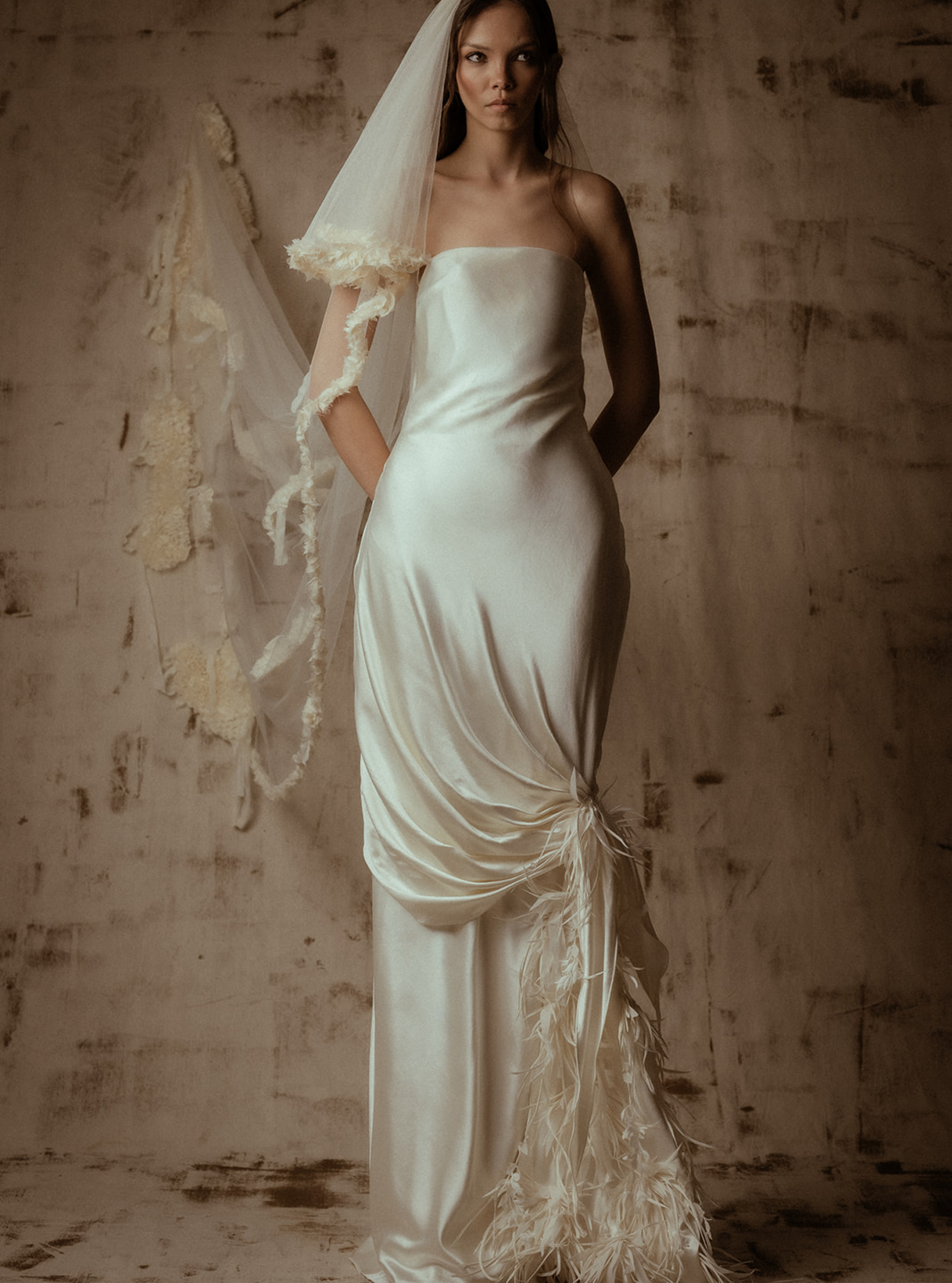
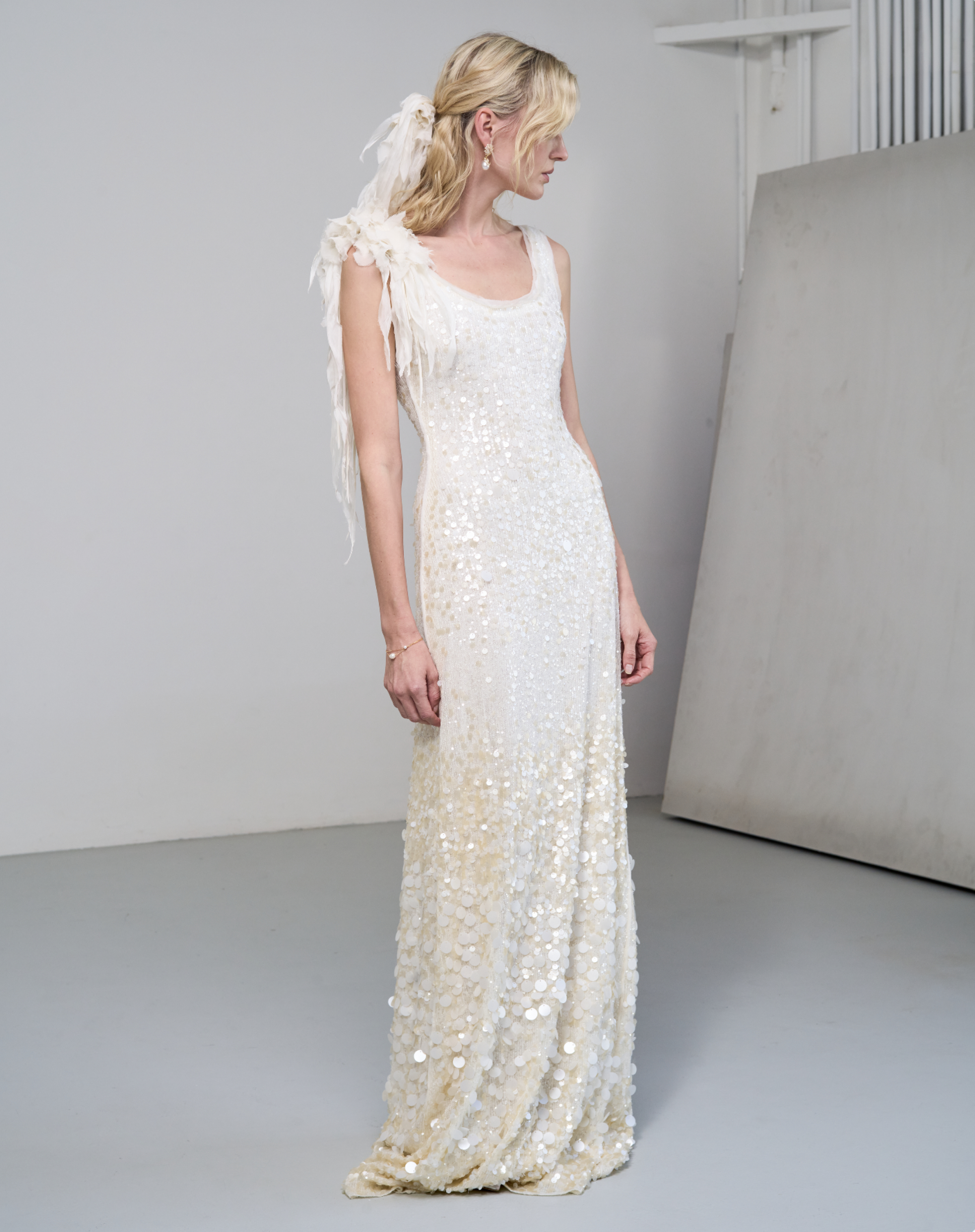
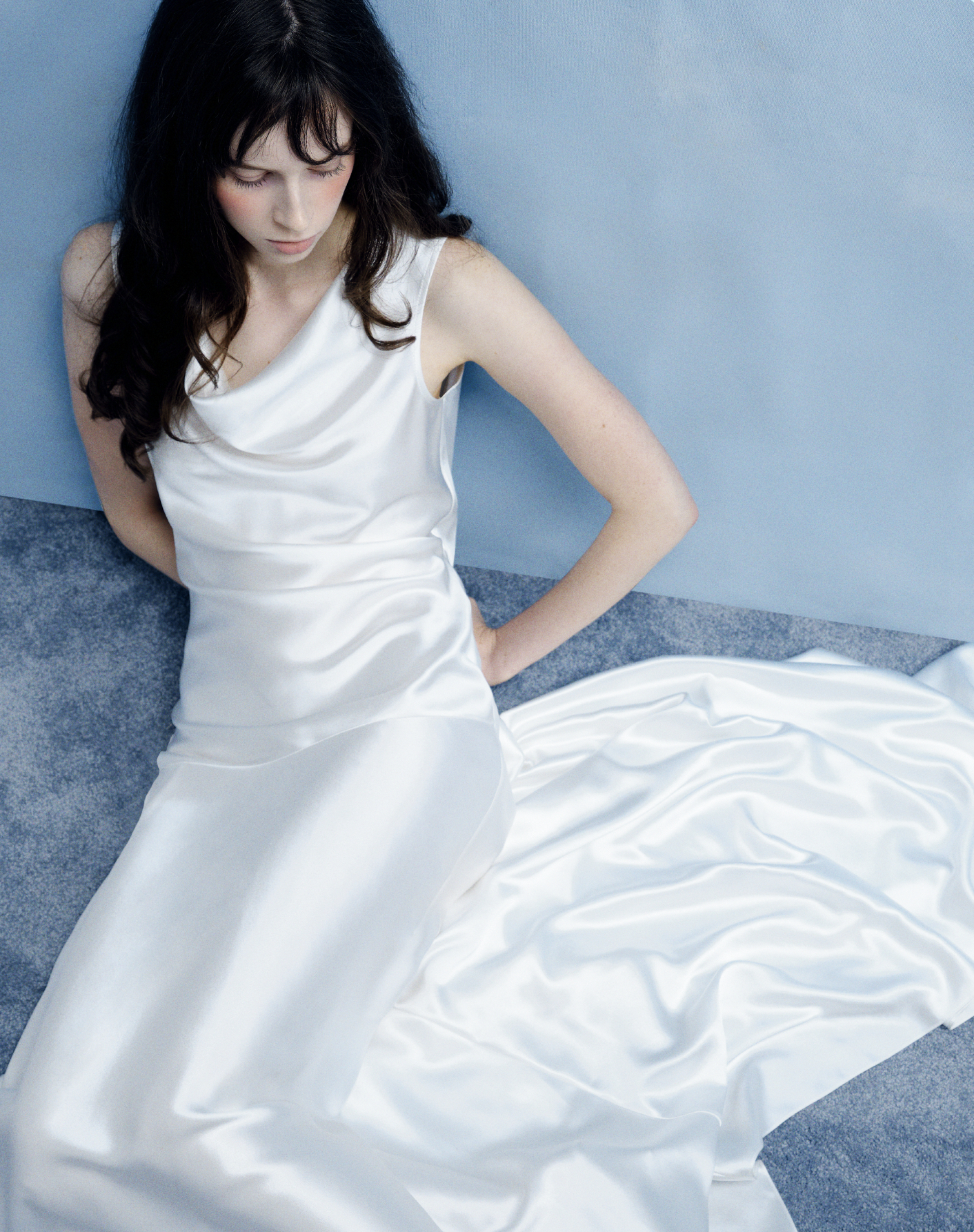
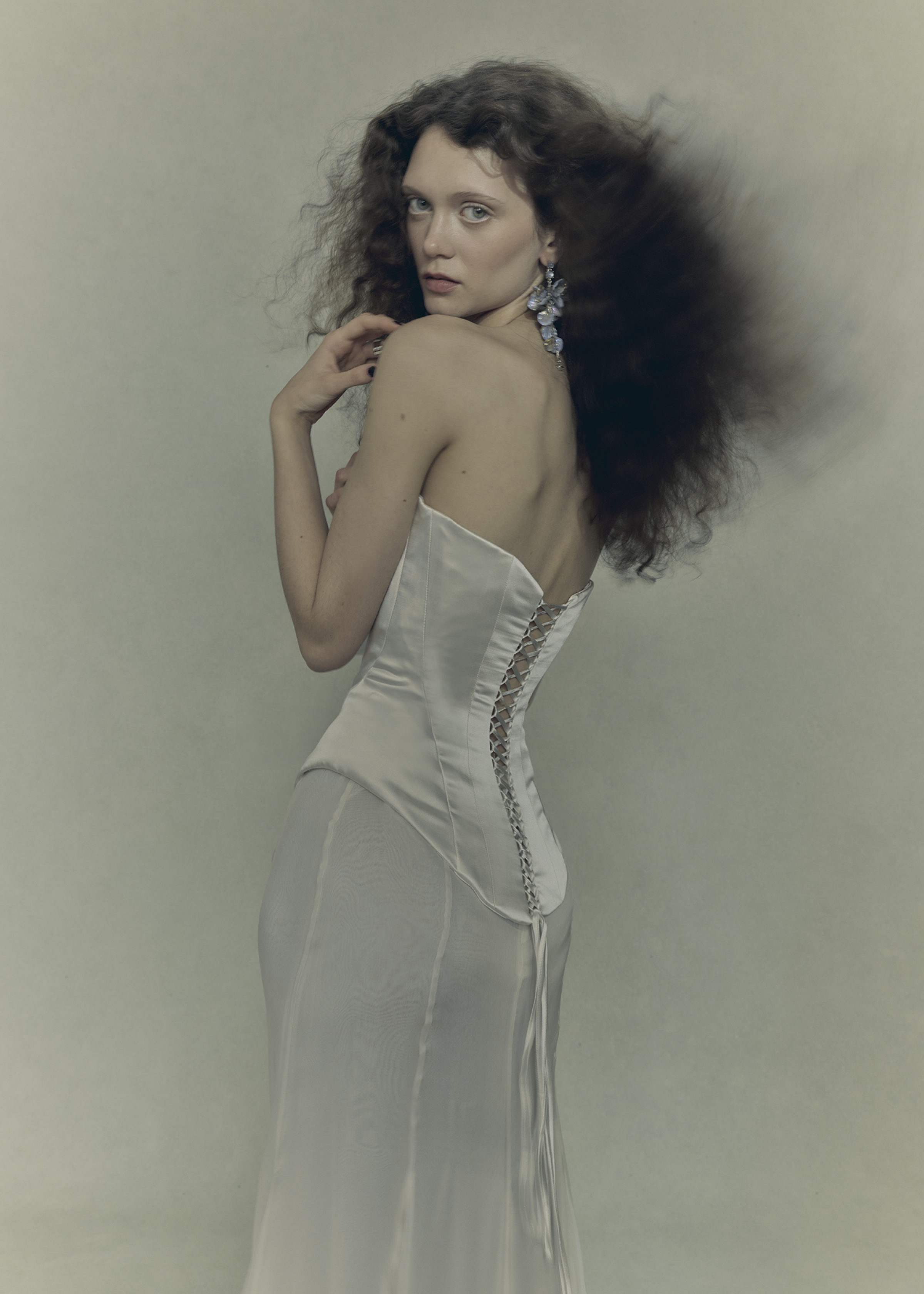
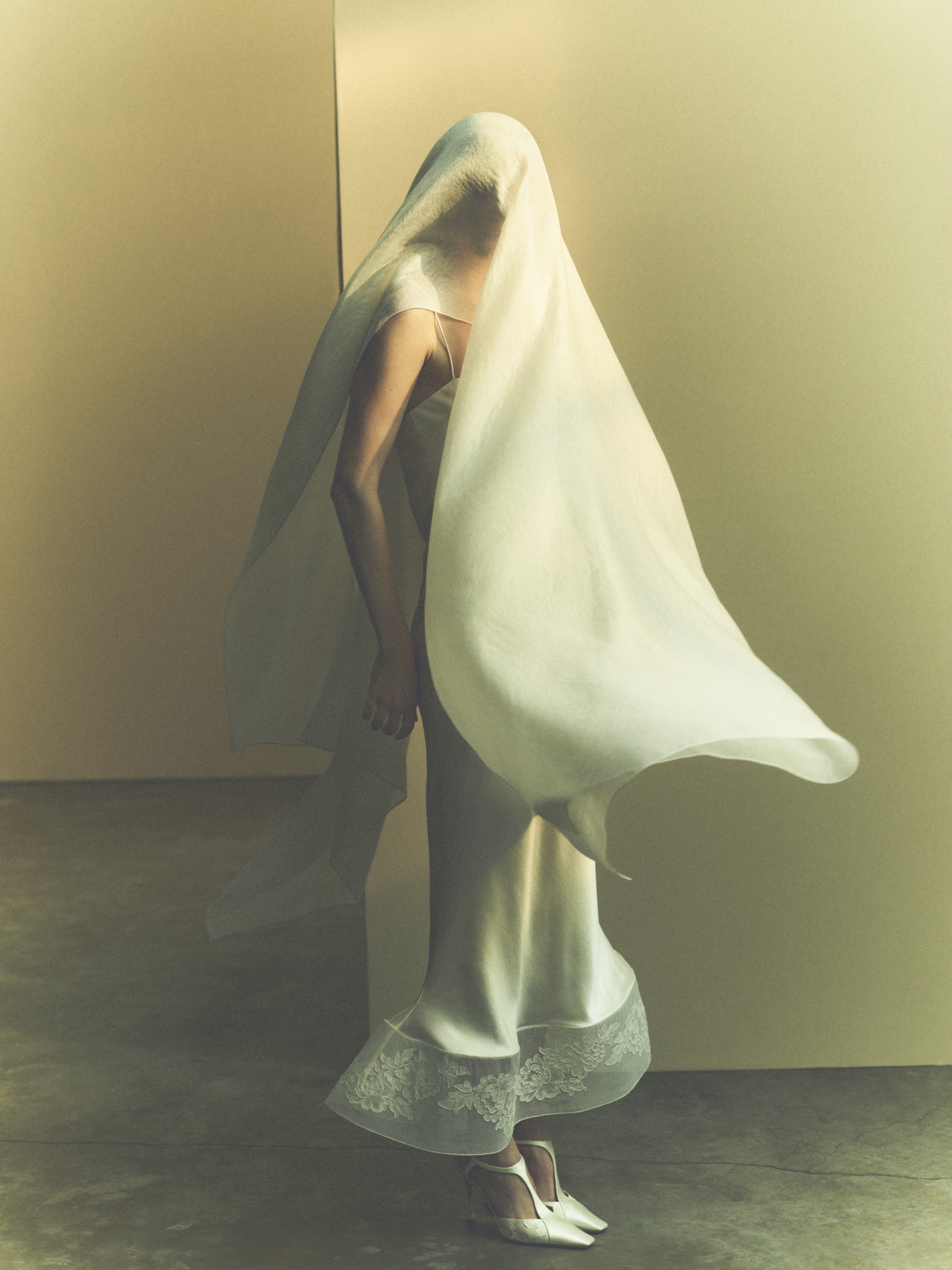
After seasons of sculpted corsetry and exaggerated volume, bridal is embracing a different kind of glamour. Taking its cues from the languid elegance of 1930s eveningwear, this season saw a return to fluid, bias-cut silhouettes that skim rather than sculpt the body. Where the 1920s liberated women from restrictive silhouettes, the 1930s refined that freedom into something altogether more sensual, with liquid silks and uninterrupted lines that celebrated the female form without constraining it.
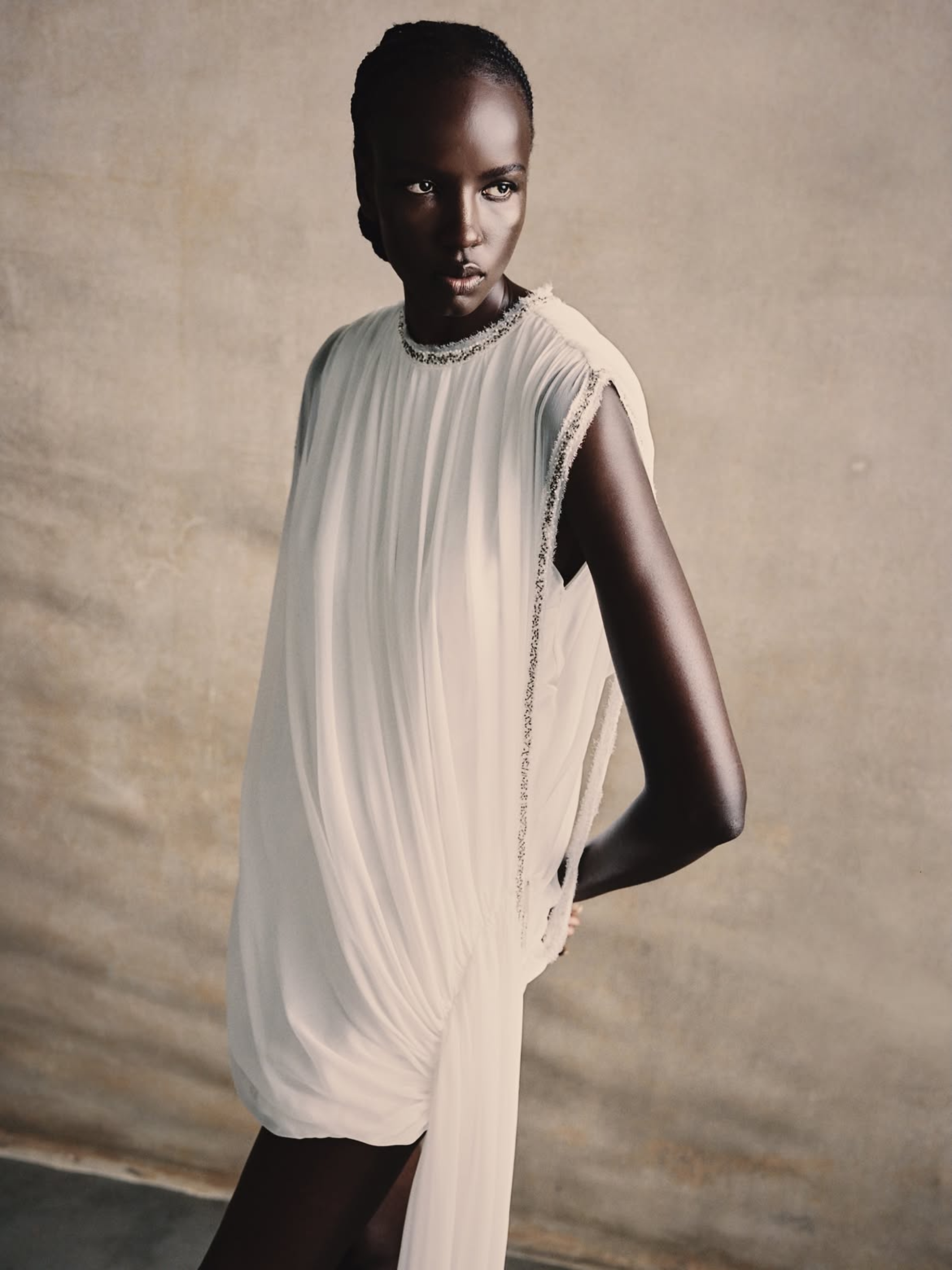
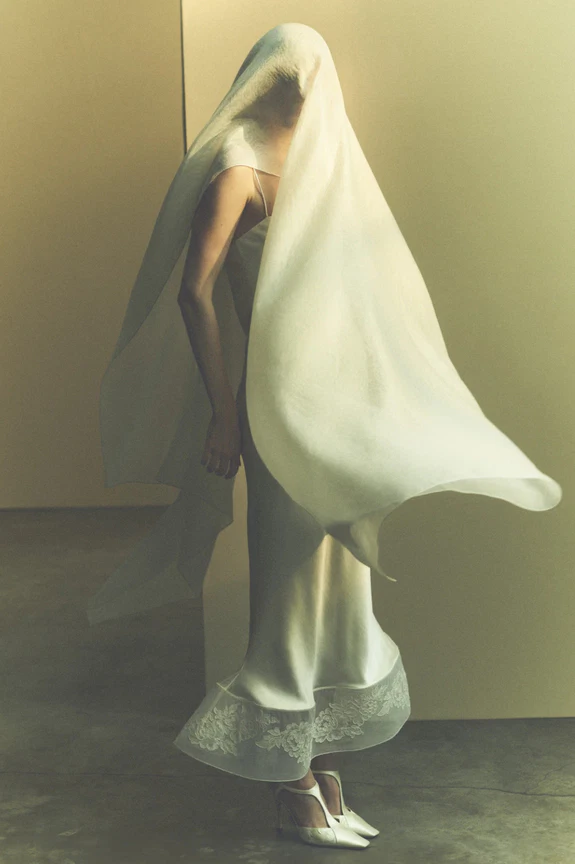
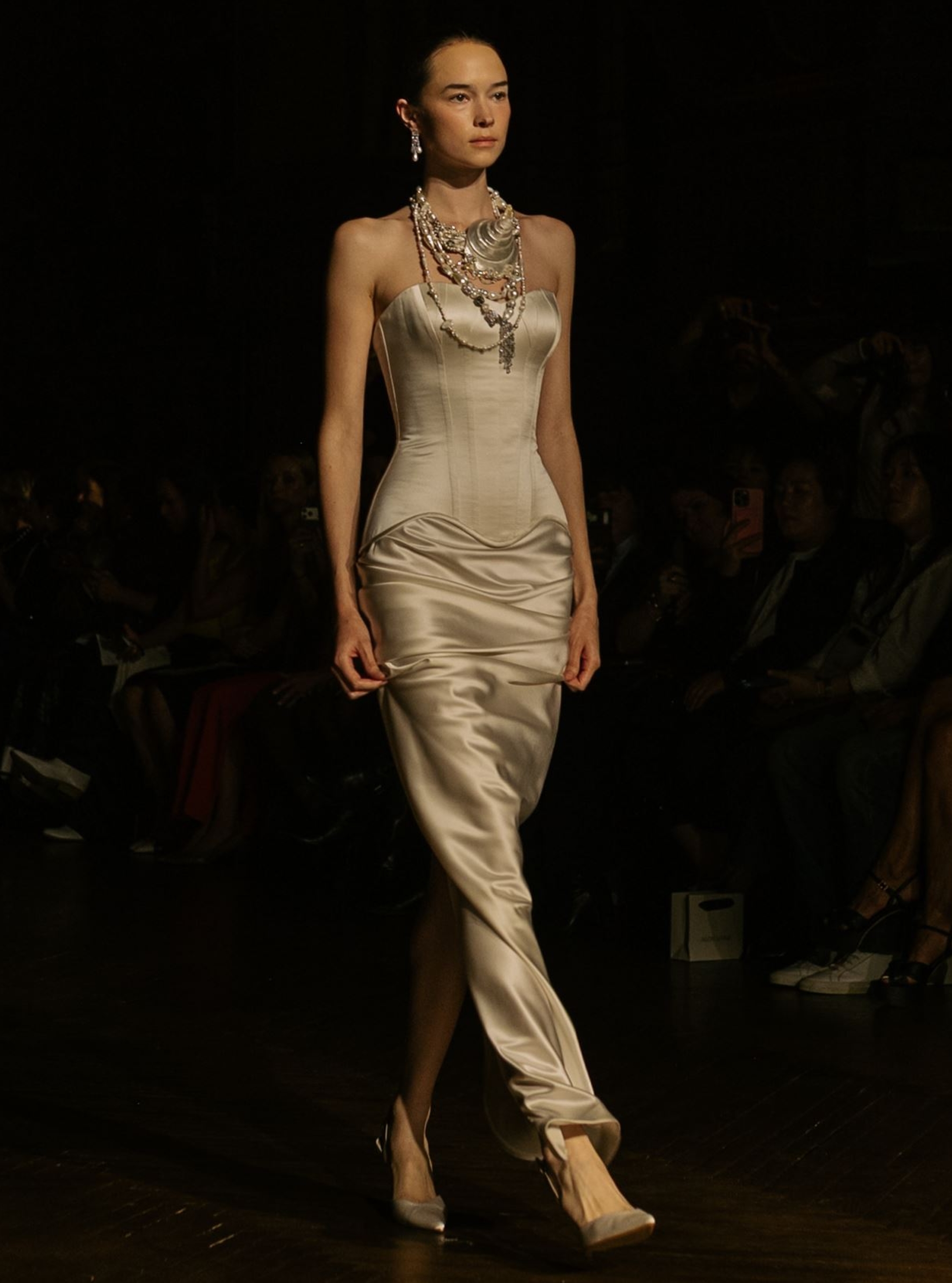
At Wed and Floure, liquid silk satins skimmed the body with an effortless fluidity, punctuated by artfully placed knots and subtle draping, while Danielle Frankel introduced intrigue through a softly draped shawl overlay. Noy Eliyahu and Marmar Halim offered a more embellished interpretation, introducing shimmering beadwork and sequins that caught the light with every sway. The appeal lies in the restraint: relaxed yet undeniably sophisticated, sensual without being overt, and proof that elegance needn’t be complicated. An exquisite choice for a second look, certainly, but perhaps even more compelling as an understated ceremony gown.
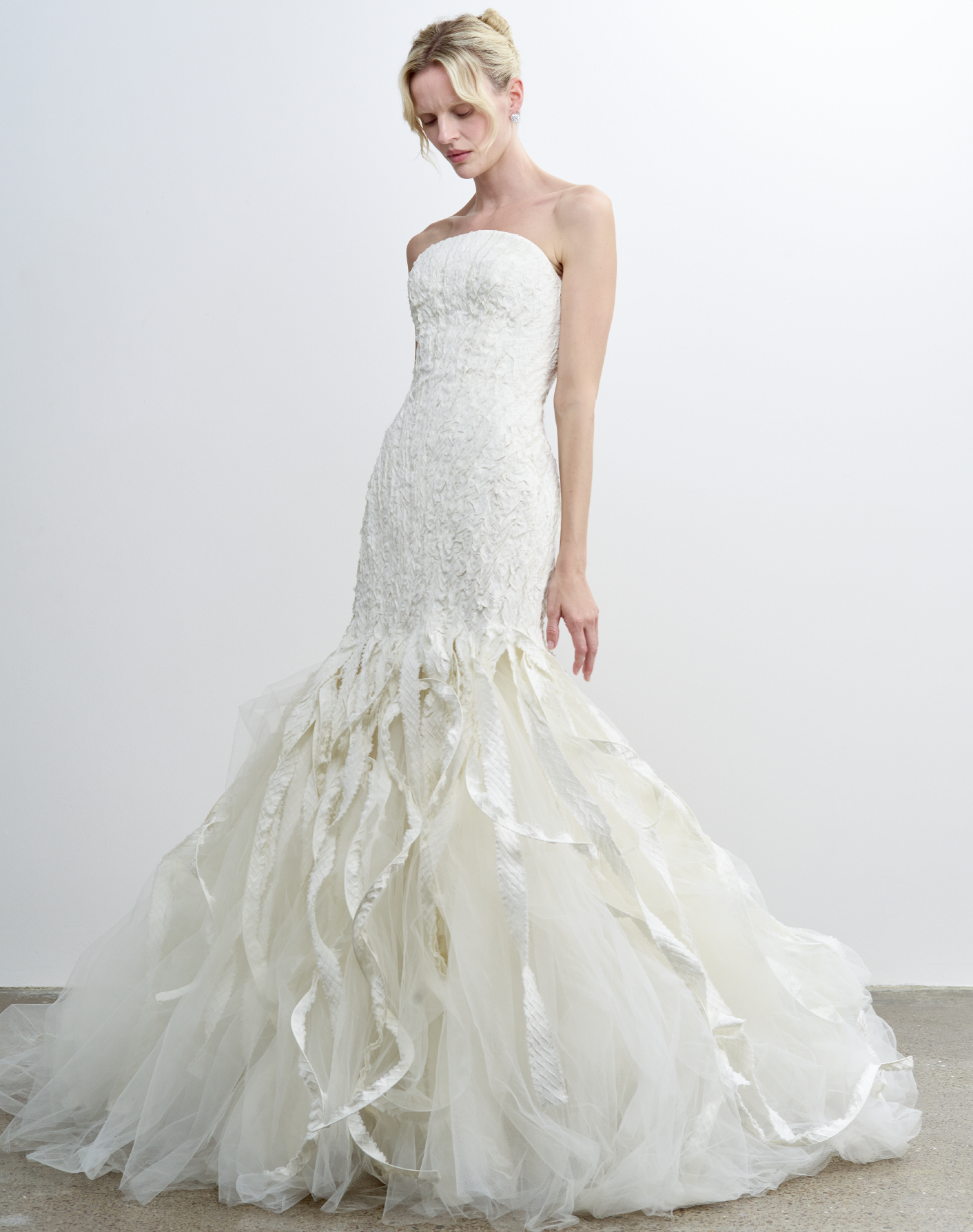
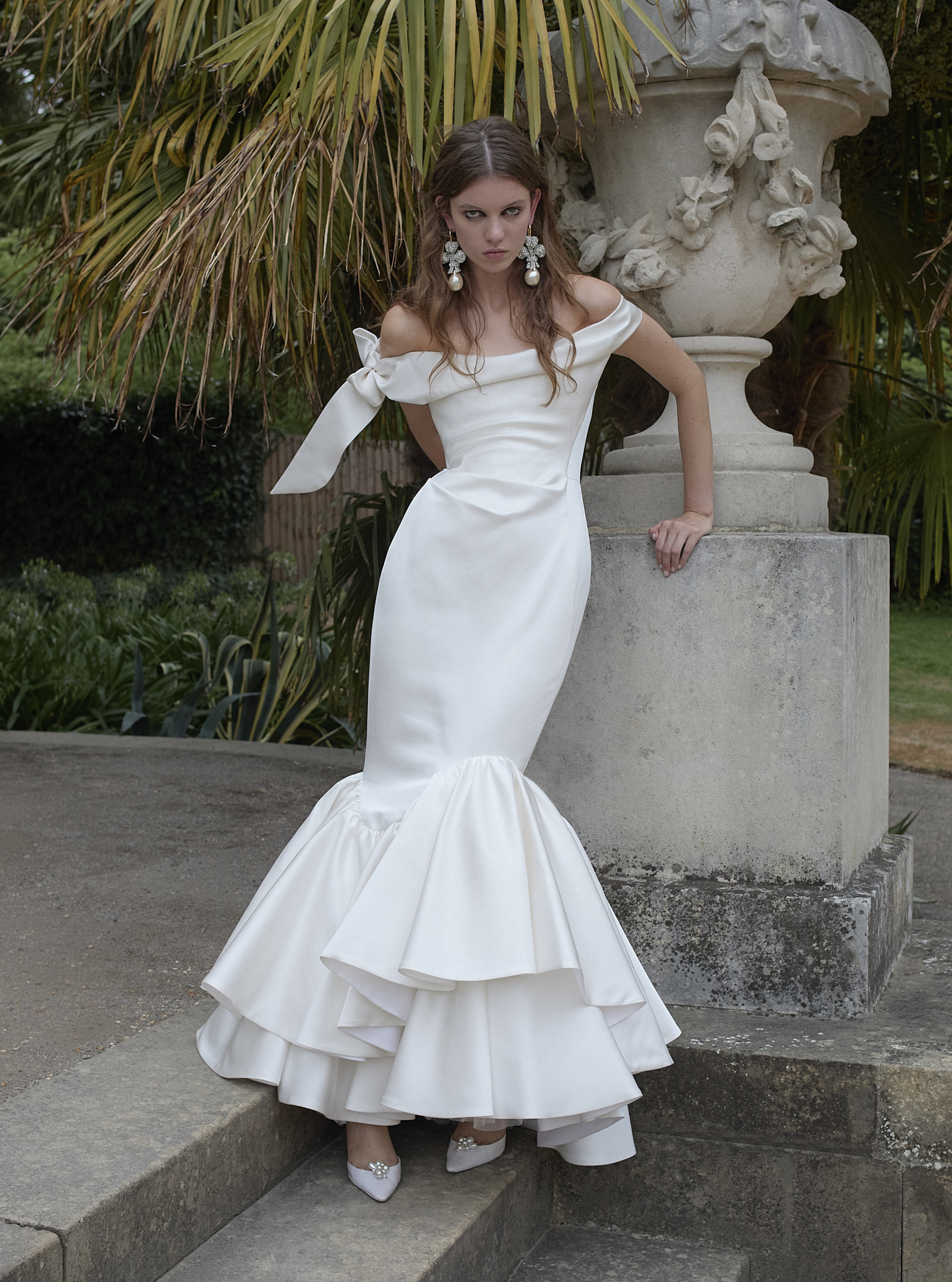
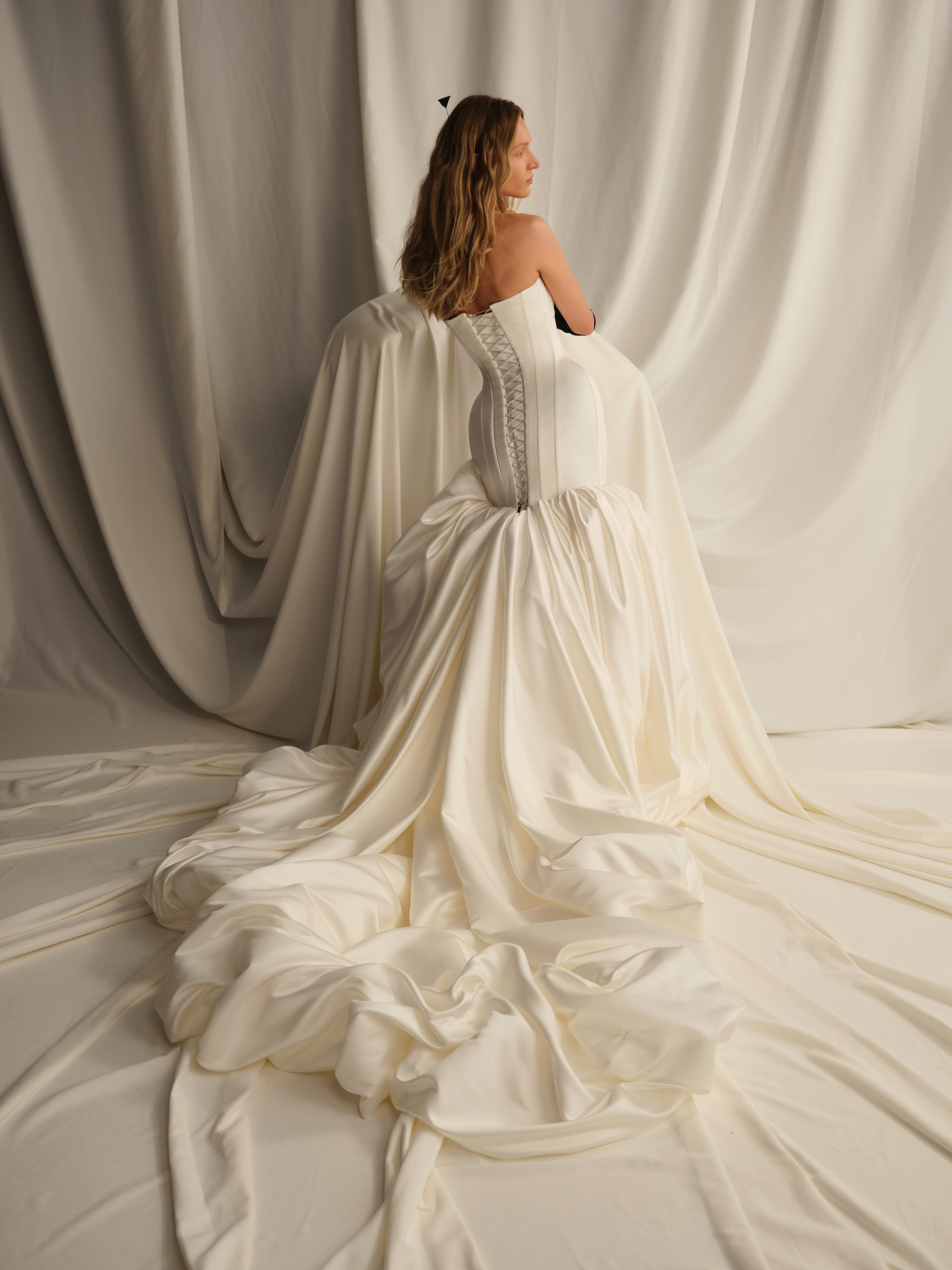
High Drama
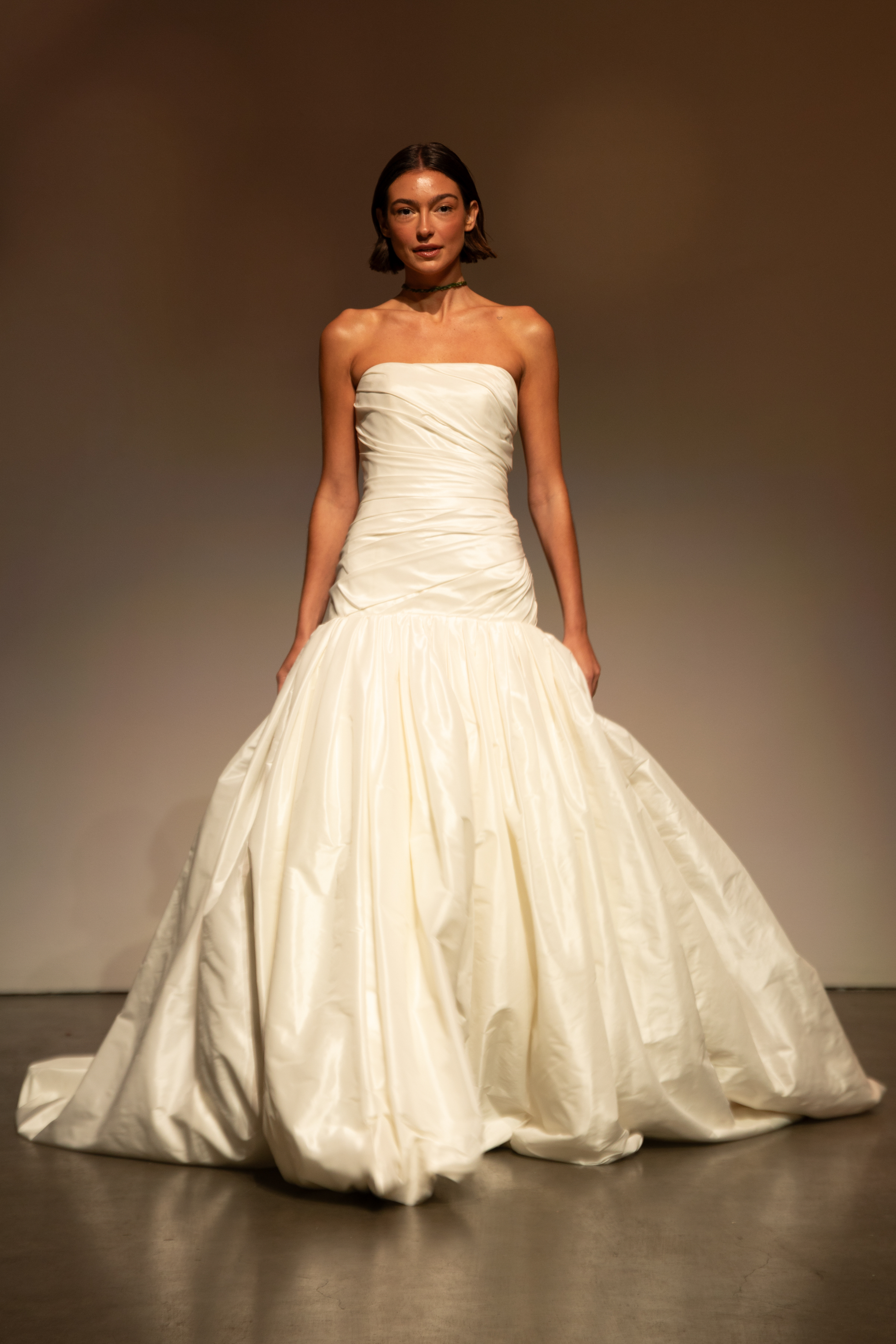
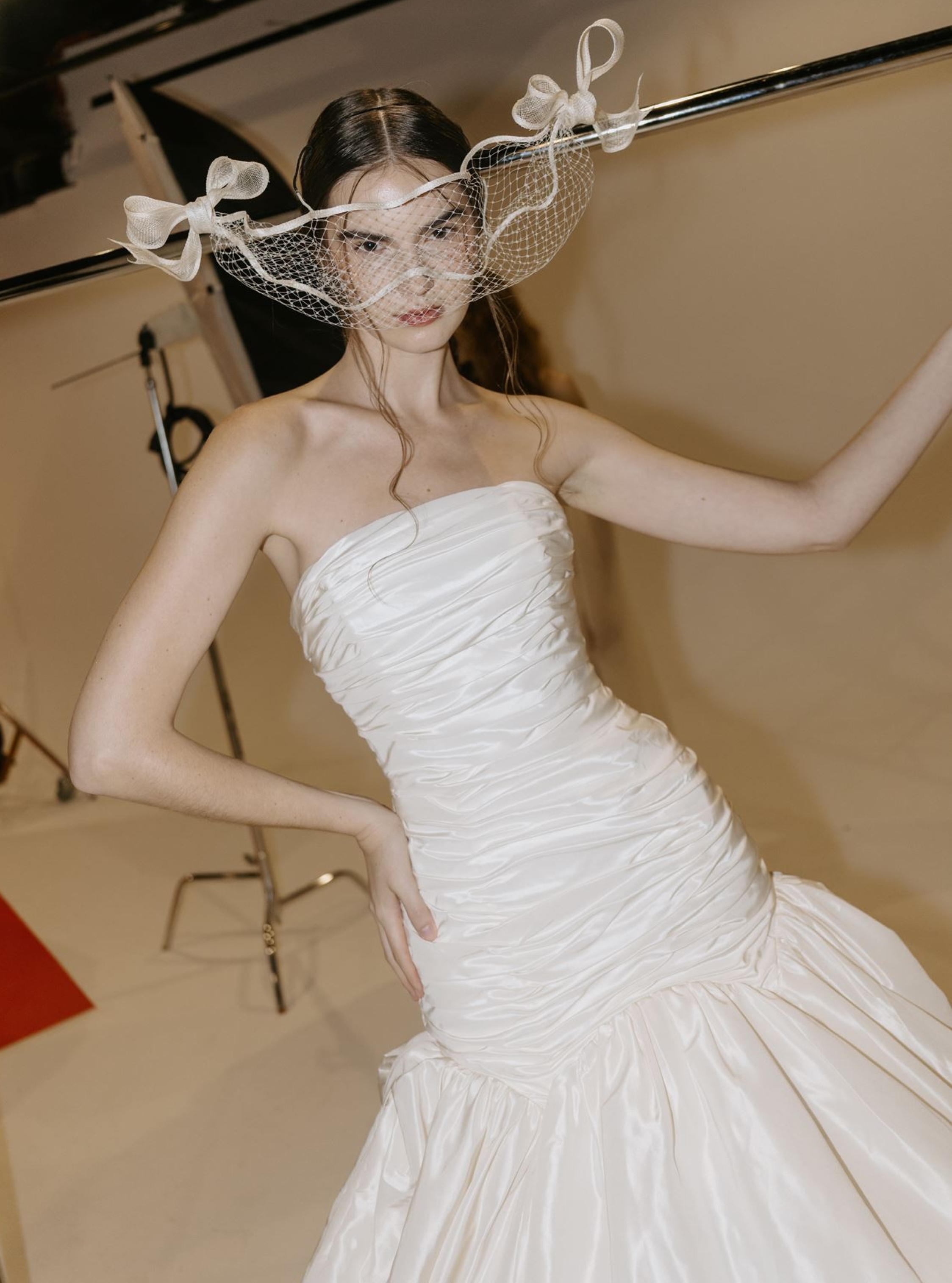
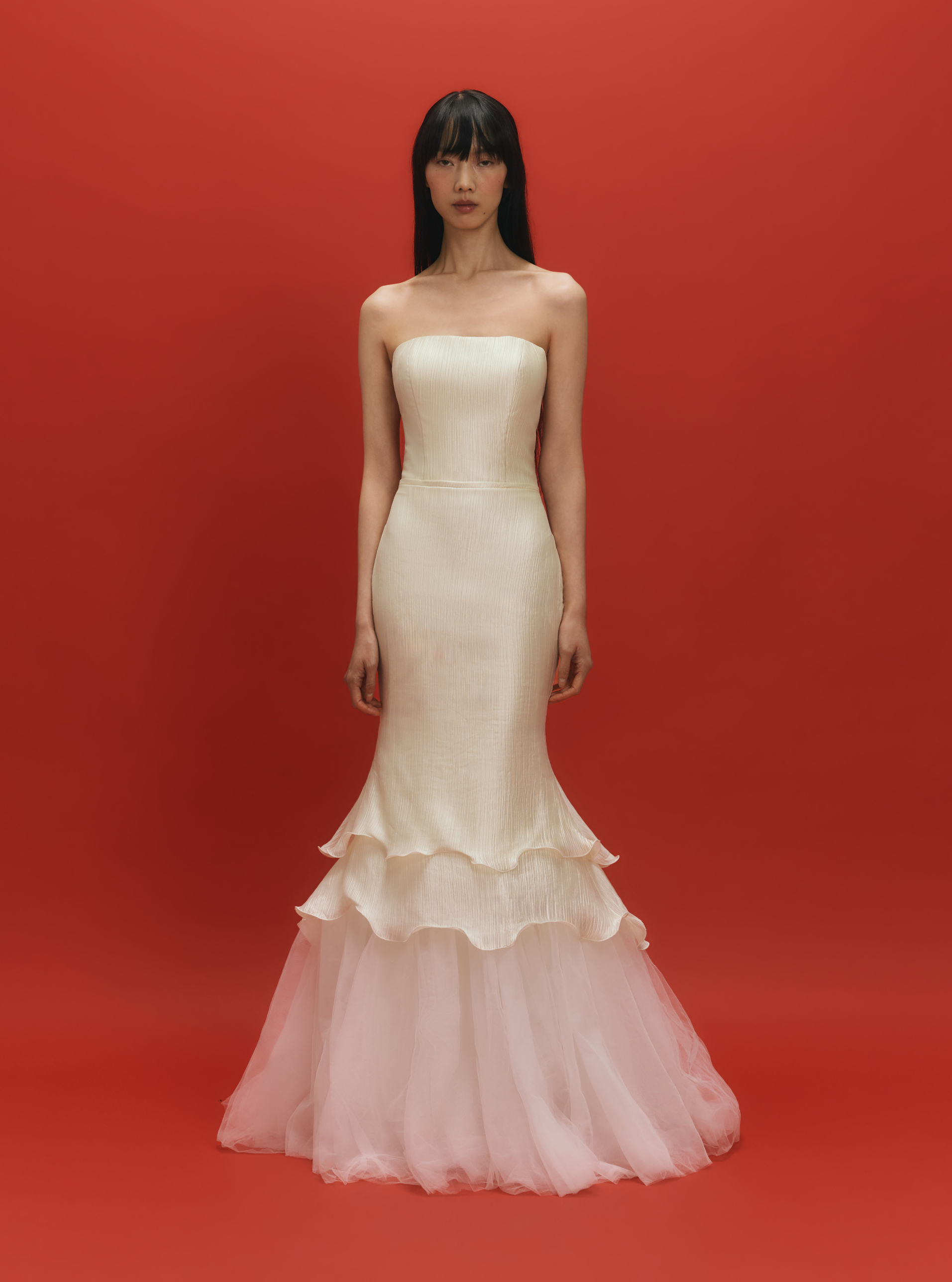
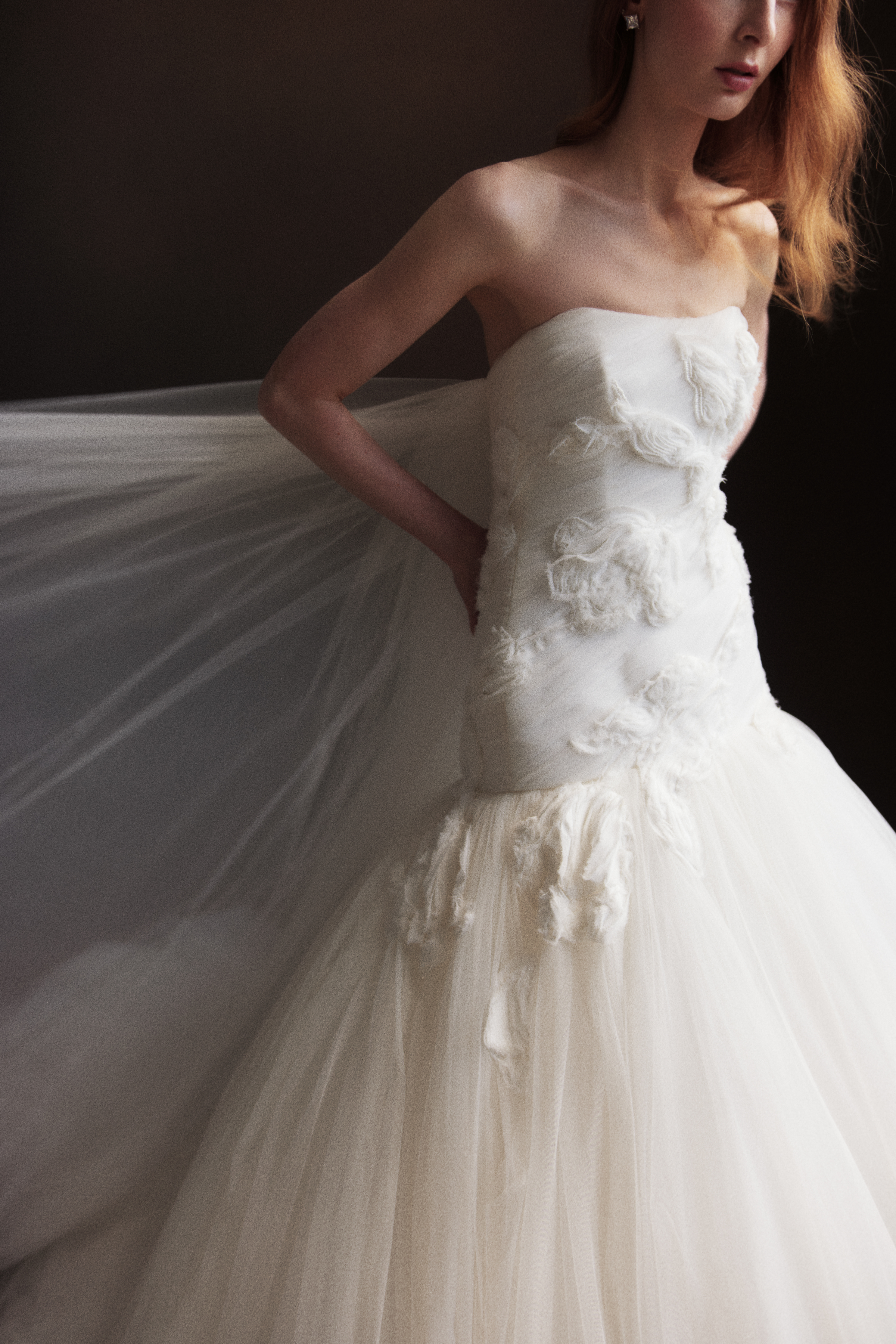
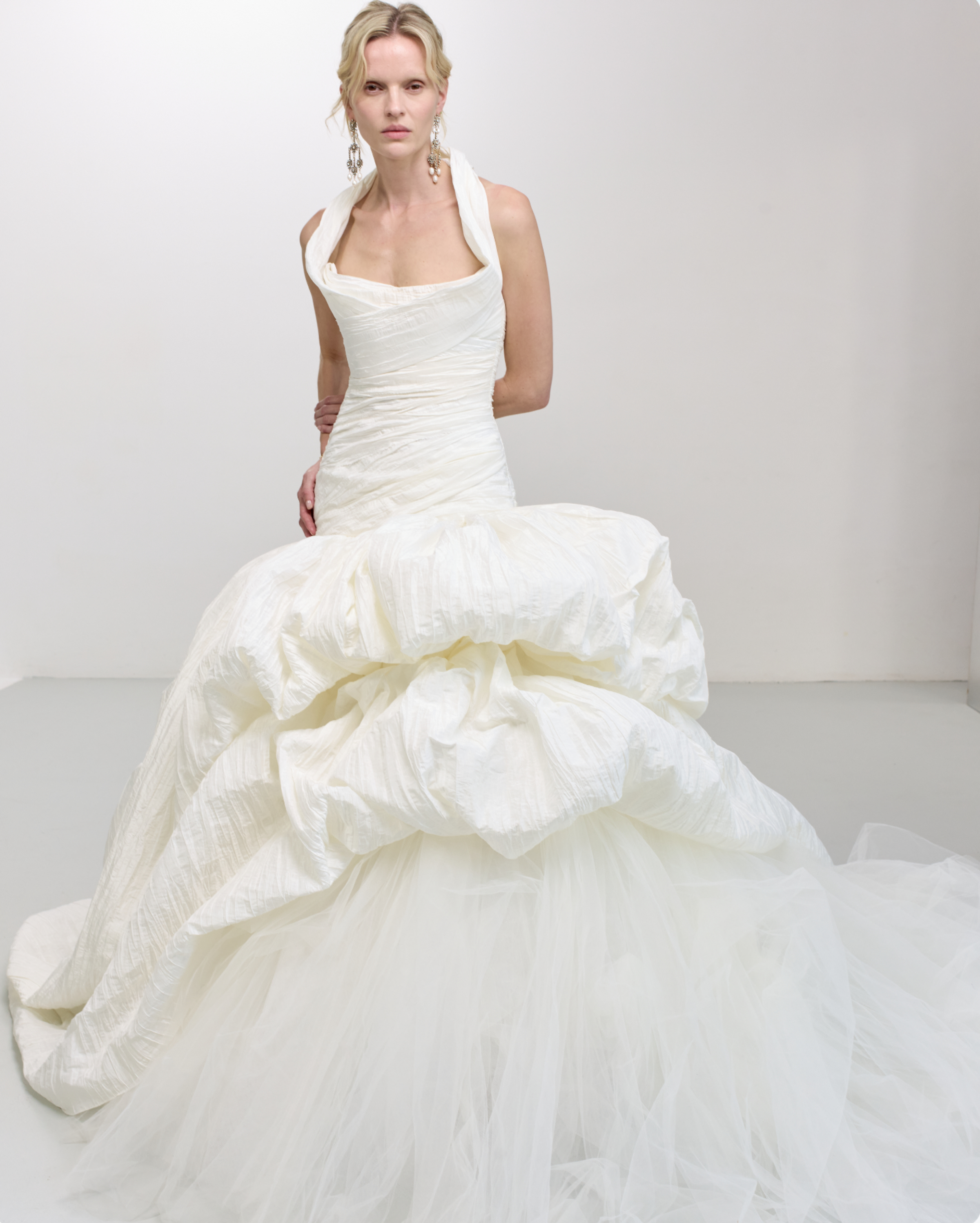
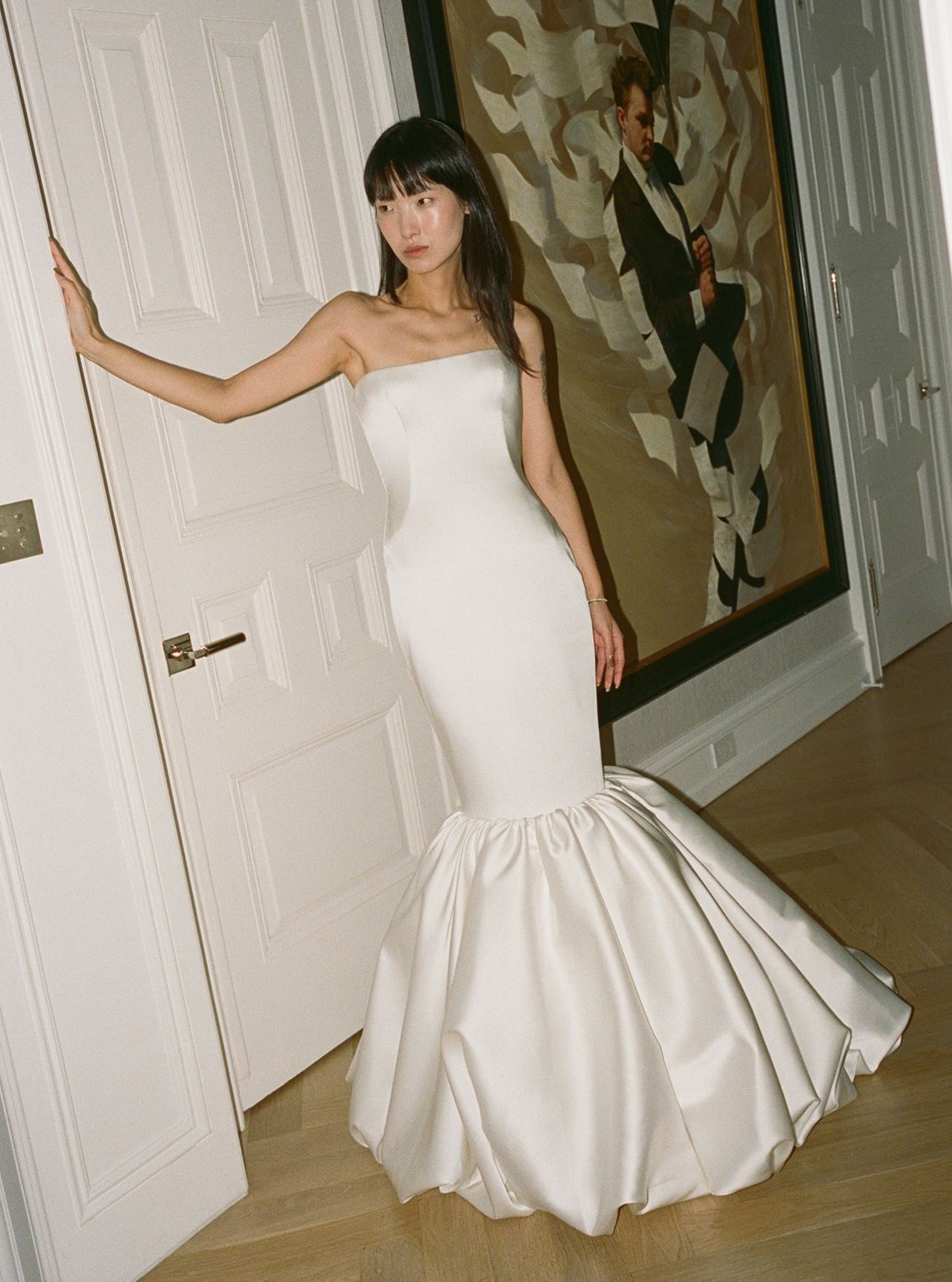
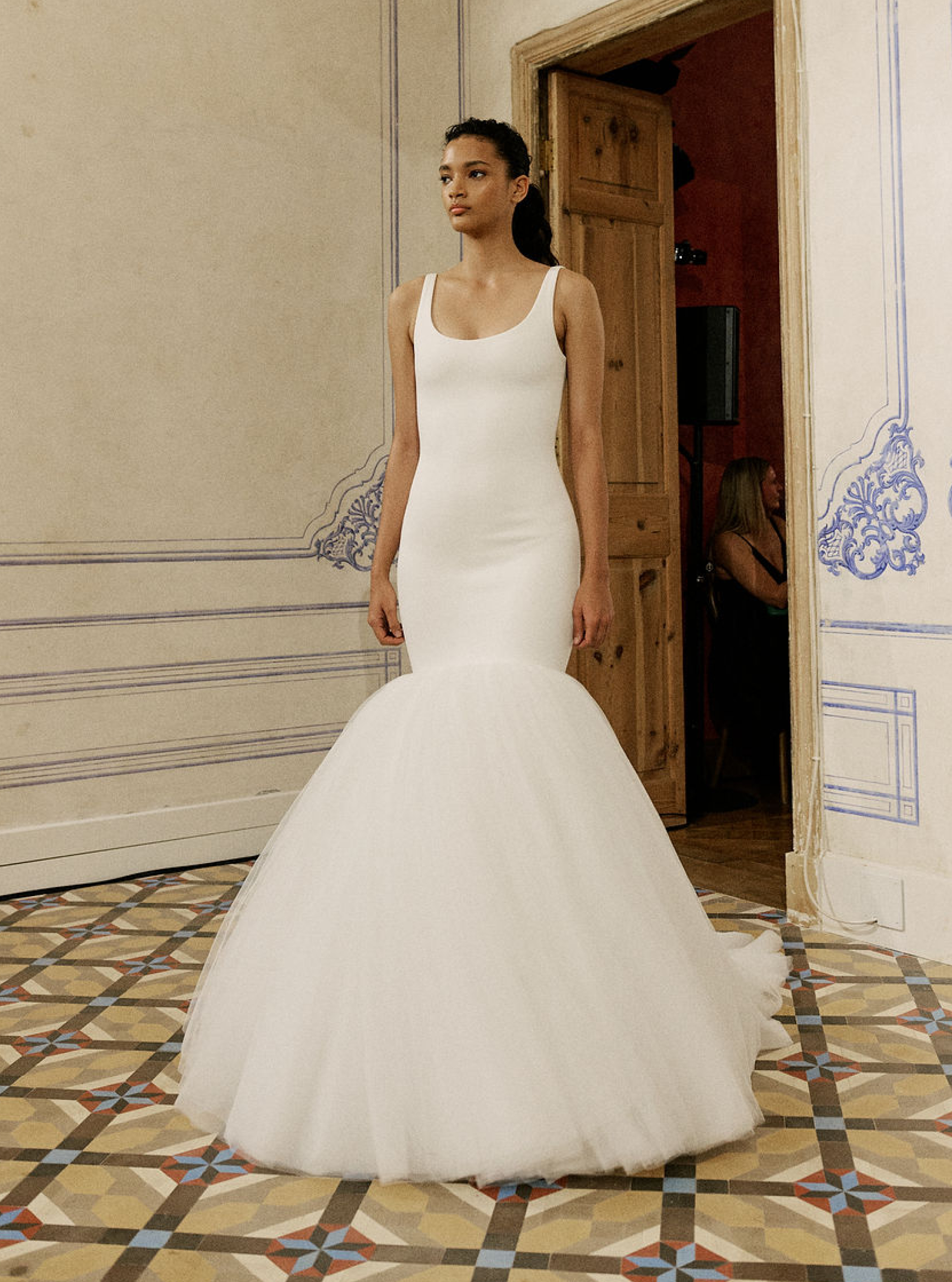
The mermaid silhouette is having another moment, and this time, designers are turning up the volume. A study in exaggerated proportions, the classic fitt-and-flare shape took on a distinctly theatrical quality this season, with elongated, body-skimming bodices giving way to dramatic explosions of fabric below the hips. At Mia Atelier, Marmar Halim and Kyha Bride, frothy layers of tulle created an almost weightless sense of volume, while Monetre explored the sculptural possibilities of gathered fabric, introducing dramatic fullness through artfully constructed skirts. Whether cut as a traditional mermaid or a more generously flared trumpet, the appeal was in the contrast: sleek above, wonderfully excessive below. Proof that sometimes, the most compelling silhouettes are the ones that refuse to do anything by halves.
The Naked Truth
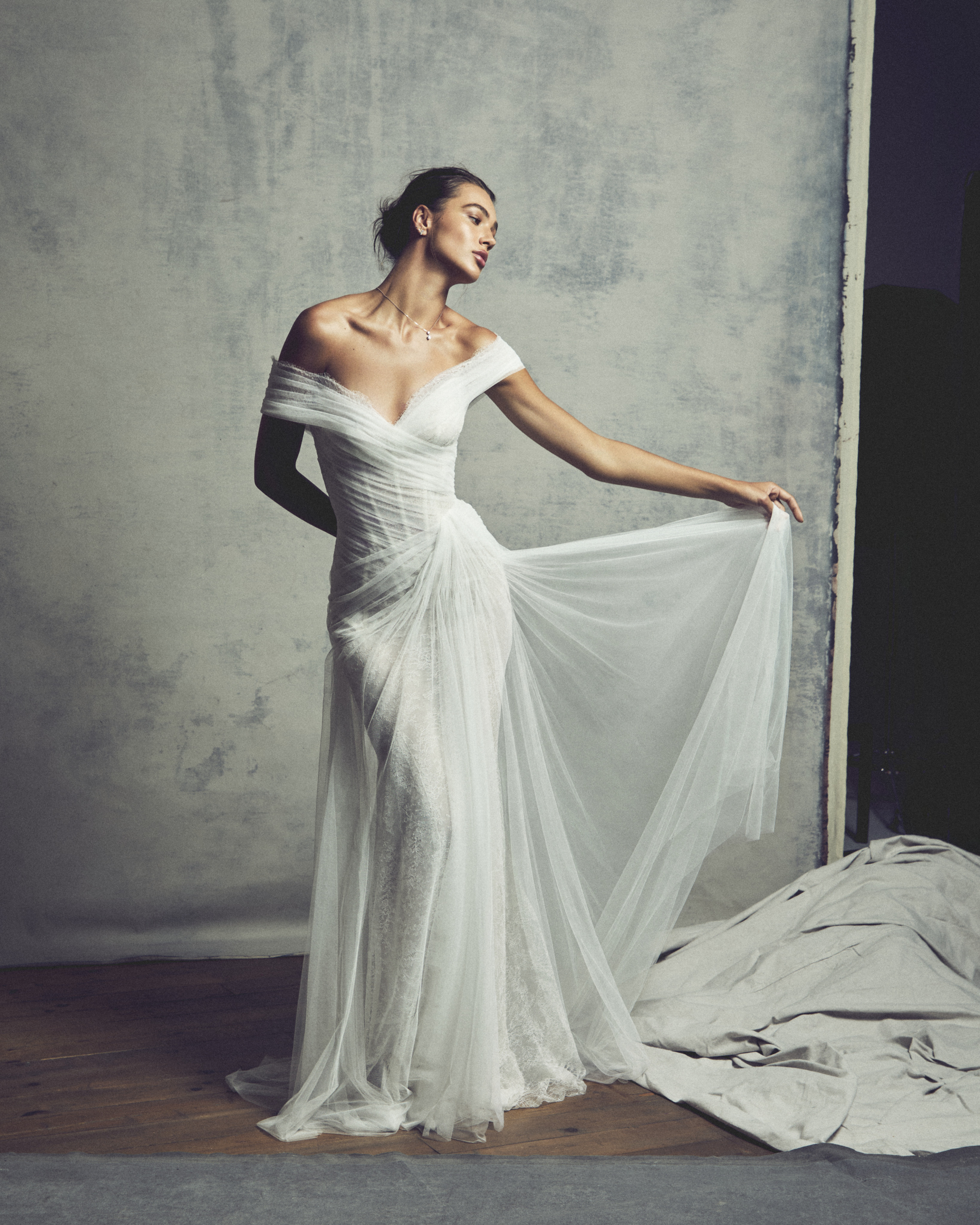
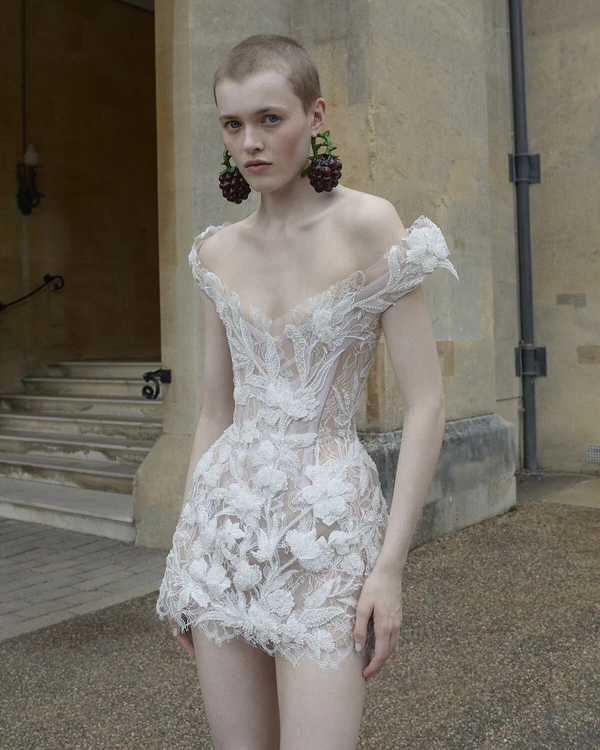
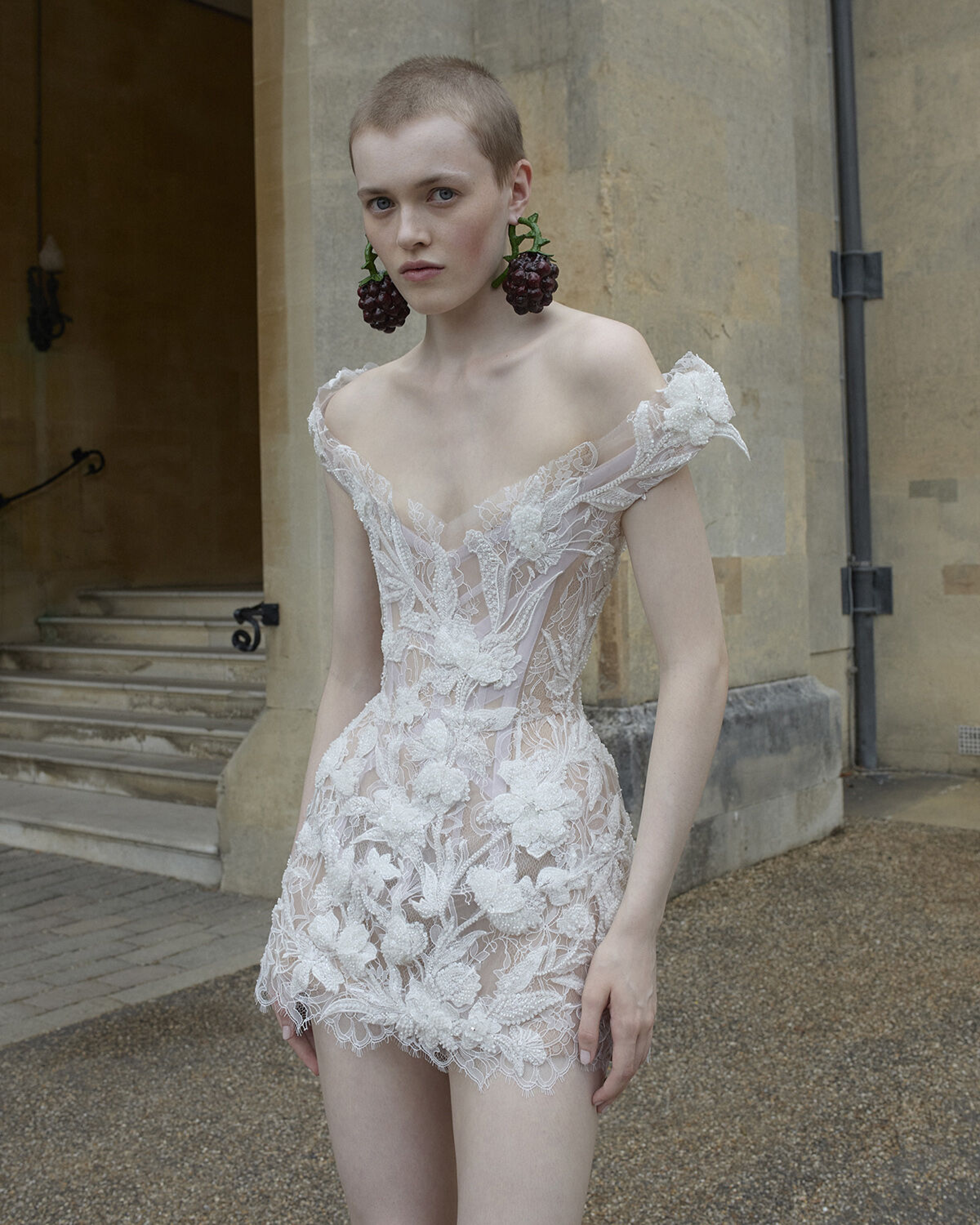
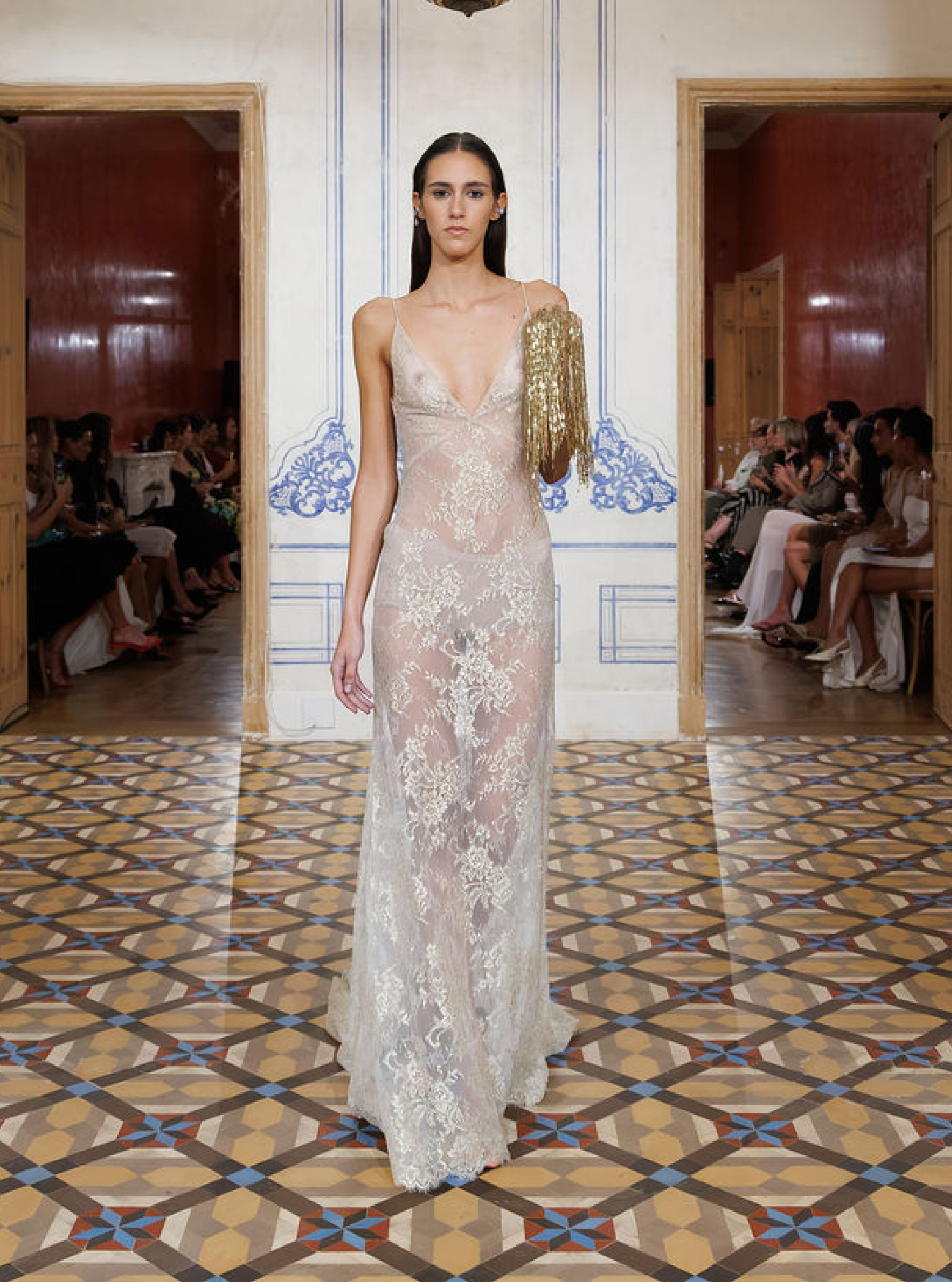
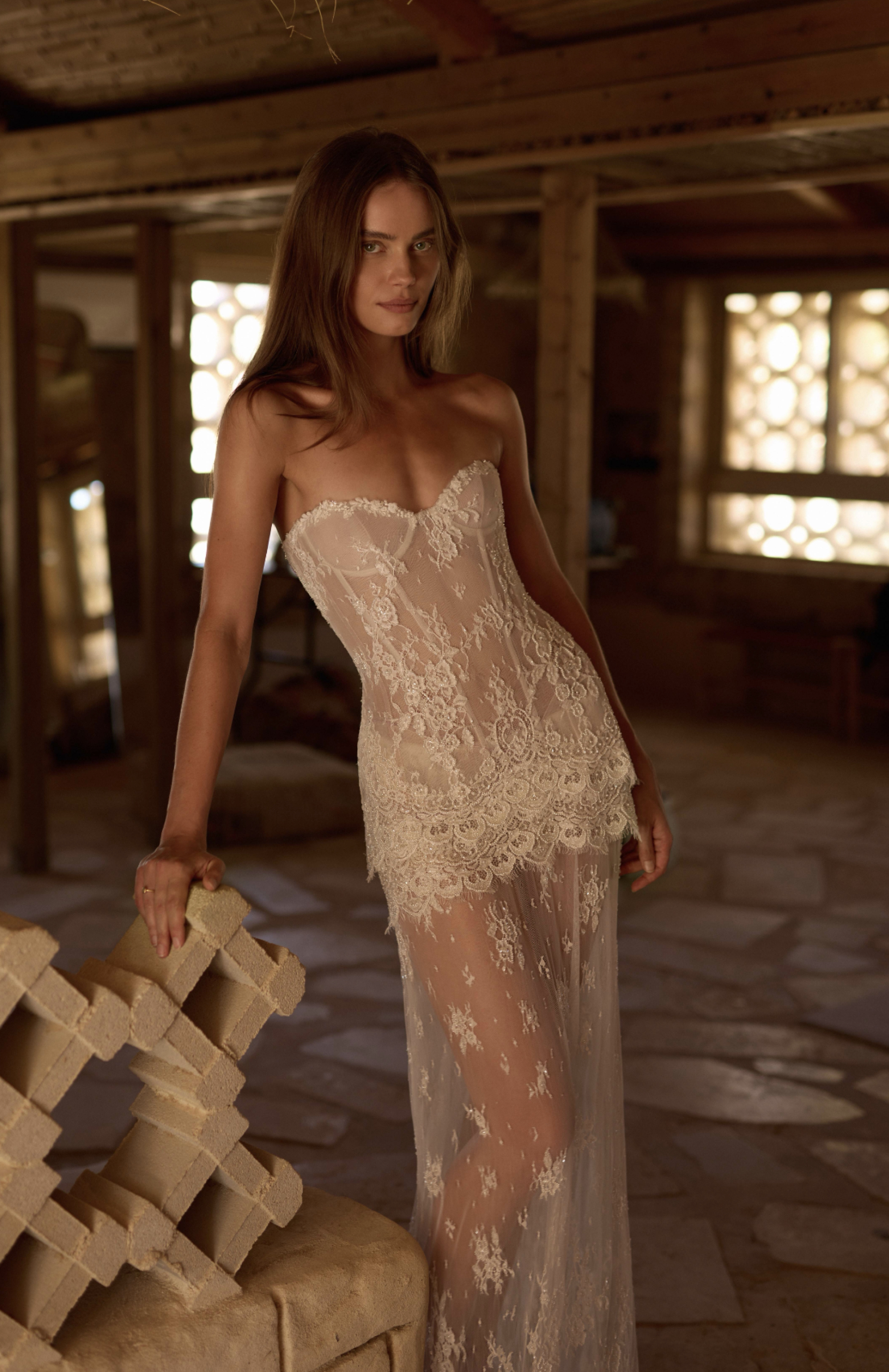
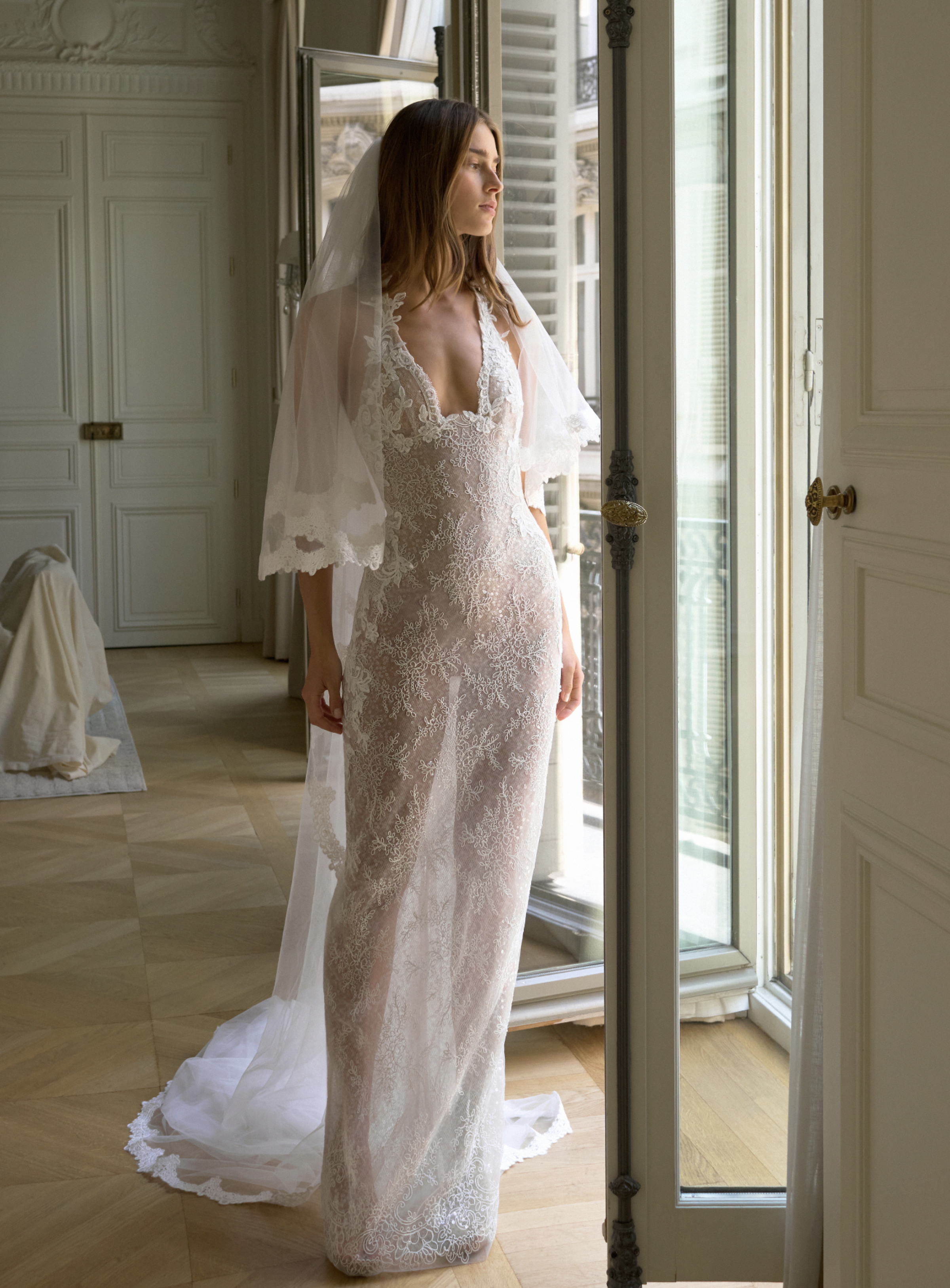
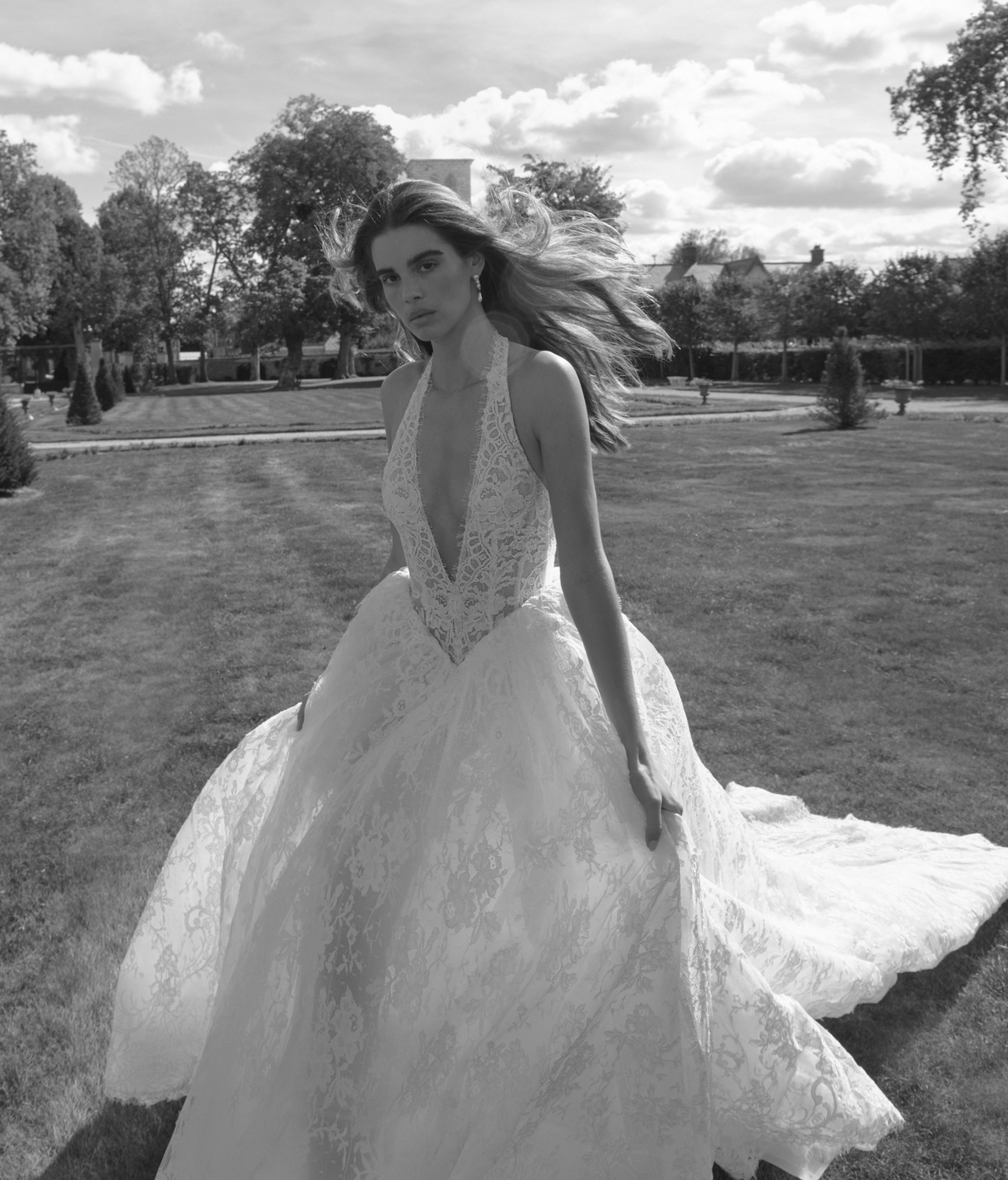
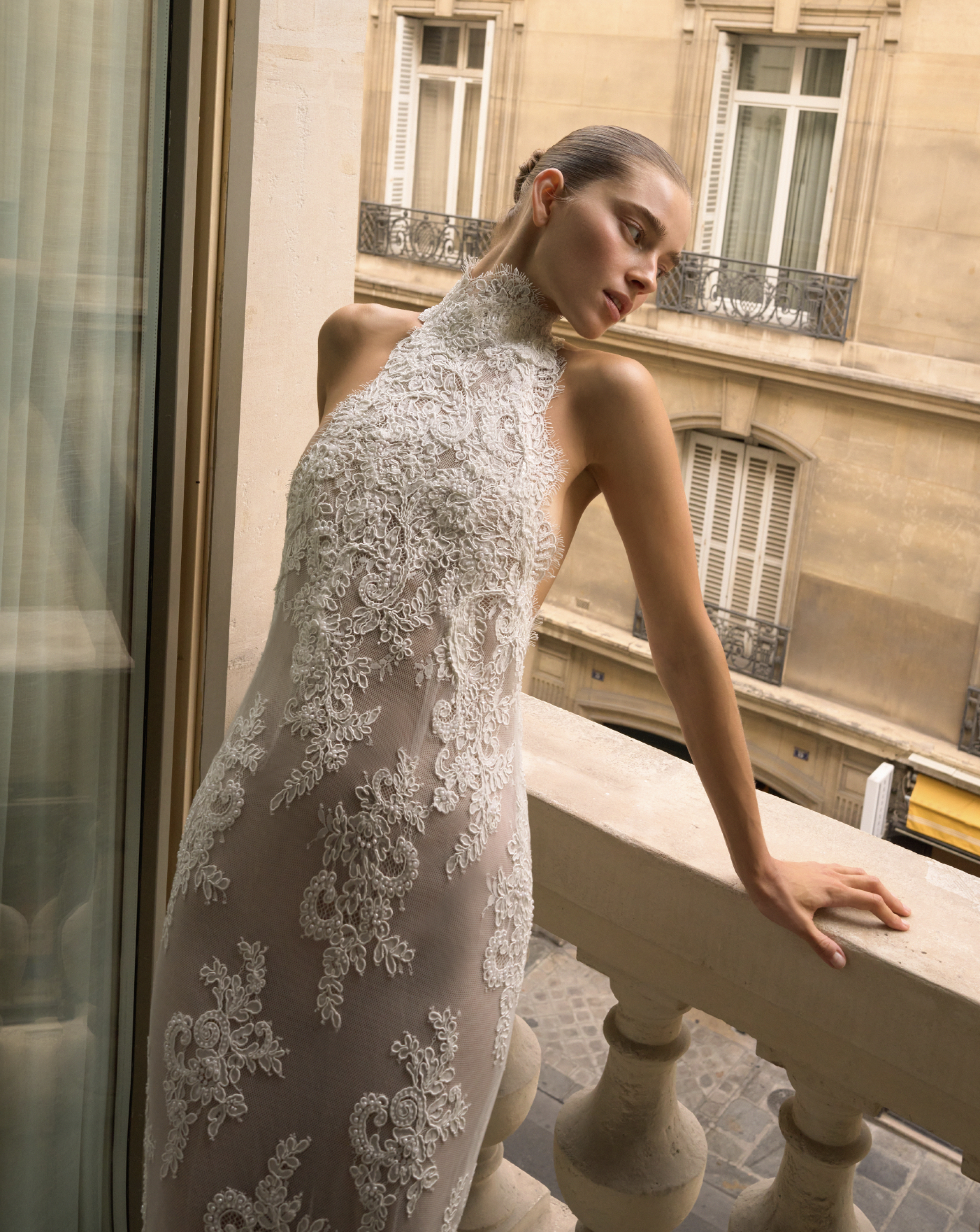
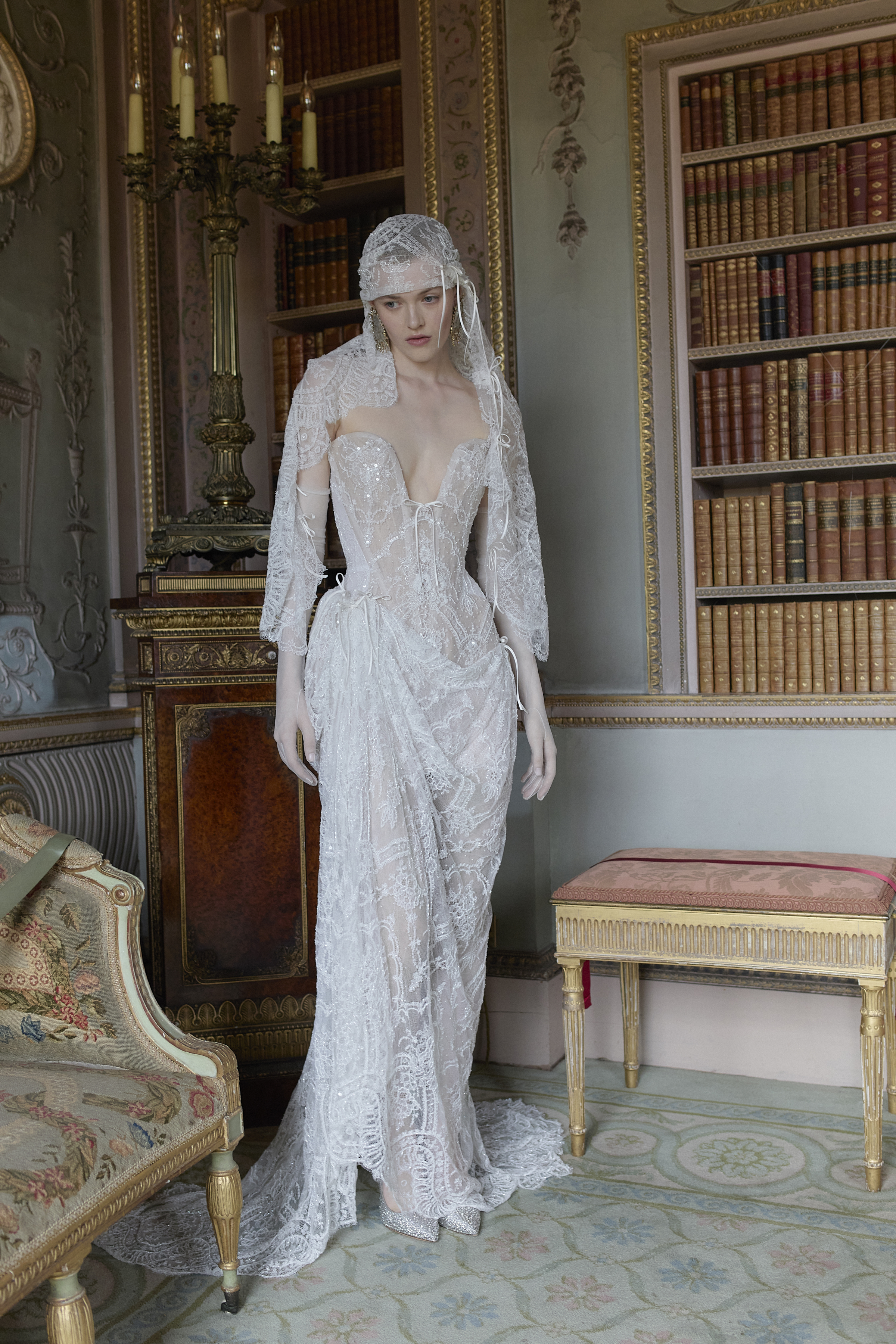
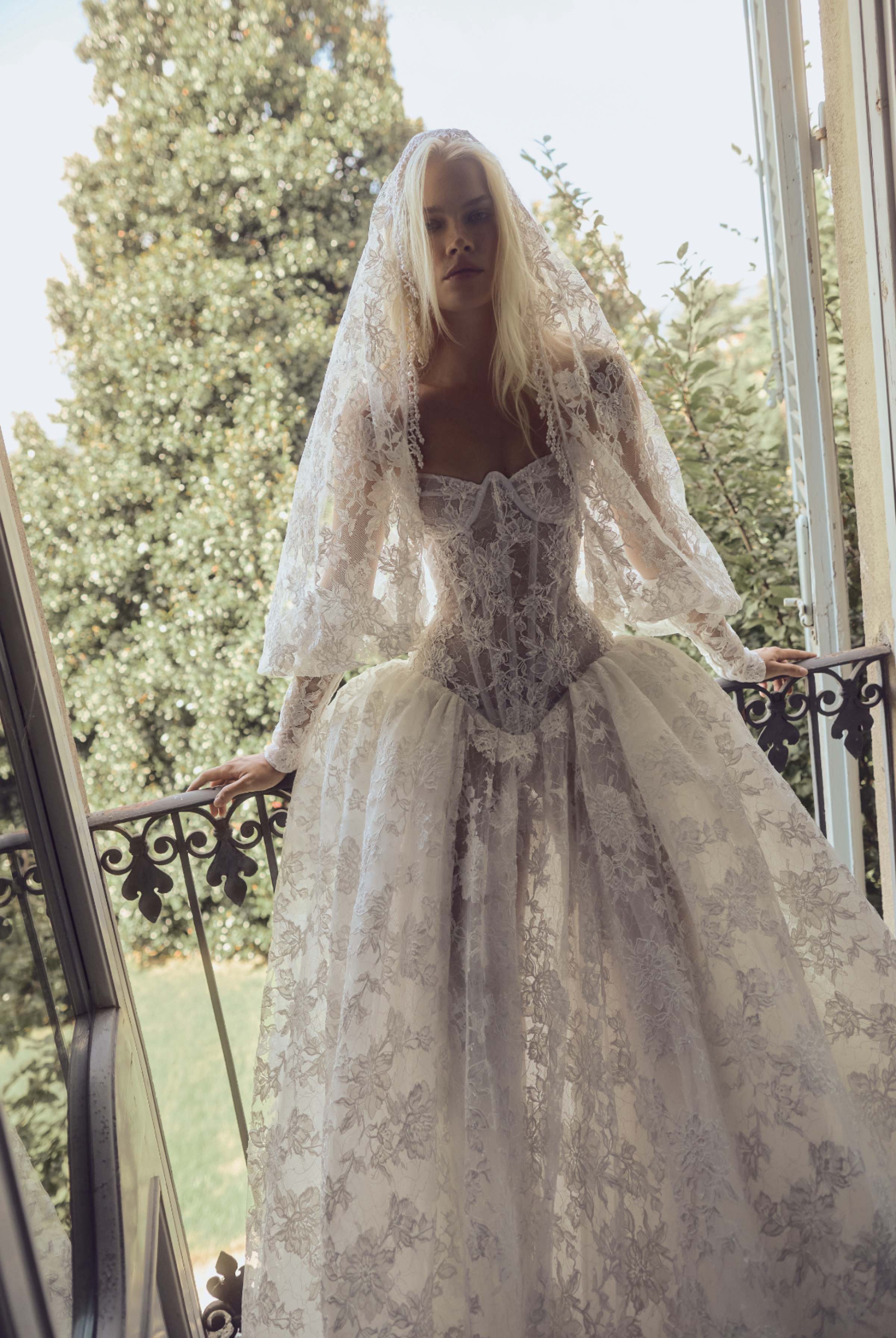
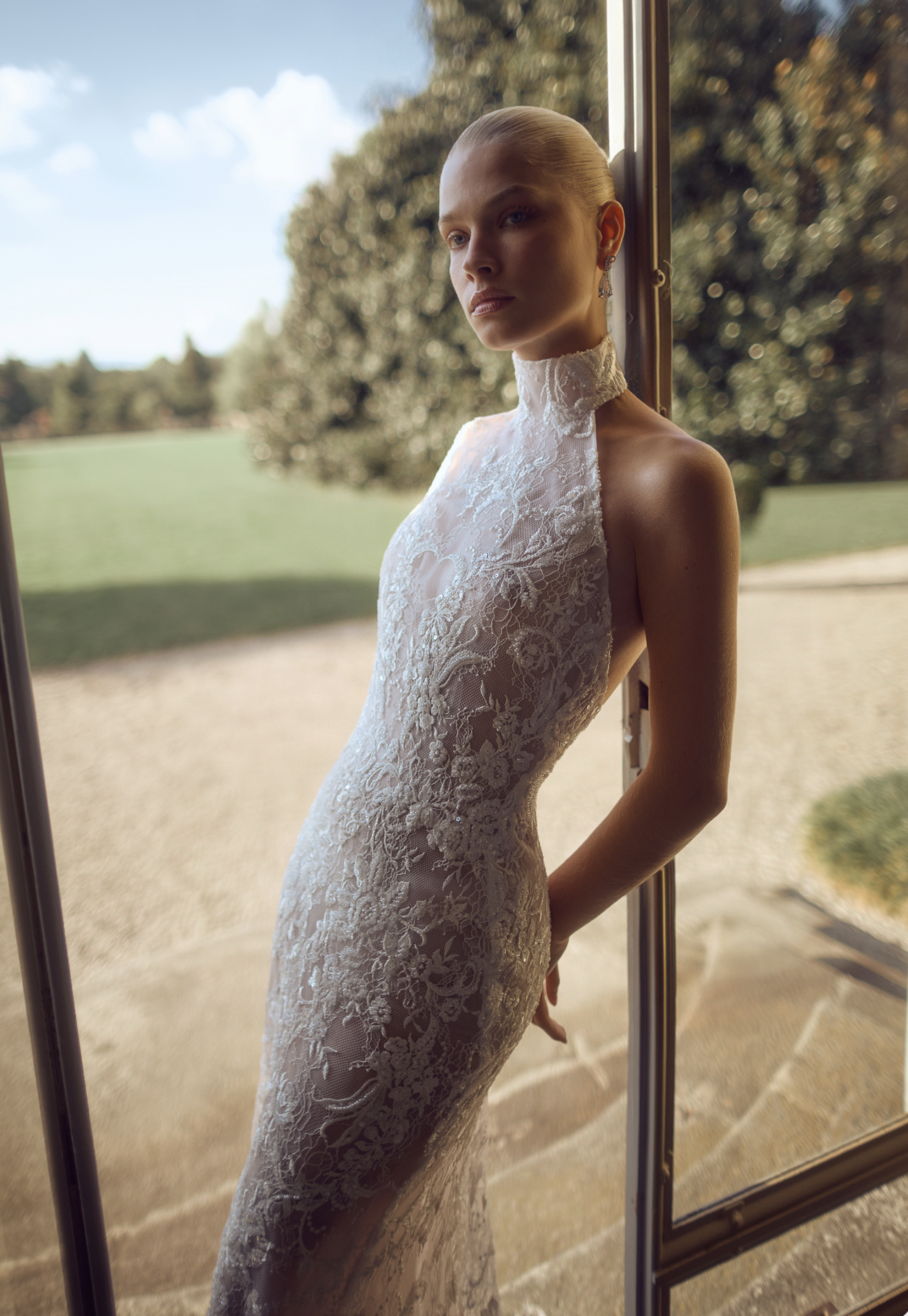
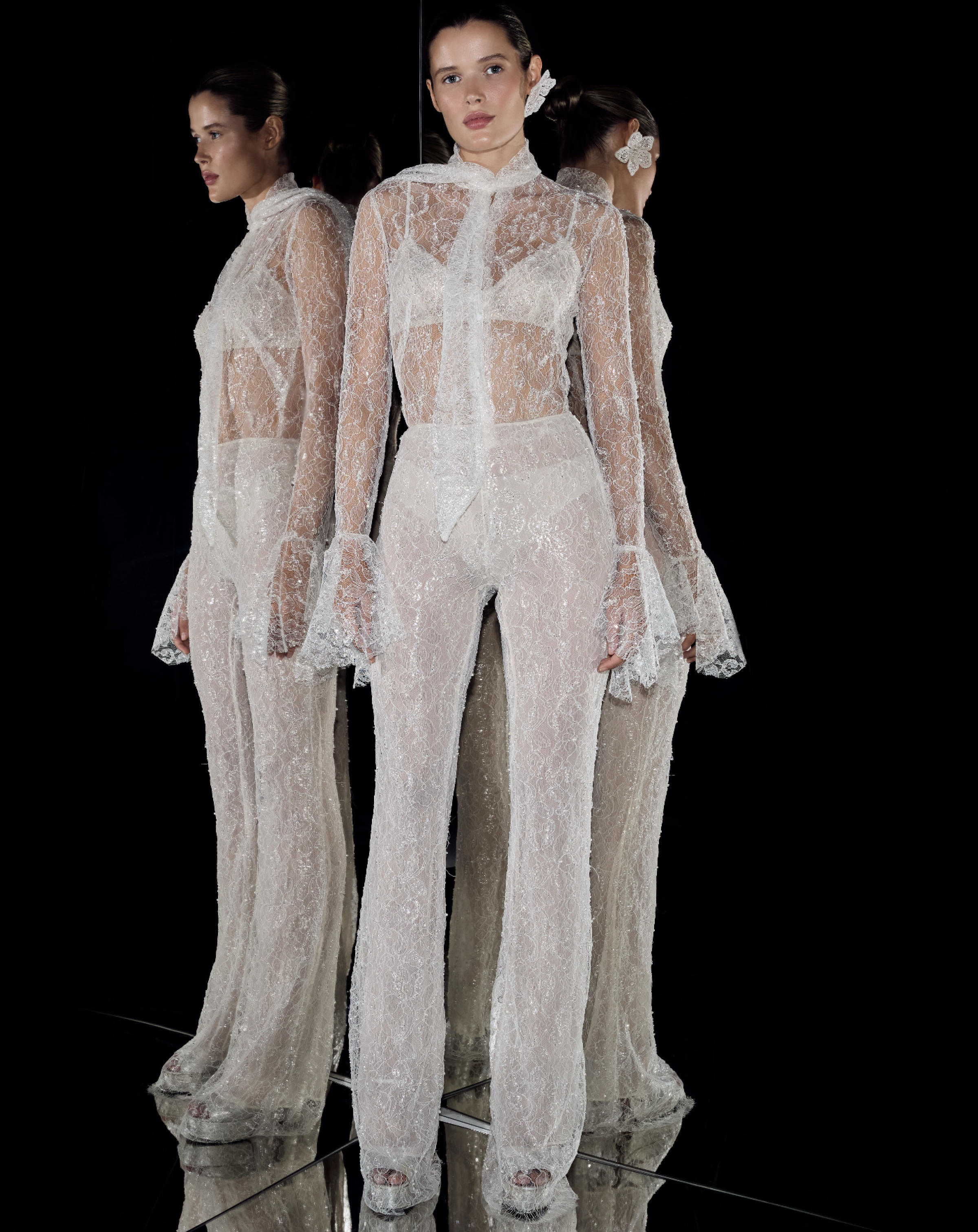
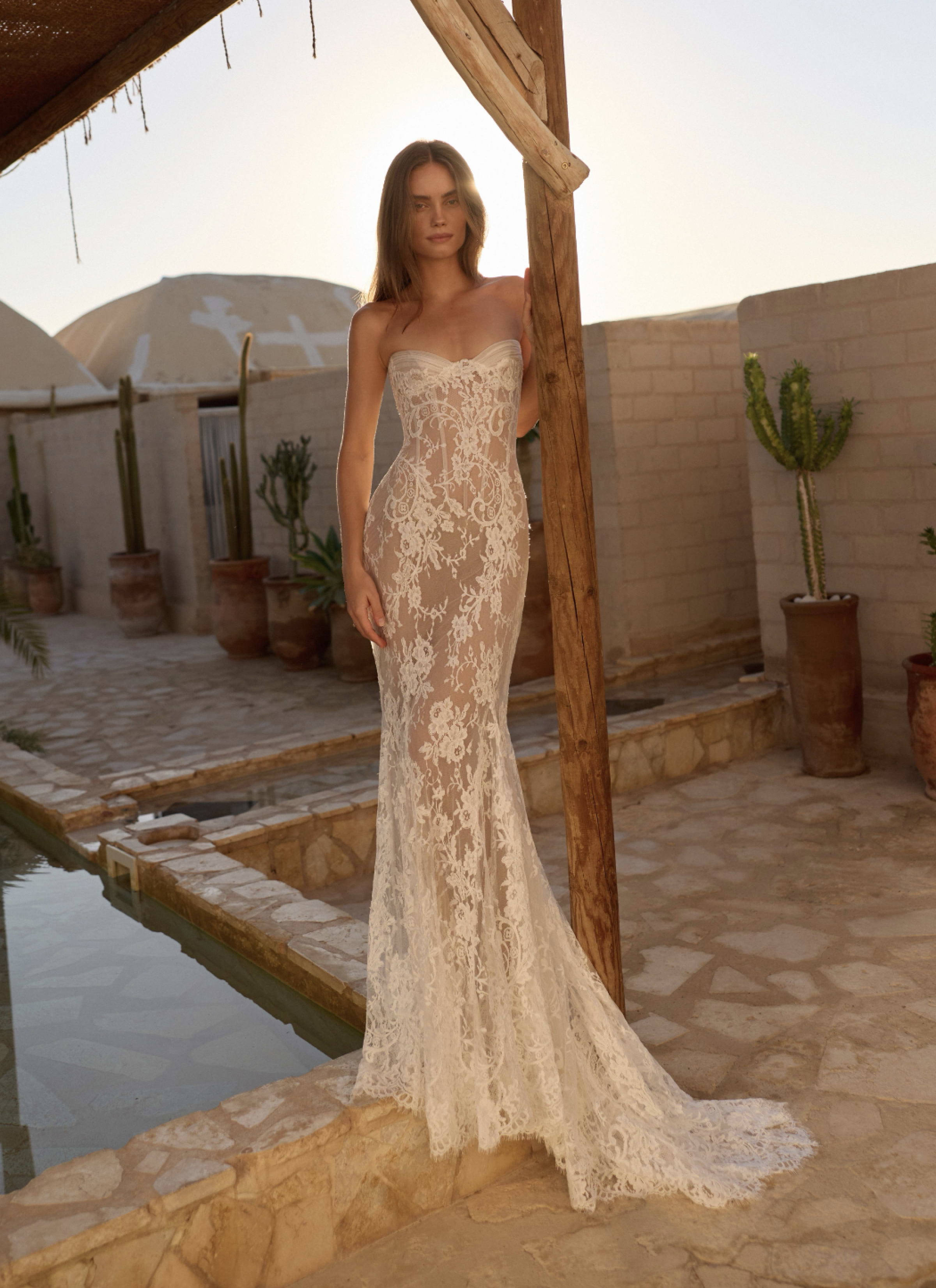
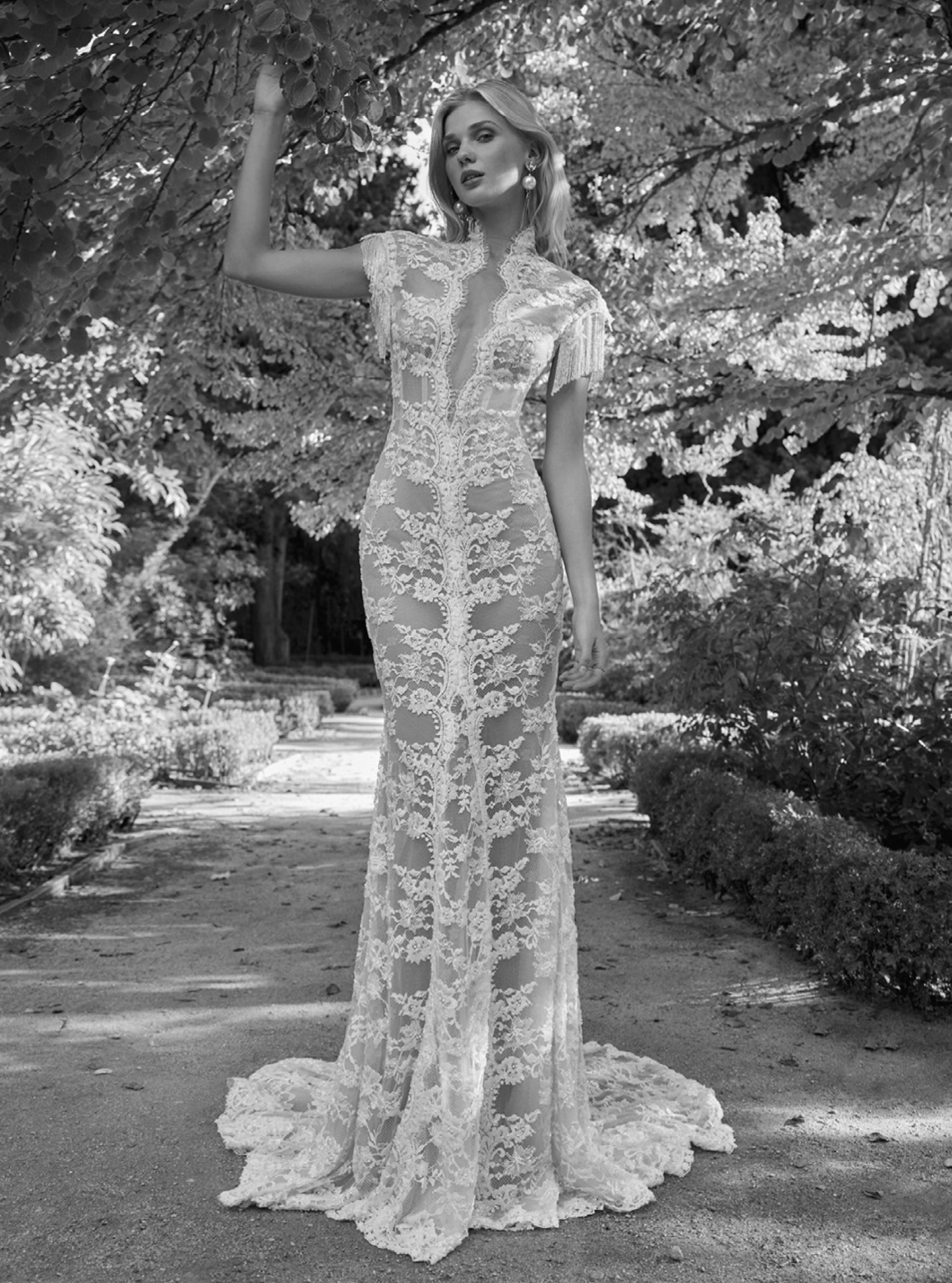
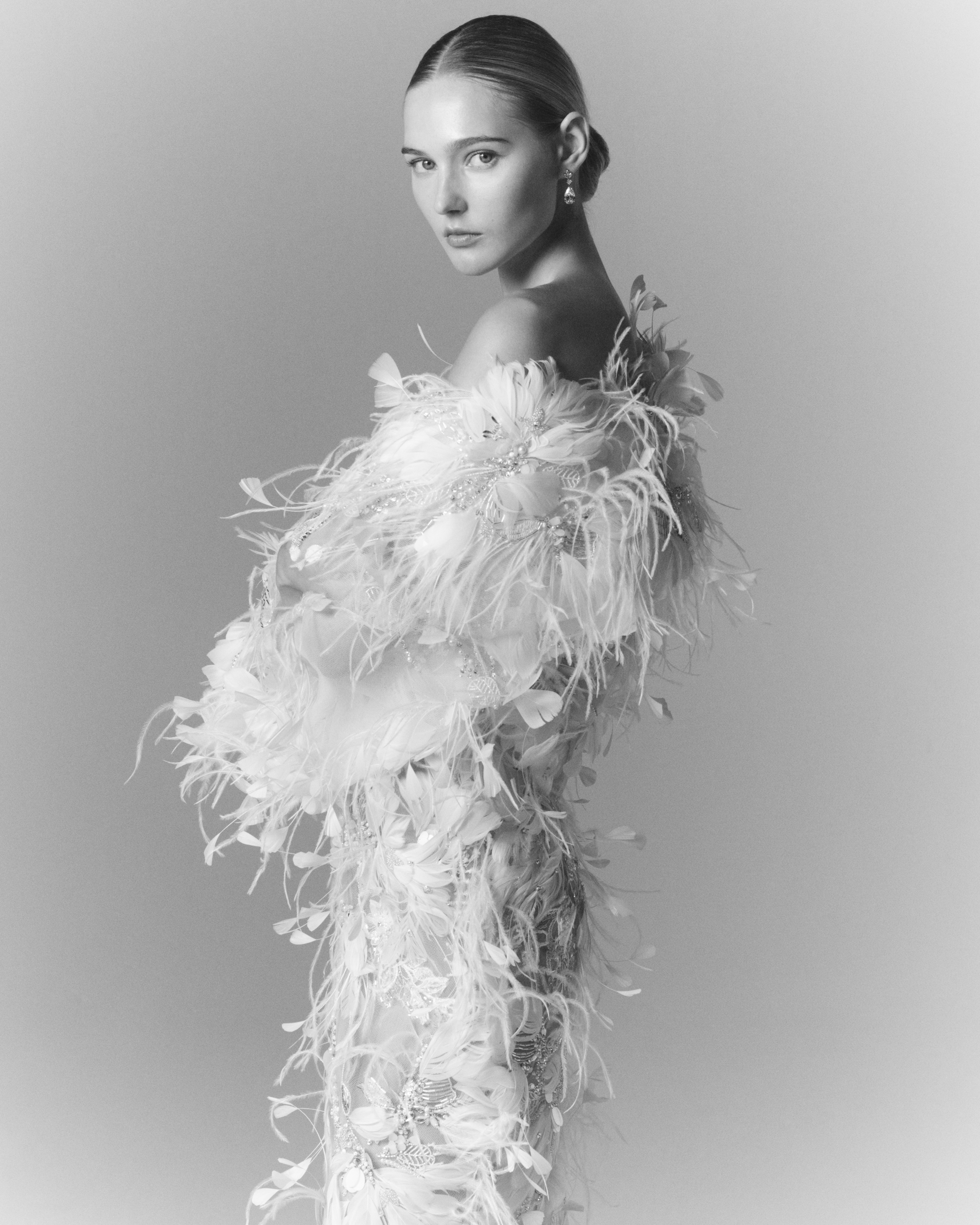
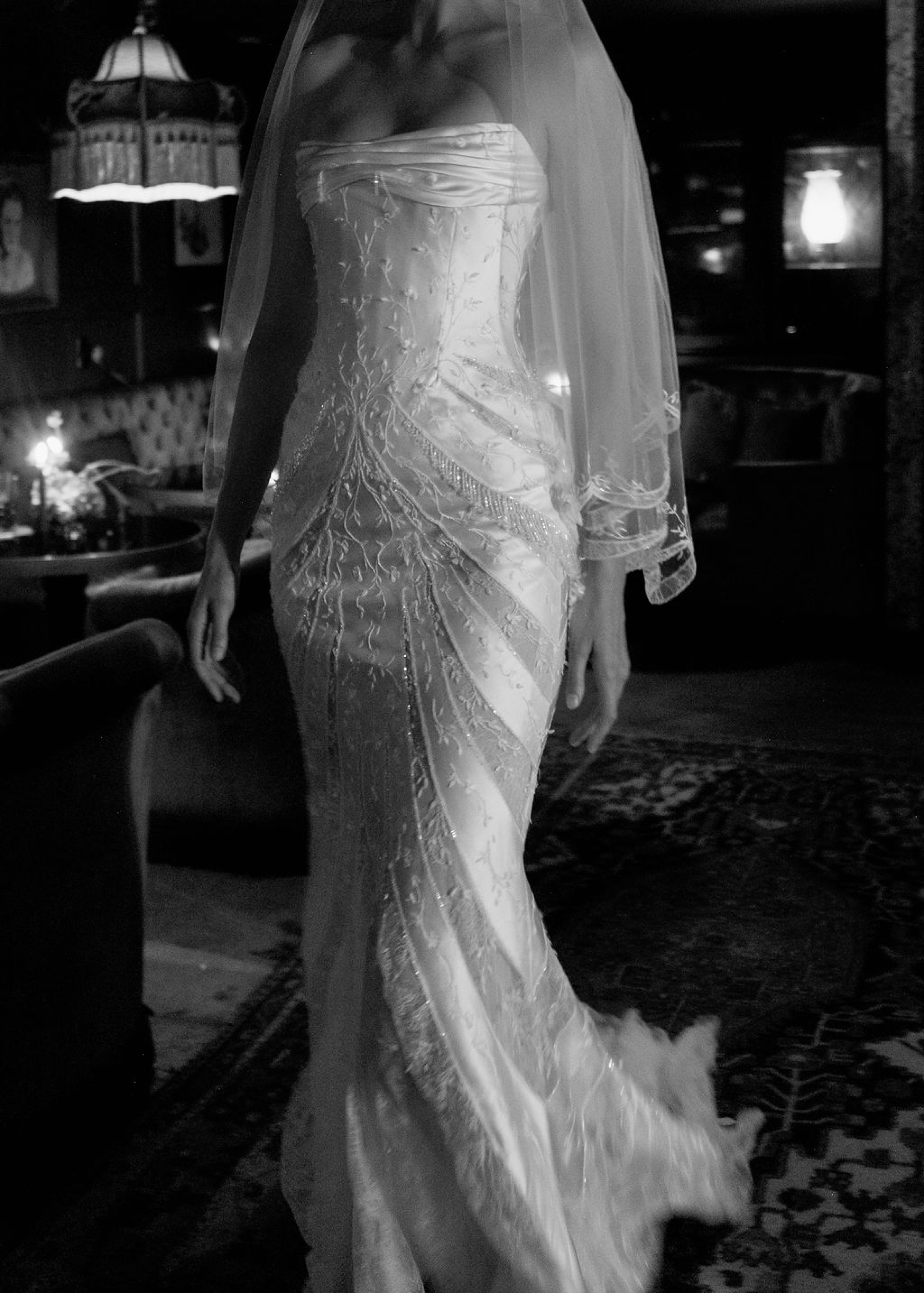
There's something rather compelling about a wedding dress that leaves little to the imagination. This season, designers embraced the art of exposure, exploring the delicate tension between what is revealed and what remains concealed. Sheer lace, translucent fabrics, and strategically placed embroidery offered a decidedly sensual take on bridal dressing, though the effect was less overtly provocative and more effortlessly chic.
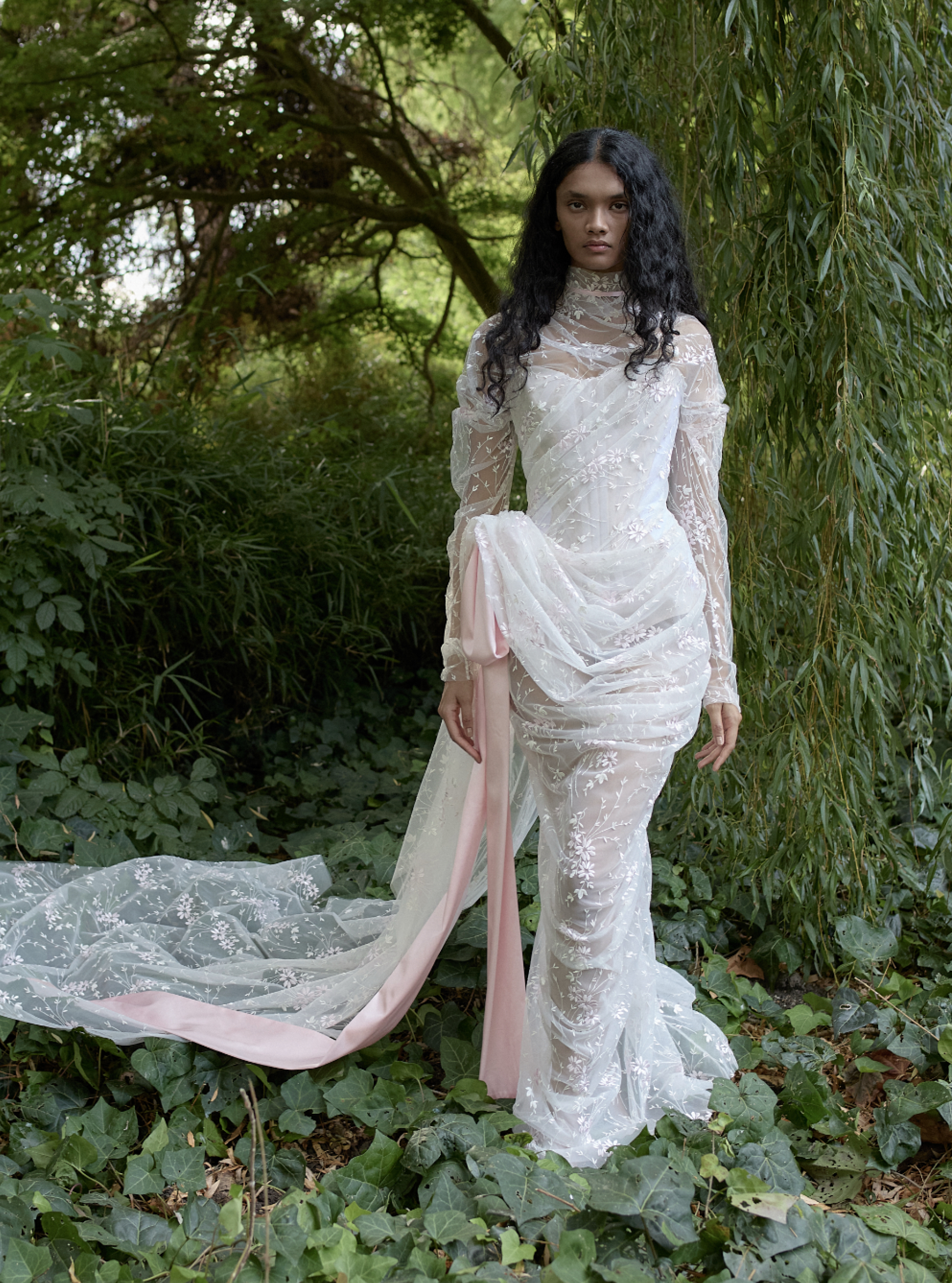
For brides inclined to bare a little more, the collections of Galia Lahav, Noy Eliyahu, Eden Aharon, and Berta offered no shortage of possibilities, each exploring transparency through their own distinctive lens. Kyha Bride delivered a particularly memorable interpretation with a silver lace slip dress that channeled the unapologetic sensuality of 1990s minimalism, while Vivienne Westwood took a more whimsical approach, with delicate floral embroidery climbing across a barely-there silhouette. While at Francesca Miranda, the naked dress took an unexpected turn in the form of a sheer lace blouse and trouser set, a thoroughly modern alternative to the traditional gown. The common thread? A certain confidence in showing skin, proving that revealing and refined needn’t be mutually exclusive.
The Perfect Match
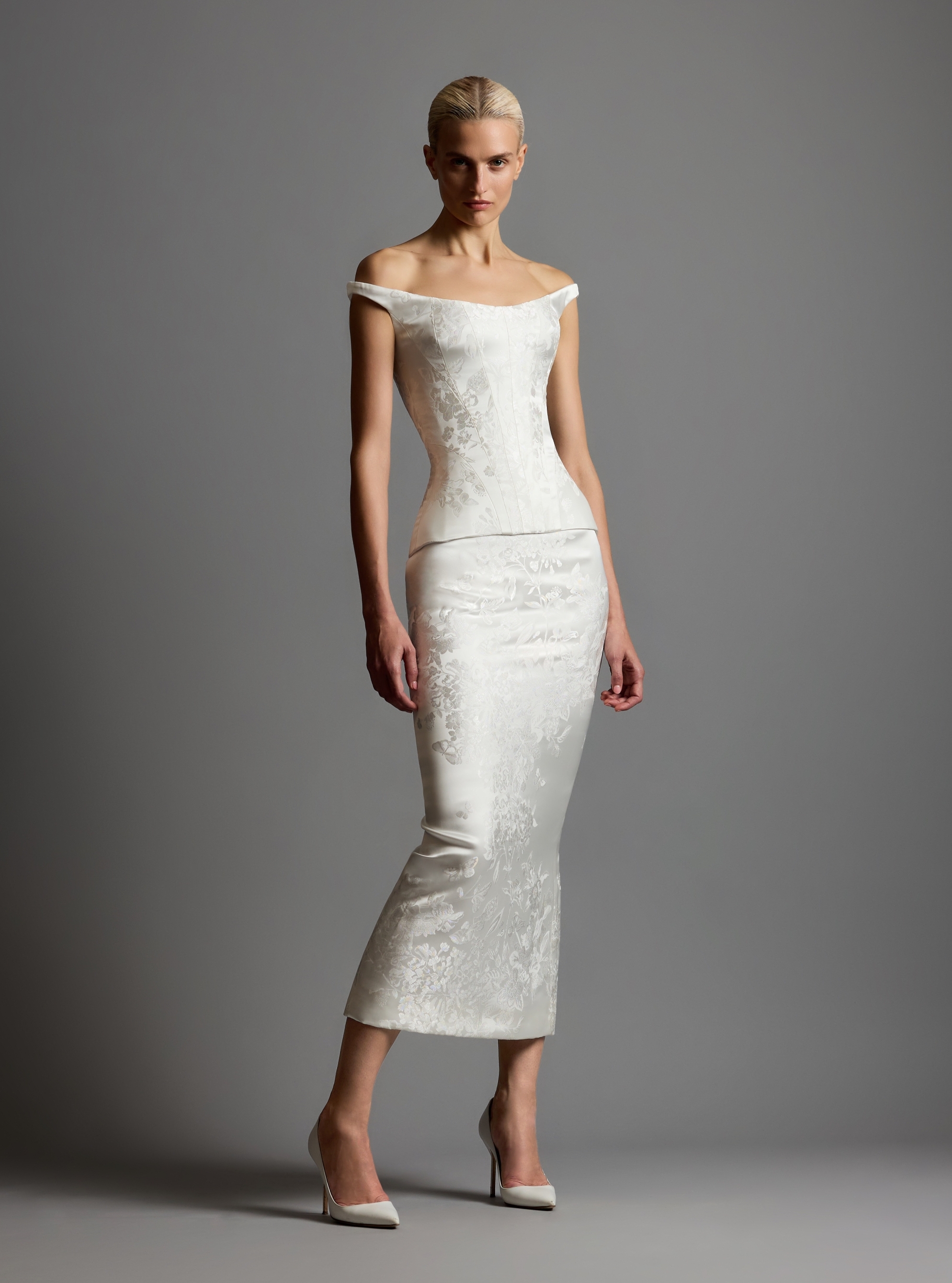
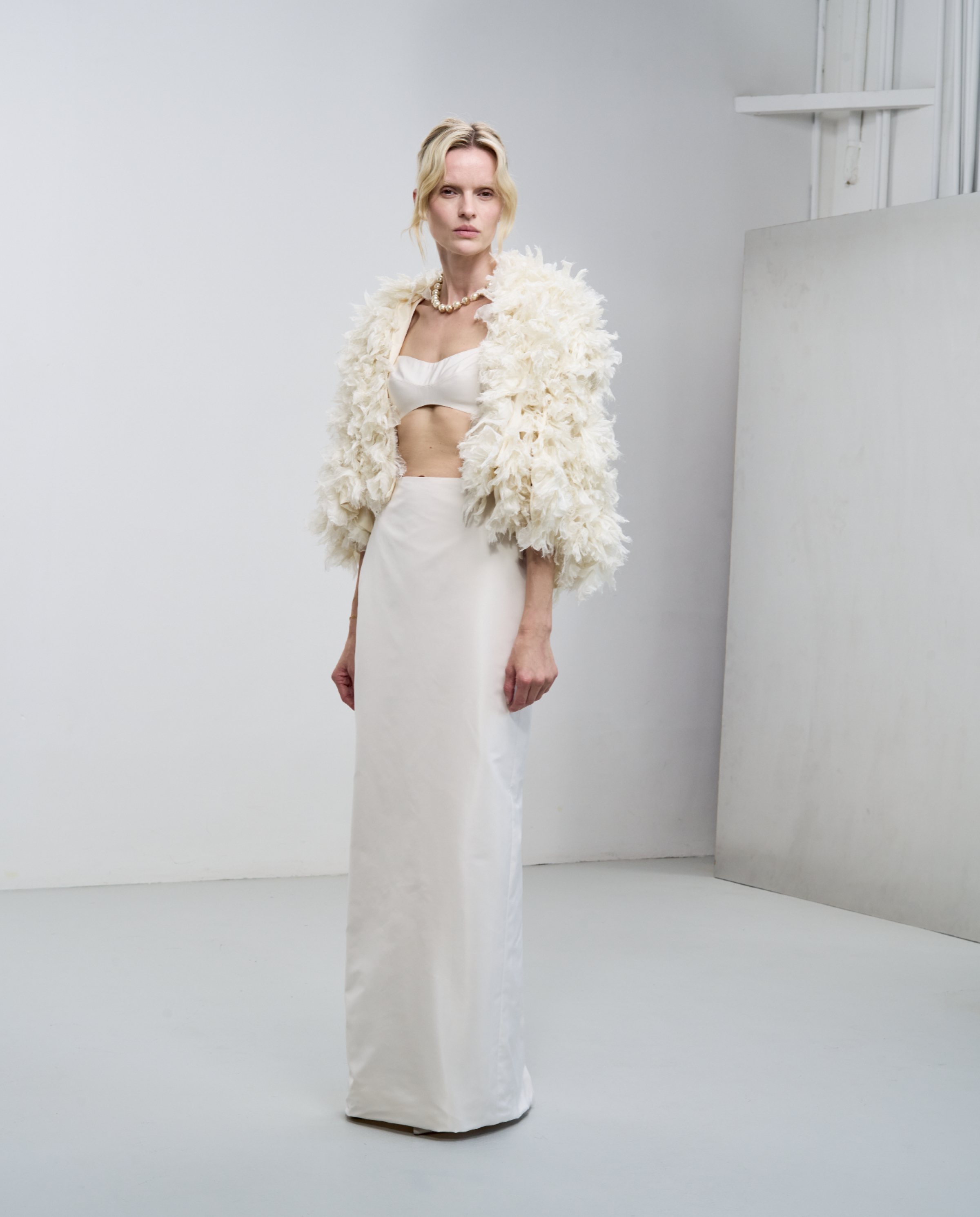
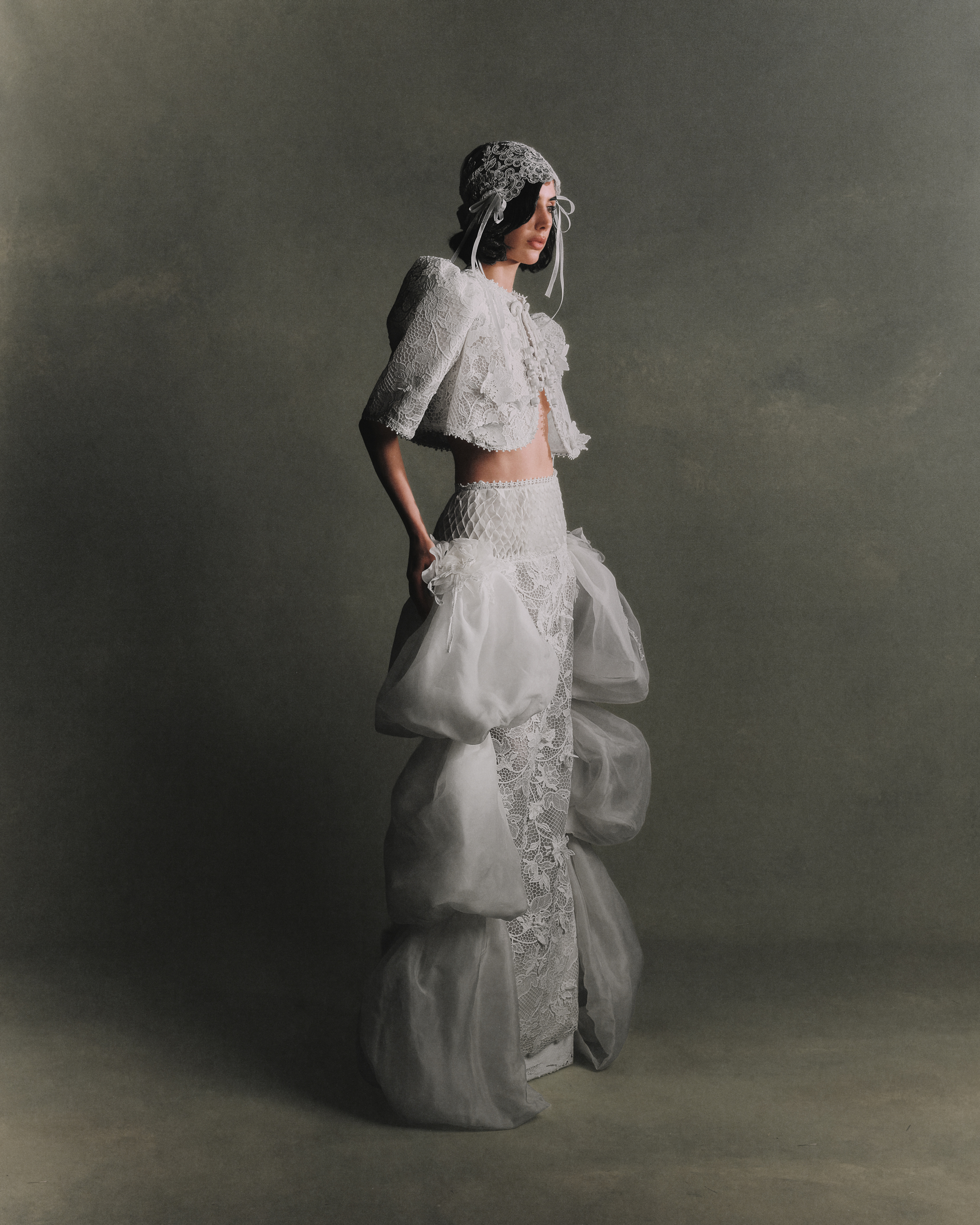
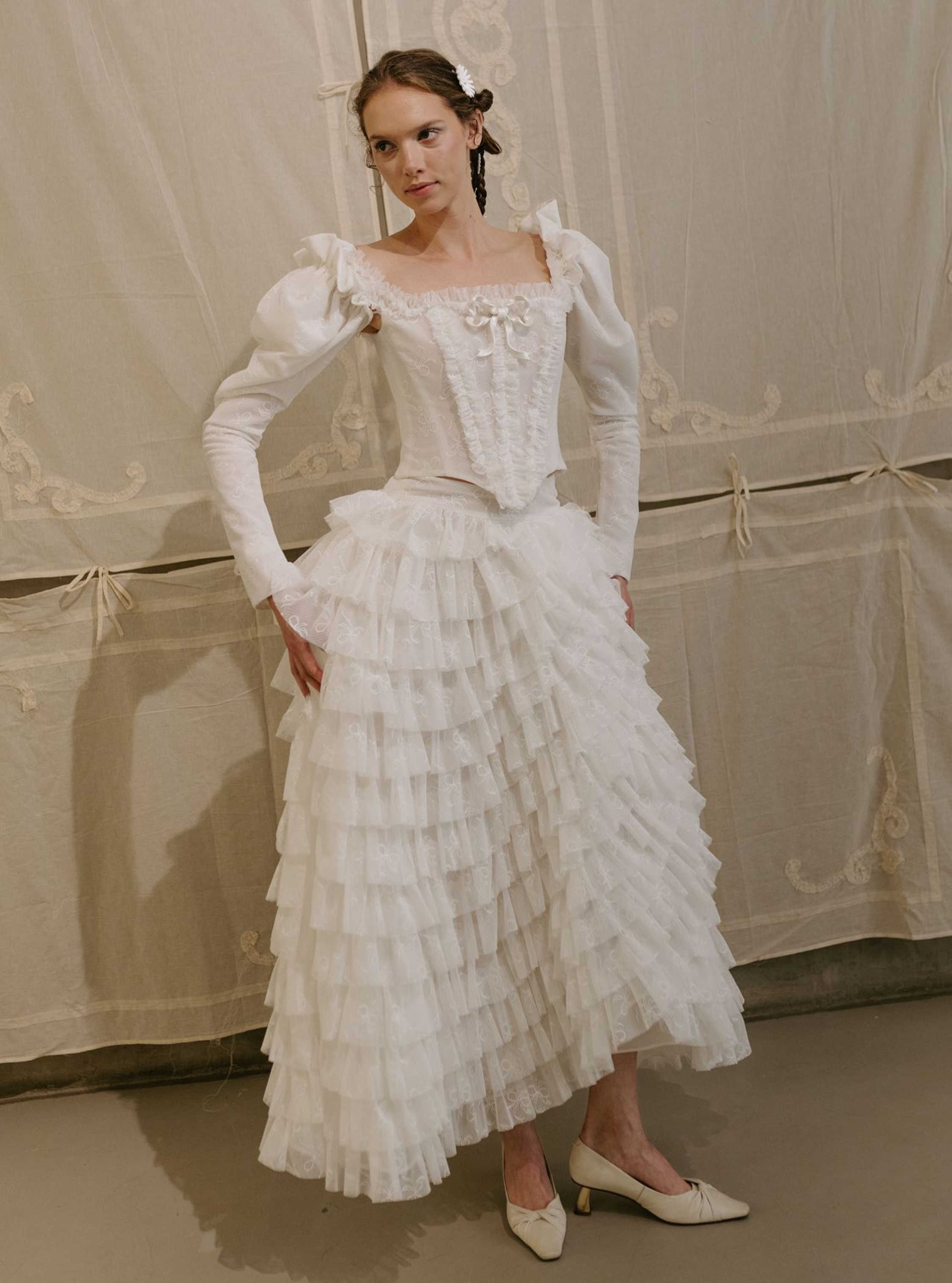
Bridal separates are hardly a new proposition, but what was once an alternative to the traditional gown has become a category designers are embracing with increasing creative freedom. This season, matching sets made a particularly bold impression, offering brides an opportunity to experiment with proportion, texture, and styling in ways that felt fresh, playful, and unapologetically fashion-forward.
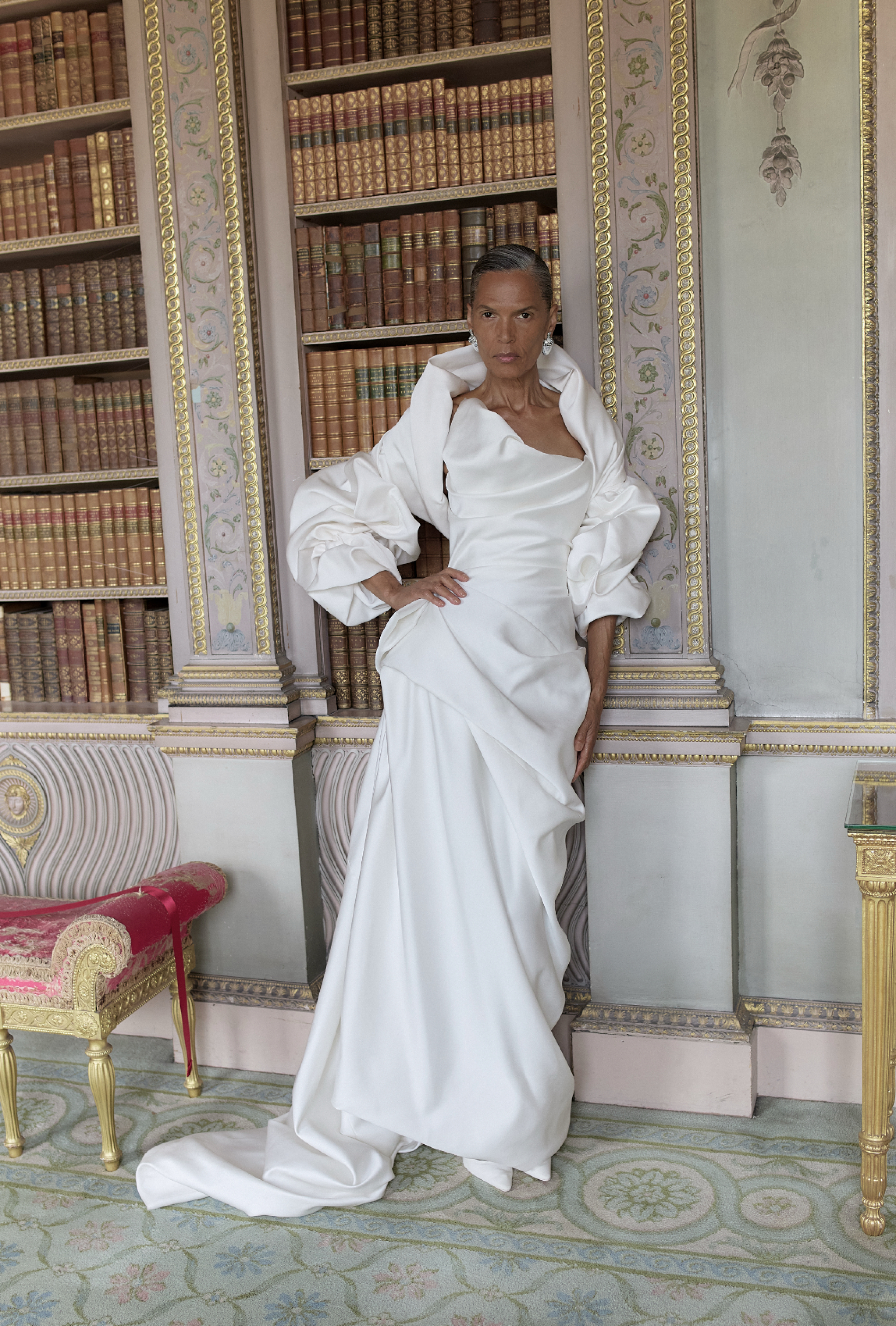
At Prea James, Maison Margot and House of Gilles, classic corsets met sleek pencil skirts for a look that felt equal parts polished and provocative, while Marmar Halim, Elie Saab, and Shahira Lasheen introduced a more expressive approach, layering statement jackets, shawls, and sculptural cover-ups over coordinating pieces. Elsewhere, cropped silhouettes offered a playful glimpse of midriff, challenging the conventions of traditional bridal dressing. Particularly compelling as a second look, these ensembles invite a little more personality into the wedding wardrobe, proving that sometimes the most interesting bridal statements come in two parts.
A Touch of Lace
After seasons of lace taking center stage, bridal’s most enduring fabric is finding beauty in the finer details. While head-to-toe lace gowns remain a perennial favorite, designers took a more restrained approach this season, using delicate trims to punctuate otherwise clean silhouettes. Against the silken surfaces of satin, taffeta, and mikado, these intricate accents introduced a subtle interplay of texture and contrast, proving that sometimes the smallest details make the strongest impression.
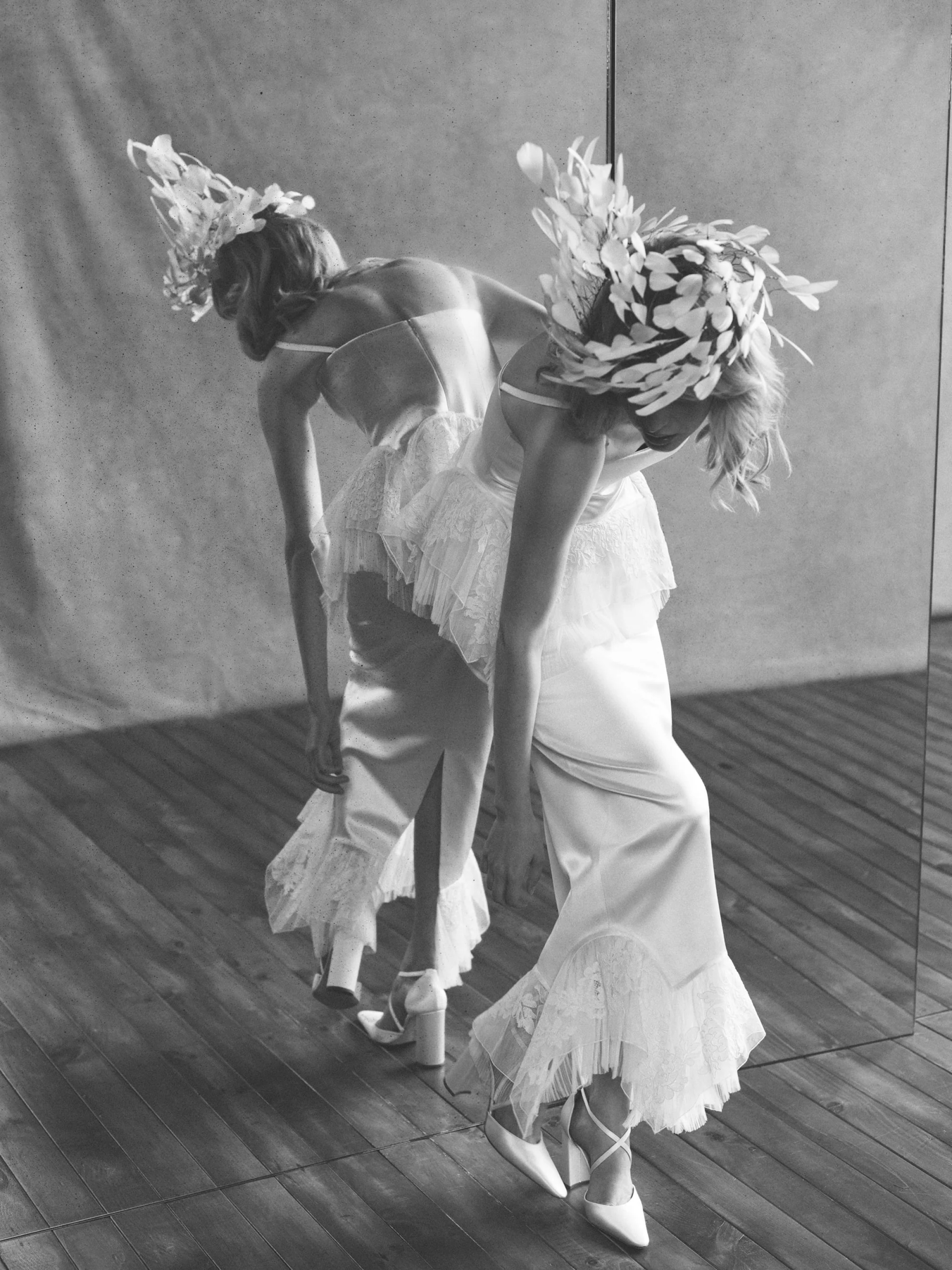
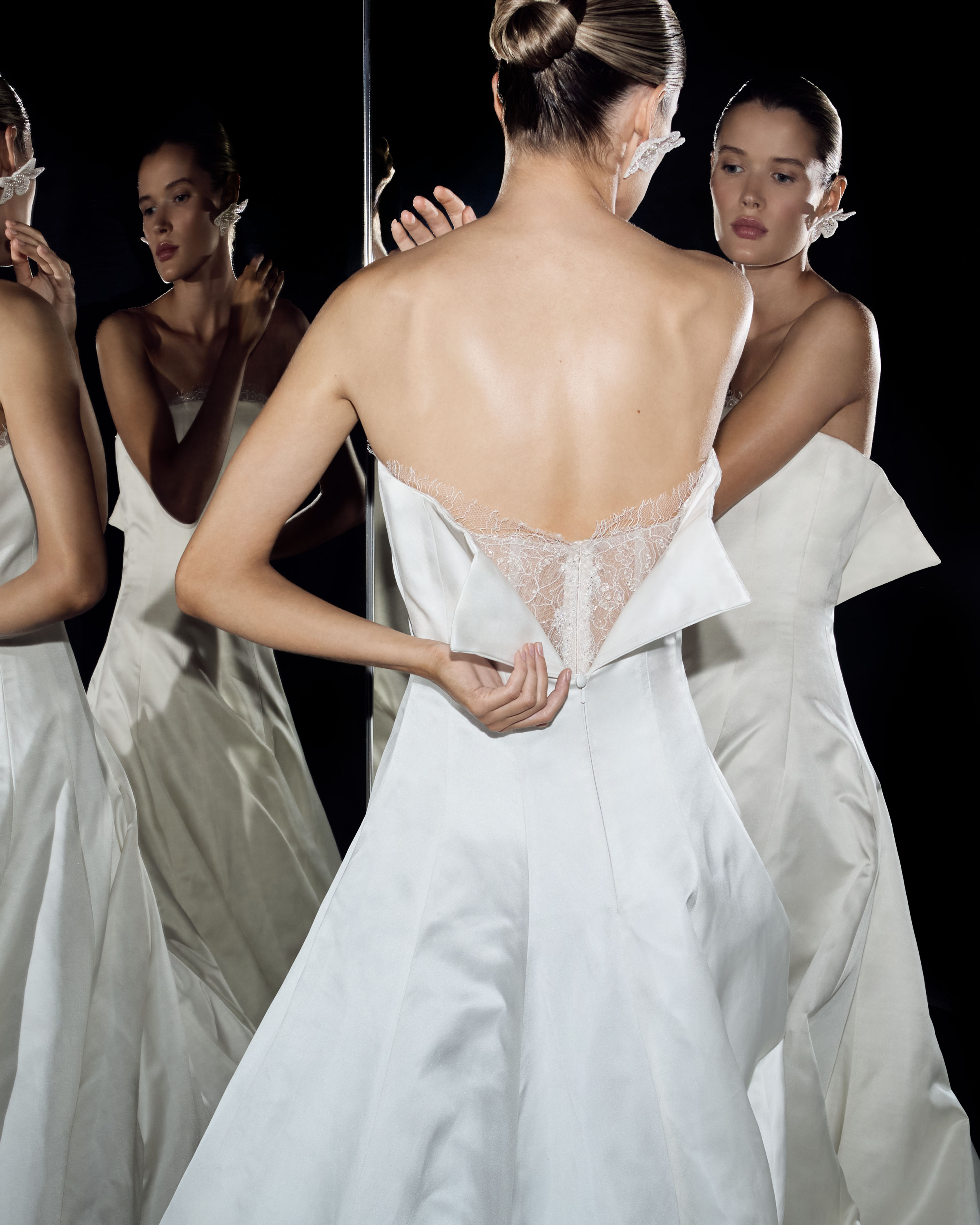
At Danielle Frankel, generous bands of lace traced the hems of fluid gowns, while Enaura introduced strips of lace radiating from the waist, creating an unexpected moment of texture and movement. Elsewhere, Milla Nova used delicate lace edging to frame the bust, lending a softer, more intimate quality to structured bodices. Less about lace as the main event and more about its power to transform the familiar, this was a study in restraint, where a little went a rather long way.
Wrapped-Up
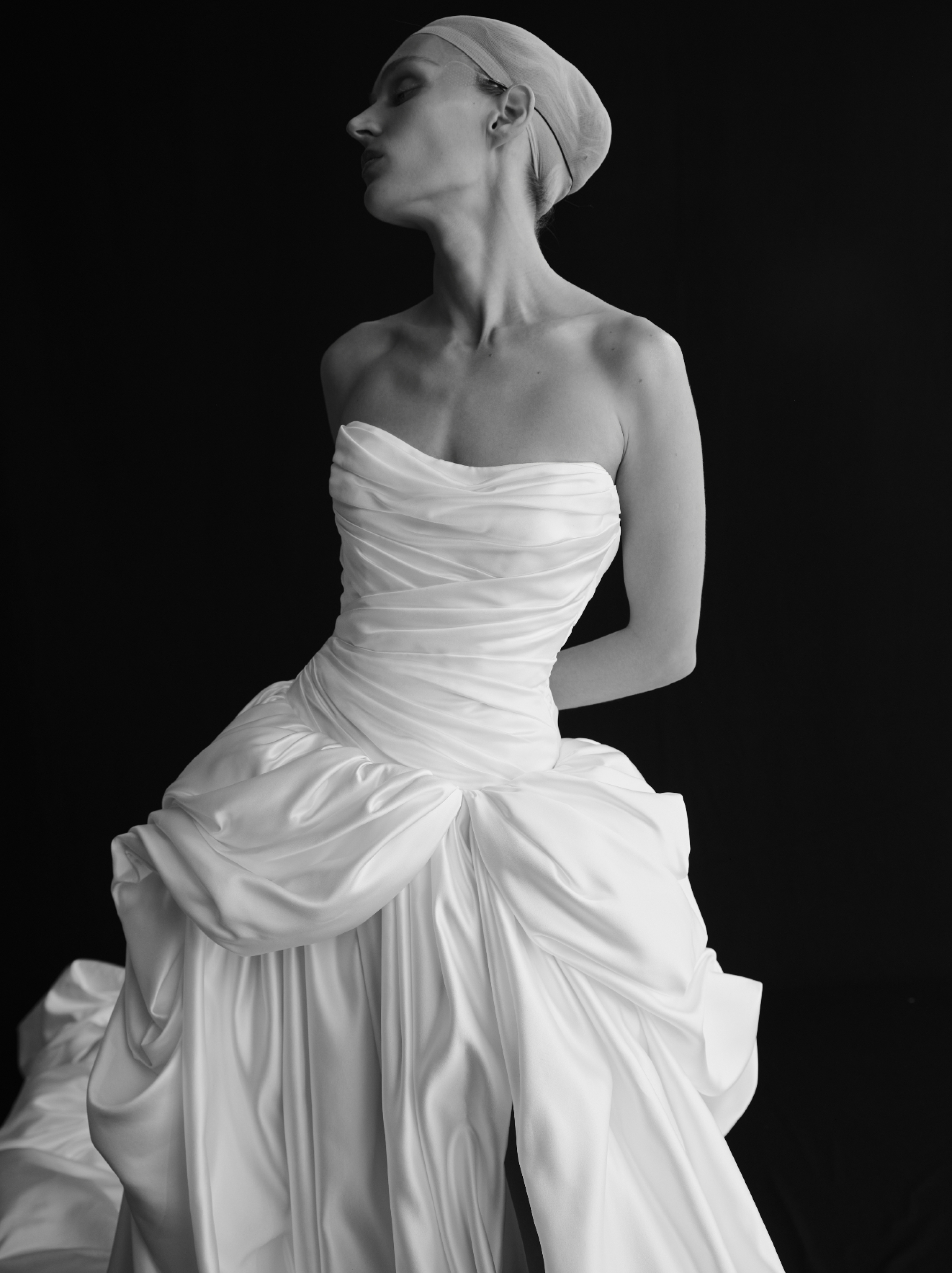
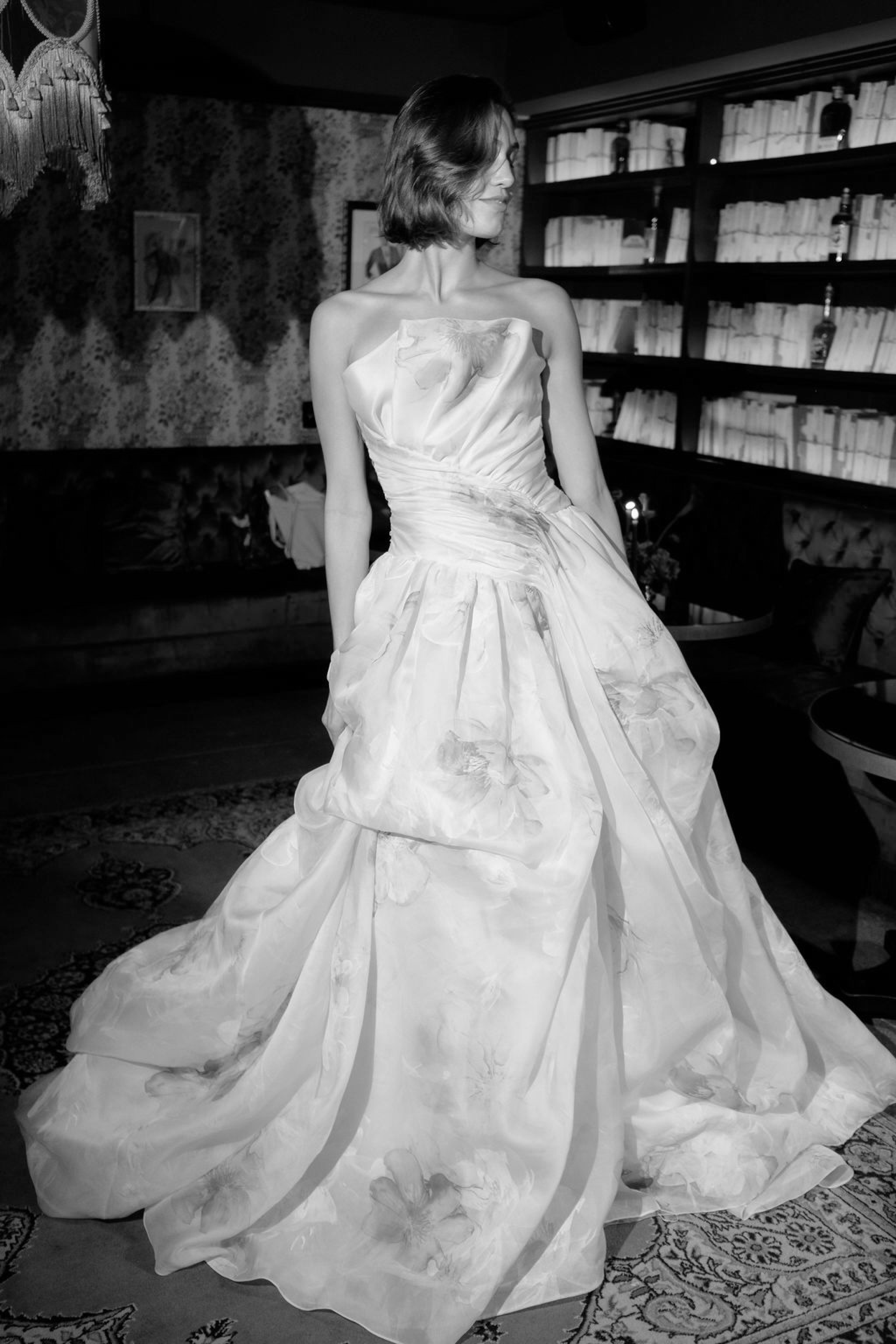
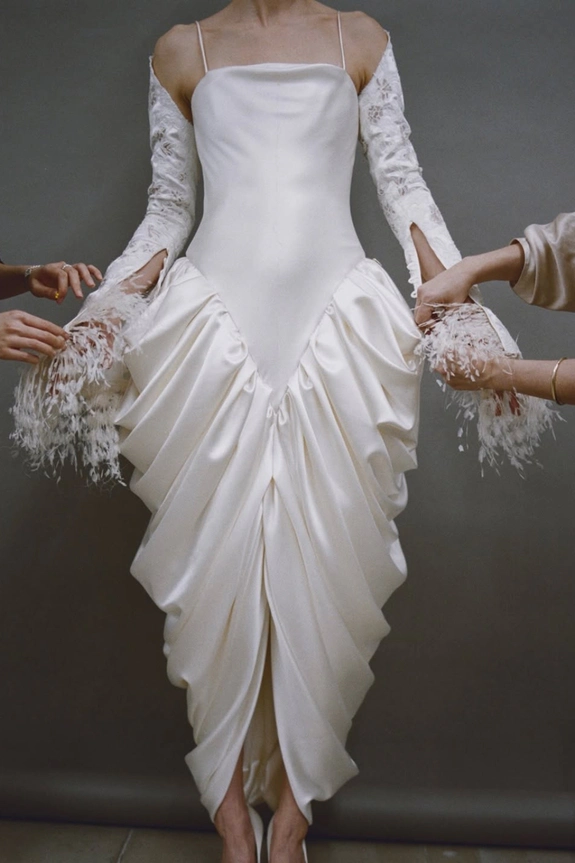
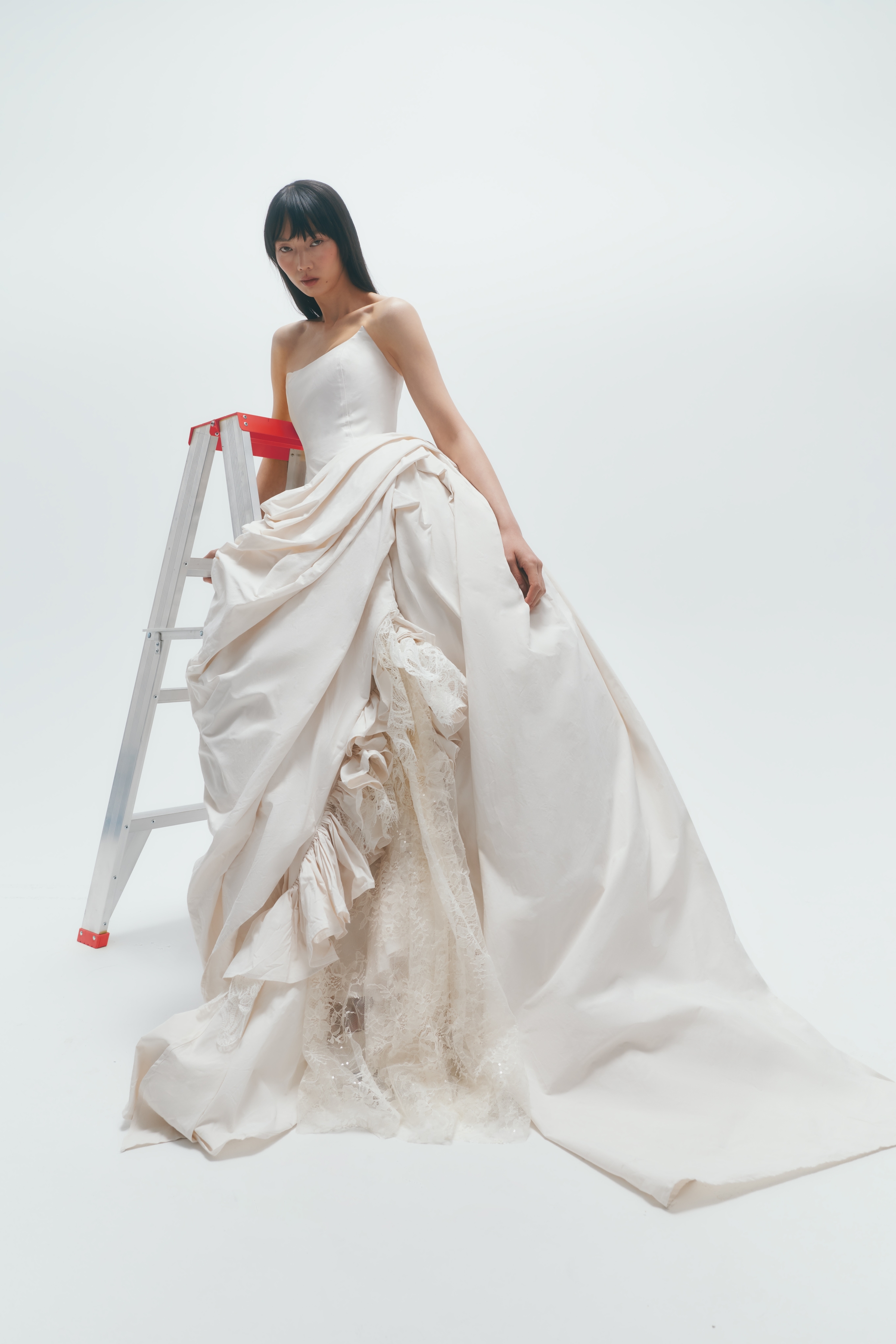
There was something wonderfully tactile about bridal this season, as designers twisted, gathered, and wrapped fabric in a study of texture and form. Like fabric caught in a perpetual embrace, layers folded around the body. At Jenny Yoo, softly draped satin bodices gave way to clean, fluid skirts, allowing the subtle interplay of folds to take center stage. Vivienne Westwood, Monique Lhuillier and Lein explored a more intricate approach, gathering delicate, sheer fabrics in multiple directions to create an almost weightless web of texture across the body. Elsewhere, Ouma, Monetre, and Mia Atelier took the concept to delicious extremes, manipulating ivory silks and taffetas into creamy, whipped confections of fabric that felt almost sculptural. The result was an exercise in controlled excess, where even the most elaborate constructions retained a sense of softness and ease. Proof that sometimes, the most compelling embellishment is the fabric itself.